

More news on this day
Tourists heading to Europe in 2026 are encountering a rapidly thickening web of rules, from new biometric borders and advance permits to tougher tourist taxes and behavior crackdowns on holiday hotspots such as Italy’s Capri, while countries including Poland, Sweden, Romania, Germany, Spain, Greece and France tighten their own regimes.
Get the latest news straight to your inbox!
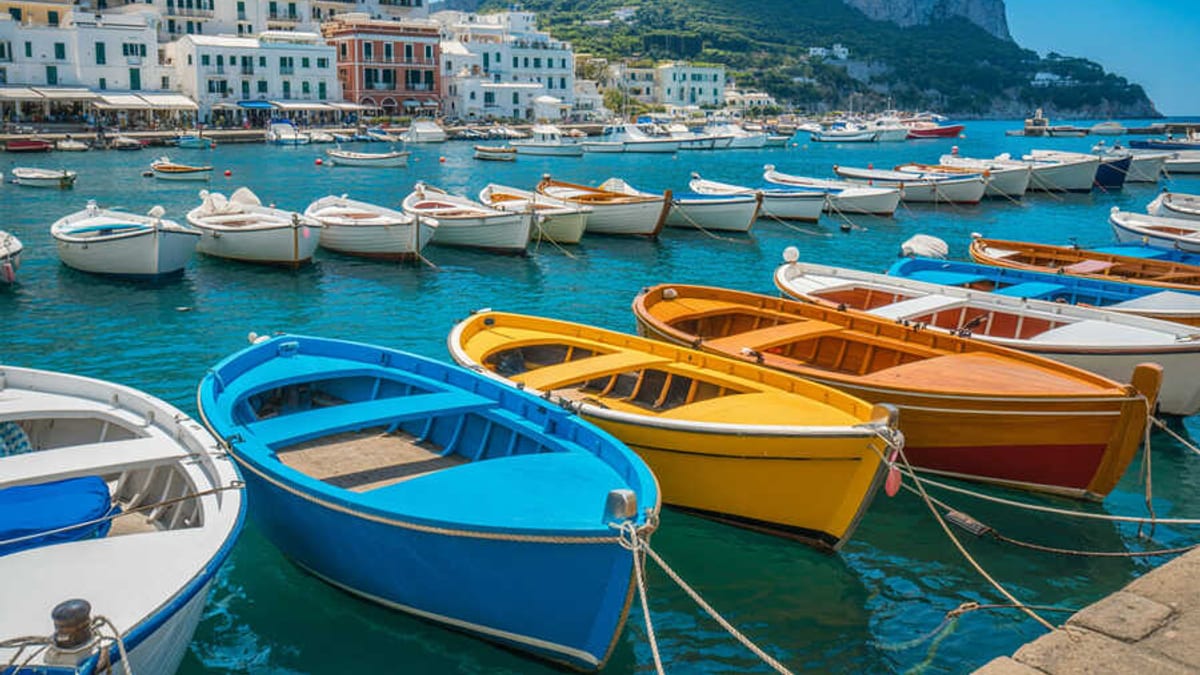
Image by Global Travel Alerts, Advisories, International Travel Alerts
Capri Tightens Tourist Tax and Conduct Rules
The Italian island of Capri has moved to more strictly regulate mass tourism, increasing local tourist levies and sharpening rules on visitor conduct in an effort to protect its fragile environment and historic center. According to Italian media coverage, local authorities have signaled a tougher stance on overcrowding and disruptive behavior, with higher charges for short-stay visitors and more active enforcement of existing ordinances.
The island has long struggled with seasonal congestion, cruise ship surges and day-tripper crowds that strain water supplies, waste systems and narrow streets. Reports indicate that the latest measures build on Italy’s broader shift toward targeted tourist fees, similar to Venice’s day-tripper charge and higher overnight taxes that already apply in many cities across the country.
The focus on behavior rules reflects a wider European trend in which overtourism hotspots are turning to fines and formal codes to curb everything from public drunkenness to littering and unauthorized bathing or climbing at heritage sites. On Capri, visitors can expect clearer signage, more patrols in key areas and a greater likelihood that violations will trigger financial penalties.
While the new rules are still evolving, travel industry analysis suggests that Capri is positioning itself alongside other Italian destinations that are willing to sacrifice some volume of budget tourism in order to prioritize higher-spend, longer-stay visitors who place less pressure on local services.
Poland’s New Position in Europe’s Travel Rule Map
Poland is emerging as a prominent example of how European travel is becoming more conditional, even as borders remain largely open within the Schengen zone. Publicly available information shows that Poland has extended temporary internal checks along parts of its border with Germany and Lithuania into early 2026, using provisions in the Schengen Borders Code that allow controls to be reintroduced in response to security or migration concerns.
These targeted checks predominantly affect road traffic, with particular attention to buses, minibuses and high-occupancy vehicles on busy motorway routes. While EU and Schengen rules still guarantee freedom of movement, travelers are being advised by tour operators and motoring organizations to allow additional time for spot checks and possible queues, especially at peak holiday periods.
At the same time, Poland has been drawn into tightening travel rules beyond the European mainland. According to recent coverage of the United Kingdom’s new Electronic Travel Authorisation regime, Polish citizens heading to the UK now require online pre-clearance, joining travelers from Italy, Spain, France, Germany and many other visa-exempt countries under a system that became fully enforceable in February 2026. For many Poles accustomed to spontaneous low-cost weekend trips, that change marks a new layer of digital administration before departure.
This dual role, as both a Schengen frontline state managing selective internal checks and as a source of travelers now subject to stricter entry formalities in partner countries, places Poland alongside Sweden, Romania, Germany and others at the center of Europe’s evolving travel landscape.
Sweden, Romania, Germany, Spain, Greece and France Grapple With Checks and Charges
Across northern and southern Europe, several countries are experiencing their own version of tighter travel rules. Sweden, Denmark and Norway continue to operate temporary passport checks within the Nordic region that have been periodically renewed since the 2015 migration crisis, according to Nordic cooperation briefings. For travelers transiting through Sweden by land or sea, this means identity controls where, in theory, free movement once felt almost entirely frictionless.
Romania, a more recent entrant to the Schengen area, has invested heavily in automated border gates and biometric systems at airports, reflecting the European Union’s shift toward digital controls. Travel advisories note that while these systems are designed to accelerate processing for compliant travelers, they can also lead to bottlenecks when technical glitches occur or when staff and passengers adapt to new procedures.
In Germany, Spain, Greece and France, the main changes for visitors come through a combination of reinforced border checks at key entry points and an expanding patchwork of local tourist taxes. Major cities such as Berlin, Barcelona, Athens and Paris apply overnight levies that help fund infrastructure, cultural preservation and clean-up operations. Travel industry roundups describe a steady rise in both the number of municipalities charging such fees and the amounts involved, often tiered according to accommodation type and star rating.
France and Spain, in particular, have also been highlighted in European media as among the countries most exposed to early congestion linked to the EU’s new biometric Entry/Exit System at external Schengen borders, placing them in the same conversation as Italy and Greece when it comes to potential queues at airports and busy land crossings.
EU Biometric Borders and the Coming ETIAS Layer
Beyond national measures, the entire European travel system is shifting under the weight of new technology-led border controls. The EU’s digital Entry/Exit System, which began operating in October 2025 and is being expanded through 2026, records the biometric data, entries and exits of non-EU nationals crossing external Schengen frontiers. Official EU documentation describes it as a way to replace passport stamps, enforce the 90-day rule more strictly and increase security at the bloc’s outer borders.
Travel industry reports from early 2026 indicate that the rollout has already produced longer queues at some major gateway airports, especially in France, Germany, Greece, Italy, Portugal and Spain, where infrastructure and staffing have struggled to keep pace with demand. Airlines and airports have urged passengers to arrive earlier than before, particularly during peak travel seasons and at hubs where a large share of arrivals now pass through biometric kiosks.
Layered on top of EES will be the European Travel Information and Authorisation System, or ETIAS, which EU sources currently schedule for the last quarter of 2026. Once active, visa-exempt visitors from countries such as the United States, Canada and the United Kingdom will need to complete an online application and pay a modest fee before boarding transport to the Schengen area. Guidance from travel associations stresses that ETIAS is not a visa, but a form of pre-screening that sits alongside existing passport and customs checks.
For tourists moving between Italy, Poland, Sweden, Romania, Germany, Spain, Greece and France, these EU-wide systems mean that once they have cleared the external frontier, intra-Schengen journeys should, in principle, remain largely borderless. However, the persistence of temporary internal checks in some regions and the proliferation of local rules, taxes and enforcement practices ensure that the on-the-ground reality is considerably more complex than the original dream of effortless movement.
What This Patchwork Means for Travelers in 2026
For visitors planning multi-country trips across Europe, the convergence of Capri’s stricter tourist tax and conduct rules with Poland’s renewed internal checks, Sweden’s extended border controls and the EU’s new digital infrastructure adds up to a noticeably more demanding environment. Travel planners are increasingly advising clients to build extra time into itineraries, keep identity documents readily accessible on all cross-border segments and budget for a broader range of local levies.
One of the biggest shifts is psychological. Where a holiday in Europe once centered mainly on flights, hotels and basic entry requirements, travelers now need to think in terms of pre-travel authorizations, biometric registrations, destination-specific behavior codes and fluctuating municipal charges. The contrast is particularly stark on iconic leisure islands and coastlines, from Capri to parts of Greece and Spain, where visitors may find formal restrictions on activities that were previously tolerated.
At the same time, tourism boards and city councils from Poland to Italy are presenting these measures as tools to safeguard heritage sites, improve security and strengthen community support for visitor economies. Analysts point out that without some form of regulation, the very qualities that attract tourists to Capri’s cliffs, Kraków’s old town or Barcelona’s waterfront could be eroded by congestion and unmanaged crowds.
As 2026 progresses, travelers to Poland, Sweden, Romania, Germany, Spain, Greece, France and Italy are likely to encounter further tweaks to border checks, tourist taxes and local behavior rules. For those willing to prepare carefully, the reward remains access to some of the world’s most popular destinations, albeit under a new, more closely managed set of conditions.