

More news on this day
Poland has joined a widening coalition of governments tightening travel advisories and evacuation assistance for the Gulf as the rapidly escalating Strait of Hormuz crisis around Iran disrupts regional mobility, commercial aviation and maritime routes serving Qatar, the United Arab Emirates, Bahrain, Oman and Saudi Arabia.
Get the latest news straight to your inbox!
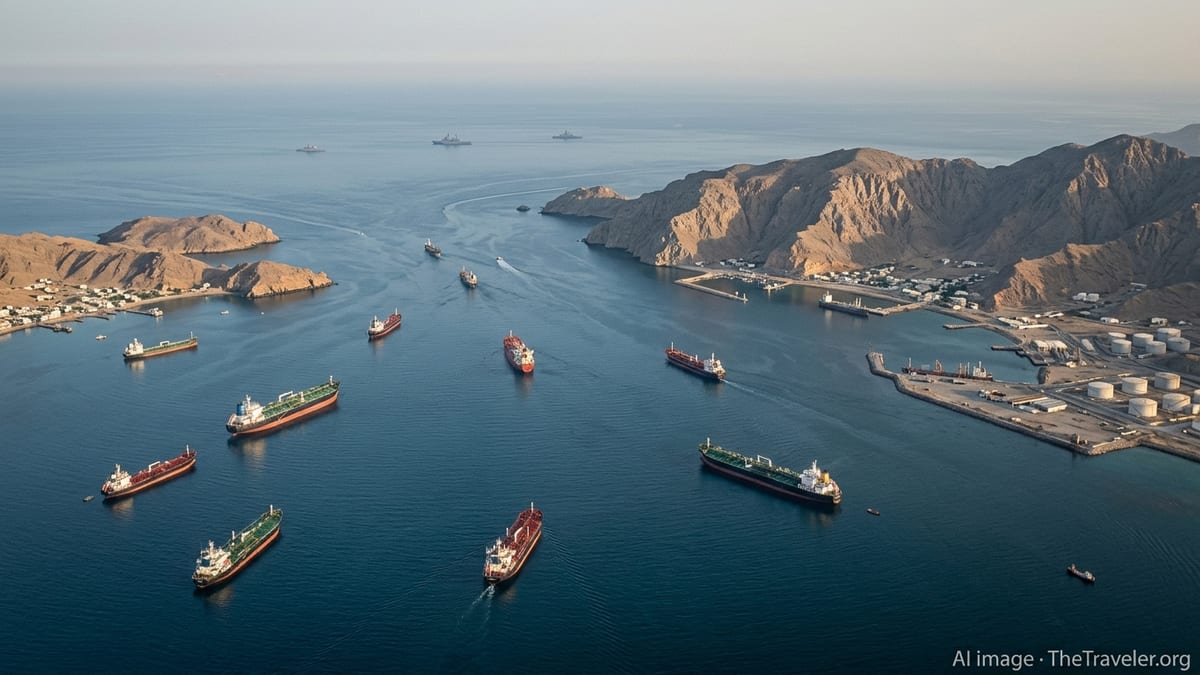
Coordinated Warnings as Hormuz Crisis Deepens
Recent government advisories show Poland aligning its travel guidance with countries such as the United Kingdom, Romania, Canada, the United Arab Emirates, Australia and Germany, as the security situation in and around the Strait of Hormuz deteriorates amid the 2026 Iran war. Publicly available information indicates that multiple foreign ministries are now advising against all travel to Iran and warning of significant spillover risks for nearby Gulf states.
Updated notices highlight a combination of factors driving the stricter stance: Iranian declarations about restricting passage through the Strait of Hormuz, recent seizures and attacks on commercial vessels, and a sharp rise in missile, drone and mine-related threats to shipping. Maritime security advisories from flag states and shipping bodies describe an elevated or critical threat level for merchant traffic transiting the Persian Gulf, Gulf of Oman and northern Arabian Sea, with the chokepoint effectively operating under severe constraint.
Travel-focused monitoring outlets note that since early March 2026, tanker and cargo movements through the Strait have dropped to a fraction of normal volumes, following strikes on Iranian naval infrastructure and reported attacks on multiple commercial ships. This maritime disruption, combined with airspace restrictions and potential strikes on energy and port infrastructure, has led governments to tighten their messaging to both tourists and expatriate workers across the wider Gulf region.
Heightened Risk for Travelers in Gulf States
Although most advisories continue to distinguish between Iran and its Gulf neighbors, the scope of warnings has expanded to cover Qatar, the UAE, Bahrain, Oman and Saudi Arabia due to their proximity to active military operations and dependence on Hormuz-linked trade routes. Publicly available guidance increasingly urges travelers to reconsider non-essential trips, prepare for rapid changes to flight schedules and anticipate possible temporary closures of airports or seaports.
Insurance implications are also becoming more prominent in official communications. Several governments caution that standard travel insurance policies may not cover trips taken in defiance of national advice, particularly to areas where “all travel” or “all but essential travel” warnings apply. Travelers are being told to check policy exclusions related to war, terrorism and government advisories before departure, and to ensure that emergency medical and evacuation cover is adequate for a high-risk environment.
Reports from the aviation and maritime sectors describe a growing pattern of route diversions, longer flight times to avoid sensitive airspace and cruise or ferry cancellations in the wider Gulf. While major hubs such as Doha, Dubai and Abu Dhabi remain open, capacity constraints, crew safety protocols and shifting insurance requirements are combining to make schedules more volatile than usual, especially for last-minute or connecting journeys.
Emergency Evacuation Planning and Consular Support
According to published government and maritime advisories, many of the countries now aligned with Poland are updating contingency plans for assisted departures from Qatar, the UAE, Bahrain, Oman, Saudi Arabia and surrounding waters if security conditions deteriorate further. These measures range from pre-positioned consular teams and charter-flight readiness to coordination with allied naval forces for potential sea-based evacuations from affected ports.
Foreign ministries are asking their nationals in the Gulf to register contact details, keep travel documents easily accessible and maintain a supply of essentials such as prescription medicines in case of sudden relocation. Guidance typically recommends that residents and visitors follow local announcements closely, avoid protest areas and sensitive infrastructure, and maintain flexible onward travel plans, particularly if based near key energy or shipping facilities that might become targets in any escalation.
At the same time, governments are signaling that evacuation assistance will likely prioritize the most vulnerable travelers, including those without commercial options, individuals with serious health needs and unaccompanied minors. Non-resident tourists are being advised to consider leaving while commercial routes remain available, especially if they lack robust insurance or are uncomfortable with the elevated security posture in major Gulf cities.
Strait of Hormuz at the Center of Global Trade Disruption
The core driver of the joint travel warnings is the strategic importance of the Strait of Hormuz, the narrow maritime corridor that links Gulf producers to global oil and gas markets. Recent analyses of the 2026 Strait of Hormuz crisis describe extensive damage to Iranian naval capabilities, reported mine-laying activity and repeated threats to enforce closures, pushing the risk of miscalculation or collateral damage to unprecedented levels.
Maritime security circulars published in late February and early March highlight a series of missile, drone and boarding incidents targeting or threatening commercial shipping in the region. Advisories urge vessels to keep maximum feasible distance from naval units, maintain heightened watches, review citadel and emergency procedures, and be prepared for electronic interference such as GPS jamming or spoofed navigation signals near Iranian waters.
For travelers, this maritime picture translates into knock-on effects for cruise itineraries, regional ferry services and even coastal tourism reliant on steady cargo and fuel flows. While beach resorts in countries like Oman and the UAE continue to operate, travel planners warn that any further disruption to energy exports or port operations could quickly ripple into higher prices, reduced flight availability and tighter local security controls that affect everyday movement.
What Travelers Should Watch in the Coming Weeks
As Poland joins the growing list of states issuing strict guidance on Iran and the Strait of Hormuz, travel analysts expect advisories to remain highly dynamic in the weeks ahead. Key indicators being tracked include any further announcements about formal closures of the Strait, new attacks on commercial vessels, and additional strikes on energy or water infrastructure around the Gulf.
Travelers with upcoming itineraries to Qatar, the UAE, Bahrain, Oman or Saudi Arabia are being encouraged by public information sources to monitor both their own government’s advice and local announcements from Gulf authorities. Adjustments to visa rules, changes in entry screening and variations in allowed movement near military or critical infrastructure zones could all shape the practical experience of visiting or transiting the region.
Industry observers also point to the possibility of more granular, city-level guidance if tensions concentrate around specific ports or airbases. For now, the dominant message from Poland and its partners is caution: avoid Iran, approach regional travel via the Strait of Hormuz with heightened awareness, and be ready to change plans quickly if the security or transport situation worsens.