

More news on this day
Poland has joined a fast-growing list of countries including the United Kingdom, Canada, Sweden, Ireland and Australia in sharply escalating travel warnings for Cuba, as the island nation grapples with a severe economic crisis, crippling fuel shortages and the impact of a tightened United States embargo on energy supplies.
Get the latest news straight to your inbox!
Coordinated Shift in Global Travel Advisories
Recent updates to government travel portals in Europe, North America and the Asia-Pacific region show a rapid convergence toward high-level warnings on Cuba, largely focused on the country’s fuel and electricity shortages. Publicly available information from the UK, Australia and other states indicates that advice has moved from standard cautionary language to urging travellers to reconsider or avoid non-essential trips.
The UK’s Foreign, Commonwealth and Development Office revised its Cuba guidance in March 2026, advising against all but essential travel in response to what it describes as severe disruption to essential services, ongoing power outages and persistent fuel shortages. Similar language now appears in advisories from several other European governments, reflecting concern that basic infrastructure is under sustained strain.
Australia’s Smartraveller platform has also raised its risk rating, advising travellers to reconsider their need to visit Cuba due to serious fuel shortages that are affecting transport, healthcare and other critical services. Canada has updated its own notices to warn that shortages of fuel, food and consumer goods may affect visitors even at resort areas that traditionally shield tourists from wider economic pressure.
Poland’s foreign ministry has now aligned itself with this more cautious stance, updating its country information to discourage non-essential travel and highlight the risk of sudden deterioration in living and travel conditions. Reports shared by travellers and community forums indicate that similar messaging has recently been adopted or strengthened by Ireland and other European states.
Fuel Crisis and Rolling Blackouts Undermine Essential Services
At the heart of the new wave of warnings is Cuba’s deepening energy emergency. Official aviation and tourism industry notices describe a nationwide shortage of Jet A-1 fuel at all international airports, initially forecast to run from mid-February to at least mid-March 2026. This has led to widespread schedule changes, refuelling stops in third countries and, in some cases, outright flight suspensions.
Domestic fuel scarcity is also contributing to extended blackouts and forced energy-saving measures across the island. Analysis published by energy observers and financial filings referencing operations in Cuba point to repeated failures of the national grid, limited generating capacity and chronic shortfalls in imported oil. These power outages have been linked to disruptions in water supply, refrigeration, telecommunications and basic healthcare delivery.
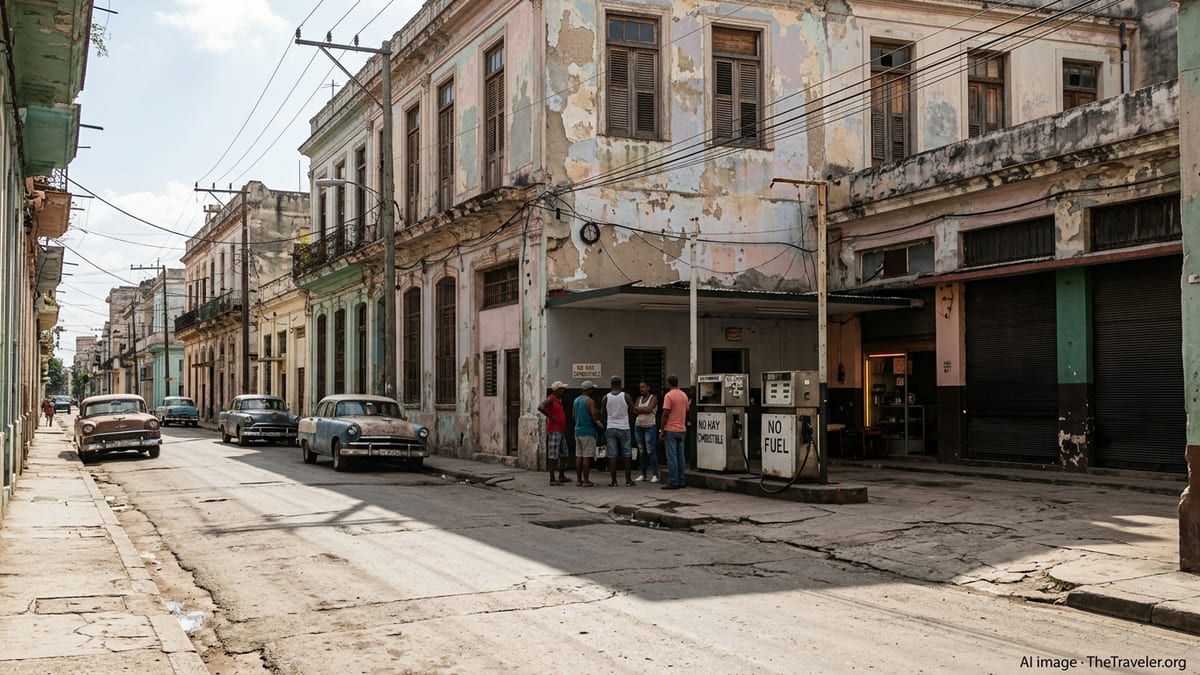
Travel advisories now warn that emergency services may be slower to respond, that some hospitals face constrained capacity and that routine services can be interrupted without notice. Reports from recent visitors describe closed petrol stations, long queues for public transport and limitations on interprovincial travel as fuel is rationed for priority uses.
Tourism infrastructure, which has historically been insulated from shortages affecting the general population, is increasingly feeling the impact. Hotels and resorts have stepped up reliance on generators, while some tour operators report itinerary changes, reduced excursions and curtailed domestic flights as operators adapt to unreliable fuel supplies.
Airlines Cut Capacity as Access and Reliability Deteriorate
The travel warnings coincide with a marked reduction in international airlift to Cuba. According to aviation sector coverage, Air Canada has cancelled most, and in some cases all, Cuba flights for the coming months, citing the operational uncertainty caused by the aviation fuel shortage. Forum posts and tour operator updates indicate that other Canadian carriers have trimmed routes or temporarily suspended services to specific Cuban destinations.
European carriers are also adjusting. Some have introduced technical stops in neighbouring countries such as Mexico or the Dominican Republic to refuel, while others have reduced frequencies in response to both the fuel crisis and falling demand. Notices to airmen circulated in February confirmed that crews could not rely on uplift in Cuba, forcing airlines to adopt more complex routings that add time and cost to travel.
Travel industry briefings suggest that tour operators in Canada and Europe are actively reviewing Cuba programmes for the remainder of 2026. Some resort areas have reportedly consolidated guests into fewer properties due to low occupancy, reflecting a sharp drop in bookings as high-profile travel warnings reach consumers in key source markets.
Passengers already holding tickets are being advised through airline and agency channels to check booking status frequently, expect possible last-minute changes and be prepared for rerouting or refunds if services are cancelled. With capacity shrinking, alternatives for rebooking can be limited, particularly from smaller regional airports.
Economic Collapse and a Tightened US Embargo Form the Backdrop
The immediate travel disruption is rooted in a broader economic emergency. Publicly available economic analyses describe Cuba as facing one of its worst crises in decades, characterised by high inflation, rising food insecurity, shortages of medicines and deteriorating infrastructure. A prolonged contraction in foreign currency earnings, in part due to the pandemic’s hit to tourism, has combined with structural weaknesses in state enterprises to push the system to the brink.
On top of longstanding United States sanctions, recent policy measures targeting fuel shipments to Cuba have further restricted the island’s access to energy imports. Human rights and trade monitors note that new enforcement actions against tankers and intermediaries supplying oil to Cuba have coincided with the sharp tightening of fuel availability since late 2025. This has amplified an already fragile situation, turning chronic shortages into an acute crisis that directly affects both residents and visitors.
The effect on tourism, historically a vital source of hard currency, is profound. Prior to the crisis, Cuba earned billions of dollars annually from international visitors, with Canada and European countries among the largest contributors. The combination of reduced airlift, negative travel advisories and on-the-ground hardships is expected to drive visitor numbers sharply lower in 2026, further constraining the government’s ability to import essential goods.
Observers warn that this feedback loop between economic collapse and declining tourism could be difficult to break without a significant easing of external pressures, new financial support or far-reaching reforms inside Cuba. For now, travel advisories reflect the reality that foreign visitors are increasingly exposed to the same shortages and infrastructure failures that local communities have endured for years.
What Travellers Should Expect if They Still Go
Despite heightened warnings, a small number of airlines and tour operators continue to serve Cuba, and some travellers remain intent on visiting friends, family or long-booked resorts. Government advisories and traveller accounts converge on a clear message for those who decide to proceed: conditions on the ground may be highly unpredictable and can change quickly.
Potential visitors are being urged in public guidance to monitor official travel advice up to and including the day of departure, confirm all flight segments and be prepared for cancellations or rerouting. They are also advised to plan for disruptions to everyday conveniences, including limited cash access, sporadic mobile and internet connectivity, and shortages of fuel, pharmaceuticals and some food items.
Resort areas may still provide relatively stable services, supported by priority fuel allocations and generator power, but travellers increasingly report that off-resort excursions reveal the depth of the crisis in surrounding communities. With several governments now explicitly discouraging non-essential leisure travel, the balance between supporting local jobs and adding pressure on stretched resources is becoming a central ethical consideration for prospective visitors.
As more countries join the UK, Canada, Sweden, Ireland, Australia and now Poland in elevating their travel warnings, Cuba is entering a period in which international tourism is likely to remain volatile and constrained. For the global travel industry and for millions of travellers who have long regarded Cuba as an accessible Caribbean escape, the message for 2026 is clear: this is a destination where risks and uncertainties are currently far higher than in previous years.