

More news on this day
Poland has elevated its travel warning for Cuba to the highest level, advising citizens to avoid non-essential trips as the island struggles with an escalating energy crisis, repeated nationwide blackouts and mounting strains on basic services.
Get the latest news straight to your inbox!
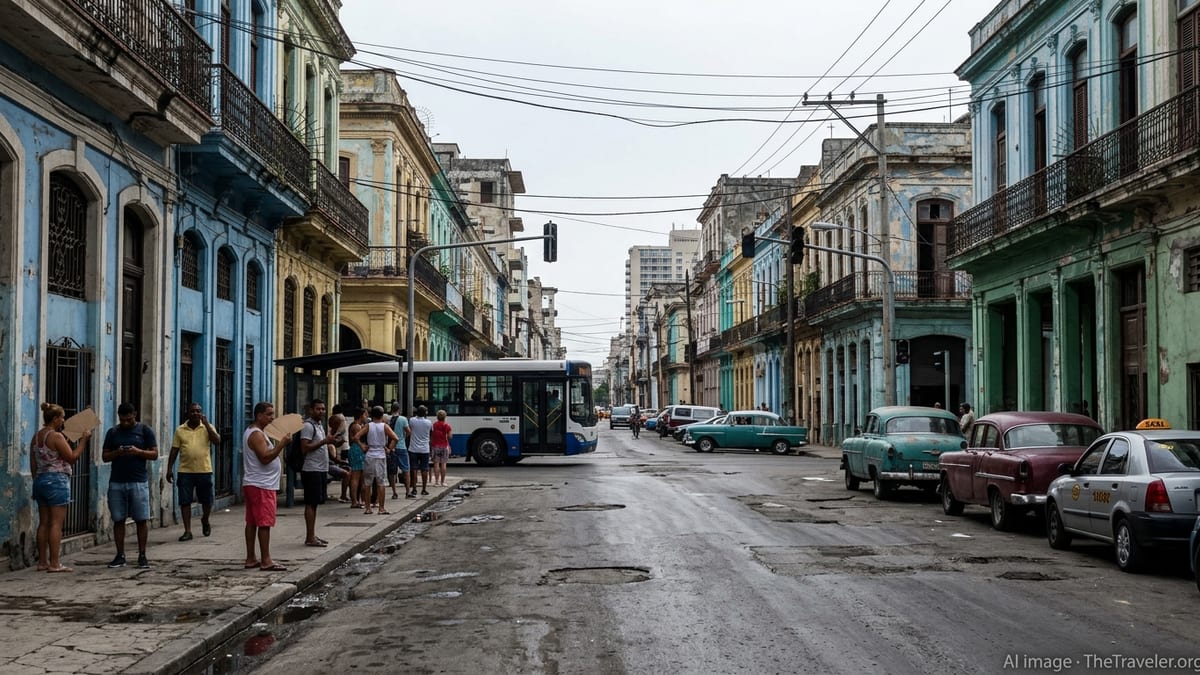
Poland Tightens Its Guidance on Travel to Cuba
According to information released through Poland’s foreign ministry travel portal and summarized in European media coverage, Cuba has now been placed in the most restrictive advisory category, typically reserved for destinations where serious safety or infrastructure risks are present. The change means Polish travelers are urged to postpone all non-essential travel and to carefully assess any remaining plans to visit the Caribbean nation.
Publicly available guidance indicates that the decision is directly linked to Cuba’s deteriorating energy situation, which has produced rolling blackouts, fuel shortages and disruptions to healthcare and transport. The Polish advisory notes that such conditions can significantly affect tourist stays, including access to air conditioning, refrigeration, electronic payments and reliable communications.
The move places Poland among a growing number of European countries that have updated their travel advice in response to Cuba’s current crisis. While most guidance stops short of a formal ban, the strongest tier of warning often has a rapid, chilling effect on new bookings and can trigger cancellations from risk-averse tour operators.
Travel industry observers in Central Europe report that charter flights and package holidays from Poland to Cuban resort areas were already under pressure from earlier reports of shortages. The latest warning is expected to further depress demand, particularly among first-time visitors or families with children.
Cuba’s Energy System Under Unprecedented Strain
The Polish decision comes after a series of island-wide power failures in Cuba in March 2026 that left millions of residents without electricity for extended periods. International news agencies describe at least three nationwide grid collapses in a matter of weeks, along with daily scheduled outages that can last up to 12 hours in some regions.
Reporting from outlets such as the Associated Press and national broadcasters in Europe points to a combination of aging thermoelectric plants, lack of spare parts and a sharp reduction in fuel imports as drivers of the crisis. Analysts note that Cuba’s electricity system relies heavily on oil-fired generation, leaving it highly exposed when diesel and fuel oil shipments are disrupted.
International assessments, including recent summaries by multilateral organizations, describe an energy network operating with minimal reserves and little redundancy. When a major generating unit fails, the system appears prone to cascading blackouts that can take many hours, and sometimes more than a day, to reverse.
These power cuts have had a pronounced effect on everyday life, from food storage and water pumping to public lighting and digital services. For travelers, the same dynamics translate into unreliable air conditioning, interruptions to hotel operations and difficulties charging electronic devices or accessing online services needed for payments and travel documentation.
Impact on Tourists: Flights, Hotels and Essential Services
The deepening energy and fuel shortages are increasingly visible across sectors directly relevant to visitors. International reporting notes that some foreign airlines have reduced or temporarily suspended flights to Cuba due to concerns about local fuel availability and operational reliability, narrowing options for travelers from Europe and beyond.
In major cities and resort areas, hotels and private guesthouses are adapting with varying degrees of success. Higher-end properties often maintain backup generators and water storage, but even these measures can be limited by fuel scarcity. Travelers may encounter restrictions on elevator use, reduced lighting, shorter service hours at restaurants and interruptions in hot water supply.
Publicly available information from humanitarian organizations and economic analysts also highlights knock-on effects on health facilities and food distribution. Unstable power can compromise cold-chain storage for medicines and perishable goods, adding uncertainty for visitors with medical needs or dietary requirements. While tourist zones are often prioritized for restoration, persistent instability makes conditions difficult to predict in advance.
Transport within the country is another area of concern. Reports from news outlets and civil society groups describe sharply reduced public bus services and long queues for fuel, affecting both residents and visitors who rely on transfers between airports, cities and beach destinations. Tour operators warn that last-minute schedule changes and delays have become more frequent as a result.
Polish Travelers Urged to Reassess Plans
Poland’s highest-level advisory effectively shifts the burden of risk assessment onto individual travelers and companies. According to published guidance, those who nonetheless decide to go to Cuba are encouraged to prepare for significant disruptions, including the possibility of extended blackouts, limited internet connectivity and shortages of cash from automated teller machines.
Travel insurers often take government advisories into account when setting coverage conditions. Industry commentary in Polish and regional media suggests that some insurers may exclude certain claims for trips undertaken against the strongest level of official warning, particularly when disruptions stem from widely reported infrastructure failures rather than sudden, unforeseen events.
Travel agencies in Poland are beginning to respond by redirecting marketing efforts toward alternative long-haul destinations in the Caribbean and beyond. Early indications from booking platforms show increased interest in other islands perceived as more stable, as well as in Mediterranean destinations for travelers who prefer to remain closer to home.
For Polish citizens already in Cuba, the advisory underscores the importance of registering their stay with consular services, monitoring local news and staying in close contact with tour representatives or accommodation providers. Travelers are also being encouraged, in widely shared guidance, to maintain a reserve of cash and essential supplies in case card systems or shops are unexpectedly affected by outages.
Wider European Context and Outlook for Cuban Tourism
Poland’s decision reflects a broader recalibration of how European countries assess non-traditional risks in travel advisories, particularly those related to infrastructure resilience and economic stress rather than direct security threats. In the Cuban case, the primary concern is not crime or conflict, but the reliability of energy, transport and basic services underpinning the tourism experience.
Economic reports indicate that tourism, a key source of foreign currency for Cuba, has already been weakened by earlier waves of power cuts, shortages and international sanctions. The latest escalation of the energy crisis has prompted fresh questions about the island’s capacity to support large numbers of foreign visitors in the near term, especially outside premium resort compounds.
Analysts following the situation suggest that Cuba’s tourism recovery will depend on a sustained improvement in fuel supplies and major investment in its electrical grid. Diplomatic discussions reported in recent weeks, including talks between Cuba and various international partners over humanitarian aid and energy support, may influence how quickly conditions stabilize.
For now, travel experts caution that visitors from Poland and elsewhere should factor in an unusually high level of uncertainty when considering a trip to Cuba. The raised warning level underlines that, while the island remains a culturally rich and historically significant destination, its deepening energy crisis has become a central risk factor shaping travel decisions in 2026.