

More news on this day
Polar Latitudes is expanding its Antarctic program for the 2027–28 season with new fly and cruise itineraries that cut travel time across the Drake Passage, a move that underscores growing demand for faster, more flexible expedition cruising to the frozen continent.
Get the latest news straight to your inbox!
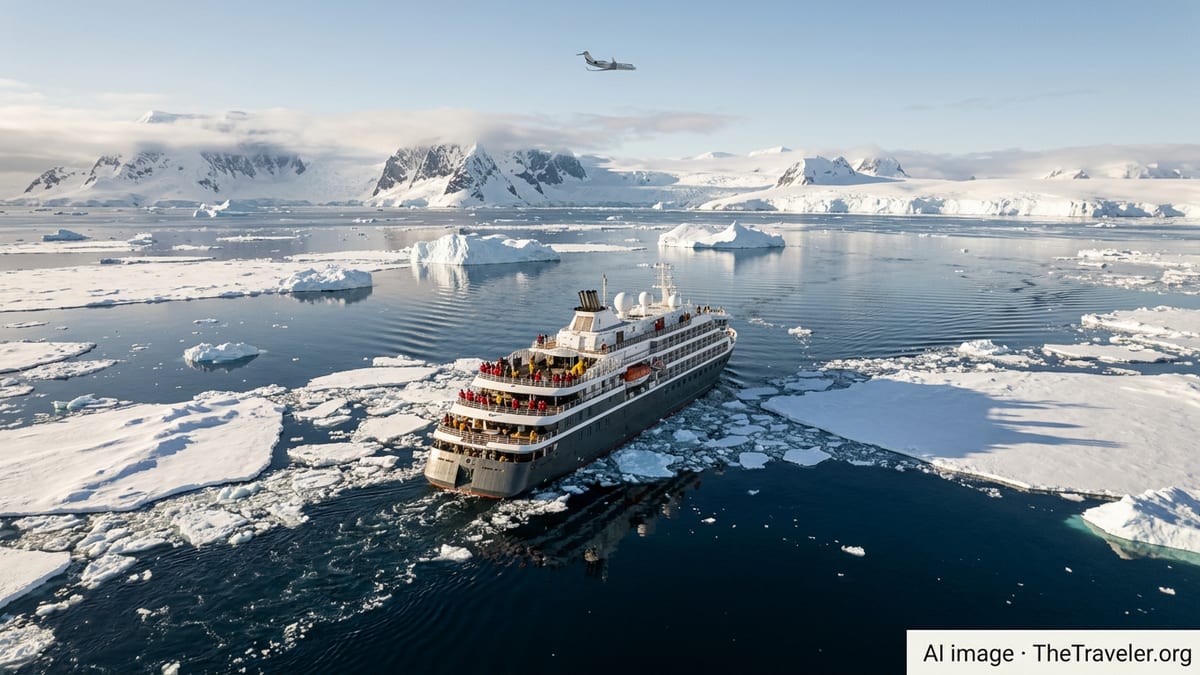
New Fly & Cruise Itineraries Target Time-Conscious Travelers
Publicly available scheduling information for Polar Latitudes shows a broadened lineup of Antarctic voyages in 2027–28, including programs promoted as fly and cruise options designed to shorten the journey to the White Continent. Rather than spending multiple days at sea in both directions, travelers fly one way over the Drake Passage and sail the other, combining the speed of air travel with the immersive experience of an expedition ship.
The fly and cruise concept is built around a roughly two-hour charter flight between southern South America and airstrips serving the Antarctic Peninsula region. By replacing at least one of the traditional sea crossings, the itineraries aim to reduce overall travel time while keeping the core elements of an expedition, such as Zodiac landings, wildlife viewing and ice navigation.
While precise departure dates and ship deployments continue to be refined for 2027–28, early brochures and trade-facing materials indicate Polar Latitudes is positioning these products for travelers who want to see Antarctica but are hesitant about the full roundtrip crossing of the Drake Passage, which can take around two days each way depending on conditions.
The company has already been operating classic sail-only voyages, including Antarctic Peninsula and Antarctic Circle routes, and the addition of dedicated fly and cruise options in 2027–28 reflects a strategy to broaden appeal across different comfort levels and vacation time windows.
Faster Access Across the Drake Passage
The Drake Passage is widely known as one of the main barriers to Antarctic tourism, both physically and psychologically. Conventional expedition cruises from Ushuaia typically require about four days in total on the open ocean for the roundtrip crossing. By flying one or both ways, Polar Latitudes’ new itineraries are marketed as a faster route that can reclaim several days for time-pressed travelers.
According to operator materials and industry comparisons, the air segment allows guests to bypass the most volatile stretch of the journey in a fraction of the time it would take by ship. For some itineraries, this can trim the overall trip length while preserving a similar number of days spent exploring the Antarctic Peninsula itself.
Expedition planners also point out that shorter ocean crossings can improve schedule reliability, as ships have more flexibility to work around storms and still keep to planned landings and scenic cruising. For guests, that can translate into more predictable itineraries and less concern about missing key experiences due to heavy seas in the Drake Passage.
The strategy mirrors a wider trend across the polar cruise sector, where several operators now offer variations of “fly the Drake” or hybrid programs that prioritize time in the destination over days in transit. Polar Latitudes’ 2027–28 offerings place the company firmly within this shift toward faster Antarctic access.
Seasonal Focus and Itinerary Variety in 2027–28
Brochure outlines and voyage calendars circulating in the trade suggest that Polar Latitudes’ 2027–28 fly and cruise lineup will be anchored around the core Antarctic travel window from November through March. This period spans the austral spring, high summer and early autumn, each offering distinct conditions for travelers.
Fly and cruise itineraries are expected to complement existing Peninsula and Antarctic Circle voyages, with options clustered around mid-season dates when weather and daylight hours typically favor flight operations. Some programs are structured as “micro” expeditions of around nine to ten days, while others extend to two weeks or more for travelers seeking deeper exploration south of the Antarctic Circle.
The company’s evolving fleet arrangements, including chartered vessels well under the 200-passenger mark, allow for multiple departures targeting different segments of the market. Shorter, fly-assisted voyages appeal to those with limited vacation time, while longer sail-heavy itineraries continue to attract travelers who view rough seas as part of the adventure.
This diversified approach gives Polar Latitudes a broader set of products to offer via travel advisors and specialist agencies, which play a central role in matching clients with departures suited to their time, budget and comfort with ocean conditions.
Rising Demand Fuels Growth in Antarctic Cruise Tourism
The expansion of Polar Latitudes’ 2027–28 program aligns with a broader upswing in interest in polar travel. Industry discussions and booking trends shared in traveler forums and trade coverage point to strong demand for small-ship expeditions, particularly among travelers seeking remote destinations that combine nature, science and adventure.
Fly and cruise products have become a key growth lever in this environment. By lowering the perceived barrier of the Drake Passage and compressing travel time, they open Antarctica to guests who might otherwise have ruled it out, including older travelers, those prone to seasickness and busy professionals constrained by vacation limits.
At the same time, the growth of Antarctic tourism has heightened scrutiny of environmental impacts and safety standards. Polar Latitudes is operating within a framework shaped by guidelines from industry bodies and national regulators, with limits on passenger numbers ashore and detailed protocols for wildlife interaction, biosecurity and waste management. Publicly available guidance emphasizes that adherence to these standards is central to maintaining access to Antarctic sites.
Analysts following the sector note that as more lines introduce new ships and routes, differentiation increasingly comes from itinerary design, expedition leadership and the balance between comfort and authenticity. The introduction of faster fly and cruise options for 2027–28 is part of Polar Latitudes’ response to that evolving competitive landscape.
Shifting Expectations for the Future of Polar Travel
The 2027–28 fly and cruise launches also reflect changing traveler expectations about how far-flung experiences should fit into broader lifestyles. Many prospective visitors now view Antarctica as a once-in-a-lifetime trip but also want it to align with limited annual leave, wellness considerations and a desire for smoother logistics.
By combining a shortened transit with the hallmarks of classic expedition cruising, Polar Latitudes’ new itineraries aim to reposition Antarctica as more accessible without losing the sense of remoteness that defines the destination. This balance is likely to influence how future products are structured, as operators consider additional air links, regional gateways and seasonal timing.
Looking ahead to the late 2020s, the company’s 2027–28 program signals confidence that demand for polar voyages will remain strong despite economic and environmental uncertainties. For ports in southern South America and gateway cities that support Antarctic charter flights, increased fly and cruise activity may also bring incremental tourism benefits in the form of overnight stays, local tours and aviation services.
For travelers weighing when and how to visit Earth’s southernmost continent, the emergence of faster hybrid itineraries provides another path to the ice, adding to a growing spectrum of options that range from long, sea-intensive expeditions to tightly focused fly and cruise journeys.