

More news on this day
Ponant Explorations is deepening the scientific focus of its Antarctica program in 2027, announcing that ocean researchers from Woods Hole Oceanographic Institution will join a new “Antarctica: Ocean (Re)Imagined” voyage departing Ushuaia, Argentina.
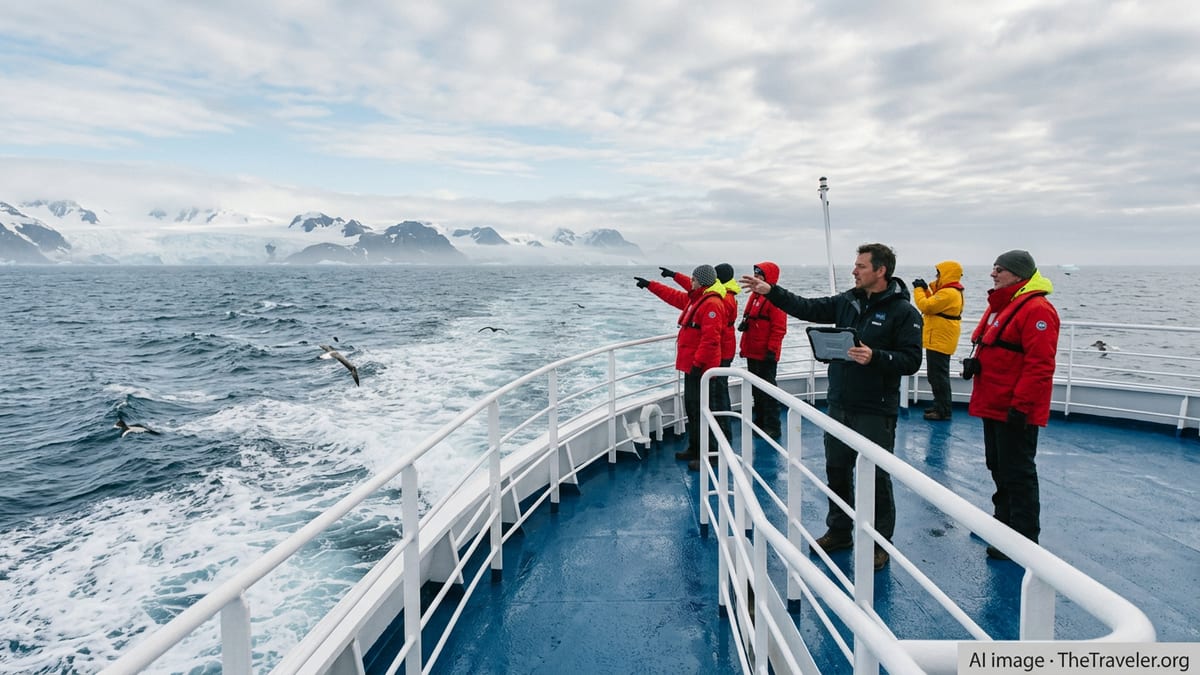
A December 2027 Departure From Ushuaia With Science at Its Core
Scheduled to sail on December 7, 2027, the 10-night “Antarctica: Ocean (Re)Imagined” itinerary will take guests from Ushuaia across the Drake Passage to the Antarctic Peninsula and back, with a distinct emphasis on understanding the Southern Ocean. Operated by Ponant Explorations aboard the small expedition ship Le Lyrial, the voyage is capped at around 200 guests, keeping the scale intentionally intimate for both shore operations and onboard discussions.
The line is positioning the sailing as an immersive learning experience rather than a standard sightseeing cruise. Travelers will still encounter the classic Antarctic highlights, including ice-choked bays, penguin colonies and sculpted glaciers, but the program layers daily scientific briefings, informal conversations and collaborative activities onto the traditional expedition framework.
Ponant’s 2027 departure joins a growing portfolio of polar voyages out of Ushuaia, the southern Argentine gateway city that has become a seasonal hub for expedition ships. By anchoring the program in an existing embarkation port and a familiar peninsula route, the company aims to make the enhanced educational elements the clear point of difference.
According to Ponant, the sailing is tailored for English-speaking travelers and bundled with pre- and post-cruise logistics, including a hotel night in Buenos Aires and charter flights to and from Ushuaia. That packaging underscores the line’s intent to attract a global audience of guests specifically motivated by science and conservation.
Woods Hole Partnership Brings Active Research to the Passenger Decks
The headline feature of Ocean (Re)Imagined is the presence of working ocean scientists from Woods Hole Oceanographic Institution, one of the world’s leading independent ocean research centers. The researchers will travel as part of Ponant Explorations’ onboard expert team, sharing current findings on ocean circulation, climate systems and polar ecosystems throughout the voyage.
Rather than relying solely on traditional lectures, the program is expected to emphasize conversation and participation. Guests will have opportunities to join small-group sessions on topics such as how the Antarctic Circumpolar Current influences global climate, how scientists use autonomous vehicles and moorings to observe the Southern Ocean, and what long-term datasets are revealing about sea ice, ocean warming and ecosystem shifts.
The collaboration gives guests a rare window into how field scientists work in one of the most remote and data-poor regions of the planet. Oceanographers and marine biologists are expected to contextualize what travelers are seeing each day, whether that is krill swarms drawing whales to a bay or the pattern of snow and blue ice on a coastal glacier face.
For Woods Hole, the voyage offers a platform to communicate complex polar science to a highly engaged audience. For Ponant, it reinforces a strategy of pairing luxury-leaning expedition hardware with partnerships that foreground environmental knowledge and responsible travel practices.
From Zodiac Landings to Floating Classroom: What Guests Can Expect
On the water, the itinerary stays faithful to the hallmarks of an Antarctic Peninsula expedition. Weather permitting, guests will go ashore or take Zodiac cruises in areas known for wildlife viewing and dramatic scenery, with expedition leaders adjusting plans daily around ice and conditions. Encounters with gentoo, chinstrap and Adélie penguins, along with humpback whales, seals and a wide range of seabirds, are all on the agenda.
Where the 2027 voyage diverges from a typical polar cruise is in how those experiences are framed. Shore briefings and recaps will be linked directly to the scientific themes running through the program, tying individual landings to broader questions about ocean health, carbon cycling and the resilience of polar species in a warming climate.
Onboard, public spaces will effectively double as a working seminar venue. Guests can expect a schedule of talks, panel-style conversations and informal drop-in sessions with the scientists, layered alongside standard expedition elements such as photography workshops and natural history presentations. The line is also highlighting opportunities for guests to engage with real datasets, simple observational protocols or demonstration instruments.
The educational emphasis does not preclude comfort. Le Lyrial is equipped with spacious lounges, a spa, fine dining and private balconies on many staterooms. Ponant is betting that a combination of relaxed onboard atmosphere and rigorous science content will appeal to travelers who want both intellectual depth and a high level of service.
Responsible Polar Tourism and a Growing Appetite for Science-Led Travel
The new program arrives as Antarctica continues to sit at the center of debates over how to balance visitor access with environmental protection. Industry-wide, expedition operators are under increasing scrutiny to demonstrate that landings are carefully managed, ship operations minimize local impact and guest experiences foster lasting stewardship rather than fleeting spectacle.
Ponant has repeatedly framed its polar portfolio as a test case for more responsible exploration, pointing to capped passenger numbers, low-impact landing protocols and investments in advanced ships, including its hybrid-powered icebreaker Le Commandant Charcot on other itineraries. Integrating active ocean scientists into the guest experience on Le Lyrial is being pitched as a natural extension of that approach.
The Woods Hole partnership also reflects a broader trend toward science-led travel. As awareness of climate change has grown, demand has risen for itineraries that move beyond conventional sightseeing into deeper understanding. Operators who can pair rigorous scientific insight with the logistical capacity to reach remote regions like the Antarctic Peninsula are increasingly well positioned in the expedition market.
For Ushuaia, the sailing underscores the city’s dual role as both a logistical hub and a symbolic gateway to climate frontiers. Departures such as Ocean (Re)Imagined keep the focus on the Southern Ocean not only as a place of austere beauty but as a living, dynamic system with global consequences.
Bookings Target Curious Travelers Ahead of the 2027 Season
With departure still more than a year away, Ponant Explorations is using a long lead time to reach guests who plan complex travel far in advance and are willing to commit early to distinctive itineraries. Travel advisors report that science-rich programs in Antarctica often attract a mix of repeat polar travelers and first-time visitors seeking an experience that feels purposeful as well as spectacular.
Pricing details for the Ocean (Re)Imagined voyage position it in line with Ponant’s broader premium expedition portfolio, reflecting both the cost of operating in Antarctica and the added value of onboard researchers. Early marketing materials emphasize the limited capacity and bundled logistics from Buenos Aires as key selling points for long-haul travelers.
As the 2027 southern summer approaches, the itinerary will face competition from an expanding roster of operators in the region, including larger ships and fly-in programs that skip the Drake Passage. Ponant’s wager is that spending those extra sea days in the company of ocean scientists, interpreting the very waters the ship is crossing, will resonate with a growing cohort of travelers eager to understand as much as they explore.
If successful, the partnership could signal a blueprint for future collaborations between research institutions and expedition lines, strengthening the role of polar tourism as both an economic driver and a conduit for ocean literacy.