

More news on this day
Port Canaveral has reached a major construction milestone on a new multilevel parking garage that will add roughly 3,500 spaces to one of the United States’ busiest cruise ports, underscoring both the strength of Florida’s cruise business and the infrastructure race to keep up with surging passenger demand.
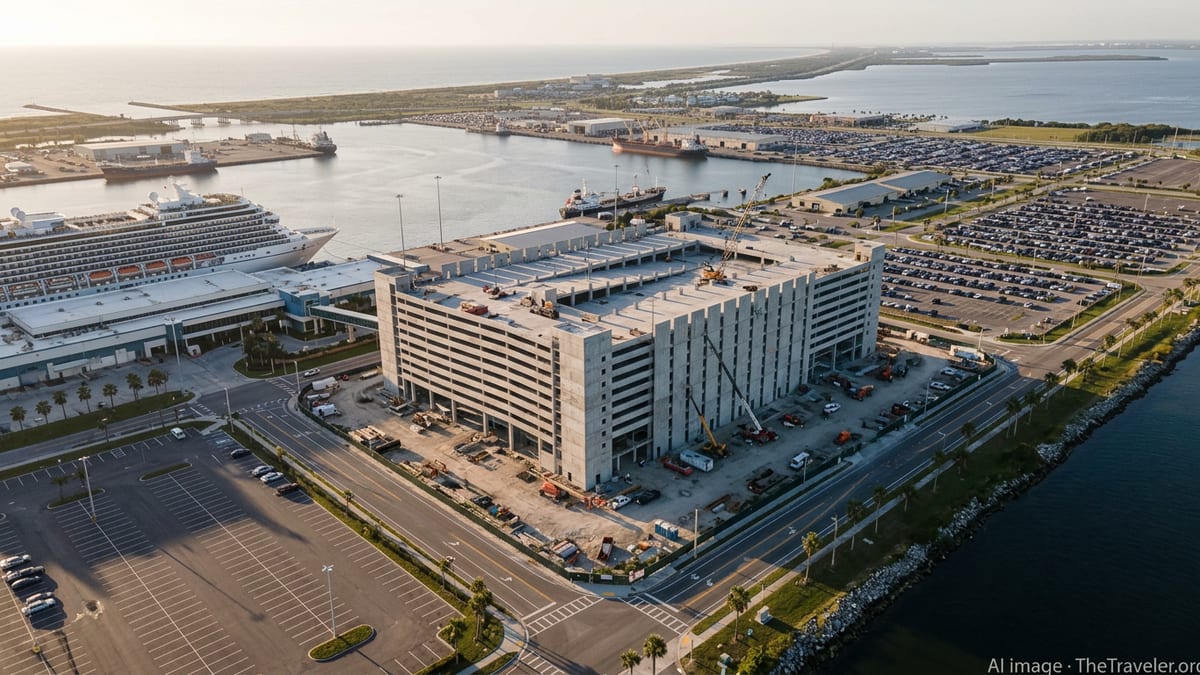
Vertical Construction Begins on 13-Story Structure
Port officials confirmed that work on the new Cruise Terminal 6 East garage has moved into a new phase with the start of vertical construction. A massive pre-cast concrete wall section, weighing more than 36 tons and measuring about 600 square feet, was recently lifted into place, a highly visible sign that the long-planned structure is taking shape on the terminal’s waterfront footprint.
The garage is designed as a 13-story facility serving Cruise Terminals 5 and 6 on the north side of the port, where several major lines operate. Once complete, it will provide approximately 3,500 to 3,700 parking spaces, depending on final striping and configuration, making it one of the largest single parking structures in the port’s history.
The project is budgeted at about 93 million dollars and is being delivered using pre-cast components to speed construction and reduce disruption to ongoing cruise operations. Contractors say the vertical build will now advance level by level in a sequence carefully timed around vessel calls and peak passenger days.
Port Canaveral expects the garage to open to the public in fall 2026, aligning with the wider cruise calendar and giving the facility its first test during the 2026–27 winter high season.
Capacity Boost for a Leading Drive-to Cruise Port
The new garage is a central piece of Port Canaveral’s strategy to handle a steady rise in drive-in cruise passengers from across Florida and the broader Southeast. With the additional 3,500 or so spaces, total parking capacity across the port’s garages and surface lots is projected to reach close to 17,500 spaces, a significant increase for a port that markets itself as one of the country’s premier drive-to cruise gateways.
Parking pressure has grown as larger ships and new deployments have joined the Port Canaveral lineup in recent years. Carnival Cruise Line, Royal Caribbean International, Norwegian Cruise Line and Princess Cruises all operate from the port, with itineraries that draw both regional drive-in guests and fly-in travelers who rent cars before boarding.
Port executives have repeatedly emphasized that keeping parking within walking distance of the terminals is key to maintaining the port’s competitive advantage. The new Cruise Terminal 6 East facility is being integrated directly into passenger drop-off, pick-up and luggage-handling zones to shorten walking distances and streamline embarkation and debarkation.
Local tourism and hospitality businesses say the added capacity should help smooth weekend traffic patterns on nearby causeways and arterial roads, where cruise-day congestion has become more common as ship sizes and passenger counts have climbed.
“Building While Sailing” to Maintain Cruise Operations
The milestone comes in the middle of what port officials have described as a “building while sailing” period, during which major capital projects are being completed without suspending or significantly curtailing cruise schedules. Construction is taking place alongside record or near-record passenger volumes, demanding careful logistical planning.
To make room for the new structure, an older, smaller parking facility in the Cruise Terminal 6 East area was demolished, and temporary arrangements were put in place to ensure sufficient spaces for sailings during the build. Traffic patterns have been adjusted around the work zone, with signage and traffic-management personnel directing vehicles through modified entry and exit points.
The use of pre-cast elements is intended to reduce on-site casting and curing time, limiting the most disruptive construction activities to defined windows between major ship turnarounds. Contractors are coordinating closely with port operations teams to schedule heavy lifts and crane work away from peak passenger movements.
Despite the scale of the project, port officials say cruise guests should experience only minor, temporary detours or slightly longer walks during the most active construction periods, with the long-term payoff being more capacity and more efficient vehicle flows.
Modern Amenities and Evolving Parking Technology
Beyond raw capacity, the new garage is being designed to accommodate updated parking technology and evolving traveler expectations. Port Canaveral has already shifted its official parking to a cashless, pay-on-entry system, and the new structure will extend that approach with multiple entry lanes, electronic payment options and automated access control to move vehicles through more quickly.
The garage will feature a mix of standard, oversized and accessible spaces, along with structured circulation aimed at reducing bottlenecks at elevators and stairwells. Port planners are also factoring in the growth of rideshare, shuttle and private transfer services by dedicating curb space and lanes for ground transportation providers to reduce conflicts with self-park guests.
Lighting, wayfinding and security systems are being upgraded in line with recent improvements elsewhere at the port. While final design details have not been fully disclosed, the new facility is expected to incorporate extensive camera coverage and continuous patrols, reflecting cruise guests’ heightened focus on vehicle safety during multi-day voyages.
Environmental and resilience features, including stormwater management and design considerations for severe weather, are being integrated into the structure as part of broader port-wide efforts to harden critical infrastructure against coastal conditions.
Economic Signal for Florida’s Cruise and Space Coast Region
The investment in expanded parking marks another vote of confidence in Central Florida’s cruise industry and the broader Space Coast tourism economy. Port Canaveral has emerged as a key gateway for families pairing cruise vacations with theme park visits in Orlando, as well as for travelers adding beach and space-related attractions in Brevard County to their itineraries.
Port leaders frame the new garage as part of a multi-year capital improvement program that includes terminal upgrades, roadway enhancements and additional passenger amenities. Together, these projects are aimed at sustaining the port’s role as a homeport for some of the world’s largest cruise ships and a major embarkation point for North American travelers.
Local officials and business groups point to the construction milestone as evidence that the port is keeping pace with demand rather than reacting after parking and traffic issues reach crisis levels. By building capacity ahead of future ship deployments and itinerary expansions, Port Canaveral is positioning itself to capture additional sailings and passenger volumes in the second half of the decade.
When the 3,500-space garage opens, it is expected to immediately relieve pressure on nearby facilities, provide more flexibility for cruise lines and ground operators, and reinforce the port’s status as a convenient, drive-friendly embarkation hub on Florida’s Atlantic coast.