

More news on this day
The Port of Palm Beach in Riviera Beach, Florida, has unveiled a sweeping new canopy connecting its cruise parking areas to the terminal, a passenger-focused investment designed to shield cruisers from intense sun and sudden downpours while signaling the port’s broader ambitions in the US cruise market.
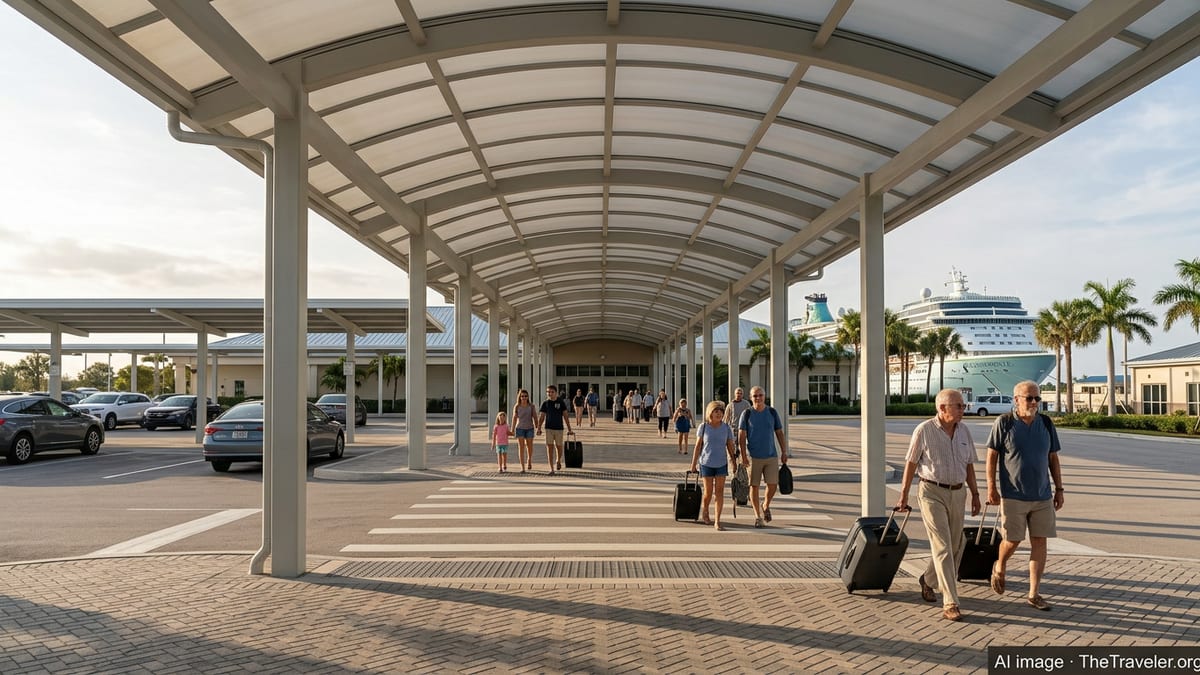
New Covered Walkway Transforms Embarkation Experience
Port officials confirmed this week that construction of the cruise terminal canopy has been completed, following months of phased installation over the primary pedestrian routes between parking and the terminal building. The structure, visible from the main approach roads, now offers continuous cover for guests arriving and departing on cruise voyages.
According to recent port communications, the project was conceived to give cruise passengers refuge from Florida’s frequently harsh conditions, reducing exposure to both high UV levels and brief but intense rain showers common along the state’s southeast coast. During peak embarkation and disembarkation periods, when thousands of guests can be moving through the port in a matter of hours, the shaded walkway is expected to ease discomfort and reduce weather-related delays.
The canopy spans the key paths connecting self-parking areas, drop-off points and the entrance to the terminal that serves Margaritaville at Sea Paradise, the port’s year-round homeported ship. Previously, passengers often had to navigate portions of the route in full sun or in the open during storms, an inconvenience that frequently surfaced in traveler feedback about the otherwise compact and easy-to-access facility.
By integrating the canopy into broader terminal and parking upgrades, the Port of Palm Beach is positioning itself as a more guest-centric alternative to some of Florida’s larger, more congested cruise hubs, particularly for short-break itineraries to the Bahamas and nearby destinations.
Designed for Florida’s Sun, Heat and Sudden Storms
Engineered specifically for South Florida’s coastal climate, the canopy structure combines durable materials with a light, airy aesthetic intended to maintain visibility and airflow. Port planners prioritized shade and drainage, aiming to keep walking surfaces cooler and drier even during mid-afternoon heat or passing thunderstorms.
The design incorporates high-clearance framing to accommodate buses, shuttles and luggage carts moving beneath parts of the structure, helping port operations continue smoothly while passengers walk under cover. Lighting is integrated along key sections so that early-morning arrivals and evening departures retain a sense of safety and wayfinding clarity.
Port engineers have highlighted that the canopy was coordinated with parallel improvements to cruise parking, including a shift from valet to self-parking and updated traffic patterns near the terminal entrance. The goal is to give passengers a more predictable curb-to-ship journey, with clearer pedestrian routes and fewer choke points where guests previously clustered in exposed areas waiting for rides or queuing for security.
In addition, the project dovetails with ongoing modernization of elevators in the cruise terminal complex, signaling that the port is tackling comfort, accessibility and weather protection as part of a single, long-term vision for the passenger experience.
Boost for Margaritaville at Sea and Future Boutique Calls
The timing of the canopy’s debut is significant for Margaritaville at Sea Paradise, which operates near-continuous short sailings between the Port of Palm Beach and the Bahamas and Florida ports. With frequent turnarounds and a high percentage of drive-market guests, even modest improvements to embarkation comfort can translate quickly into stronger satisfaction scores and repeat business.
The port is also preparing to welcome an expanded mix of luxury and boutique cruise ships for seasonal and one-off itineraries in the coming years. Industry reports have noted plans for calls and turnarounds by smaller upmarket vessels on Caribbean and Panama Canal routes, a segment in which port infrastructure and guest experience are increasingly scrutinized by both cruise lines and well-traveled passengers.
By upgrading the landside environment now, Palm Beach officials aim to showcase the port as a nimble, passenger-friendly option capable of handling both high-frequency short cruises and more complex turnaround operations. The canopy, while a relatively straightforward piece of infrastructure, becomes a visible symbol of that strategy every time a new ship’s guests step ashore.
For cruise operators seeking alternatives to the busiest Florida gateways, such investments can help differentiate Palm Beach as a port that combines ease of access with a resort-adjacent setting and steadily improving amenities.
Raising the Bar in a Competitive Florida Cruise Corridor
The unveiling of the canopy comes as Florida’s cruise ports continue to compete aggressively on passenger comfort and operational efficiency. Larger hubs such as PortMiami and Port Everglades have invested heavily in new terminals, parking garages and passenger bridges to streamline the movement of millions of cruisers each year. Against that backdrop, the Port of Palm Beach is leaning into targeted, experience-focused upgrades to remain competitive on a smaller scale.
With passenger volumes at Palm Beach far below those of the state’s mega-ports, port leaders have emphasized convenience, shorter walking distances and a less hectic atmosphere as core strengths. The canopy amplifies that message by making the port’s compact footprint more comfortable in real-world conditions, particularly for families with young children, older travelers and guests managing luggage over short distances.
Local tourism stakeholders view the enhancement as aligning with broader regional efforts to elevate Riviera Beach and the surrounding Palm Beach County coastline as an accessible getaway that can capture more of the booming cruise demand flowing into South Florida. As cruise lines map itineraries years in advance, the presence of modern, weather-ready facilities is increasingly seen as a prerequisite for securing new deployments.
While the canopy itself may look like a simple architectural addition, its impact will be closely watched by port planners and cruise partners alike as they assess guest feedback from the coming peak travel seasons and evaluate the next phase of improvements for one of Florida’s most compact but strategically located cruise gateways.