

More news on this day
Port Stephens on the New South Wales coast is entering 2025 with a wave of strategic investments in tourism and infrastructure, as Port Stephens Council and regional partners fast-track projects that are reshaping access, experiences and visitor capacity across this increasingly in-demand destination.
Get the latest news straight to your inbox!
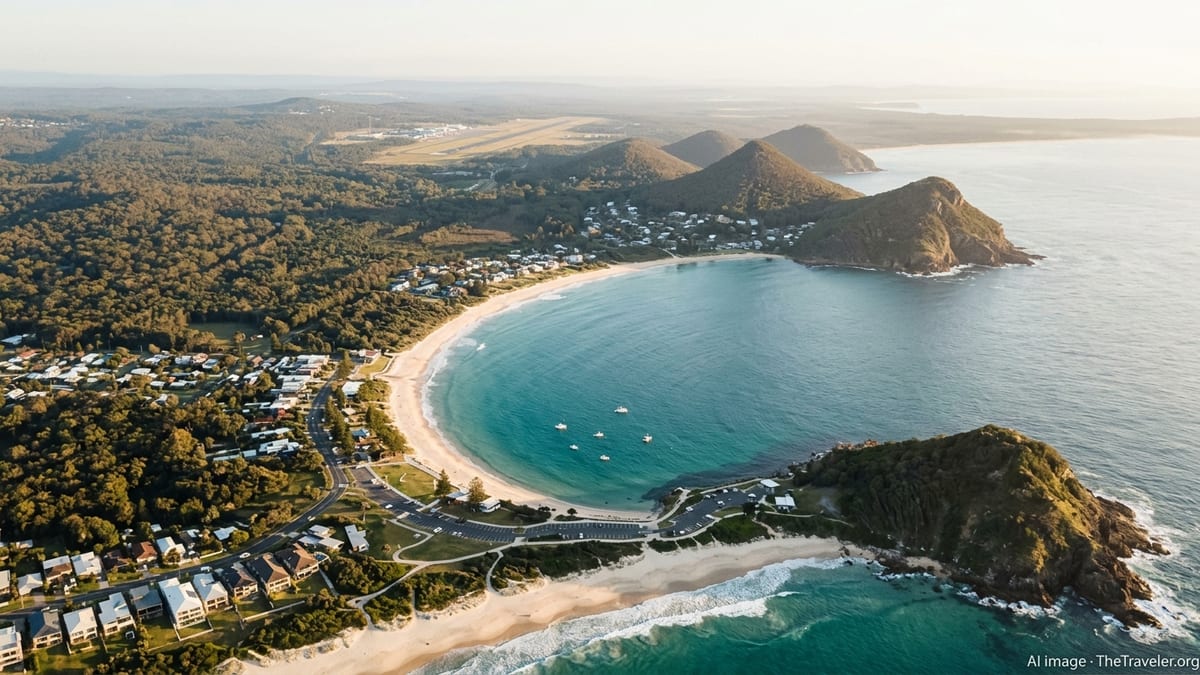
Airport Expansion Turns Port Stephens into a Global Gateway
Port Stephens Council’s co-ownership of Newcastle Airport is proving central to the region’s tourism ambitions. A quarter-billion-dollar expansion of the terminal and runway, completed in 2025, has transformed the airport into a modern international gateway for the Hunter region and Port Stephens. Publicly available information from the airport and government agencies indicates the project is forecast to generate around $12.7 billion in economic activity over the next two decades and support thousands of ongoing jobs, much of it linked to tourism and trade.
The international terminal, officially opened in late 2025, significantly increases capacity for larger aircraft and new routes. Reports indicate that international services are expected to add hundreds of thousands of additional visitors over the coming years, placing Port Stephens within easier reach of long-haul markets in Asia and beyond. For holidaymakers, this means shorter connections from major hubs to the region’s beaches, coastal villages and national parks.
For Port Stephens Council, the airport upgrade is framed as a catalyst rather than a standalone project. Council documents and regional briefings point to the airport as a cornerstone of a wider visitor economy strategy, with improved air access underpinning investment in accommodation, foreshore renewal and conference facilities. The result is a more seamless arrival experience that positions Port Stephens as a first-stop destination rather than a side trip from Sydney.
Nature-Based Attractions Receive Flagship Upgrades
Port Stephens has long traded on its natural appeal, but recent investments are elevating its coastal landscapes into headline tourism experiences. One of the most prominent is the Tomaree Coastal Walk, a multi-day track threading 27 kilometres through Tomaree National Park between Tomaree Head and Birubi Point. The state-led project, completed with a budget of around 6.7 million dollars, has delivered new lookouts, boardwalks, upgraded access and interpretive elements that highlight Worimi cultural heritage and the area’s volcanic landscapes.
The walk connects existing favourites such as the Tomaree Head summit with quieter beaches and headlands, encouraging visitors to stay longer and explore beyond a single lookout or bay. Reports indicate that Tomaree Head alone already attracts hundreds of thousands of people annually; the continuous coastal route is designed to spread visitation across the park, extend stays into shoulder seasons and support local operators offering guided walks, accommodation and transport.
Along the broader coastline, council and state-funded improvements to car parks, paths and viewing areas are gradually lifting the standard of coastal infrastructure. Initiatives along the Birubi Beach and Stockton sand dunes precinct aim to balance visitor access with the protection of Worimi conservation lands, reinforcing Port Stephens as a leading destination for both soft adventure and cultural tourism.
Smarter Local Infrastructure Supports Visitor Growth
Complementing major regional assets, Port Stephens Council is advancing a suite of local infrastructure upgrades designed to manage growing visitor numbers while improving quality of life for residents. Budget and planning documents for 2024 to 2025 highlight a focus on community parks, foreshore spaces and local road and parking projects in key bayside villages that double as tourism hubs.
Proposals and trial programs have explored the rollout of smart parking technologies in high-pressure locations such as Little Beach, Fingal Bay and Birubi. These systems are intended to reduce congestion, improve turnover of beachfront spaces and provide clearer information for visitors arriving by car. Council material also points to ongoing investment in foreshore paths, shade, amenities and play spaces, reinforcing beaches and harbourfronts as welcoming public domains that can handle peak holiday crowds.
In parallel, the council’s capital works planning places emphasis on unlocking new commercial opportunities through selective land sales and partnerships, with a stated intention to attract accommodation and mixed-use investment in appropriate centres. This combination of hard infrastructure and land-use planning is central to the council’s vision of Port Stephens as a year-round destination that can continue to grow without overwhelming its coastal villages.
Agritourism and Events Broaden the Visitor Economy
While Port Stephens is best known for its bays and surf beaches, council initiatives over recent years show a deliberate effort to diversify the visitor economy beyond the shoreline. Agritourism has been identified by Port Stephens Council as a key growth sector, with a dedicated information hub, guidance for landholders and alignment with national strategies developed by Australian Regional Tourism. Farmers and rural landowners are being encouraged to convert sheds and cottages into visitor accommodation, host paddock-to-plate experiences and offer nature-based activities.
This policy setting is designed to disperse visitors into hinterland areas, create new revenue streams for primary producers and lengthen stays by pairing coastal holidays with rural escapes. Publicly available resources highlight that council is offering advisory support to help operators navigate planning rules, showcasing agritourism as an accessible pathway for small enterprises to benefit from rising visitation.
Port Stephens is also strengthening its credentials as a conference and business events destination. Industry reports and destination marketing material describe the area as a “destination conference” location, underpinned by a growing stock of resorts, boutique accommodation and coastal venues. With improved air access through Newcastle Airport and enhanced digital infrastructure, the region is increasingly targeting national association meetings and corporate retreats that blend business sessions with outdoor recreation.
Data Points to Rising Visitation Ahead of 2025
Recent statistics from Tourism Research Australia, highlighted by state tourism agency coverage, show that Port Stephens welcomed around 800,000 domestic overnight visitors in the year to September 2024, an increase on the previous year. This trend suggests that the region’s combination of infrastructure investment, experience development and marketing is already gaining traction with Australian travellers, even before the full benefits of the international terminal and new air routes are realised.
Destination analysis notes that Newcastle Airport’s expanded international capacity, including new connections into major Asian hubs, is expected to deliver a further surge in visitors from late 2025 onward. For Port Stephens, situated within easy driving distance of the airport, this places the region in a strong position to capture a share of inbound leisure and visiting-friends-and-relatives travel, particularly from markets seeking coastal nature, wildlife experiences and short-break escapes outside capital cities.
As 2025 approaches, Port Stephens Council’s coordinated approach across airport governance, coastal infrastructure, agritourism support and event development is positioning the region as a standout Australian hotspot. With major projects now completed or in advanced stages and visitation already trending upwards, Port Stephens is emerging as a model for how regional councils can leverage infrastructure and natural assets to compete in a crowded national tourism landscape.