

More news on this day
Port Tampa Bay is preparing for the busiest cruise month in its history this March, as a surge in Caribbean-bound departures pushes ship calls, passenger volumes and tourism dollars to record levels across Florida’s Gulf Coast.
Get the latest news straight to your inbox!
Record March Schedule Caps Years of Cruise Growth
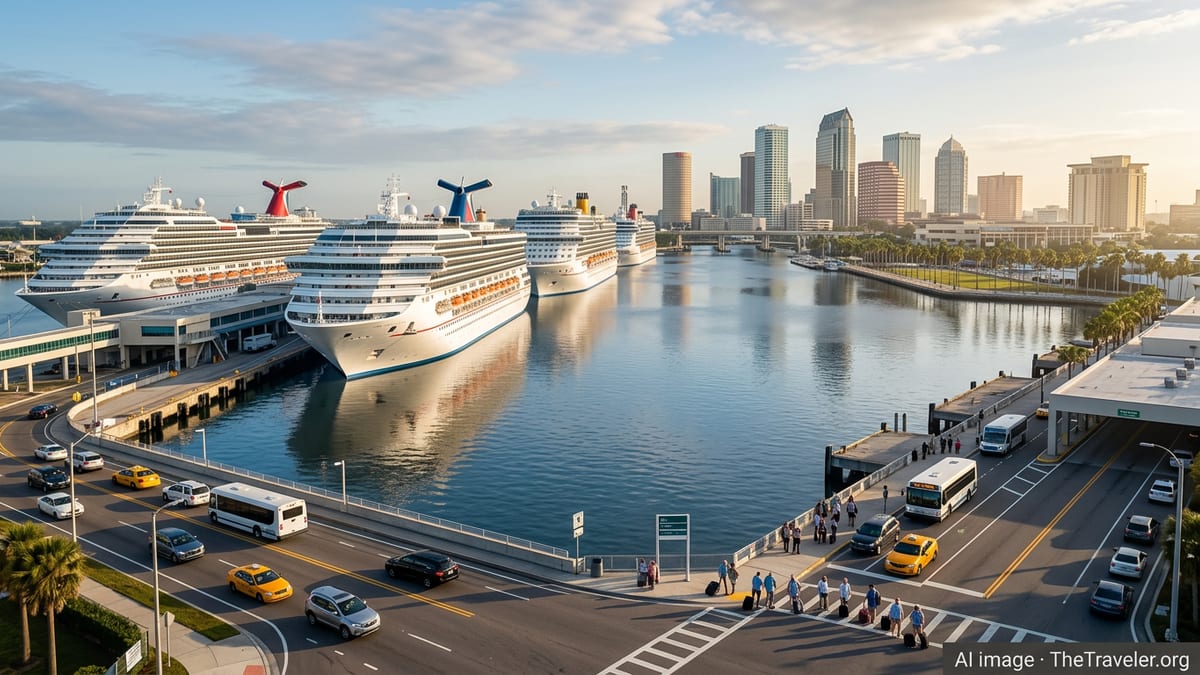
Port officials confirmed that 51 cruise ship calls are scheduled at Port Tampa Bay in March 2026, the highest monthly total the expanding Gulf Coast homeport has ever handled. The record reflects a sustained rebound and expansion in cruising, driven by spring break demand, expanded itineraries and Florida’s entrenched role at the center of the global cruise industry.
The packed calendar underscores how far Tampa’s cruise business has come since the pandemic-era shutdown. The port handled approximately 1.66 million cruise passengers in 2025, an all-time high, and is tracking toward around 1.8 million passengers in 2026 if current booking trends hold, according to port projections. March is expected to lead that growth, concentrating tens of thousands of embarkations and debarkations into a single, high-intensity month.
Port Tampa Bay is home to five major cruise brands, including Carnival Cruise Line, Royal Caribbean International, Norwegian Cruise Line, Celebrity Cruises and Margaritaville at Sea, which collectively offer a spectrum of short getaways and longer Caribbean itineraries. The port has also attracted new luxury and premium calls, positioning Tampa as a complementary alternative to Florida’s larger Atlantic-side hubs.
Port executives say the March milestone is both a symbolic and operational benchmark. With more than four dozen arrivals and departures compressed into 31 days, the month serves as a test of terminal capacity, passenger processing, staffing and ground transportation, even as it delivers a substantial economic windfall to the wider region.
Caribbean Demand Drives New Ships and Itineraries
The record-setting March is being propelled largely by the Caribbean cruise market, which continues to power Florida’s dominance in the sector. From Tampa, ships will fan out across the Western Caribbean to popular ports such as Cozumel, Grand Cayman and Roatán, as well as Mexico’s Yucatán Peninsula and select Eastern Caribbean islands on longer itineraries.
Cruise lines are leaning into Tampa’s geographic advantages for Caribbean routes, highlighting its drive-to market, proximity to Orlando and appeal for travelers across the Southeast. Affordable four- and five-night sailings aimed at families and first-time cruisers sit alongside seven-night and longer voyages targeting repeat guests looking for varied port calls and upgraded onboard experiences.
New entrants are also helping fill the March schedule. Luxury and upper-premium brands have begun to test Tampa as a seasonal gateway for Caribbean and repositioning voyages, adding higher-spend passengers into the mix. A growing presence from Margaritaville at Sea, which has expanded its fleet and Gulf Coast offerings, further broadens the port’s Caribbean-focused portfolio.
Industry-wide forecasts point to 2026 as another record year for global cruising, and Tampa’s March calendar reflects that trajectory. Analysts say strong Caribbean demand combined with new ship deliveries and redeployments into Florida homeports will keep pressure on berth space, triggering more creative scheduling and occasional use of cargo berths for cruise operations during peak days.
Economic Engine for Tampa Bay and Florida
The surge in cruise traffic is poised to ripple through the Tampa Bay economy during March, magnifying the impact of what is already a major regional economic engine. Port Tampa Bay estimates that annual cruise activity generates more than $648 million in economic impact, supporting jobs across hospitality, transportation, retail and port services.
Each ship call brings a wave of spending from both embarking and disembarking passengers, many of whom extend their stay in the area before or after sailing. Local hotels anticipate strong occupancy, particularly in downtown Tampa, Ybor City and nearby beach communities, as cruise travelers add nights to visit attractions such as Busch Gardens, the Riverwalk and area beaches.
Small businesses stand to benefit as well. Restaurants, bars, tour operators and rideshare drivers typically see noticeable spikes on heavy embarkation days, especially on weekends when multiple ships are in port simultaneously. For March 2026, port planners expect several three-ship days, compressing passenger flows and associated spending into short windows that can be highly lucrative for nearby businesses.
At the state level, Florida policymakers view ports such as Tampa as critical nodes in a cruise network that includes PortMiami, Port Canaveral and Port Everglades. Together, these gateways help anchor Florida’s tourism-driven tax base and sustain a broad ecosystem of maritime, construction and service-sector jobs tied directly and indirectly to cruising.
Infrastructure, Traffic and Capacity Under the Spotlight
The record March will also test Tampa’s infrastructure and operational resilience. While the port has demonstrated flexibility by using cargo docks as temporary cruise facilities during recent high-volume days, the run of 51 ship calls is expected to stress everything from terminal check-in space to baggage handling and security screening.
Ground transportation remains a particular concern. As other Florida cruise ports have learned, heavy weekend ship days can trigger significant traffic congestion on access roads, slowdowns at parking facilities and strains on taxi and rideshare availability. Tampa officials say they are coordinating closely with city agencies, law enforcement and transportation providers to smooth traffic flows, encourage early arrivals and promote off-site parking and shuttle options where available.
Longer term, Port Tampa Bay is planning hundreds of millions of dollars in capital investments over the next several years, as outlined in statewide seaport development plans. Those projects include terminal upgrades, berth improvements and roadway enhancements intended to create more capacity for both cargo and cruise operations as ship sizes and passenger volumes continue to climb.
Observers note that Tampa’s experience in March could influence the pace and scope of future investments. A successful, largely disruption-free record month would bolster the port’s case that it can handle sustained growth with targeted upgrades. Conversely, visible bottlenecks or passenger frustration could sharpen calls for accelerated spending on cruise-specific infrastructure and better integration with regional transit.
Competitive Florida Cruise Market Intensifies
Port Tampa Bay’s record March unfolds against a backdrop of intensifying competition among Florida cruise ports. On the Atlantic coast, PortMiami, Port Canaveral and Port Everglades continue to set their own passenger and ship-call records, supported by some of the world’s largest cruise terminals and fleets of next-generation megaships.
Rather than directly matching those facilities, Tampa has carved out a role as a flexible, mid-size homeport with strong access to the Western Caribbean and a loyal drive-in customer base from across the Southeast and Midwest. Its downtown-adjacent location and connection to Tampa’s broader tourism offerings are increasingly being marketed as differentiators in a crowded field.
Statewide planning documents highlight Port Tampa Bay as one of five Florida ports expected to handle more than 800,000 cruise passengers annually beginning in 2026, placing it firmly in the tier of significant North American homeports. That status brings added visibility with cruise executives as they plan future deployments, as well as heightened expectations from local stakeholders about customer experience and economic returns.
For now, port leaders are focused on navigating what is shaping up to be a defining month. If March’s unprecedented wave of Caribbean-bound sailings proceeds smoothly, it could further cement Tampa’s reputation as a rising cruise gateway and help secure additional ship deployments that extend the benefits of this year’s surge well into the next decade.