

More news on this day
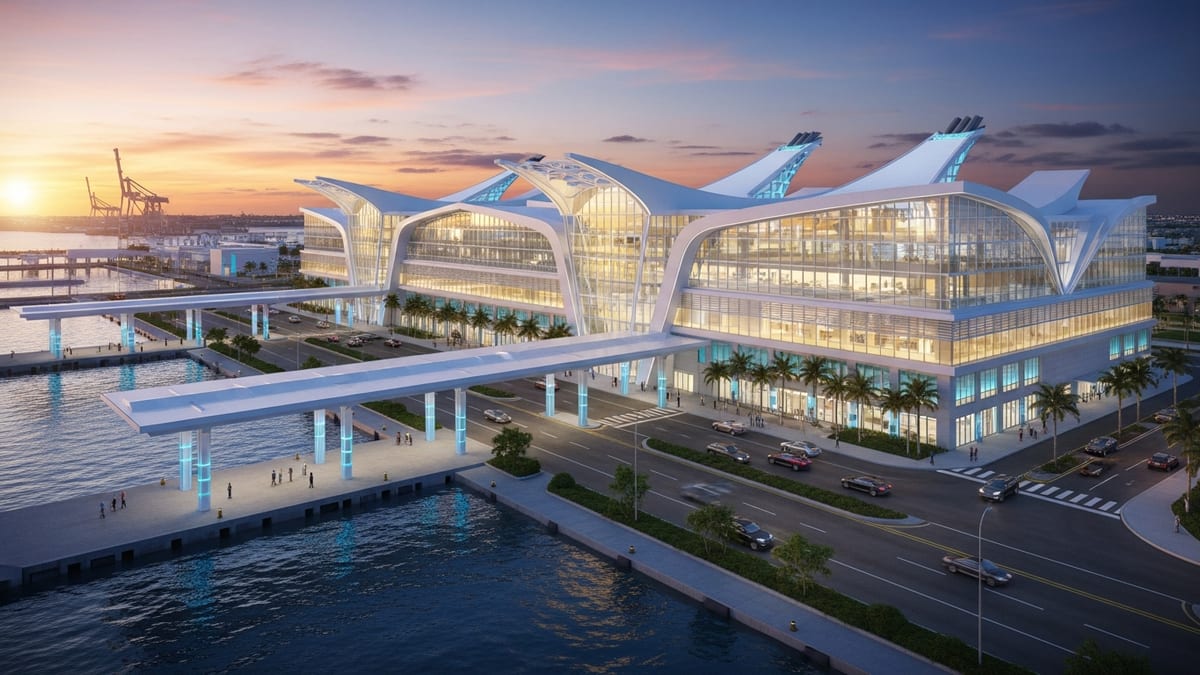
Port Tampa Bay is advancing plans for a new cruise terminal in downtown Tampa, positioning the Gulf Coast hub to handle record passenger volumes and solidify Florida’s dominance in the global cruise market.
Get the latest news straight to your inbox!
Record Passenger Growth Pushes Port to Expand
Recent coverage indicates that Port Tampa Bay handled about 1.66 million cruise passengers in 2025 and is on track to approach 1.8 million in 2026, with ship calls also hitting new highs. Publicly available information shows that the port’s three existing facilities in the Channel District are now operating close to capacity, prompting the move toward a fourth terminal.
Reports indicate that the constrained terminal capacity has already led to some cruise itineraries being turned away. Industry observers note that this situation is unusual for a port of Tampa’s size and reflects the pace at which cruise demand has rebounded and grown across Florida.
Published coverage of the port’s long-term planning, including its Vision 2030 framework, highlights cruising as a central pillar of future development. The new terminal is being framed as a core element of that strategy, intended to keep Tampa competitive with other fast-expanding Florida ports.
The latest reporting describes the expansion as a response not only to traditional seven-night Caribbean voyages, but also to a growing mix of shorter getaways and specialty cruises homeporting from Tampa. This diversity of itineraries is further increasing pressure on limited berthing space.
Details of the Planned Fourth Cruise Terminal
According to recent trade and consumer travel reports, Port Tampa Bay’s planned fourth cruise terminal would be located within the existing cruise and entertainment district, adding a new berth and modern terminal building designed for today’s larger vessels. While the exact construction timeline has not yet been finalized, design work is described as being in its early stages and expected to progress over the next year.
Publicly available information suggests the new facility could accommodate up to 200 additional ship calls annually and more than 1 million extra passengers. That would lift total annual throughput above 2.5 million travelers, putting Tampa firmly among the busiest homeports in the United States.
Reports also note that the project is being closely coordinated with broader harbor improvements and navigation upgrades that are receiving separate federal support. Those efforts are expected to help ensure that both cargo and cruise traffic can grow without creating bottlenecks in the channel.
Although key details such as final cost estimates and completion dates have not been publicly confirmed, the concept outlined so far aligns with statewide planning documents that call for Florida seaports to add cruise capacity over the next several years.
Infrastructure Upgrades, Shore Power and Passenger Flow
Coverage of the new terminal proposal indicates that Port Tampa Bay is treating the project as an opportunity to upgrade the passenger experience as well as capacity. Early descriptions point to a terminal with expanded check-in areas, streamlined security, and enhanced baggage handling intended to move guests through the building more efficiently.
Reports further suggest that the port is evaluating modern features such as shore power connections, allowing ships to plug into the local electrical grid while docked instead of running their engines. Industry observers say this would mirror upgrades already underway at other major cruise ports and could reduce both emissions and local noise.
The planned terminal is also being discussed in the context of downtown transportation patterns. Publicly available planning materials emphasize improved traffic circulation, with an eye toward minimizing congestion in the Channel District on days when multiple ships are in port. Enhanced signage, revised drop-off zones, and better integration with existing parking facilities are among the options being studied.
Regional planning documents describe these cruise-focused changes as part of a larger effort to modernize Tampa’s waterfront infrastructure, from channel dredging to road connections, while keeping pace with the evolving scale of today’s cruise ships.
Economic Impact for Tampa and Florida’s Cruise Sector
Analysts note that a fourth cruise terminal at Port Tampa Bay would carry significant economic implications for the wider region. Cruise visitors typically spend on hotels, dining, entertainment and transportation before and after their sailings, and reports indicate that the new terminal could substantially increase those pre- and post-cruise stays.
Travel industry coverage suggests that additional berths will also allow more cruise brands and ship classes to homeport in Tampa, broadening consumer choice and spreading economic benefits to a wider mix of local businesses. This could range from independent tour operators and restaurants to retail shops in the nearby Channel District and downtown core.
At the state level, the project is being viewed within a broader competitive landscape that includes PortMiami, Port Canaveral and Port Everglades, all of which are pursuing expansions or upgrades. Florida remains the world’s leading cruise region, and maintaining that position requires continuous investment in terminals, access infrastructure and environmental improvements.
Observers point out that the proposed Tampa expansion arrives as other cruise port projects in the wider Tampa Bay area face headwinds. Recent legislative actions and local debates have cast uncertainty on some alternate harbor locations, leaving Port Tampa Bay as a primary focus for near-term cruise growth in the region.
What Cruise Travelers Can Expect in the Coming Years
For travelers planning to sail from Tampa, reports indicate that existing cruise operations at Terminals 2, 3 and 6 will continue as normal while planning and early design work for the new facility move forward. Any major construction impacts are expected to be communicated in advance through cruise lines and port information channels once timelines are firmed up.
Industry commentary suggests that in the medium term, additional capacity could translate into more itinerary options, including longer voyages and deployments by newer or larger ships that previously could not be accommodated as easily. This may further elevate Tampa’s status as a convenient homeport for travelers from across Florida and the broader Southeast.
Public discussions around the project indicate that local leaders and planners are also weighing how the new terminal will interact with nearby attractions and waterfront amenities. The Channel District and adjoining neighborhoods have seen steady investment in hotels, entertainment venues and cultural sites, and the next phase of cruise growth is expected to build on that momentum.
With plans now moving into sharper focus, Port Tampa Bay’s new cruise terminal is emerging as one of Florida’s most closely watched port developments, signaling how the state’s cruise industry is preparing for sustained growth in the years ahead.