

More news on this day
Porter Airlines is kicking off 2026 with one of its most aggressive growth pushes yet, adding new routes that link major Canadian cities such as Ottawa, Vancouver, Montreal and Toronto with sun destinations, key U.S. hubs including Austin, and fast-growing regional markets across Canada.
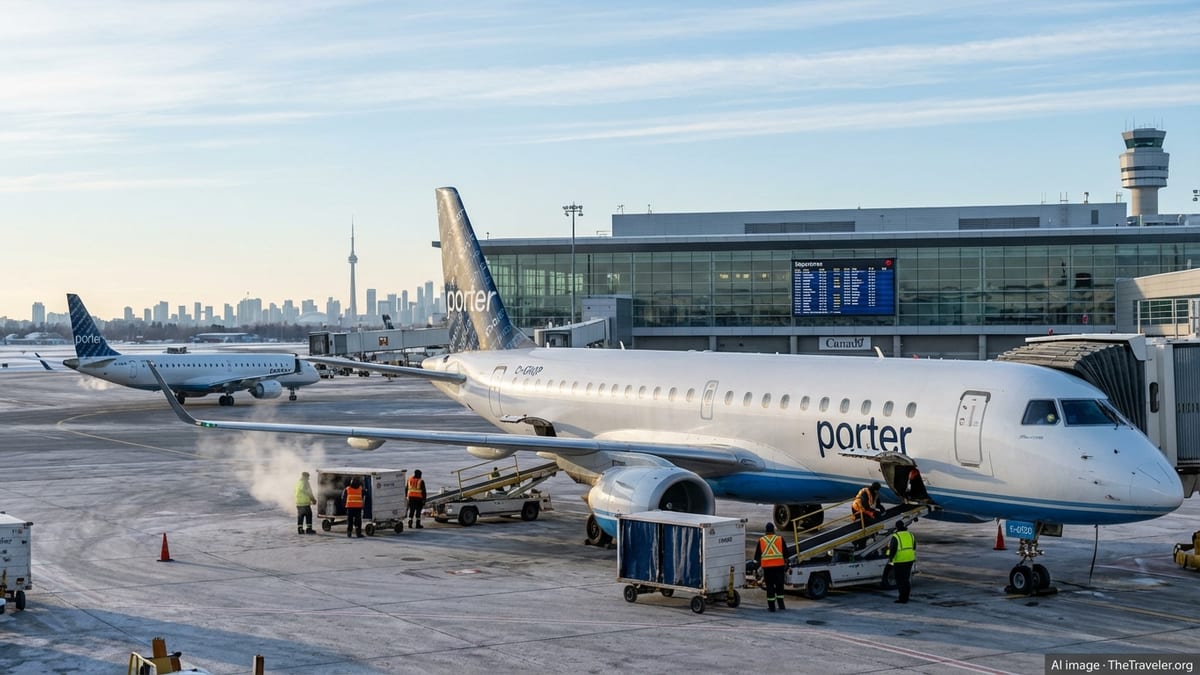
Austin Joins Porter’s Network as New Southern Gateway
The headline addition for 2026 is Austin, with Porter set to launch nonstop service between Toronto Pearson and Austin-Bergstrom International Airport on May 21. The year-round route will operate five times weekly using Embraer E195-E2 jets, positioning Austin as a new southern gateway for Canadian travelers seeking Texas’ tech, culture and food scene.
The move brings fresh competition to a corridor currently served by Air Canada and comes as Austin-Bergstrom advances a multibillion-dollar expansion designed to handle rapid passenger growth. For Porter, the addition of Austin deepens its U.S. footprint beyond traditional gateways, while for Austin, it adds a second Canadian carrier and a new link to Toronto’s vast onward network.
Porter is betting that demand between the two cities will remain resilient despite broader softness in Canada–U.S. travel. The airline is marketing the route equally to Canadians heading south for leisure and business, and to Texans looking for easier access to Canada and beyond via Toronto.
On board, travelers can expect Porter’s signature all-economy layout with no middle seats, complimentary snacks, and beer and wine in glassware, alongside high-speed Wi-Fi on the E195-E2 aircraft serving the Austin route.
Ottawa Emerges as a Powerhouse Hub in Porter’s Network
Ottawa, long an important station for Porter, is emerging in 2026 as one of the airline’s most dynamic growth hubs. This year’s schedule layers new and expanded routes atop a network that already connects the Canadian capital to both coasts and multiple U.S. and sun markets.
Among the standout developments is new seasonal service between Ottawa and Deer Lake in western Newfoundland, scheduled to begin in June with five weekly flights on E195-E2 jets. The route strengthens Ottawa’s role as a connecting point for travelers heading to Atlantic Canada, complementing Deer Lake flights from Toronto Pearson and Halifax.
Ottawa is also gaining and solidifying links to warm-weather and U.S. destinations. Newly launched or recently announced routes to Miami and Phoenix give travelers in the National Capital Region direct access to major U.S. hubs and cruise gateways, while at the same time feeding partner networks and codeshare connections.
Domestically, Porter has been steadily adding links from Ottawa to cities such as Victoria, Windsor, Sudbury and Kelowna, turning the city into a true cross-country bridge. For travelers, the result is more nonstop options that bypass traditional mega-hubs and reduce overall journey times.
Vancouver and Phoenix Strengthen West Coast and Desert Links
On Canada’s West Coast, Porter is using Vancouver as a launchpad for deeper U.S. expansion. Early 2026 marks the start of seasonal nonstop flights between Vancouver and Phoenix, operating daily from February into the spring travel period. It is Porter’s first U.S. route from Vancouver and reflects strong winter demand for desert escapes.
The Phoenix service is particularly notable because it ties into a broader strategy: tapping established U.S. hubs that offer both leisure appeal and connectivity. Phoenix Sky Harbor International Airport fits that profile, giving Porter access to a market historically dominated by U.S. majors while offering Canadians a familiar sun destination.
The Vancouver–Phoenix link also balances Porter’s growing Western Canada network. Together with existing service across British Columbia and routes like Ottawa–Victoria and Toronto–Victoria, the new desert connection gives West Coast travelers more choice without requiring connections through central Canada.
All Vancouver–Phoenix flights are scheduled with E195-E2 aircraft, offering a consistent onboard product that Porter hopes will set it apart in what is becoming an increasingly competitive transborder market.
Montreal and Toronto Anchor a Wider North American Web
While Ottawa and Vancouver are clear growth stories, Montreal and Toronto remain the anchors of Porter’s North American ambitions. From Toronto Pearson, the airline has been rolling out a mix of sun, U.S. and regional routes, with the new Austin service underscoring Pearson’s role as Porter’s primary long-haul and international gateway.
Toronto Pearson now links Porter passengers to a growing roster of leisure routes in Mexico, the Caribbean and Central America, along with an expanding set of U.S. destinations. The addition of Austin sits alongside existing services to cities such as Miami and various resort destinations, allowing travelers to piece together complex itineraries without changing carriers.
Montreal, meanwhile, is being quietly reshaped into a more substantial base. Recent additions like Montreal–Nassau, which joins Nassau flights from Toronto and Ottawa, show Porter’s intent to build a more balanced presence in Quebec rather than focusing solely on Ontario. New sun service from Montreal gives Quebec travelers one-stop or nonstop access to warmer climates, while still plugging into the broader network.
Together, the two cities act as twin pillars: Toronto as the main international and sun hub, and Montreal as a growing alternative that gives Porter more geographic reach and competitive flexibility in eastern Canada.
Chicago Upgrade and Regional Canada Ramps Up Connectivity
Beyond headline-grabbing new destinations, Porter is using 2026 to refine and upgrade key parts of its network. A major change comes in Chicago, where the carrier will move its long-standing Billy Bishop Toronto City Airport service from Midway to O’Hare on September 1 and triple frequencies to three daily flights.
Shifting to O’Hare, Chicago’s primary international hub, opens up a much wider set of connections via partner airlines and gives business travelers access to a more extensive bank of onward flights. Combined with a new U.S. Customs and Border Protection preclearance facility slated for Billy Bishop, the change is designed to speed journeys and smooth connections for cross-border passengers.
Within Canada, Porter is also layering in more regional capacity. New or expanded routes linking Ottawa with Windsor, Sudbury and Kelowna, as well as Hamilton with St. John’s and Winnipeg, are turning secondary cities into meaningful spokes that feed the airline’s hubs in Toronto, Ottawa, Montreal and Vancouver.
The strategy is straightforward: by anchoring service in multiple Canadian cities rather than relying on a single mega-hub, Porter can capture demand from travelers who increasingly prefer to avoid backtracking and long layovers. For many communities, Porter’s expansion translates into more nonstops and more competitive fares.
What Travelers Can Expect Onboard Porter’s E195-E2 Fleet
Central to Porter’s 2026 growth story is its fleet of Embraer E195-E2 aircraft, which now underpin most of the airline’s longer domestic, U.S. and sun routes. The jets seat up to 132 passengers in a two-by-two configuration, eliminating middle seats and giving the cabin a more spacious feel even in an all-economy layout.
Onboard service is a core part of Porter’s brand and a key differentiator as it enters more crowded markets. Travelers on routes including Toronto–Austin, Ottawa–Deer Lake, Ottawa–Phoenix and Vancouver–Phoenix can expect complimentary beer and wine served in glassware, along with premium snacks. Select fare options add extra legroom, priority services and, on longer flights, fresh meal choices.
The E195-E2 fleet is also equipped with fast, free Wi-Fi, allowing passengers to work, stream or stay connected without additional fees. That connectivity, paired with a quieter new-generation engine design, positions Porter as a comfort-focused alternative to larger competitors, especially on medium-haul routes that can otherwise feel cramped.
For travelers comparing options between Canadian and U.S. carriers, these product touches may prove decisive, particularly on leisure trips to destinations like Austin, Miami, Phoenix and Caribbean resorts, where the journey itself is increasingly seen as part of the holiday experience.
Partnerships, Codeshares and the Bigger Competitive Picture
Porter’s 2026 network additions are unfolding against a complex backdrop for transborder travel. Several Canadian airlines have scaled back or exited parts of the U.S. market, citing weaker demand and shifting economics. In contrast, Porter is leaning into cross-border flying and using partnerships to spread risk and reach.
A new codeshare tie-up with American Airlines is one of the most significant pieces of that strategy. By placing its code on select American flights and allowing reciprocal booking arrangements, Porter can offer customers one-ticket itineraries that extend far beyond its own operated network while simultaneously feeding more traffic into its Canadian hubs.
The Austin launch and expanded Phoenix, Miami and Chicago services also align neatly with this partnership play. Many of these airports are major bases for U.S. carriers, giving Porter passengers convenient onward options while offering American a richer menu of Canadian origins and destinations.
For consumers, the practical effect is access to a broader map of cities with more schedule choice, often without a noticeable change in the booking or airport experience. For the airlines, the cooperation helps fill seats and deepen loyalty in a market where cross-border traffic patterns have become less predictable.
How the 2026 Expansion Changes Options for Travelers
For travelers based in Canada, the implications of Porter’s 2026 expansion are tangible. Residents of Ottawa, Vancouver, Montreal and Toronto now have more nonstop options to key sun and U.S. markets, including Austin and Phoenix, reducing the need to connect through congested hubs or rely on a limited set of carriers.
Travelers in the United States, particularly in Texas and the Southwest, gain additional access points into Canada and beyond. The new Toronto–Austin route, for example, provides a direct bridge between two booming tech and creative cities, opening up business, education and tourism flows in both directions.
Regional travelers in smaller Canadian markets stand to benefit as well. Added capacity from cities like Windsor, Sudbury, Kelowna, Hamilton and Deer Lake gives those communities more ways to reach major hubs without driving or connecting through distant airports. In many cases, Porter’s arrivals and departures are timed to maximize same-day connections.
As 2026 progresses, the full impact of these changes will become clearer in fare trends, load factors and traveler behavior. For now, what is evident is that Porter is using the year to firmly stake its claim as a serious North American player, with Ottawa, Vancouver, Montreal, Toronto and now Austin at the heart of a rapidly evolving network.