

More news on this day
Montreal’s position on the North American route map is set for a major shake-up in 2026, as Porter Airlines prepares to launch twelve new routes from the revamped Montreal Metropolitan Airport at Saint-Hubert, promising faster domestic links, new U.S. options and fresh competition for the region’s air travelers.
Get the latest news straight to your inbox!
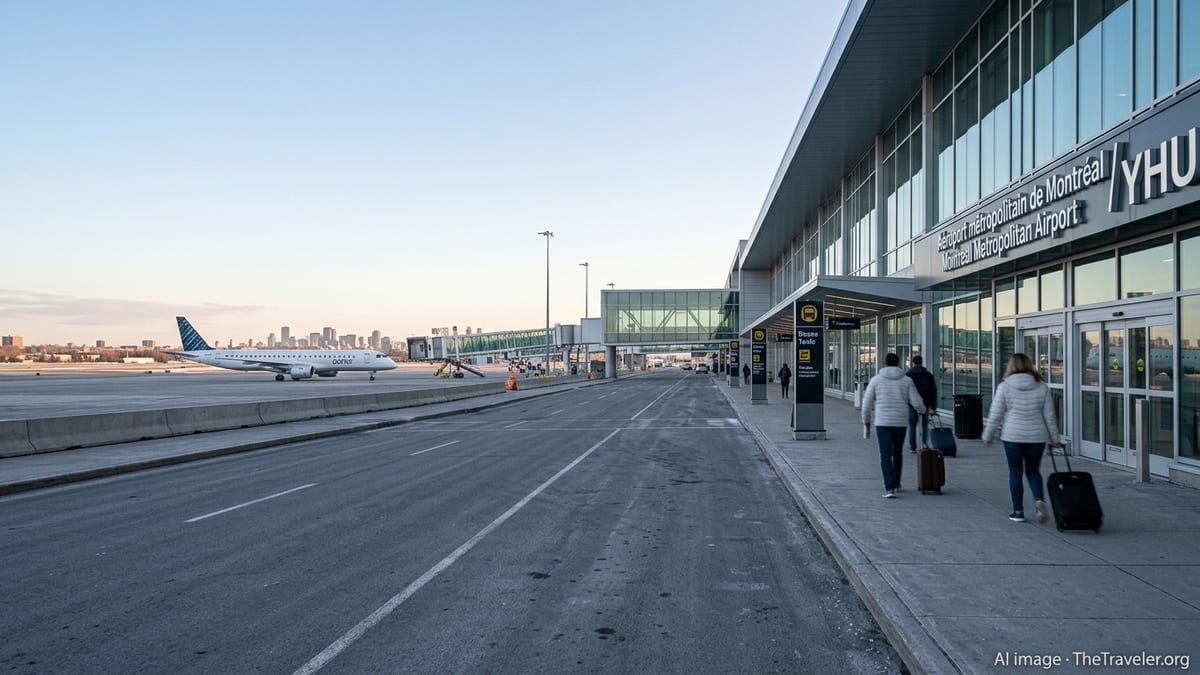
A New Montreal Airport Steps Into the Spotlight
The once-modest Saint-Hubert facility on Montreal’s South Shore has been reborn as Montreal Metropolitan Airport, a multi-million-dollar terminal project designed to handle up to several million passengers a year. Publicly available information shows that the nine-gate terminal has been developed in partnership with Porter, positioning the carrier as anchor tenant at the site.
Reports indicate that construction delays pushed the opening beyond earlier target dates, but the airport is now entering its operational phase in 2026 with Porter as launch carrier for regular commercial flights. The new terminal layout, security zones and passenger flows have been planned around high-frequency regional operations and quick turnarounds for narrowbody jets.
Unlike Montreal–Trudeau, which focuses heavily on long-haul and transborder traffic, Montreal Metropolitan is being framed as a nimble, close-to-town alternative for domestic and short-haul North American routes. For travelers in Longueuil and the South Shore, the new airport removes the need to cross the St. Lawrence River to reach major Canadian and select U.S. destinations.
Ground access is a crucial part of the revamp. Local coverage describes a coordinated bus service linking the terminal with Longueuil’s metro hub in roughly 20 to 25 minutes, aiming to offer a predictable, rail-connected journey into downtown Montreal that competes with the car or taxi ride out to Trudeau.
Twelve New Routes to Rewire 2026 Itineraries
Porter’s Saint-Hubert strategy builds on several years of rapid fleet and network expansion, during which the airline has grown into a national player with nearly 90 routes systemwide. From Montreal Metropolitan, the carrier is now layering twelve new routes designed to create a dense web of point-to-point and connecting options across Eastern and Central Canada, along with select U.S. and sun destinations.
Based on published network updates and industry analysis, the new Saint-Hubert schedule is expected to feature multiple high-frequency links to key Canadian cities such as Toronto, Ottawa and Halifax, alongside longer sectors toward Western Canada. The aim is to pull a significant share of Quebec-originating domestic journeys away from traditional routings via Montreal–Trudeau, while still complementing Porter’s existing operations at that larger airport.
Porter has also been gradually adding sun and leisure destinations from its eastern Canadian bases, including seasonal services to Florida and the Caribbean from Montreal–Trudeau. Aviation observers suggest that at least a portion of this southbound growth could be mirrored out of Saint-Hubert in 2026 and beyond, offering South Shore residents new nonstops to beach markets without a cross-town airport transfer.
The twelve-route package turns Saint-Hubert from a local airfield into a meaningful secondary hub. With timed banks of arrivals and departures, the new operation is structured to support through-connections, allowing, for example, travelers from Atlantic Canada to connect in Montreal Metropolitan and continue west without backtracking through Toronto.
Fleet, Cabin Experience and the Billy Bishop Playbook
Porter is bringing its dual-fleet strategy to Montreal Metropolitan, combining De Havilland Dash 8-400 turboprops for shorter sectors with Embraer E195-E2 jets on longer legs. Publicly available fleet data and past route launches show that the E195-E2 has become the backbone of Porter’s cross-country expansion, offering the range to reach Western Canada and many U.S. destinations from Eastern hubs.
The Saint-Hubert blueprint closely mirrors Porter’s long-established model at Toronto’s Billy Bishop airport, where frequent, short-haul flights and an upgraded onboard product helped the airline carve out a loyal business and leisure following. In Montreal, Porter appears to be adapting that approach to a larger, more modern terminal, emphasizing quick processing times and a consistent in-flight experience across the new route portfolio.
Within the cabin, Porter continues to market an “elevated economy” concept, retaining all-economy seating without middle seats on key aircraft types and promoting complimentary snacks and drinks as differentiators in the crowded North American market. For Montreal travelers who have grown used to more stripped-back service on short hops, the new Saint-Hubert flights offer an alternative that blends low-fare competition with a more full-service feel.
The fleet mix also supports environmental messaging. Industry commentary often highlights the E195-E2’s fuel efficiency and lower emissions compared with older narrowbodies, while the Dash 8-400 remains a relatively low-consumption option on shorter routes. That profile is significant in a region where community groups have closely scrutinized airport expansion and its local environmental impact.
Competition, Connectivity and Impact on Montreal–Trudeau
The emergence of Montreal Metropolitan as a second passenger airport is set to reshape competitive dynamics across Quebec and Eastern Canada. Montreal–Trudeau will remain the region’s primary gateway for long-haul and most international flights, but Porter’s twelve-route package at Saint-Hubert introduces a new focal point for domestic connectivity and some transborder services.
According to published coverage from aviation and travel outlets, Porter is positioning Saint-Hubert as a complement rather than a direct replacement for its existing Montreal–Trudeau operations. Routes tied to interline and joint-venture connectivity, particularly long-haul links operated by partner carriers, are expected to stay concentrated at Trudeau, while high-frequency domestic and regional flying gradually migrates to the South Shore.
For rival airlines, the new capacity out of Saint-Hubert adds pressure on key city pairs such as Montreal–Toronto and Montreal–Halifax, markets that already see competition from low-cost and full-service carriers. Industry analysts note that similar multi-airport strategies in other regions have often led to sharper pricing and more schedule choices for passengers, at least in the medium term.
Regional communities may also feel the ripple effects. As Porter layers Saint-Hubert into its broader network alongside hubs in Ottawa and the Greater Toronto Area, smaller cities in Atlantic Canada and Ontario could gain new one-stop options through Montreal Metropolitan, changing long-standing travel habits that routed almost everything through Toronto.
What 2026 Travelers Can Expect on the Ground
For passengers planning 2026 trips, the transformation at Saint-Hubert will be most visible in the day-of-travel experience. The new terminal has been conceived as a compact facility, which typically means shorter walking distances than at major hubs and the potential for tighter minimum connection times between incoming and outgoing flights.
Publicly available planning documents and community briefings describe a terminal footprint with modern check-in zones, centralized security and open gate areas designed around Porter’s network banks. Early images and reports suggest a contemporary interior aesthetic, with large windows, natural light and a layout that emphasizes clear sightlines from security to the boarding gates.
Access to and from the airport is central to the new hub’s appeal. Local transit plans call for a dedicated bus link to Longueuil’s metro station at regular intervals, connecting travelers into Montreal’s broader public transport system. For those arriving by car, new parking facilities and improved roadway signage are intended to reduce congestion and make the South Shore airport straightforward to reach from both Montreal and nearby regions such as the Eastern Townships.
As Porter’s twelve-route rollout beds in through 2026, travelers will be able to compare the Saint-Hubert experience directly with flights from Montreal–Trudeau and Ottawa. For many, the deciding factors are likely to be time and convenience. If the new hub delivers on its promise of shorter commutes, smoother terminal flows and competitive fares, Montreal’s latest airport could quickly become a preferred launching point for domestic and near-border trips across the continent.