

More news on this day
Non-EU travelers heading to Portugal or Sweden could soon spend less time in airport queues, as both countries begin using a new European Union “Travel to Europe” mobile app designed to pre-register passenger data and support the rollout of the bloc’s Entry/Exit System for external border checks.
Get the latest news straight to your inbox!
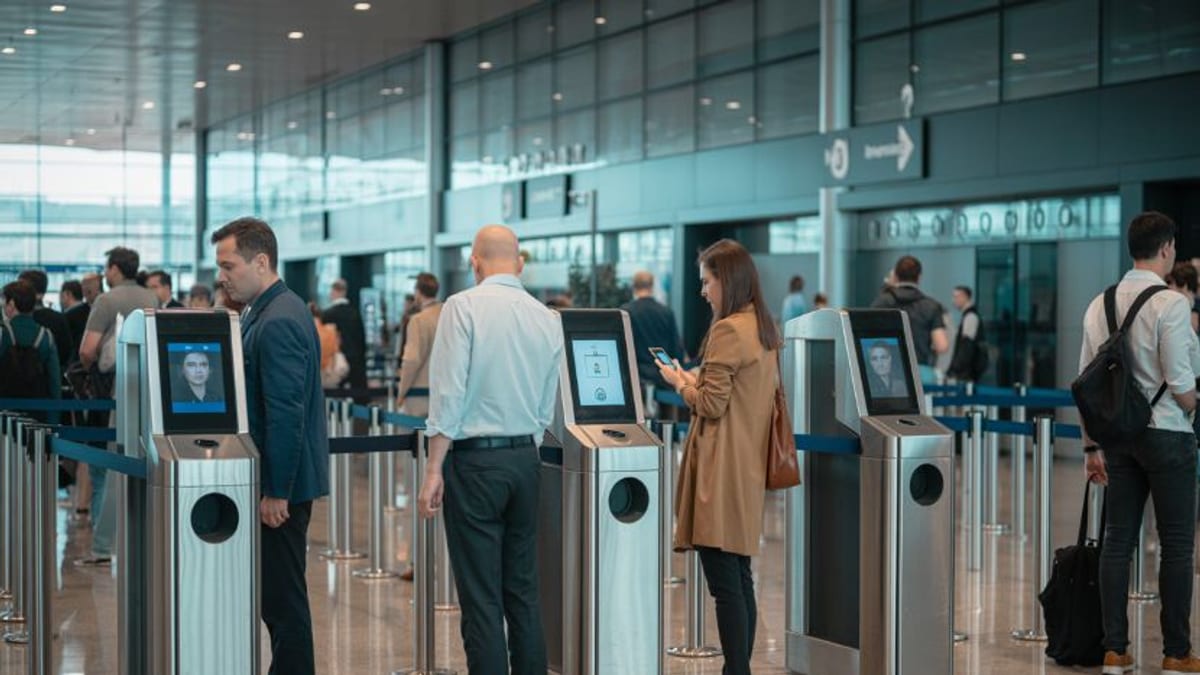
Image by Travel And Tour World
How the new EU travel app works with the Entry/Exit System
The Travel to Europe app is part of a wider EU border modernization program centered on the Entry/Exit System, often referred to as EES. Publicly available information from EU institutions describes EES as a large-scale IT platform that records the time and place of entry and exit for non-EU nationals crossing Schengen external borders, along with biometric identifiers such as a facial image and fingerprints. The goal is to replace manual passport stamping with a digital record while tightening security and improving the flow of passengers.
The app gives eligible travelers a way to submit key information ahead of arrival instead of completing all steps at the border kiosk. According to published coverage, non-EU nationals who hold a biometric passport and are subject to EES registration can use the app to enter personal details, travel plans and, in some implementations, biometric data before they land in Europe. The data is then made available to border systems once the traveler presents their passport at an automated or staffed checkpoint.
Reports indicate that the app does not replace passport checks or the need for a valid visa or travel authorization such as the forthcoming ETIAS for visa-exempt visitors. Rather, it is designed as a pre-registration tool that should reduce the time spent at self-service kiosks or counters by avoiding repetitive data entry at the airport. Border officers remain responsible for the final decision on entry and for any additional questions or inspections.
EU documentation notes that the rollout of EES across the Schengen Area is gradual, with some border points capturing biometric data and using the new system earlier than others. That staggered deployment helps explain why the app is only available in a limited number of countries and airports initially, even though the underlying legal framework applies to all Schengen external borders.
Portugal and Sweden as early adopters
Portugal and Sweden have emerged among the first Schengen countries to be linked to the Travel to Europe app for live use by non-EU travelers. Discussion in recent traveler reports and consumer-facing guidance shows Portugal using the app at least in connection with Lisbon Airport, one of the main external gateways into the Schengen Area from long-haul destinations. At the same time, app store listings and user feedback indicate that Sweden has been integrated into the system and can be selected as a country of entry for certain journeys.
These early deployments position Portugal and Sweden as testbeds for the EU’s digital border experience, particularly for passengers arriving from North America, the United Kingdom and other non-EU regions. Both countries handle significant volumes of leisure and business traffic, making them suitable for piloting technology intended to relieve bottlenecks that could arise as EES becomes fully operational.
Travel commentary suggests, however, that coverage within each country is still partial. In Portugal, references to Lisbon feature more prominently than to secondary airports, and there are indications that the level of functionality travelers can access may vary from one border crossing point to another. In Sweden, information from national data protection guidance and EU-level documentation confirms the general principles of EES, but actual app usage appears most relevant at major international airports handling non-EU arrivals.
As with many digital infrastructure projects, the Portugal and Sweden launches should be viewed as early phases rather than a final state. Travelers can expect additional airports and possibly seaports to be added over time as both technical integration and border staff training progress.
What non-EU travelers can do before they fly
For visitors planning trips to Portugal or Sweden, the most immediate practical step is to check whether the Travel to Europe app is available in their region’s app stores and whether their itinerary is compatible with the current rollout. Publicly available information and user reports indicate that the app is designed for non-EU nationals who hold a biometric passport and who will be entering the Schengen Area at a participating border crossing point.
Once downloaded, travelers are generally asked to create a profile and provide passport details, travel dates and destination information. Some versions of the process may prompt users to scan their passport’s chip, upload a facial image and confirm other personal data that would otherwise be captured at a border kiosk. Because the system interfaces with official border databases, small discrepancies between the information entered in the app and the passport can cause delays at the checkpoint, so accuracy is important.
Travelers should also be prepared for the possibility that the app will not recognize all airports or border points yet, even within Portugal or Sweden. Recent user feedback shared on public forums describes situations in which specific airports, such as Lisbon, do not always appear in search fields or return error messages when selected as a border crossing point. In those cases, passengers still undergo standard EES registration on arrival, relying on in-person kiosks and staffed counters.
Importantly, the app does not remove the requirement to comply with other entry conditions. Non-EU travelers must still observe Schengen rules on short stays, hold necessary visas where applicable and, once ETIAS becomes active, secure travel authorization in advance if they are visa-exempt. The app is intended to make border formalities more efficient, not to change the underlying rules on who may enter and for how long.
Data, privacy and reliability concerns
The deployment of the Travel to Europe app sits at the intersection of border control and digital privacy, an area where EU standards are typically stringent. Public guidance from national data protection authorities in countries such as Sweden describes EES as an advanced system that processes sensitive biometric information and travel histories, subject to European data protection law and oversight by independent regulators. These authorities outline retention periods, access controls and travelers’ rights to information and, in some cases, to request corrections.
At the same time, early users of the app have highlighted technical issues and usability concerns. Recent posts on travel forums describe problems such as airports not appearing in drop-down lists, error messages when attempting to complete a pre-registration and confusion over which journeys are eligible to be processed through the app. Such comments suggest that, despite the underlying EU infrastructure, the user-facing software and airport integrations are still maturing.
From a traveler’s perspective, this means the app should be treated as a convenience feature rather than a guarantee of faster processing. Non-EU visitors who decide to use it are still advised to allow extra time at the airport in case pre-registered data cannot be retrieved or requires manual verification. Airlines and airport operators may also adjust their advice as they observe how the system performs during peak travel periods.
Data-conscious travelers may wish to review official privacy notices associated with EES and the app before submitting biometric information. These documents typically explain which authorities have access to the data, for what purposes, and how long it will be retained. While the EU framework is designed to ensure robust safeguards, individual comfort levels with biometric sharing vary, and travelers can still opt to complete registration entirely at the border without using the app.
What this could mean for future trips to Europe
The launch of the Travel to Europe app in Portugal and Sweden offers a glimpse of how border controls across the Schengen Area could evolve in the coming years. As EES becomes routine and ETIAS travel authorization is phased in for visa-exempt visitors, non-EU travelers may encounter a more digital, pre-planned experience that emphasizes advance data collection and automated checks rather than stamps and paper forms.
If Portugal and Sweden’s initial deployments prove successful, other Schengen countries are expected to connect their airports and land crossings to the same ecosystem. This could eventually result in a network of compatible apps and kiosks where travelers can reuse pre-registered data, cutting down on repetitive procedures when visiting multiple countries within one trip.
However, the transition period is likely to be uneven. Differences in infrastructure, staffing and national implementation timetables mean that the level of digitalization at border points will vary. Travelers heading to Portugal or Sweden should therefore monitor official travel and border updates close to their departure dates, especially during busy seasons when small technical issues can quickly translate into long queues.
For now, the clearest takeaway is that non-EU travelers have a new optional tool to prepare for entry into the Schengen Area, starting with Portugal and Sweden. Those willing to engage with the system early may benefit from smoother passage through participating airports, while others can observe how the rollout unfolds before deciding whether to add another app to their pre-trip checklist.