

More news on this day
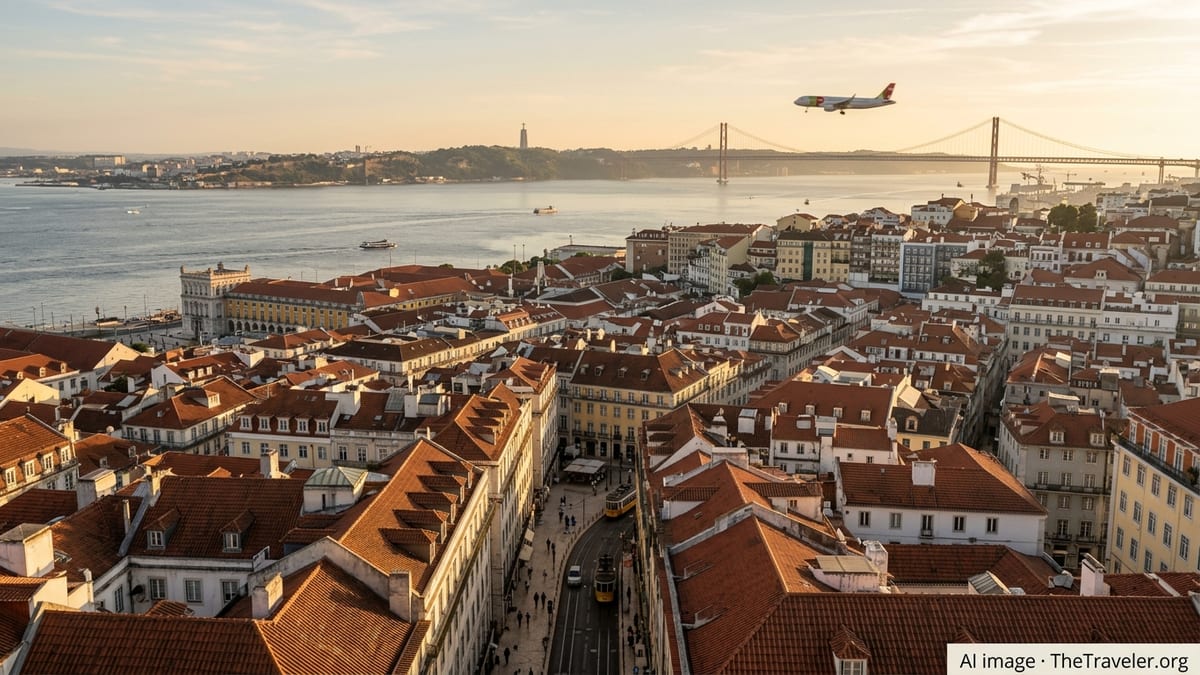
Portugal is moving quickly to capture a surge of redirected travel demand as the widening Middle East crisis disrupts aviation and tourism in Bahrain, Saudi Arabia, Qatar, the United Arab Emirates, Oman and other Gulf states, putting unprecedented pressure on traditional hub-and-spoke routes between Europe, Asia and Africa.
Get the latest news straight to your inbox!
Middle East Crisis Upends Gulf Hubs And Global Flows
Airspace closures across much of the Middle East since late February 2026 have sharply curtailed operations at key Gulf aviation hubs that long dominated traffic between Europe, Africa and Asia. Publicly available flight-tracking data and recent news coverage indicate that airspace over Bahrain, Saudi Arabia, Qatar, the UAE and Oman has been closed or heavily restricted, with thousands of flights cancelled or rerouted and hundreds of thousands of travelers stranded across the region.
The disruption follows the outbreak of a wider war involving Iran, which has triggered missile strikes, damage to energy infrastructure and the effective closure of the Strait of Hormuz to much commercial traffic. Economic analyses describe the shock as the most severe for global transport and energy markets in decades, with Gulf aviation and tourism among the hardest-hit sectors. Airlines based in Dubai, Abu Dhabi and Doha, once among the fastest-growing in the world, are now operating sharply reduced schedules, largely limited to evacuation and essential services.
Travel-industry reporting shows ripple effects far beyond the Gulf. Europe–Asia and Europe–Africa routes that previously relied on one-stop connections through Gulf hubs are being diverted along longer corridors to the north and south, adding hours to flight times and raising operating costs. As carriers review network plans and travelers look for more stable routings, countries outside the immediate conflict zone are moving quickly to reposition themselves as alternative gateways.
Portugal Steps Forward As A Stable Atlantic Gateway
Portugal is among the European destinations most actively seeking to turn this sudden realignment into a longer-term opportunity. Recent figures from regional tourism authorities show that the Algarve alone ended 2025 with record accommodation revenues of around 1.8 billion euros and more than 20 million overnight stays, underscoring the country’s growing profile as a high-value leisure destination even before the current crisis.
National tourism agency updates and trade communications highlight renewed efforts to deepen Portugal’s reach in long-haul markets, especially in Asia. In late 2025, VisitPortugal hosted a dedicated travel trade marketplace in China to connect Portuguese tourism operators with Chinese buyers and promote new itineraries across Lisbon, Porto and secondary regions. That initiative, along with similar outreach in other Asian markets, is now taking on added significance as carriers and tour operators seek to reconfigure Europe-bound routes that previously depended on Gulf stopovers.
Portugal also benefits from its geographic position on the western edge of Europe, which allows airlines to design transatlantic and Europe–Africa connections that bypass disrupted Middle Eastern corridors entirely. Industry observers note that this lends itself to new triangle routes linking North America, Portugal and parts of Africa, as well as repositioned services between Europe and South America that can attract travelers diverted from Gulf-based networks.
UK, France, Austria, Singapore, Spain And Thailand Compete For Rerouted Demand
Portugal is not alone in courting displaced passengers and holidaymakers. Aviation and tourism coverage across Europe and Asia indicates that the United Kingdom, France, Austria, Spain, Singapore and Thailand are all leaning on their existing air connectivity and brand recognition to absorb traffic that once flowed through Gulf hubs.
Major European airports in London and Paris, already among the busiest in the world, are emerging as primary alternatives for Europe–Asia connections, even as they face capacity constraints and higher airspace charges on extended routings. Austria and Spain, through Vienna and Madrid in particular, are promoting their roles as secondary hubs with available slots and convenient rail links into wider tourism regions. These airports are aiming to attract both scheduled airlines seeking additional frequencies and charter operators looking for stable bases for seasonal traffic.
In Asia, Singapore and Thailand are positioning themselves as reliable, politically distant options from the Gulf conflict zone. Changi Airport’s long-standing role as a Southeast Asian super-hub and Bangkok’s strong appeal as a leisure gateway give both countries a platform to court travelers who might previously have connected via Dubai, Doha or Abu Dhabi. Tourism boards in these destinations are emphasizing safety, ease of access and diverse itineraries as they respond to inquiries from tour operators adjusting multi-country packages.
New Travel Patterns Emerge As Gulf Tourism Stalls
Published economic assessments of the 2026 crisis point to a sharp reversal for Gulf tourism, which had enjoyed a sustained boom through 2024 and 2025. Analysts now expect recessions in several Gulf economies as airlines ground fleets, hotels cut rates and major events in Bahrain, Saudi Arabia, Qatar, the UAE and Oman confront cancellations or reduced attendance.
With key Gulf airports operating at a fraction of normal capacity, travelers are quickly reshaping their plans. Instead of one-stop connections via Doha or Dubai, Europe-based passengers heading to Asia are increasingly routed through northern corridors over Turkey and the Caucasus or via southern paths that lean more heavily on African and European Mediterranean gateways. For leisure travelers wary of transiting near active conflict zones, the appeal of itineraries that begin and end fully outside the Middle East is growing.
This dynamic is propelling interest in destinations that can combine strong air links with perceptions of stability and varied tourism offerings. Portugal’s Atlantic beaches and historic cities, Spain’s cultural capitals, Austria’s Alpine resorts, France’s established city-break market, Singapore’s urban attractions and Thailand’s resort islands all fit this profile. Travel trade commentary suggests that, at least in the short term, some of the Gulf’s loss is likely to become a gain for these countries as tour operators repackage products for cautious long-haul clients.
Can Temporary Gains Become Long-Term Advantage?
The key question for Portugal and its competitors is whether this surge in attention can be converted into durable structural change in global travel patterns. Industry analysts caution that if the current Middle East conflict eases and Gulf airspace reopens, powerful local carriers and destination marketing budgets in Bahrain, Saudi Arabia, Qatar, the UAE and Oman are likely to reassert their influence over long-haul flows.
For now, however, tourism boards and airport operators in Europe and Asia appear focused on locking in new partnerships established during the disruption. In Portugal’s case, that includes building on existing momentum in markets such as China and consolidating the Algarve’s success with strategies that prioritize higher-value, lower-seasonality visitors. Similar efforts in the UK, France, Austria, Singapore, Spain and Thailand are likely to emphasize diversified source markets and improved connectivity that does not depend on any single geopolitical corridor.
The outcome will depend on how long the Middle East crisis continues to constrain Gulf aviation and whether travelers’ risk perceptions change more permanently. If rerouted passengers discover new favorite stopover cities and holiday destinations during this period, countries like Portugal may find that today’s emergency rerouting lays the groundwork for tomorrow’s enduring travel habits.