

Portugal’s charm is not only in its Atlantic light, tiled facades and hilltop castles, but in a set of lived traditions that quietly shape everyday life. From the way people greet one another in a café to the rules of ordering coffee, from summertime street festivals to reflective evenings in a fado bar, Portuguese customs are subtle but deeply felt. Understanding them will help travelers move through the country with more ease, respect and connection.
Social Etiquette: Greetings, Personal Space and Politeness
Portuguese social etiquette tends to be warm but measured. In most everyday situations, a simple “bom dia” in the morning, “boa tarde” in the afternoon, and “boa noite” in the evening will be appreciated. Handshakes are common for first meetings, usually accompanied by eye contact and a brief verbal greeting. Among friends and family, greetings are more relaxed and may involve a hug or cheek kisses, but visitors are rarely expected to initiate these. If you are not sure, offer a handshake and let your host or counterpart set the tone.
Respectful forms of address matter, especially with older people or in more formal contexts. Using “senhor” and “senhora” followed by a surname, or even just “senhor” or “senhora” on its own, is perceived as polite. Younger people often quickly suggest first names, but as a visitor it is safer to start slightly more formal and adjust if invited. Speaking quietly in public is another unspoken rule; loud voices on public transport or in restaurants can stand out more than travelers might expect.
Physical distance in Portugal sits somewhere between northern and southern Europe. People may stand a little closer than in some cultures, but not as close as in others along the Mediterranean. Waiting your turn, refraining from cutting in line and acknowledging those around you with a nod or greeting are small gestures that signal respect. In smaller towns and villages, it is still common to greet shopkeepers and even strangers on the street; a traveler who does the same will often receive a warm response.
Punctuality is generally valued for professional meetings, tours and reservations, while social gatherings with friends can be more flexible. Even so, arriving extremely late without notice is considered rude. A brief message or call if you are delayed is appreciated, particularly in rural accommodations or family-run guesthouses where schedules are tight and personal.
Café and Dining Culture: From Espresso Rituals to Long Lunches
Coffee is woven into the fabric of daily life in Portugal, and knowing how to order it helps visitors blend in. A standard espresso is usually called a “café” or “bica” in Lisbon, while in Porto it might be “cimbalino” in some older cafés. A “meia de leite” is similar to a latte, served in a larger cup with roughly half coffee and half milk, often enjoyed at breakfast. Many Portuguese drink coffee standing at the counter, exchanging a few words with staff before heading to work. Joining this ritual, even briefly, gives a small glimpse into local rhythm.
Meal times are slightly later than in many northern countries. Lunch, often the main meal of the day, usually starts around 1 p.m. and can stretch to mid-afternoon, especially on weekends. Dinner service in restaurants typically begins around 7:30 or 8 p.m., though more touristy areas may open earlier. It is customary to linger at the table, talking and enjoying a post-meal coffee or digestive drink, rather than rushing out as soon as plates are cleared. Staff rarely bring the bill unasked; you will usually need to request it when you are ready to leave.
At many restaurants, small dishes may arrive at the table shortly after you sit down: bread, butter, cheese, olives or sliced cured meats. These are called “couvert” and are not always complimentary. You are free to decline them politely as soon as they arrive if you do not want to pay extra, or simply leave what you do not intend to eat. Portions can be generous, especially for dishes like bacalhau (salt cod) or grilled meats, and sharing plates is common. If unsure, ask whether a “dose” can be shared between two people.
Table manners lean toward the continental style: knife in the right hand, fork in the left, and hands visible above the table rather than in your lap. It is polite to wait until everyone is served before starting to eat, and to say “bom apetite” to the table. Tipping is not obligatory, as service is generally included, but rounding up the bill or leaving a modest gratuity for good service in restaurants, taxis and cafés is appreciated. In very casual places, people may simply leave small change on the counter.
Family, Faith and the Rhythm of the Calendar
Family remains a central pillar of Portuguese life. Sundays are still widely treated as a day for gathering with relatives, sharing a long lunch and sometimes attending Mass, especially in smaller communities. As a traveler, you may notice restaurants and roads growing busier at lunchtime, with multi-generational groups seated together. Respect for elders is strong, and younger family members often make time to visit or care for parents and grandparents.
The Catholic tradition continues to shape the country’s calendar and customs, even among people who are not actively religious. Many municipalities have their own patron saint’s day, which can mean local holidays, processions and closures. National holidays tied to religious observances or historical events can affect opening hours for shops, museums and public services. When planning travel, it is wise to check whether your visit coincides with major dates such as Holy Week, All Saints’ Day or a local saint festival, as transport or business schedules may shift.
Processions remain visible expressions of communal faith and identity. During these events, streets may be decorated with flowers, candles and banners as statues of saints are carried through towns, accompanied by bands and parishioners. Visitors are generally welcome to watch, but it is respectful to keep a certain distance, avoid blocking participants and dress modestly, especially near churches. Photography is usually tolerated in outdoor settings, but taking photos during religious services inside churches can be considered intrusive.
Churches and chapels across Portugal are often open during the day, both as places of worship and cultural heritage. Even in popular tourist areas, it is courteous to lower your voice, remove hats and avoid entering during services if you only intend to look around. Modest clothing that covers shoulders and midriff is sensible, particularly in more traditional regions. A traveler who treats these spaces primarily as living places of devotion, not merely attractions, will be seen as more respectful.
Festivals and Street Traditions: The Spirit of Santos Populares
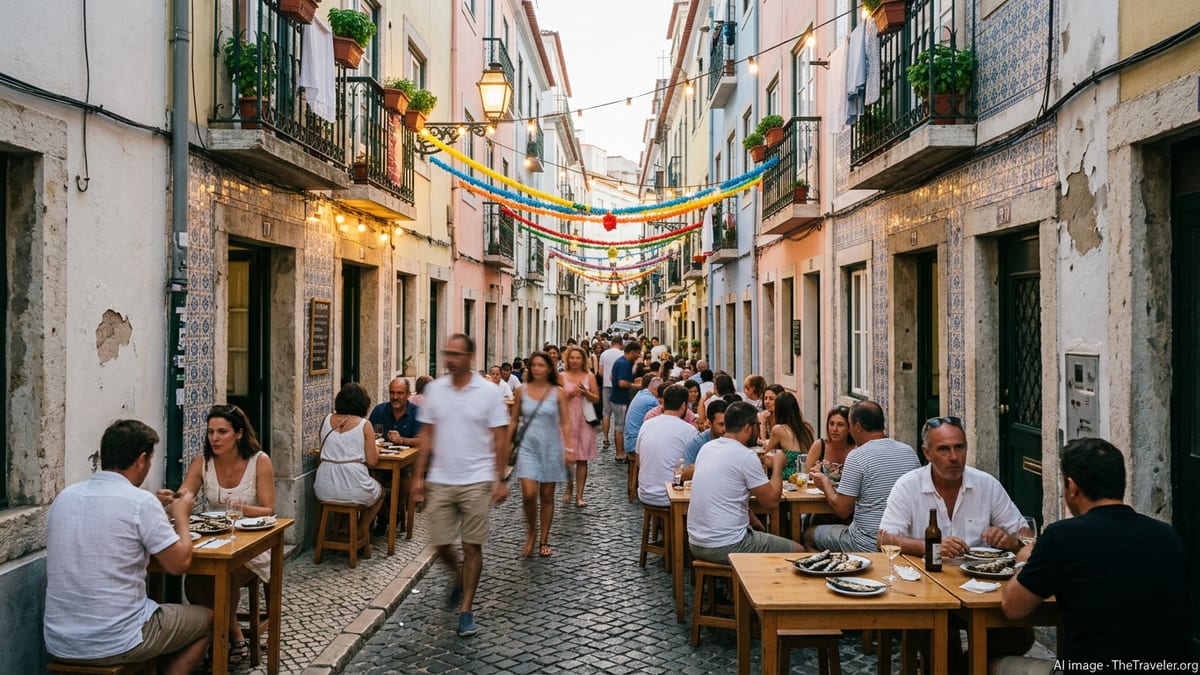
Portugal’s summer is animated by Santos Populares, a cluster of popular saint festivals that fill streets with music, grilled sardines and colored streamers. In Lisbon, the mid-June celebrations of Saint Anthony transform historic neighborhoods into a swirl of marches, decorations and late-night revelry. Residents decorate their balconies, set up temporary grill stands and host “arraiais,” or street parties, where locals and visitors gather around communal tables to eat caldo verde, sardines and bifanas, and dance to popular songs.
Further north, Porto’s São João festival on the night of 23 June is famous for its exuberant rituals. Crowds flood the riverside districts, carrying plastic toy hammers that they gently tap on the heads of friends and strangers as a playful greeting and good-luck wish. Bonfires, paper lanterns and midnight fireworks over the Douro River create a vivid, communal atmosphere that stretches until dawn. For first-time visitors, joining this celebration can be memorable, but it is useful to know that streets become extremely crowded and public transport can run at special schedules.
Along the coast, fishing towns mark Saint Peter’s Day at the end of June with processions of decorated boats, maritime blessings and waterfront parties. Here, ties to the sea, fishing traditions and local identity come to the fore. Men and women wear regional costumes for parades, brass bands play into the night and grilled seafood is central to the festivities. In all these events, travelers are welcome, but should be prepared for noise late into the night, limited parking and occasionally higher accommodation prices during peak dates.
Participating respectfully in these festivals means embracing spontaneity while remaining mindful of local norms. Public drinking is widely tolerated during major celebrations, yet aggressive behavior is frowned upon. Keeping an eye on belongings in dense crowds, following directions from police or stewards and avoiding climbing on fragile structures or monuments are essential. Many residents see these festivities as an extension of their neighborhood and home; a visitor who treats the space with care will often be drawn into the spirit of hospitality.
Fado, Saudade and Cultural Sensitivity
Fado, Portugal’s most iconic musical expression, is closely linked to the concept of “saudade,” a word that suggests a deep, often bittersweet longing or nostalgia. In Lisbon and Coimbra in particular, fado houses offer evenings of live performance where singers are accompanied by classical guitar and the distinctive Portuguese guitarra with its teardrop shape and metallic sound. These spaces, whether intimate taverns or more formal venues, operate with certain expectations that visitors should understand before attending.
Silence during performances is considered a sign of respect, both to the musicians and to other guests. Conversations that might feel acceptable over background music in a bar are not appropriate once the singing begins. Staff will often dim the lights and signal that a new set is starting, at which point it is customary to pause eating and talking. Applause at the end of each song is encouraged, and performers may interact briefly with the audience between sets, sharing anecdotes or introducing traditional verses.
Dress codes at fado venues vary, but smart-casual attire is generally the safest choice. Some restaurants require or recommend reservations, particularly in popular districts. In more traditional places, travelers can expect fixed-price menus combined with music, while in others it is possible to order à la carte at the bar. Photography and filming may be limited or discouraged; even where it is permitted, it is more courteous to take a small number of discreet photos rather than constant video recording that distracts performers.
Approaching fado and other cultural expressions with curiosity rather than comparison helps avoid misunderstandings. It can be tempting to frame saudade solely as sadness, but many locals see it as an emotional depth that includes tenderness, memory and resilience. Asking questions, listening to locals’ stories and acknowledging the history behind songs, including episodes of migration and social struggle, allows visitors to engage on a more meaningful level than treating performances purely as entertainment.
Everyday Habits: Transport, Queues and Beach Culture
Understanding small, everyday habits can make moving through Portugal much smoother. On public transport in cities, passengers usually form loose but orderly queues, and younger people often offer seats to the elderly, pregnant women or those with disabilities. Speaking quietly on trains and buses is appreciated, and it is rare to hear phone conversations on speaker. Validating tickets on trams, metro systems and some commuter lines is essential; checks do occur and fines can be significant if you are traveling without a validated fare.
In shops and markets, taking a number from a dispenser before ordering at the counter is common, particularly at bakeries, delicatessens and some supermarket sections. When in doubt, watch what locals do and follow their lead. Cash remains widely used alongside cards, especially in small cafés, markets and family-run businesses. Having some smaller notes and coins on hand can smooth interactions, including at village festivals or local events where card terminals might be limited.
Portugal’s extensive coastline draws both residents and travelers to the beach for much of the year. Beach culture is relaxed, but certain courtesies apply. It is polite to keep some space between your towel and those of other groups, avoid shaking sand near others and keep noise levels reasonable, especially if you bring speakers. Many beaches have lifeguard-supervised areas with colored flags indicating swimming conditions; respecting these signals is important, as Atlantic currents can be strong.
Topless sunbathing on many mainstream beaches is tolerated but not universal, and full nudity is restricted to officially designated naturist beaches. Eating and drinking on the sand is accepted, yet leaving litter behind is strongly condemned and carries fines in protected areas. In fishing villages, you may see boats being worked on directly on the sand or small harbors; treating these spaces as workplaces rather than purely scenic backdrops shows respect for the livelihoods that underpin coastal life.
Language, Communication Style and Regional Identity
European Portuguese can sound quite different from its Brazilian counterpart, with distinct pronunciation and vocabulary, but using even a few basic phrases is a powerful gesture. Locals often appreciate attempts at “por favor,” “obrigado” or “obrigada” depending on the speaker’s gender, and “com licença” when passing someone in a tight space. In cities and tourist areas, many people working in hospitality speak English, and in the north or interior, French or Spanish might be common second languages among older generations, though younger people increasingly learn English at school.
Communication style tends toward indirectness and diplomacy. People may be reluctant to say “no” directly, preferring softer expressions that imply hesitation or an alternative. For travelers, this can sometimes create confusion when arranging services or schedules, so it helps to ask follow-up questions politely to ensure details are clear. At the same time, discussions about politics, history or football clubs can become animated; these are important aspects of identity and community, and recognizing their emotional weight can deepen understanding.
Regional identity is strong across Portugal, and many traditions are tied to specific provinces, cities or even individual villages. The way bacalhau is prepared in the north may differ from coastal recipes in the south; embroidery styles from Madeira or the Minho have distinct patterns and histories; and even accent and vocabulary change noticeably from Algarve to Trás-os-Montes. Travelers who show interest in these local particularities and buy regional products directly from artisans or small producers support the continuity of these traditions.
Humor often leans on irony and understatement, and self-deprecation is common. Compliments about food, music or scenery are typically well received, but comments that compare Portugal unfavorably to other countries can quickly dampen a conversation. Asking for recommendations, whether for a favorite pastry shop or viewpoint, opens doors to personal stories and hidden corners that rarely appear in guidebooks.
The Takeaway
Portuguese traditions and customs rarely shout for attention; they unfold in the quiet of a morning coffee, the shared table of a Sunday lunch, the collective joy of a June street festival or the hush of a fado performance. For travelers, learning the basics of etiquette and paying attention to local rhythms is less about following strict rules and more about signaling respect for the people who live here. Small gestures, like greeting a shopkeeper, waiting patiently in line or listening in silence during a song, can transform fleeting encounters into genuine connections.
As Portugal continues to welcome growing numbers of visitors, sensitivity to local ways of life becomes part of responsible travel. Observing how residents interact, asking when in doubt and adapting with humility allows traditions to breathe rather than be overshadowed. In return, travelers are often rewarded with kindness, stories and invitations that reveal the country’s deeper character. Understanding these customs is ultimately an invitation to experience Portugal not just as a destination, but as a shared space of memory, hospitality and everyday grace.
FAQ
Q1. Is tipping expected in Portugal, and how much should I leave?
Tipping is appreciated but not strictly required. In restaurants, many locals round up the bill or leave around five to ten percent for good service, while in cafés and taxis small change is common.
Q2. What should I know about visiting a fado house for the first time?
Book ahead if possible, dress smart-casual, and be prepared to remain quiet during performances. It is polite to pause conversation and eating when the lights dim and the singing begins.
Q3. How do I avoid making mistakes with the couvert in restaurants?
When bread, olives or cheese are brought without being ordered, ask whether they are charged. You can decline them immediately or only pay for what you actually eat.
Q4. Are there any clothing rules for visiting churches and religious sites?
Modest clothing that covers shoulders and midriff is recommended, especially during services. Remove hats, keep voices low, and avoid walking in front of the altar during ceremonies.
Q5. What local customs should I follow during the São João or other June festivals?
Expect crowded streets, fireworks and late-night noise. Join the fun, but treat plastic hammer taps and other playful gestures in good humor, respect residents’ doorways and windows, and follow any safety instructions.
Q6. Is it acceptable to speak English, or should I try Portuguese?
English is widely understood in tourist areas, but using simple Portuguese greetings and thanks is seen as respectful. Most locals appreciate the effort, even if your pronunciation is not perfect.
Q7. How do Portuguese people feel about public displays of affection?
Moderate displays, like holding hands or brief hugs and kisses, are generally accepted, especially in cities. More intense or explicit behavior in public can draw disapproving looks.
Q8. Are there any special rules for using public transport?
Validate your ticket where required, offer seats to those who need them, and keep bags off spare seats. Speaking softly and avoiding strong food on board is also appreciated.
Q9. What should I know about beach etiquette in Portugal?
Give neighboring groups some space, keep music at a reasonable volume and dispose of rubbish properly. Respect lifeguard flags and avoid walking through tightly packed umbrellas and towels.
Q10. How important is punctuality in Portuguese daily life?
Punctuality matters for tours, reservations and business appointments. Social plans with friends can be more flexible, but arriving very late without warning is still considered impolite.