

More news on this day
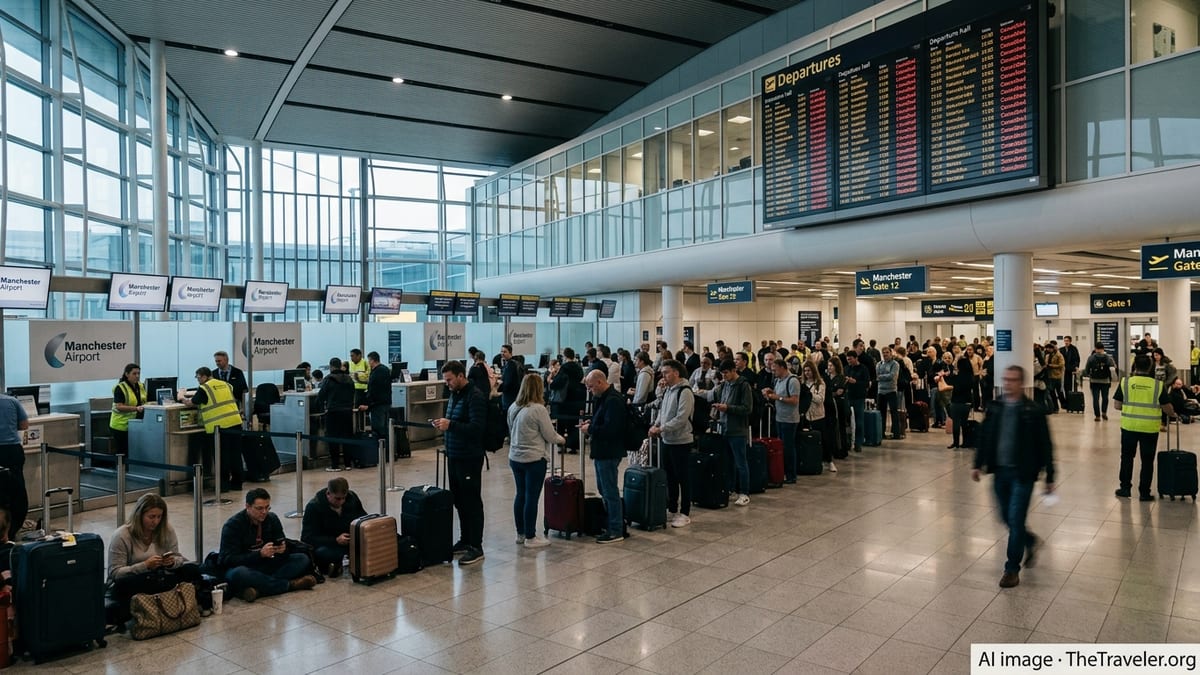
Manchester Airport has been plunged into travel turmoil after a major power supply problem triggered widespread flight cancellations and severe delays, leaving thousands of passengers stranded and highlighting fresh concerns over the resilience of critical airport systems.
Get the latest news straight to your inbox!
Power Failure Sparks System-Wide Disruption
Published coverage from late June 2024 shows that a significant power cut affecting the Manchester area caused extensive disruption across the airport, forcing airlines to cancel scores of flights and delay many more as key operational systems went offline. Reports indicate that the loss of power affected not only terminal facilities but also essential back-end infrastructure, creating a cascading operational breakdown.
According to news agency reporting at the time, the outage hit on a busy summer travel Sunday, when terminals were already operating near capacity. With electricity supplies interrupted, parts of the airport struggled to maintain normal check-in, security and boarding processes. While backup systems were available, publicly available information suggests they were not able to fully compensate for the scale or nature of the failure.
Subsequent documentation released by the Manchester Airport Consultative Committee describes how the incident on 23 June 2024 exposed a rare but critical combination of technical vulnerabilities. Meeting minutes note that while contingency plans had been in place for several years, this particular chain of events had not previously occurred in testing or real-world operations, leaving staff to manage an unprecedented disruption in real time.
Airlines operating from multiple terminals reported that they were unable to process passengers at normal speed, with some carriers choosing to cancel entire rotations rather than risk further knock-on delays. The result was a backlog of travellers facing long queues, minimal information and considerable uncertainty about when services would resume.
Baggage Systems Grind to a Halt
One of the most serious consequences of the outage was the impact on Manchester Airport’s complex baggage handling system. Publicly released accounts indicate that, even after power was restored to large parts of the site, the automated baggage network remained inoperable for an extended period, forcing airlines and ground handlers to improvise manual workarounds.
News reports at the time highlighted how this baggage system failure quickly became a flashpoint for passenger frustration. Travellers arriving in Manchester reported long waits to reclaim luggage, while many departing passengers were advised that their bags might not travel on the same flight. In some cases, airlines acknowledged that checked baggage would be delayed and delivered separately once systems had recovered.
Jet2, one of the largest operators at Manchester, was among the carriers most visibly affected, with images in national media showing long lines at its check-in areas. Publicly available information suggests the airline had to cancel or heavily delay numerous departures while staff attempted to process passengers and luggage using limited manual capacity.
For airports such as Manchester, which handle millions of passengers each year, automated baggage systems are tightly integrated with security screening and aircraft turnaround schedules. Once those systems fail, the knock-on effect can last many hours beyond the original outage, contributing to what many passengers experienced as an all-day travel nightmare.
Passengers Face Cancellations, Missed Connections and Overnight Stays
The scale of the disruption meant that many travellers experienced more than just delays at the gate. Reports from UK and international media describe passengers missing long-haul connections, package holiday departures and important business trips as the cancellation tally climbed throughout the day.
Some travellers attempting to start multi-leg journeys from Manchester found themselves unable to leave the terminal at all, after early flights were cancelled and later services became oversubscribed. Others arriving into the airport discovered that their connecting departures had already been removed from the schedule, effectively stranding them in the North West with limited options for rebooking.
Travel industry coverage suggests that airlines offered a mix of solutions, including refunds, rebookings from alternative UK airports and hotel accommodation where required. However, the sudden scale of demand for replacement flights on a peak travel weekend meant that many re-accommodated passengers were forced to accept departures a day or more later than originally planned.
The cancellations also carried financial implications for both airlines and travellers. While European air passenger rights rules typically offer protections in cases of severe disruption, eligibility can depend on the cause of the problem and whether it is deemed within an airline’s control. Consumer groups have since urged passengers affected by the Manchester incident to keep detailed records of their itineraries and expenses when seeking redress.
Broader Questions Over Infrastructure Resilience
The power failure and its aftermath at Manchester Airport have prompted broader debate about the resilience of critical transport infrastructure in the United Kingdom. Aviation industry publications have noted that, despite substantial investment in recent years, core systems at major hubs can still be vulnerable to relatively localised technical incidents that then escalate rapidly.
In public documents, Manchester Airport Group has acknowledged the scale of the disruption caused by the 2024 outage and has described the event as highly unusual. Meeting notes from the airport’s consultative committee reference ongoing work to review the circumstances of the failure, including how backup supplies and contingency plans performed under pressure, and what additional safeguards may be required.
The incident has also been viewed in the wider context of recent disruption at other major European airports, where electrical faults, IT failures and radar outages have occasionally led to significant operational shutdowns. Industry commentators argue that as air travel continues to recover and grow, the tolerance for single points of failure in airport systems is diminishing, placing renewed focus on redundancy and rapid-recovery capability.
For Manchester, the episode comes at a time of substantial redevelopment, with long-term terminal and airfield improvements intended to boost capacity and passenger experience. While recent traveller commentary suggests that construction work itself is not seriously impeding day-to-day operations, the power cut has underscored that even a modernising hub can be brought to a standstill by an unexpected breakdown in its most basic utilities.
What Travelers Need to Know Before Flying From Manchester
In the wake of the disruption, travel experts and consumer organisations have outlined several practical steps for passengers planning to use Manchester Airport in the coming months. Public guidance encourages travellers to monitor their flight status closely in the 24 hours before departure, make use of airline apps where available and allow additional time for check-in and security during busy periods.
Passengers embarking on complex itineraries, particularly with tight connections or onward long-haul sectors, are being advised to build extra flexibility into their plans. Where possible, booking through a single airline or alliance on a single ticket can make it easier to secure rebooking assistance if an initial leg is disrupted by a localised problem such as a power or systems failure.
Travel insurance that explicitly covers missed connections, extended delays and additional accommodation costs is also being highlighted as an important safeguard. Policy terms vary considerably, and consumer advocates recommend checking that cover applies to airport infrastructure failures as well as adverse weather or airline-specific issues.
While Manchester Airport has since returned to normal operations, the recent episode has become a case study in how quickly a modern hub can be thrust into crisis when critical infrastructure fails. For passengers, it is a powerful reminder that even routine journeys can be upended without warning, and that informed preparation remains one of the few tools available to reduce the personal impact of large-scale travel chaos.