

More news on this day
Travelers at Denver International Airport faced mounting frustration this week as a major power disruption and subsequent ground stop rippled across the national air network, leaving passengers on Delta Air Lines, Southwest Airlines and Alaska Airlines contending with delays and at least seven flight cancellations affecting Denver, Chicago, New York and several other US cities.
Get the latest news straight to your inbox!
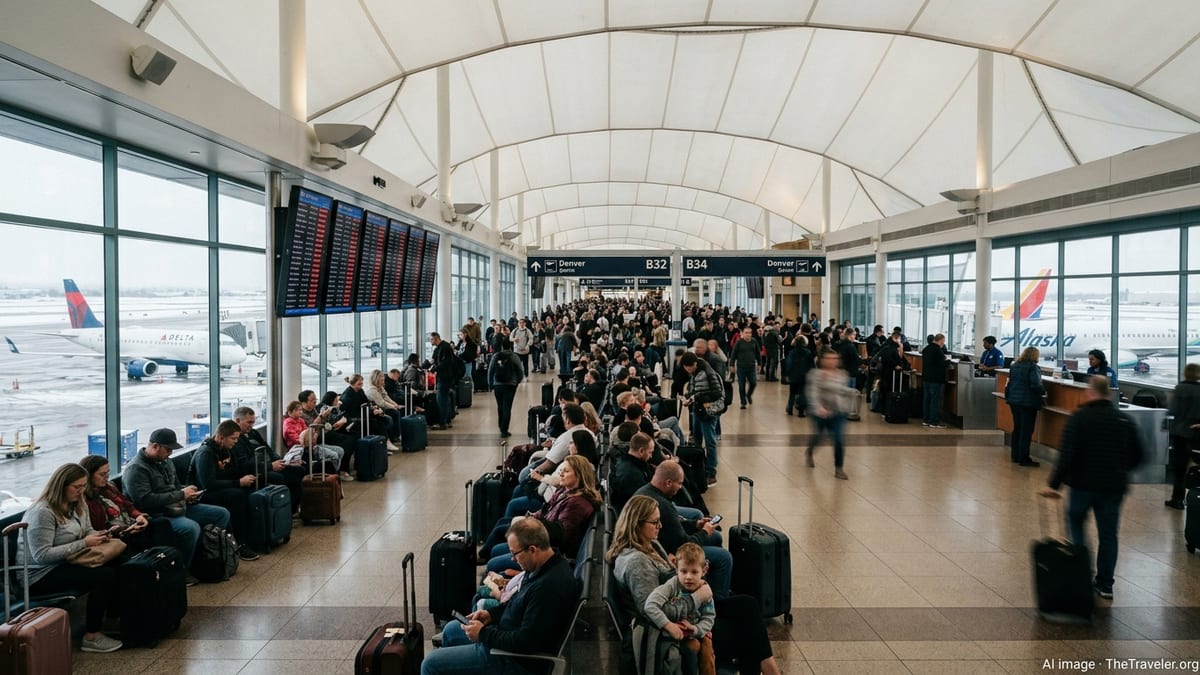
Power Failure at Denver International Disrupts Operations
Reports from passengers and local coverage indicate that Denver International Airport experienced a widespread power outage on March 18, disrupting terminal operations, lighting and some critical airport systems. Backup generation and a dedicated solar array reportedly kept essential safety and communications equipment running, but routine functions such as check in, baggage handling and concessions were significantly affected for several hours.
The outage coincided with a traffic peak, intensifying its impact on departing and arriving flights. With parts of the terminal operating on limited power, airlines were forced to slow boarding, manually process some passengers and adjust gate assignments. The reduced capacity contributed to a backup of aircraft on the ground and in holding patterns, which quickly cascaded into broader disruptions.
Publicly available information shows that the Federal Aviation Administration instituted a ground stop affecting flights bound for Denver during the peak of the outage. Departures already in the air were held away from the airport or diverted, while newly scheduled departures from other cities were temporarily paused as crews awaited clarity on runway and terminal conditions.
Although power was gradually restored and the full ground stop lifted, the recovery process extended into subsequent waves of flights. Aircraft and crews were left out of position, and same day connections through Denver became increasingly difficult for passengers booked on Delta, Southwest and Alaska services across the country.
Flight 77 Delays and Cancellations Ripple Across Routes
Among the disrupted schedules were multiple services identified as Flight 77 on different carriers, a common route number that appears on several domestic pairings. Tracking data and airline schedule information indicate that one Delta Flight 77 operating through Denver experienced a prolonged delay, while other Flight 77 services on Southwest and Alaska were either significantly delayed or cancelled outright as the disruption spread into interconnected hubs.
At least seven flights tied to Denver’s operational problems were cancelled across the network, with knock on effects reported in Chicago, New York and additional midwestern and coastal cities. Some of these cancellations were attributed directly to the Denver power issue, while others stemmed from aircraft and crew being stranded out of position after missing scheduled turns through the airport.
Because flight numbers are reused by airlines on different routes and days, passengers encountered confusion when receiving automated alerts about “Flight 77” delays and cancellations that did not always clearly distinguish between carriers or city pairs. This added to the perception of wider chaos, especially for travelers holding multi segment itineraries that included Denver as a connecting point.
Airline operations teams responded by shuffling aircraft assignments, rerouting aircraft around Denver and, in some cases, consolidating lightly booked services to free up planes for stranded passengers. These measures helped stabilize schedules through the evening but left thousands of travelers needing rebooking or overnight accommodation in hub cities.
Impact Felt in Chicago, New York and Other Major Hubs
The shockwaves from Denver’s outage quickly reached other key airports. In Chicago, travelers reported extended waits as inbound aircraft that had been scheduled to arrive from Denver were delayed or diverted. This created gaps in aircraft availability for subsequent departures, especially for evening and early morning flights that rely on tightly timed turnarounds.
In New York, congestion amplified the problem. LaGuardia and John F. Kennedy airports were already operating near capacity amid a busy late winter travel period. When flights from Denver arrived out of sequence or not at all, some Delta, Southwest partner and Alaska services were forced into rolling delays. According to publicly available tracking data, several departures experienced schedule pushes of more than two hours while airlines sought replacement aircraft or awaited inbound crews.
Smaller and midsize markets connected to Denver, Chicago and New York also felt the disruption. Cities in the Mountain West and Midwest saw schedule gaps where Denver originating aircraft did not arrive as planned, interrupting the steady flow of regional connections. In some locations, passengers reported that the last flight of the day was cancelled after the inbound leg from Denver or Chicago failed to operate, forcing unexpected overnight stays.
With weather related waivers already in place in parts of the Midwest and Northeast earlier in March, the Denver outage added a new layer of complexity to an already strained network. Travelers who had rebooked trips around earlier storms now faced a fresh round of uncertainty linked not to weather, but to infrastructure failure.
Delta, Southwest and Alaska Work to Recover Schedules
Delta Air Lines, Southwest Airlines and Alaska Airlines each maintain significant operations that interact with Denver either through direct service or through shared national traffic flows. Publicly available schedule data show that all three carriers had aircraft routing through Denver on the day of the outage, and disruptions there echoed through their broader networks.
Delta faced particular challenges in balancing hub operations in cities such as Minneapolis, Salt Lake City and New York with irregular arrivals and departures linked to Denver. Aircraft that started the day on clean schedules found themselves arriving late into downstream hubs, compressing turnaround times and increasing the risk of crew timing out. As a result, some later departures were cancelled or delayed as staffing windows closed.
Southwest, which relies heavily on quick turn point to point flying, also felt the disruption. Denver is one of its busiest stations, and a sudden halt in operations there can ripple into Midway in Chicago, smaller regional airports and coastal cities that rely on continuous aircraft rotations. As flights backed up, crews hit duty limits and aircraft were forced into unscheduled overnights in cities not originally planned as layover points.
Alaska Airlines, while smaller in Denver than the other two carriers, nonetheless saw schedule impacts on routes connecting the Pacific Northwest with the central United States and East Coast. When Denver based flights fell offline or were delayed, some onward services from connecting hubs lost critical feed, leading to additional cancellations and unmet demand on popular business and leisure routes.
Stranded Passengers Navigate Limited Options
For passengers caught in the disruption, options were often limited. With multiple airlines experiencing irregular operations simultaneously, same day alternative flights quickly sold out on key legs between Denver, Chicago, New York and other hubs. Travelers described long lines at customer service desks and extended waits for rebooking through call centers and mobile apps.
Publicly available guidance from airlines in similar disruption events typically encourages passengers to use digital tools for rebooking and to monitor flight status before heading to the airport. In practice, however, the speed at which the Denver outage unfolded left many travelers already in transit or at the gate when delays escalated into cancellations. Some were unable to secure seats until the following day, especially those needing to keep multi city itineraries intact.
Hotels near Denver International and major connecting hubs reported higher than usual demand as stranded passengers sought last minute rooms. With winter weather still affecting parts of the country and early spring holidays approaching, availability and prices in some markets were less flexible than during off peak periods, adding to the strain on disrupted travelers.
Travel planners note that episodes like the Denver outage highlight the vulnerability of tightly timed airline networks to localized infrastructure failures. For passengers, the episode serves as a reminder to build extra time into connections through major hubs, keep essential items in carry on bags in case of unexpected overnights and remain alert to schedule changes across all segments of an itinerary, not just the first departure.