

More news on this day
A brief but disruptive power outage at Kuala Lumpur International Airport’s main terminal has snarled baggage handling and left thousands of passengers facing delays, missed connections and long waits at one of Southeast Asia’s busiest hubs.
What Happened During the KLIA Power Trip
Malaysia Airports confirmed that the baggage handling system at Kuala Lumpur International Airport’s main terminal was disrupted for just over an hour on March 6 after a sudden power trip hit parts of the facility. Although power was restored quickly, the stoppage brought the automated conveyor network to a standstill, causing luggage to pile up behind the scenes while flights continued to operate on schedule.
The outage primarily affected checked baggage being processed through the main terminal, known as KLIA Terminal 1, which handles full-service carriers and a significant share of long haul international traffic. Low cost operations at the neighbouring terminal, KLIA2, continued largely as normal. Airport officials said there was no impact on runway operations, air traffic control or security screening, but the knock-on effect for baggage was immediate.
Because outbound luggage could not be sorted and loaded during the disruption, some flights departed late while others were forced to leave bags behind for later delivery. Arriving passengers also encountered extended waits at carousels as ground teams worked manually to clear the growing backlog once the system was brought back online.
Malaysia Airports has described the incident as a temporary technical failure triggered by an unexpected power issue, stressing that critical systems are now functioning and that additional monitoring is in place. However, the operator has not given a detailed public breakdown of which components failed or why safeguards did not fully prevent the interruption.
How Travellers Were Affected on the Ground
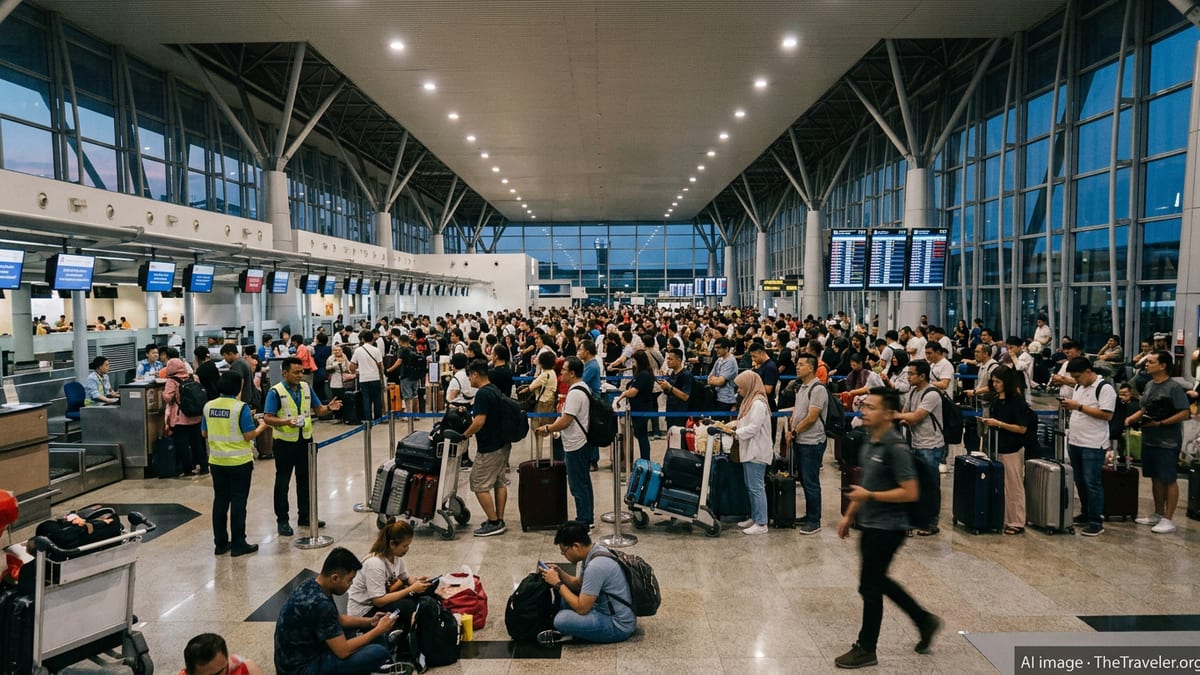
The outage struck during a busy travel period, amplifying its impact. Airlines reported passengers missing onward connections as they waited for delayed bags, while others arrived at their final destinations without checked luggage and had to file reports for delayed delivery. Social media posts from travellers described crowded check in halls, long queues at baggage service counters and scenes of suitcases stacked in holding areas as staff attempted to sort luggage manually.
Some flights from Kuala Lumpur departed with limited baggage loads so they could leave before crew duty time limits expired, forcing airlines to re route affected suitcases onto later services. For long haul travellers with tight connections in hubs such as Doha, Dubai or Singapore, this introduced a risk of extended separation from their belongings, particularly for itineraries continuing on to Europe or North America.
On the arrivals side, many passengers reported waiting significantly longer than usual at baggage carousels in the hours after the system was restored, as handlers merged manually processed bags with those coming through the restarted conveyors. While airport authorities have not released an official figure, regional travel outlets estimate that several thousand travellers experienced some form of delay, whether in late arriving luggage, missed flights or extended processing times in the terminal.
Airlines operating from KLIA said they were working to reunite customers with late bags within 24 to 72 hours where possible. Priority is typically given to medication, mobility devices and bags for passengers on short stays, but the volume of affected luggage has meant some travellers may face longer waits, especially on heavily booked routes.
What KLIA and Malaysia Airports Are Doing Now
In statements to local media, Malaysia Airports said normal baggage operations had resumed after the outage and that teams were deployed on the ground to assist passengers and work through the backlog. The operator also indicated that an internal technical review is under way to determine the exact cause of the power trip and to assess whether further redundancy is needed in the baggage handling infrastructure.
The disruption comes at a sensitive time for the airport operator, which has faced scrutiny over previous systems failures at Kuala Lumpur International Airport, including earlier incidents involving network outages and train service interruptions between the main terminal and satellite building. Analysts say the latest baggage failure will add pressure on management to demonstrate that resilience improvements are delivering tangible results.
Aviation industry observers note that modern baggage systems are highly automated and can be vulnerable to cascading failures when a single power or network component goes offline. While backup generators and surge protection are standard in major hubs, even a short interruption can create operational ripples that take hours to absorb, particularly when terminals are running near capacity.
Malaysia Airports has not indicated any long term capacity reductions at KLIA as a result of the outage, and airlines continue to sell tickets normally. However, the operator is expected to brief regulators and government stakeholders on its findings and on proposed safeguards to reassure both carriers and passengers ahead of anticipated traffic growth in the coming peak travel seasons.
Advice for Passengers Flying Through KLIA This Week
For travellers with flights through Kuala Lumpur in the coming days, airport operations are largely back to normal, but residual knock on effects may still be felt in isolated cases as airlines reposition delayed bags and adjust rotations. Passengers with imminent departures are being advised by local travel agents to arrive earlier than usual, particularly if they plan to check in luggage at the main terminal.
Allowing at least three hours for regional flights and four hours for long haul departures gives extra buffer in case of queues at check in or any renewed strain on the baggage system. Where possible, travellers with tight connections or important items are encouraged to travel with carry on only, or to pack essentials such as medication, valuables, a change of clothes and chargers in hand luggage rather than checked bags.
Passengers who arrive at their destination without their checked baggage should immediately file a delayed bag report with their airline before leaving the airport, providing a local delivery address and detailed description of their luggage. Keeping boarding passes and bag tags is essential to help tracking, and many carriers now offer online or app based tools so customers can monitor progress as bags are forwarded.
Those with comprehensive travel insurance may be eligible for reimbursement of basic necessities such as clothing and toiletries if luggage is delayed beyond a specified number of hours. Travellers should keep receipts and check policy terms carefully, as coverage limits and conditions vary between providers and ticket types.
What This Incident Signals for Regional Air Travel
The KLIA baggage disruption underscores how vulnerable large hub airports can be to even short technical failures, especially as travel demand rebounds across Asia. Kuala Lumpur is a key connector for routes linking Southeast Asia with the Middle East, Europe and Australia, so any operational hiccup can quickly ripple through airline networks and affect passengers far beyond Malaysia’s borders.
The incident also highlights the growing importance of robust infrastructure investment and contingency planning as airports compete to serve as preferred transit points. Travellers increasingly compare not just airfare but also reliability, connection times and the likelihood of delays or baggage mishandling when choosing routings.
For Malaysia, the episode is a reminder that delivering a consistently smooth experience at its flagship airport will be central to ambitions of attracting more international visitors and premium traffic. While a single outage is unlikely to permanently alter travel patterns, repeat disruptions can erode confidence among frequent flyers and airline partners who have alternative hubs to choose from in the region.
In the short term, passengers connecting through Kuala Lumpur should be prepared for the possibility of occasional irregularities as airports and airlines across Asia continue to operate near the limits of their capacity. Building in extra time, travelling light where feasible and staying closely informed via airline communications remain the most practical defences for travellers navigating an increasingly crowded regional air network.