

More news on this day
A viral complaint about a traveler forced to check an allegedly undersized carry-on bag has intensified scrutiny of how airlines and gate agents wield their power over passengers’ luggage at the gate.
Get the latest news straight to your inbox!
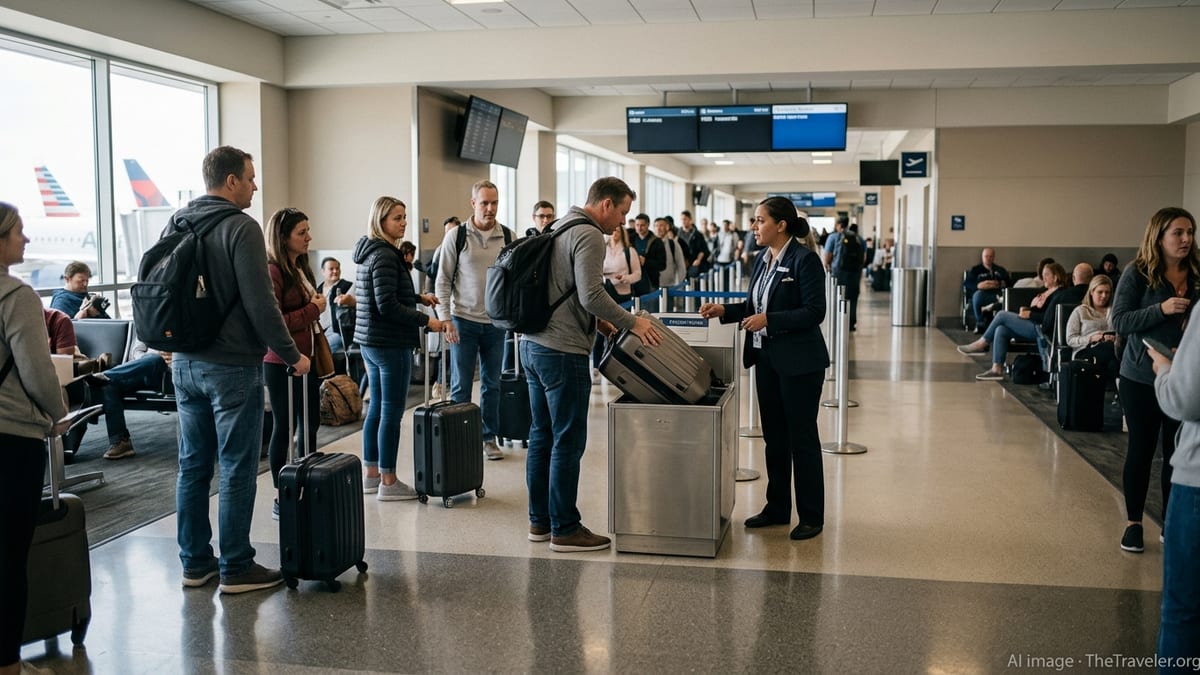
Viral complaint accuses airline staff of “unchecked power trips”
The latest flashpoint emerged from a frequent flyer’s account shared on a popular airline forum in late March 2026. The traveler, who described themselves as an elite-status customer with hundreds of flights on a major U.S. carrier, said a gate agent singled them out during boarding and ordered their small roller bag into the metal sizer.
According to the post, the bag appeared to meet the airline’s published length and width requirements but was slightly thicker than allowed. The passenger claimed they offered to remove a wetsuit and transfer it to a personal item to comply, but wrote that the agent refused to engage and insisted the bag be checked. The customer alleged that any attempt to explain was met with accusations of being “disruptive,” prompting them to stop arguing and surrender the bag.
The traveler concluded that the airline was allowing staff to go on “unchecked power trips” against even their most loyal customers, framing the incident as part of a broader pattern in which subjective, last-minute baggage decisions can override what passengers believe are clear written rules.
The account prompted thousands of reactions from other travelers, many of whom shared similar stories of disputes at the gate over carry-on size and what constitutes a personal item.
Other oversized-bag flashpoints are circulating online
The March complaint is only the latest in a series of widely shared clashes between passengers and airline staff over luggage dimensions and weight. In recent months, social media feeds and travel forums have featured videos and posts showing travelers pulled from boarding lines to weigh or measure their bags, sometimes just minutes before departure.
One widely discussed thread in February 2026 described travelers at Chicago Midway being forced to step out of the boarding queue if staff deemed their carry-on “oversized,” then sent to a separate counter to pay to check the bag before being allowed back in line. Commenters argued that the practice slowed boarding and created confusion as customers tried to understand why bags that had flown before were suddenly considered too large.
Archived discussions and older viral clips show the tensions are not new. Posts about “power tripping” gate agents at U.S. and foreign airports recount passengers being told to cram bags into tight metal sizers, remove contents on the terminal floor, or pay unexpected fees or risk being denied boarding. Some travelers say they have become increasingly anxious about inconsistent enforcement, even when using luggage marketed as “carry-on approved.”
Observers note that while many disputes stay offline, those that are captured on video or described in emotional detail can quickly gain traction, feeding a narrative that frontline staff sometimes exercise their discretion in a way that appears arbitrary to customers.
Incentives and shrinking space put pressure on the boarding gate
Publicly available information suggests structural factors are fueling these conflicts. Multiple reports in 2024 and 2025 highlighted that some low-cost airlines pay gate agents small commissions for each bag they reclassify and collect a fee for, creating a financial incentive to flag borderline carry-ons as oversized. A U.S. Senate subcommittee report cited in consumer coverage described millions of dollars paid out to staff for catching passengers “not following airline bag policies,” including bonuses for overweight or too-large luggage.
At the same time, industry data show that many carriers have tightened carry-on size rules over the past decade as overhead bin space has become more constrained. Airlines have installed larger bins on some aircraft but have also pushed more travelers toward carry-on only fares, raising the number of bags competing for the same space. When full flights leave little room, strict gate checks can become a way to manage volume, even if passengers believe their bags technically comply.
Consumer advocates quoted in travel columns argue that vague language in baggage policies, combined with aggressive fee structures, leaves significant discretion in the hands of gate staff. Travelers may buy luggage labeled with an airline’s dimensions only to discover that metal sizers in the terminal are slightly smaller or that handles, wheels, or bulging pockets push bags beyond the limit.
The combination of shrinking margins for error and financial rewards for catching noncompliant bags can make the gate feel less like a routine checkpoint and more like a high-stakes inspection, especially for infrequent flyers who are unfamiliar with evolving rules.
Passengers describe uncertainty and “moving goalposts”
Reactions to the latest complaint underscore a recurring theme: travelers say they are unsure what to expect from one flight to the next. In comments responding to the March incident, frequent flyers said they had carried the same bag on dozens of trips without issue before being challenged by a particular gate agent or at a specific airport.
Some described sizer boxes that appeared smaller than earlier models, or staff requiring even personal items to be tested in the frame. Others reported that staff in one city waved a bag through while a different station treated an identical bag as oversize on the return journey. This perceived inconsistency leads many passengers to view tough enforcement as personal rather than procedural, fueling complaints of “power trips” and bias.
Travel writers and forum moderators often advise passengers to plan for stricter interpretations by keeping bags slightly under the maximum in every dimension and avoiding overstuffing. Nonetheless, recent experiences shared online suggest that even cautious travelers can be caught off guard if a staff member decides to re-measure or reweigh luggage at the gate.
For many commenters, the emotional sting comes less from the fee itself and more from feeling dismissed or talked over when questioning a decision. Accounts that go viral frequently mention an uneven power dynamic at the boarding door, where arguing can risk being labeled disruptive and removed from the flight.
Calls grow for clearer rules and better communication
The latest wave of stories has renewed calls from travelers and consumer advocates for clearer baggage policies and more transparent enforcement at airports. Suggestions circulating in travel advice columns include requiring airlines to ensure that all sizers match the written dimensions on their websites, publishing photographs or diagrams of approved bags, and training gate staff to explain decisions in calm, neutral language.
Some commentators argue that airlines should remove or limit commission-based incentives tied directly to bag fees, saying such schemes can erode trust even when staff are acting within policy. They suggest that if operational needs require checking more bags, carriers should communicate the reasons openly and consider waiving fees when passengers reasonably believed their luggage complied.
Meanwhile, many travelers are adapting their own strategies. Common recommendations in online communities include measuring bags at home, leaving extra room for expansion, carrying a small collapsible duffel or tote in case items need to be shifted, and documenting interactions at the gate with photos or notes. While these steps do not eliminate the risk of a dispute, experienced flyers say they can help de-escalate tense moments.
As the March 2026 complaint continues to circulate, it encapsulates a wider frustration with modern air travel: that a trip can be derailed in the final minutes of boarding not by weather or mechanical issues, but by a difference of opinion over a few centimeters of luggage.