

More news on this day
As Holy Week approaches and millions of Filipinos prepare to travel by sea, the Philippine Ports Authority is stepping up digital upgrades to its Online Reservation and Ticketing System, known as ORAS, aiming to make ferry bookings smoother and queues shorter across the country’s busiest ports.
Get the latest news straight to your inbox!
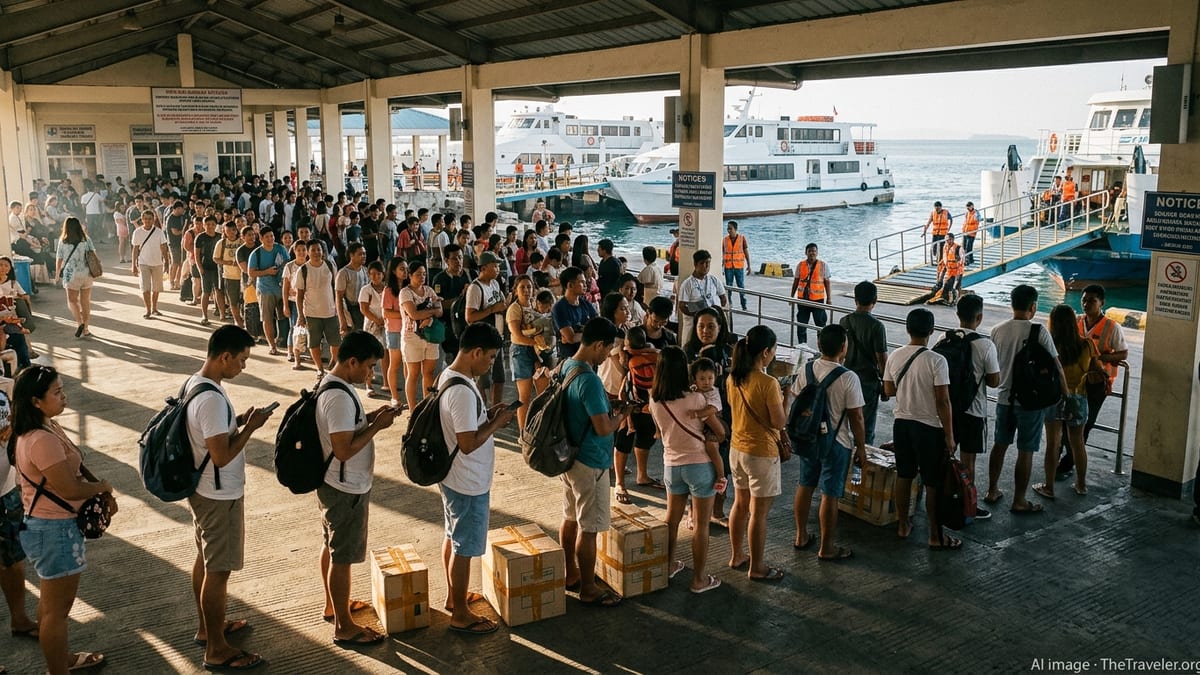
Digital Push After Record Holy Week Passenger Volumes
Recent data from publicly available port statistics shows that Holy Week has firmly reestablished itself as one of the busiest travel periods in the Philippines, with passenger volumes in 2025 rising sharply compared with the previous year. Reports indicate that seaport traffic during the Lenten break climbed to well over two million travelers as Filipinos headed to home provinces, pilgrimage destinations and island resorts.
Analysts note that this surge reflects a broader rebound in domestic tourism and a growing reliance on sea transport along major nautical highways. Port management offices in Batangas, Bohol, Panay, Mindoro and other key gateways have consistently ranked among the top movers of passengers, particularly during Holy Wednesday and Holy Thursday, when many travelers traditionally begin their journeys.
Against this backdrop, the Philippine Ports Authority has been rolling out a wider digitalization program designed to keep seaport infrastructure in step with rising demand. Enhancements to systems such as ORAS form part of that agenda, with the goal of using technology to reduce congestion inside terminals, shorten processing times and provide more predictable travel experiences during peak seasons.
Holy Week 2026 is expected to follow the same upward trajectory, with planning documents and media coverage pointing to continued growth in passenger numbers nationwide. This makes the performance of digital reservation platforms a critical factor in how smoothly port operations will run.
How ORAS Streamlines Ferry Bookings
The Online Reservation and Ticketing System, branded as ORAS, is the Philippine Ports Authority’s integrated platform that enables passengers to secure ferry bookings in advance for selected routes across the archipelago. Instead of lining up at physical ticket counters hours before departure, travelers can search for sailings, choose schedules and reserve seats ahead of time through the digital interface.
Publicly available information on the initiative indicates that ORAS is being positioned as a key tool for managing demand, particularly during holidays when passenger volumes spike sharply. By encouraging advance reservations, the system allows operators and port authorities to gain clearer visibility on expected loads per sailing and per terminal, which in turn supports better allocation of berths, boarding gates and security screening resources.
For travelers, the main benefit lies in predictability. Having a confirmed reservation helps reduce the risk of being turned away from fully booked trips, a common frustration in years when walk-in ticketing dominated Holy Week sea travel. It can also lessen time spent queueing at ports, since much of the transaction and validation process is shifted online and to pre-departure stages.
Industry observers point out that as ORAS is further enhanced, the system could support more advanced features such as dynamic scheduling alerts, real-time capacity updates and integration with loyalty programs or tourism offerings. Each incremental improvement is expected to contribute to a more seamless booking experience as digital familiarity among passengers grows.
Enhancements Target Queues, Safety and Crowd Management
Recent coverage of the Philippine Ports Authority’s digital roadmap highlights a series of planned upgrades intended to make ORAS more robust ahead of major travel peaks like Holy Week. These include improving the platform’s stability during traffic surges, refining user interfaces for easier navigation and expanding the number of participating routes and shipping operators connected to the system.
Such enhancements are closely tied to safety and crowd management inside terminals. When more passengers are able to complete bookings electronically and arrive with confirmed reservations, port personnel can focus their efforts on security checks, baggage handling and vessel turnaround rather than manual ticket processing. This contributes to smoother passenger flow and helps reduce bottlenecks at entrances, ticket booths and boarding areas.
Operational reports from recent Holy Weeks have underscored how quickly congestion can build up in gateway ports, especially during early morning and late evening sailings when multiple routes converge. Digital tools like ORAS give port managers an additional lever to stagger arrivals and allocate holding areas based on verified manifests, lessening the likelihood of overcrowded halls and extended waiting times.
Some of the enhancements are also designed to make the system more inclusive. Efforts to simplify on-screen instructions, provide multilingual options and enable easier access via mobile devices seek to ensure that both tech-savvy users and first-time digital bookers can navigate ORAS without difficulty, particularly under the time pressure of holiday travel planning.
Nationwide Reach From Luzon to Visayas and Mindanao
While major urban gateways like Manila, Batangas and Cebu often draw attention during Holy Week, the Philippine ferry network extends deeply into secondary and tertiary ports that serve island provinces and smaller coastal communities. Reports on PPA’s modernization plans indicate that enhancing ORAS is seen as a way to provide more consistent service standards across this wider network.
Expanding ORAS coverage to additional routes linking Luzon, Visayas and Mindanao can help distribute passenger flows more evenly and support tourism growth beyond traditional hotspots. For instance, better reservation visibility on services to destinations such as Bohol, Siquijor, Guimaras or Northern Mindanao allows local stakeholders to anticipate visitor arrivals and prepare accommodation, transport and visitor services accordingly.
For overseas Filipino workers and balikbayan travelers who often transit through major airports before continuing by sea to their home provinces, a stronger digital link between flight arrivals and ferry reservations is especially important. Media reports have highlighted ongoing efforts in some gateways to simplify air-to-sea transfers, and improvements to ORAS can complement these initiatives by making it easier to align ferry bookings with flight schedules.
As more shipping lines and port management offices integrate their operations with the reservation platform, passengers using smaller ports can gradually benefit from the same level of transparency on sailing times and capacity that has historically been more available in larger hubs.
Practical Tips for Holy Week Travelers Using ORAS
For travelers planning to take advantage of ORAS during Holy Week, industry guidance emphasizes the value of early booking. With historical data showing steep increases in passenger volumes in the days leading up to Good Friday, securing a reservation well in advance can significantly reduce uncertainty and the likelihood of having to adjust travel dates or routes at short notice.
Travel advisories also recommend closely checking reservation details before departure, including port of origin, terminal assignments, boarding cut-off times and any documentation requirements set by shipping operators. Having digital or printed copies of booking confirmations prepared before arriving at the terminal can speed up verification at port checkpoints.
Passengers are further encouraged to monitor announcements from port and maritime agencies, particularly in cases of adverse weather or sea conditions that may prompt schedule changes. While ORAS enhancements aim to improve the timeliness of notifications, travelers are advised to remain flexible and allow extra transit time between connecting trips, especially when combining bus, air and sea segments.
For many Filipinos, Holy Week travel is not only a logistical exercise but also part of long-standing religious and family traditions. By leveraging ORAS and other digital tools introduced across Philippine ports, travelers can better navigate the seasonal rush and focus more fully on the observances and reunions that define this period each year.