

More news on this day
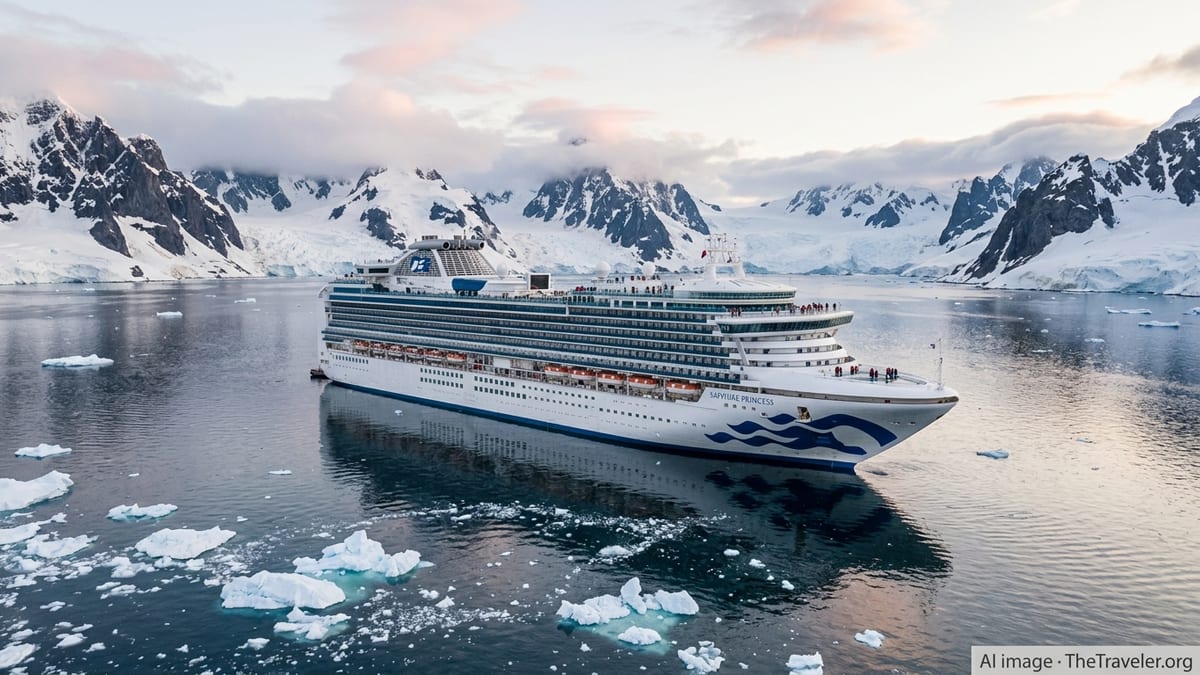
Princess Cruises is reshaping mainstream access to the White Continent with rare overnight stays in the Antarctic Peninsula, positioning its 2026–27 program as a more immersive, expedition-style way to experience one of the planet’s most remote regions.
Get the latest news straight to your inbox!
Overnight Antarctic Calls Mark a New Phase for Princess
Publicly available deployment details for the 2026–27 season show Princess Cruises introducing itineraries that include two overnight stays in the Antarctic Peninsula on selected voyages operated by Majestic Princess. Reports indicate these sailings will operate between November 2026 and January 2027 as part of an expanded South America and Antarctica program built around longer, multi-week journeys.
The move distinguishes Princess from many large-ship operators that have traditionally focused on daytime scenic cruising in Antarctica, without extended night-time positioning off the Peninsula. Overnight calls are more common among smaller expedition lines that prioritize long shore days and Zodiac operations, but they remain unusual for a contemporary, high-capacity brand.
By anchoring off the Peninsula for consecutive nights, the line is signaling that Antarctica is no longer just a bonus scenic segment on a longer South America route. Instead, it is being framed as the central narrative of the voyage, with the overnight structure designed to maximize time within the ice-fringed channels and bays that define the classic Antarctic Peninsula experience.
Industry observers view this as part of a broader evolution in big-ship polar cruising, as more travelers seek deeper engagement with remote destinations without sacrificing onboard amenities such as multiple dining venues, spas and entertainment typical of a Royal-class vessel.
From Scenic Cruises to Immersive Expedition-Style Experiences
Historically, Princess Antarctica programs have been promoted as scenic cruises, giving guests sweeping views of glaciers, icebergs and penguin colonies from the decks of large ships, while landings on the continent were left to smaller expedition operators. Published commentary from cruise travelers has often highlighted this distinction between scenic transits and expedition itineraries that include Zodiac tours and shore visits.
The newly announced overnight stays do not convert Majestic Princess into a traditional small expedition ship, but they do shift the emphasis toward immersion. Longer stays alongside the Peninsula extend viewing windows across changing light conditions, from pastel late-night skies to early-morning alpenglow on the mountains, and increase the chances of spotting wildlife such as humpback whales, seals and penguins over multiple tidal and weather cycles.
Travel industry coverage notes that these immersive Antarctic segments are built into itineraries ranging from around two weeks to more than a month, often combined with scenic cruising through Beagle Channel and Glacier Alley and visits to ports in Argentina, Chile, Uruguay and the Falkland Islands. This design positions Antarctica as part of a wider Southern Cone journey, but the overnight component signals a shift in how long guests actually spend within the Peninsula region itself.
The strategy also aligns Princess Cruises more closely with a broader market trend in polar travel, where operators increasingly promote depth of experience, extended wildlife encounters and slower travel over simple destination checklists.
What Overnight Stays Change for Guests on Board
For travelers, an overnight position off the Antarctic Peninsula changes both the rhythm and range of possible experiences, even within the framework of a large ship. With the vessel remaining in the region across multiple days and nights, scenic transits can be timed around the best weather and light, and guests may have more opportunities to observe shifting ice conditions and wildlife behavior from different vantage points around the ship.
Extended time on site also opens the door to enhanced programming on board. Public information about comparable polar voyages suggests that lines often schedule lectures, photography sessions and natural history presentations around key scenic periods. In an overnight scenario, those activities can be tailored more closely to what is unfolding outside, whether that is a pod of whales feeding in the Gerlache Strait or a spell of crystal-clear weather revealing distant peaks and ice shelves.
From a guest-experience perspective, the overnight structure allows for quieter moments that are difficult to achieve on a single, tightly timed transit. Travelers can step out on deck late at night to watch the twilight sky reflecting off pack ice, or rise early to see the first light catch the snowfields, without feeling that the ship is quickly moving on to its next destination.
The approach is particularly significant for first-time visitors to Antarctica, many of whom may only make the journey once. For these travelers, two nights off the Peninsula increase the chance of at least one period of favorable weather and visibility, an important consideration in a region known for fast-changing conditions.
Positioning Within a Crowded Polar Cruise Market
The decision to add overnight Peninsula stays comes as competition intensifies in the wider Antarctic cruise sector. A growing number of expedition-focused brands have launched purpose-built ships for high-latitude travel, often with advanced ice-strengthened hulls, hybrid propulsion and extensive Zodiac fleets. Many of these companies promote small-group landings, citizen science initiatives and specialist guides as key points of differentiation.
In this context, Princess Cruises is carving out a different niche: offering a more immersive Antarctic experience than a simple sail-by, while maintaining the scale and amenities of a contemporary mainstream line. The overnight calls provide a narrative hook that distinguishes Majestic Princess itineraries from standard scenic-only transits marketed by other large ships.
Travel trade analyses suggest that such hybrid offerings appeal to guests who might otherwise feel torn between the comfort of a big-ship environment and the depth of an expedition cruise. By extending time off the Peninsula without adopting the small-ship expedition model, Princess positions these voyages as a bridge product for travelers transitioning from traditional cruising into more remote, experience-driven itineraries.
The move also underscores how Antarctic itineraries are becoming central to branding for many operators, no longer just seasonal add-ons but key components of broader adventure and discovery narratives that stretch across multiple regions and years.
Balancing Access, Sustainability and Regulation
Offering overnight stays in one of the world’s most fragile environments also highlights the increasing scrutiny on Antarctic tourism. The region is governed by a framework of international agreements and guidelines that aim to minimize human impact on local ecosystems, including rules relating to ship size, landing numbers and biosecurity measures.
Although large vessels like Majestic Princess typically conduct scenic cruising rather than frequent landings, their presence still requires careful operational planning. Publicly available information on industry practices indicates that operators must coordinate closely with route planning, ice navigation protocols and environmental guidelines to manage emissions, waste and wildlife disturbance in polar waters.
Princess Cruises has positioned its 2026–27 program within a broader narrative of responsible exploration, highlighting more efficient technologies and careful itinerary design across its South America and Antarctica schedule. The introduction of overnight stays places additional attention on how these voyages are structured, particularly in terms of speed, time in sensitive areas and adherence to evolving best practices for polar tourism.
As demand for Antarctic travel continues to rise, the line’s decision to invest in deeper immersion at the Peninsula may encourage further innovation across the sector. It also reinforces the message that the future of polar cruising will likely be defined not only by how far ships can go, but by how thoughtfully they spend time once they get there.