

More news on this day
Princess Cruises is raising what guests pay once they are on board, increasing daily crew appreciation charges and leaning harder on dining-related fees just as demand for Caribbean, Alaska and United States sailings is climbing to record levels.
Get the latest news straight to your inbox!
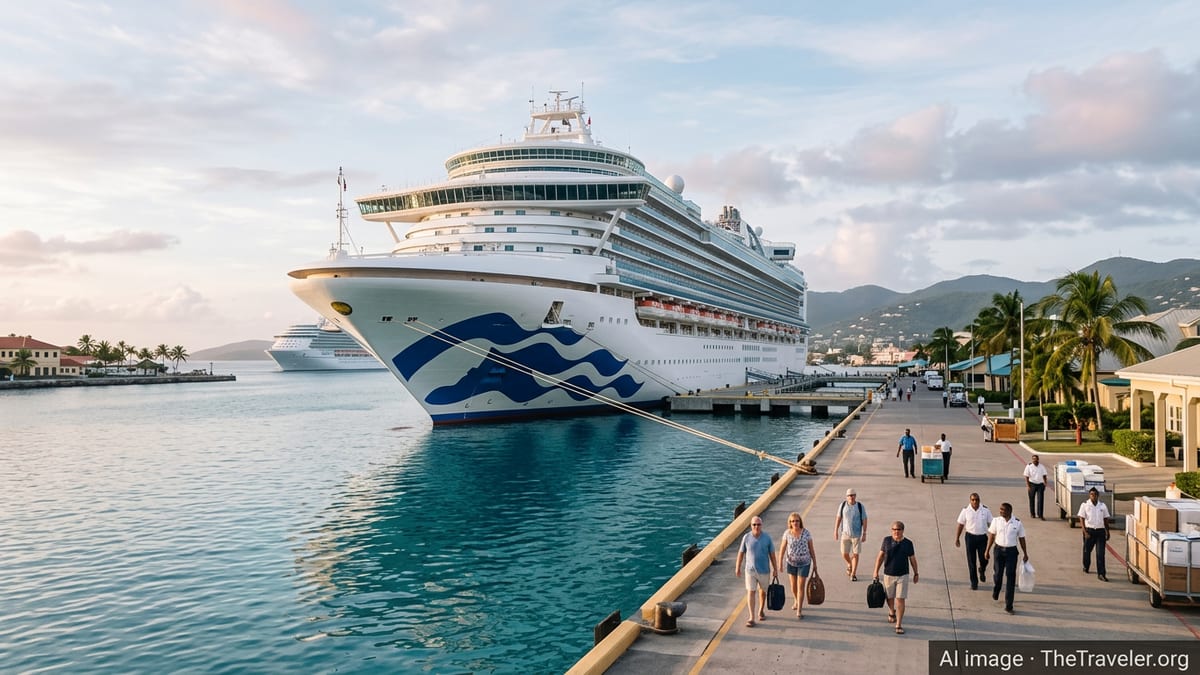
New Crew Charges Roll Out Across the Fleet
Princess Cruises began rolling out higher daily “Crew Appreciation” charges on March 8, 2026, quietly lifting the automatic gratuity that appears on every guest’s onboard account. The adjustment, confirmed by the line to U.S. media, adds one dollar per person per day across cabin categories compared with the previous structure.
The higher fee means a couple sharing an inside stateroom on a typical seven night cruise will now spend more than 250 dollars on automatic crew payments alone, compared with just under 240 dollars previously. For longer itineraries such as repositioning voyages and extended Alaska sailings, the compounded effect runs into hundreds of additional dollars per cabin.
Princess brands the charge as Crew Appreciation and stresses that the money is pooled and distributed to front line and behind the scenes service staff. Passengers can still visit guest services to request adjustments, but the higher default rate sets a new baseline for what most travelers will pay unless they actively opt out or prepay as part of a bundled package.
The latest increase follows earlier hikes in 2024 and 2025 across the cruise sector, cementing automatic daily service charges as a core revenue pillar for mass market brands rather than a discretionary tip in the traditional sense.
Dining Service Fees Creep Higher
Alongside the crew charge increase, Princess has steadily been reshaping its dining economics, particularly for passengers sailing without one of the line’s Plus or Premier packages. In recent years the company has introduced prix fixe charges at several casual venues and tightened rules around what is included in specialty restaurants and room service.
Casual outlets such as the Salty Dog Pub, Alfredo’s and selected pub style venues now carry a per person cover for a set menu, while some premium menu items attract an additional surcharge. Guests on standard cruise-only fares feel these add ons most sharply, as the extra costs stack on top of the higher daily Crew Appreciation fees.
Room service has also evolved into a more defined revenue stream. A per delivery charge applies on most sailings unless guests hold an upgraded package that waives the fee. At the same time, policies in specialty restaurants increasingly treat extra main courses and certain high cost dishes as chargeable beyond the basic cover, a shift that reduces the all you can order perception that once defined cruise dining.
While the main dining room remains included, the web of small surcharges and activation fees means that passengers seeking variety beyond the classic dining venues now face a noticeably higher onboard food bill than they did just a few years ago.
Caribbean and Alaska Demand Offsets Sticker Shock
The timing of the changes underscores how confident cruise lines have become about demand for North American itineraries. Travel agents report strong bookings and higher pricing power for Caribbean voyages out of Florida and Gulf Coast ports, as well as for summer and shoulder season Alaska sailings from Seattle and Vancouver.
Industry data show Caribbean cruises operating at or near full capacity through 2026, with many ships redeployed to warm weather routes in winter and spring to capture robust U.S. demand. In Alaska, a limited season and strict berth allocations in marquee ports such as Juneau and Ketchikan give major brands like Princess additional leverage to nudge onboard pricing upward.
With cabins selling well, cruise companies are increasingly focusing on what guests spend once they step aboard, from drinks and Wi Fi to spa treatments and specialty dining. Automatic service charges are a relatively low friction way to raise revenue without advertising higher base fares, even if the result is more complex bills for travelers to decode.
For now, the steady appetite for Caribbean sun and glacier views in Alaska appears to be cushioning any pushback. Agents say most customers are more focused on headline cruise fares and air prices than on the fine print of gratuities and dining surcharges, at least until their onboard statement arrives.
Bundled Packages Blur the True Cost
Princess has positioned its Plus and Premier packages as a partial answer to concerns about nickel and diming by folding many of the rising charges into a single daily rate. These bundles typically include the Crew Appreciation amount, beverage gratuities, select casual dining experiences and perks such as Wi Fi and fitness classes.
For some travelers, particularly those who drink alcohol or plan to dine frequently in alternative venues, the packages can still provide value despite the recent adjustments. Because they absorb both the higher daily crew charge and several dining fees, they make the cost of a cruise feel more predictable, even as the line tweaks individual components behind the scenes.
However, the reliance on packages also makes it harder to compare the true price of a Princess cruise with rivals. Some ships and sailings effectively bake in service charges to advertised fares in certain markets, while others foreground a low lead in rate that balloons once crew appreciation, service fees and optional dining are tallied.
Travel advisors say they are spending more time walking clients through these structures, especially first time cruisers weighing a Caribbean week or a once in a lifetime Alaska trip. The question has shifted from how much is the cruise to what will I really spend from booking to disembarkation.
Travelers Weigh Value Against Service
The latest increases highlight a tension familiar to frequent cruisers. Many guests express strong support for crew members and say they are willing to pay more if they are confident that staff benefit directly, particularly as ships run at high occupancy in popular regions like the Caribbean and Alaska.
At the same time, higher automatic charges and a growing list of dining fees can create the perception that passengers are being asked to shoulder more of the operating cost as base cruise fares stay sharp in a competitive market. On social media and cruise forums, some Princess loyalists have begun to debate whether to reduce discretionary spending on board or to switch to lines with simpler pricing.
For now, the company is betting that strong demand for sun soaked Caribbean itineraries, glacier cruises along Alaska’s Inside Passage and coastal voyages within the United States will keep its ships full even as onboard costs ratchet higher. The real test will come if economic conditions soften and travelers start comparing not just where a ship sails, but how transparently a cruise line treats the price of service.