

More news on this day
Princess Cruises has detailed a new 2027–28 South America program built around Buenos Aires and Rio de Janeiro, outlining longer itineraries that link the two marquee cities while adding calls across Brazil, Patagonia and Antarctica, in a move industry watchers see as a fresh boost for regional tourism.
Get the latest news straight to your inbox!
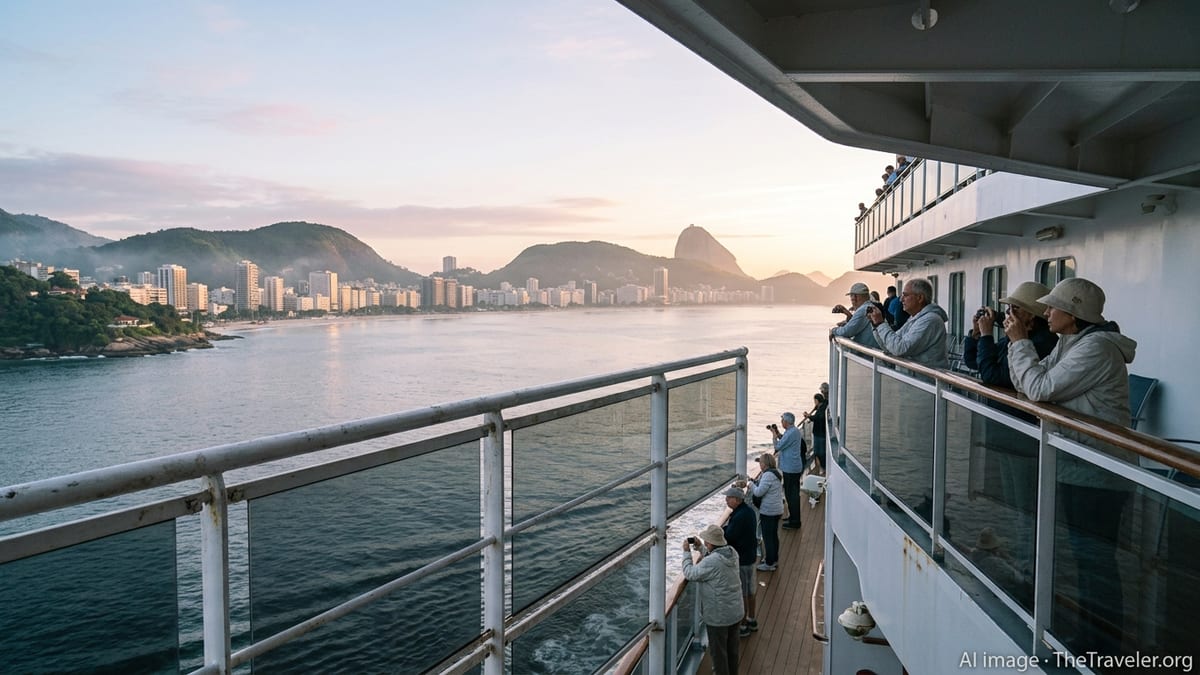
New 2027–28 Season Puts Rio and Buenos Aires Center Stage
Publicly available itinerary materials for the 2027–28 season indicate that Princess Cruises will deploy the Majestic Princess on extended South America routes featuring both Buenos Aires and Rio de Janeiro. The program is scheduled to run from October 2027 through January 2028, with multiple departures that either sail between the two cities or include both within longer grand voyages.
The season builds on existing South America deployment already outlined for late 2026 and early 2027, where Princess has trailed combinations of Brazilian coastal routes, Cape Horn and Antarctic scenic cruising. In those documents, Buenos Aires appears as an overnight turnaround port and Rio de Janeiro as a headline call, signaling how central the two hubs have become to the line’s South American strategy.
For the newly announced 2027–28 program, summary information circulated through cruise distribution channels highlights six departures across four itineraries, using Buenos Aires as a primary embarkation port and Rio de Janeiro as a key call or gateway on longer repositioning-style voyages. The emphasis on the two cities reflects demand patterns from past seasons, where itineraries that combine tango in Argentina with samba and beaches in Brazil have consistently drawn interest from international guests.
The South America deployment also dovetails with Princess Cruises’ broader plan to concentrate longer, more immersive itineraries on a small number of ships. Earlier brochure releases for the 2026–27 period showed Majestic Princess taking on extended South American and transatlantic segments, positioning it as the line’s main platform for multi-week voyages that cross several regions in a single sailing.
Key Routes: From Brazilian Adventure to Grand Passages
Itinerary previews for the late 2020s show Princess continuing the pattern of pairing intensive regional cruises with longer passages that link South America to Europe and the Caribbean. One previously published route, labeled a Brazilian Adventure and operating roundtrip from Buenos Aires, combines coastal Brazil with Montevideo and an overnight in the Argentine capital, and includes calls such as Fortaleza and Rio de Janeiro. The 2027–28 season is expected to evolve that concept with fresh date patterns and refined port combinations.
Another strand of deployment centers on grand adventures that combine Antarctica, Cape Horn and Brazil into a single multi-week sailing. Materials for the 2026 season describe sequences that start in Buenos Aires, head south to Punta Arenas and Ushuaia for glacier and fjord cruising, then continue north through the Falkland Islands and Montevideo before pushing on across the Atlantic via Rio de Janeiro and the Canary Islands. The 2027–28 releases suggest similar structures, with Buenos Aires and Rio anchoring either end of extended repositioning voyages.
There is also an emphasis on one-way South American passages between Buenos Aires and Rio de Janeiro, particularly in early-year windows when ships are moving between seasonal homeports. These sailings tend to feature a mix of well-known beach destinations and lesser-visited ports, appealing to repeat cruisers seeking new coastal towns alongside the marquee cities. By threading Buenos Aires and Rio together, Princess can market the same voyage both as a cultural city-break cruise and as a warm-weather escape from North American and European winters.
Industry deployment grids from recent seasons show that Princess regularly uses these longer South American segments to connect into Europe-bound cruises, effectively turning Buenos Aires-to-Rio itineraries into the opening chapter of even broader journeys that later cross the Atlantic. The 2027–28 announcements fit this pattern, creating options for guests who want to link multiple cruises into extended trips spanning several continents.
Tourism Impact Across Argentina, Brazil and Beyond
Regional tourism organizations track cruise deployment closely, and the decision to maintain or expand a line’s presence over multiple seasons is often viewed as a sign of confidence in the destination. In this case, the continuation of Buenos Aires and Rio de Janeiro as repeat turnaround and feature ports into 2027–28 suggests that Princess sees sustained demand for South America, particularly among travelers seeking combinations of culture, wildlife and scenic cruising.
For Argentina, itineraries that begin or end in Buenos Aires typically translate into several additional nights spent on land, as international guests often add pre- or post-cruise stays. Hotel associations and local tourism boards have previously highlighted the economic value of this pattern, noting that cruise visitors frequently extend their trips to include wine regions in Mendoza or Iguazu Falls. By framing Buenos Aires as both a cruise gateway and a standalone city break, the 2027–28 program is likely to reinforce that dynamic.
Brazil stands to benefit through a mix of marquee and secondary ports. Rio de Janeiro serves as a powerful marketing anchor, but published route maps for the mid-2020s also show calls in coastal destinations such as Fortaleza, Ilhabela and other beach towns, spreading passenger spending beyond a single urban center. If similar port combinations are maintained or expanded in 2027–28, local operators in multiple Brazilian states could see a modest but meaningful lift in arrivals.
The inclusion of Antarctic scenic cruising and Patagonian gateways, where offered, also amplifies South America’s appeal as an expedition-style region accessible on a large ship. Travel trade analysis has noted that guests who experience Antarctica and Patagonia on a first cruise are more likely to return for land-based adventures in Chile or Argentina, effectively turning an initial sailing into a longer-term source of repeat visitation.
What Travelers Should Know Before Booking
For prospective guests, the main takeaway from the 2027–28 announcement is that South America remains a core part of Princess Cruises’ long-haul portfolio, with Buenos Aires and Rio de Janeiro serving as the key anchors. Itineraries tend to be longer than typical week-long Caribbean sailings, with many routes running two to three weeks or more. Travelers considering these voyages should plan for extended time away and factor in the cost and logistics of long-haul flights to and from South America.
Seasonality is another practical consideration. The Princess program for 2027–28 is concentrated in the Southern Hemisphere spring and early summer, roughly October through January. During this period, temperatures in Buenos Aires and Rio de Janeiro can be hot and humid, with the chance of heavy rain, especially around the height of summer. Those sensitive to heat may prefer the shoulder months at the start or end of the deployment window, when conditions can be more moderate.
Port-intensive itineraries that combine Brazil, Argentina and possibly Antarctica typically include a mix of overnight stays, late-night departures and scenic cruising days. Travelers should review day-by-day schedules closely to understand how much time will actually be available ashore in Buenos Aires, Rio and other ports. Earlier Princess brochures for similar routes highlight overnight calls in Buenos Aires and late stays in Rio de Janeiro as selling points, giving guests time to experience evening neighborhoods, local dining and cultural performances.
Because these sailings are released several years in advance, deployment information also comes with the caveat that cruise lines reserve the right to adjust ports and dates. Booking terms generally note that itineraries and onboard offerings are not guaranteed and may change due to operational needs, port availability or regulatory requirements. Travelers who are set on specific ports such as Rio de Janeiro or Antarctic scenic cruising should monitor for schedule adjustments as their departure date approaches.
Positioning Within a Competitive South America Cruise Market
The announcement of a 2027–28 South America season featuring Buenos Aires and Rio de Janeiro comes amid broader competition among mainstream and premium cruise brands for the region. Other major lines have periodically scaled capacity up or down in South America depending on currency trends, airlift and geopolitical factors, leading to some years with dense deployment and others with a more limited presence.
By locking in a dedicated South America program several years ahead, Princess Cruises signals a level of commitment to the market while also staking out a defined niche built around longer, more immersive itineraries on a single ship. The approach differs from some rivals that spread shorter itineraries across multiple vessels or focus more heavily on Caribbean and North American routes during the Northern Hemisphere winter.
For destinations, the combination of Buenos Aires, Rio de Janeiro, Patagonian gateways and Antarctic scenic cruising offers a differentiated product that is harder to replicate elsewhere. While Caribbean and Mediterranean cruises can rely on a dense cluster of ports within short sailing distances, South America’s geography favors these longer, grand-style voyages. The 2027–28 season continues this trend, using Buenos Aires and Rio as essential bookends on routes that highlight the scale and variety of the continent.
Travel advisors watching deployment patterns suggest that these extended South America cruises tend to attract repeat cruisers, retirees and experienced travelers who are comfortable committing to three weeks or more at sea. With the new season now mapped out for 2027–28, the focus will shift to how quickly the voyages sell and whether strong demand encourages further expansion of South America capacity in subsequent years.