

Private healthcare is a central consideration for individuals and families evaluating relocation to Mexico. While the public system provides broad nominal coverage, practical access constraints mean that many locals and foreign residents rely heavily on private doctors, clinics and hospitals for timely, higher-comfort care. Understanding how private healthcare works, what it typically costs and how best to insure against major medical risks is essential for realistic relocation planning.
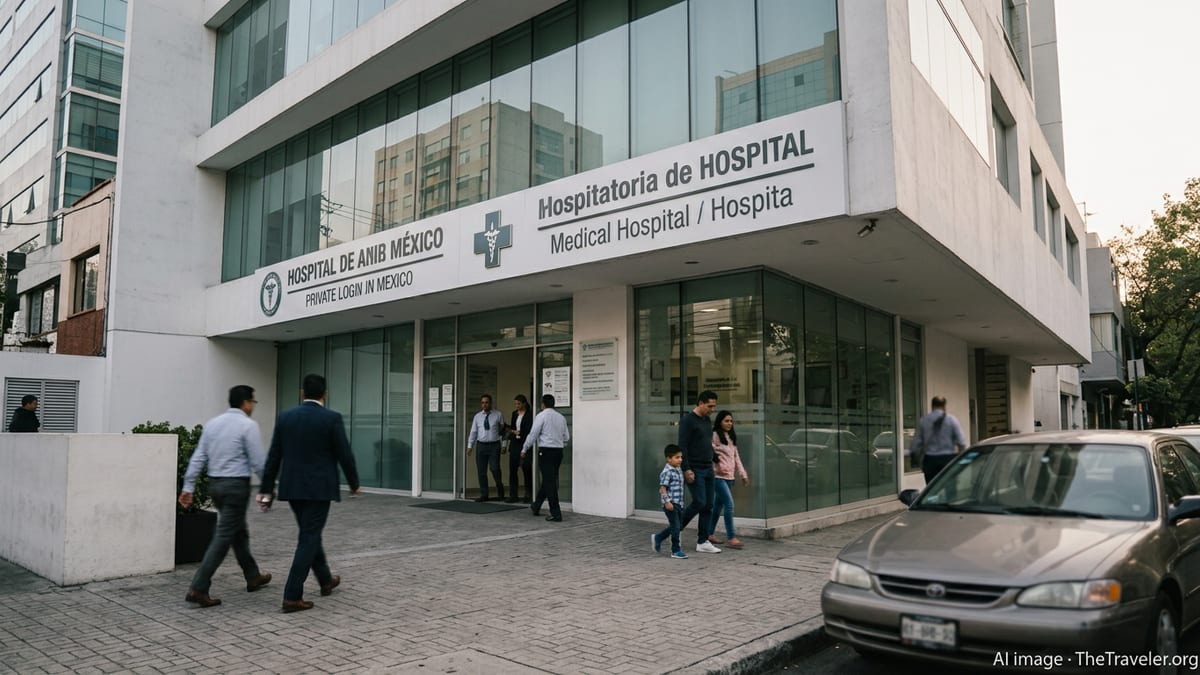
Overview of Private Healthcare in Mexico
Mexico operates a mixed health system in which public institutions coexist with an extensive private sector. Although the public schemes are designed to provide universal coverage, capacity constraints, waiting times and perceived quality gaps have led to growing use of private services. Recent national survey data indicate that slightly over half of the population now seeks care from private providers for at least some needs, reflecting both demand from the middle class and shortfalls in public access.
The hospital landscape underscores the prominence of the private sector. Mexico has roughly 4,500 hospitals nationwide, and approximately two thirds of these facilities are privately owned. The public sector retains a larger share of total beds, but private hospitals dominate numerically and are especially concentrated in major urban centers such as Mexico City, Monterrey, Guadalajara and key regional hubs.
For prospective international relocations, private care is usually the primary channel for non-emergency treatment. Private hospitals and clinics are more likely to offer shorter waiting times, modern infrastructure and staff with stronger English proficiency in urban and expat-oriented locations. However, quality and pricing are heterogeneous, ranging from boutique tertiary centers comparable to high-end international hospitals to small local clinics with far more basic services.
Decision-grade evaluation therefore requires distinguishing between different tiers of private providers, recognizing geographic disparities and accounting for rapid medical cost inflation, particularly in 2024 and 2025, which is pushing up both out-of-pocket prices and insurance premiums.
Structure and Quality of Private Hospitals and Clinics
Private healthcare in Mexico spans a wide spectrum of institutions. At the top end are large, tertiary-care hospitals in major cities that offer advanced specialties, intensive care units, oncology services and complex surgery. Some of these facilities are accredited by international bodies and appear in global hospital rankings, positioning themselves as regional centers for high-complexity care and medical tourism.
Below this tier sit mid-sized private hospitals and specialty clinics that provide routine surgery, maternity services, orthopedics, cardiology and other common specialties. These institutions often serve insured middle-income Mexicans and foreign residents who require predictable, scheduled care. In parallel, there is a dense network of smaller private clinics, diagnostic centers and individual practices that focus on primary care, laboratory testing, imaging and minor procedures.
Quality is not uniform across this ecosystem. Large private hospitals typically feature modern operating theaters, advanced imaging equipment and higher nurse-to-patient ratios. In contrast, some smaller clinics may have limited equipment, less standardized protocols and variable adherence to international quality benchmarks. Regulation of pricing and transparency also remains incomplete, which can lead to unexpected bills for those unfamiliar with local practices.
From a relocation standpoint, the most practical approach is to map out specific facilities in the intended city of residence, focusing on hospitals with established reputations, documented specialties and clear billing procedures. In many major cities, it is possible to build a mixed network consisting of a high-end hospital for emergencies and complex care, complemented by more cost-efficient clinics for routine consultations and diagnostics.
Cost Levels and Typical Private Medical Expenses
Private medical care in Mexico is generally less expensive than in the United States and many Western European countries, but it is far from universally low-cost. Prices vary sharply by city, provider tier and whether the patient is perceived as a local resident or short-term visitor. Moreover, medical inflation has been running ahead of general inflation, with reported double-digit increases in some years, especially after 2023.
Indicative price ranges for out-of-pocket private care in urban centers are as follows:
| Service | Typical private cost range (MXN) | Indicative USD equivalent* |
| General practitioner consultation | MXN 300 – 800 | Approx. 18 – 48 USD |
| Specialist consultation | MXN 800 – 3,000+ (can reach ~5,000 at top centers) | Approx. 48 – 180+ USD |
| Routine lab panel or imaging (basic) | MXN 600 – 2,000 | Approx. 36 – 120 USD |
| One night in a standard private hospital room | MXN 5,000 – 10,000+ depending on city and hospital tier | Approx. 300 – 600+ USD |
| Common non-complex surgery with short stay | Often several tens of thousands of MXN | Frequently in low-to-mid four figures USD |
*USD estimates assume a mid-range exchange rate and are indicative only.
For major events, such as intensive care admissions or complex surgeries, bills can climb into the high five or even six figures in local currency, especially at premium private hospitals in tourist zones and large metropolitan areas. Cases have been reported where multi-day intensive care stays have generated charges equivalent to tens of thousands of US dollars, particularly in facilities that target international patients.
Another structural factor is the heavy reliance on direct payments. Private health expenditure in Mexico accounts for a substantial share of total health spending, and a high proportion of that is out-of-pocket rather than financed through insurance. This means households that rely exclusively on pay-as-you-go private care are exposed to significant financial volatility if serious illness or accidents occur.
Role of Private Health Insurance for Residents and Relocators
Health insurance is not legally mandatory in Mexico, and a large share of the population either uses public coverage alone or supplements it with direct payment for private consultations and tests. However, for foreign residents and globally mobile professionals, private insurance is a primary risk-management tool for accessing higher-end private hospitals and capping exposure to catastrophic costs.
Private health insurance relevant to relocation typically falls into three categories. First, domestic Mexican private plans sold by local insurers, which are designed for residents and denominated in pesos. Second, international or regional medical insurance policies offered by global carriers, often priced in US dollars, that cover care in Mexico and sometimes in multiple countries. Third, employer-sponsored group plans provided by multinational companies, which often combine domestic networks with international evacuation or out-of-country treatment options.
Coverage levels depend on product type and price. Many Mexican domestic policies focus on major medical events, with deductibles applied per event or per diagnosis and annual or lifetime caps. Routine outpatient consultations and medications may not be fully covered or may be subject to co-payments. International policies more frequently include broader outpatient benefits but come with higher premiums, especially at older ages.
Recent data from market analyses and insurers suggest that private health insurance premiums in Mexico have been rising sharply. Reports for 2026 indicate year-on-year increases in the range of roughly 20 to 40 percent for some policies, driven by rising hospital tariffs, currency movements and tax treatment. As a rough orientation, relatively young, healthy adults might find basic domestic plans starting in the low hundreds of US dollars per year equivalent, while comprehensive international plans, or coverage for older adults, can reach several thousands of US dollars annually.
Key Insurance Design Features, Exclusions and Age Considerations
Prospective relocators should pay close attention to policy structure rather than headline premium alone. Mexican domestic insurers commonly use per-event or per-condition deductibles rather than a single annual deductible. While this helps to keep premiums lower, it can lead to repeated out-of-pocket charges if multiple related diagnoses or follow-up treatments occur in the same year.
Exclusions and waiting periods are also critical. Many private policies in Mexico exclude pre-existing conditions, impose multi-year waiting periods on certain chronic diseases, or limit coverage for maternity, mental health or preventive services. Some benefits are subject to sub-limits within the overall annual maximum, such as caps on prosthetics or specific surgical procedures. Thorough review of the fine print, ideally with professional brokerage support, is advised.
Age is another decisive factor. Premiums generally increase steeply with age bands, and some domestic insurers either stop accepting new applicants beyond a certain age or impose stricter medical underwriting. Individuals planning long-term relocation should consider securing coverage earlier in life and maintaining continuous insurance to avoid gaps that could complicate future underwriting.
Foreign residents must also consider currency risk and cross-border coverage. Policies priced in pesos may appear affordable but expose the insured to medical inflation in local currency. Dollar-denominated international plans may better match income for those still earning in foreign currency but can become costly over time. Careful modeling of scenarios over a five to ten-year horizon is prudent for high-net-worth or retirement-driven relocations.
Regional Variations and Access Dynamics
Private healthcare in Mexico is highly urbanized. Large cities and economically dynamic regions host the largest concentration of high-end private hospitals and specialist clinics. Mexico City, the State of Mexico, Nuevo León, Jalisco, Querétaro and several tourist-oriented coastal states host significant private capacity, while many rural or less-developed areas rely more heavily on small clinics and public facilities.
For relocators, this means that the level of private healthcare accessible within reasonable travel time will vary significantly by destination. In metropolitan areas, it is often feasible to choose between multiple hospital groups and negotiate preferences for doctors, amenities and pricing tiers. In smaller cities or semi-rural towns, choice may be limited to one or two mid-range private hospitals and a cluster of independent specialists, which has implications for both perceived quality and emergency response options.
It is also important to distinguish between pricing for residents and pricing oriented toward short-stay international visitors. Some hospitals in heavily touristed destinations may apply higher tariffs to foreigners or to those presenting international insurance credentials, especially in emergency situations. Relocators who obtain residency, establish local physician relationships and use domestic insurance can, in many cases, access more moderate “local” price structures.
Given these dynamics, pre-relocation due diligence should include mapping the nearest tertiary-care private hospital, understanding its emergency protocols and payment expectations, and identifying at least one alternative facility. For those intending to live in more remote locations, contingency plans that include medical evacuation coverage or structured access to urban hospitals are advisable.
Financial Risk Management and Practical Planning Steps
Because out-of-pocket payments represent a large share of private health expenditure in Mexico, relocation planning should focus on limiting downside financial risk rather than assuming universal affordability. Even though routine consultations and basic diagnostics are relatively inexpensive by high-income country standards, a single serious accident or critical illness episode can generate bills large enough to impact retirement savings or household liquidity.
Relocators commonly adopt a hybrid strategy that combines three elements. First, use of public coverage where available, especially for long-term medication or chronic disease follow-up, recognizing its constraints. Second, pay-as-you-go private care for primary care, basic labs and occasional specialist visits, which often remain manageable as cash expenses. Third, private insurance designed primarily to cover high-cost hospitalizations, surgery and intensive care, with deductibles set at a level that keeps premiums sustainable.
Evaluating this mix requires realistic assumptions regarding frequency of care, age-related risk and potential relocation of dependents. Families with young children or individuals with known chronic conditions may prioritize more generous outpatient coverage and lower deductibles. Retirees or professionals with robust savings may accept higher deductibles in exchange for strong protection against rare but catastrophic events.
In addition, non-financial practicalities matter. These include confirming whether preferred hospitals have direct billing agreements with specific insurers, understanding pre-authorization requirements for elective procedures, and maintaining updated medical records in Spanish and English. These operational details can significantly affect the real-world usability of the private healthcare and insurance arrangements chosen on paper.
The Takeaway
Private healthcare in Mexico offers a broad spectrum of options, from internationally recognized tertiary hospitals to modest neighborhood clinics. For many prospective relocators, the system can provide good-value medical care compared with their home country, particularly for routine needs and standard procedures. However, rising medical costs, uneven quality across facilities and high reliance on out-of-pocket spending mean that private care is not automatically low-risk or universally affordable.
Decision-grade relocation planning should therefore treat private healthcare as a structured risk management problem rather than as an incidental benefit of moving. This involves selecting a destination city with adequate private hospital capacity, mapping specific providers and specialists in advance, and securing appropriate insurance that balances premiums, deductibles and exclusions over the likely duration of stay.
With careful preparation, it is possible to access high-quality private healthcare in Mexico while keeping financial exposure within acceptable bounds. Without such planning, households may find themselves caught between stretched public services and private bills that are substantially higher than anticipated at the time of relocation.
FAQ
Q1. Is private healthcare in Mexico generally cheaper than in the United States?
Yes, private healthcare in Mexico is typically less expensive than in the United States, particularly for routine consultations and many surgical procedures, but major hospitalizations can still generate substantial bills, especially at top-tier private hospitals.
Q2. Do I need private health insurance to use private hospitals in Mexico?
No, private insurance is not required to access private hospitals, but without insurance patients are usually expected to pay deposits and full charges directly, which can be financially risky in serious emergencies.
Q3. What are typical costs for a private doctor visit in Mexico?
General practitioner consultations commonly range from about MXN 300 to 800 in urban areas, while specialist visits often start around MXN 800 and can exceed MXN 3,000 at higher-end facilities.
Q4. How good is the quality of private hospitals in Mexico?
The quality ranges from basic to internationally competitive. Large private hospitals in major cities often offer modern infrastructure and advanced specialties, while smaller clinics may provide more limited services and variable standards.
Q5. Are there age limits for buying private health insurance in Mexico?
Many Mexican insurers increase premiums steeply with age and may impose upper age limits for new applicants or stricter underwriting for older adults, so securing coverage earlier is generally advantageous.
Q6. Will private health insurance in Mexico cover pre-existing conditions?
Coverage of pre-existing conditions is restricted on many policies. Insurers frequently exclude such conditions, apply waiting periods, or offer limited benefits, making it essential to review policy terms in detail before purchase.
Q7. Are private healthcare facilities available outside major cities?
Yes, but options are more limited. Smaller cities and towns may have only one or two private hospitals with narrower service ranges, so residents in remote areas often travel to larger urban centers for complex care.
Q8. How fast are private health insurance premiums rising in Mexico?
Recent reports for 2026 indicate that some private health insurance premiums have increased by approximately 20 to 40 percent year-on-year, reflecting high medical inflation and regulatory changes.
Q9. Can international health insurance be used in Mexican private hospitals?
Many major private hospitals accept international health insurance, but direct billing is not universal. Patients may need to pay upfront and seek reimbursement, so confirming arrangements with both the insurer and hospital is important.
Q10. What practical steps should I take before relying on private healthcare in Mexico?
Key steps include identifying reputable private hospitals near your intended residence, confirming which insurers they work with, reviewing insurance policy exclusions and deductibles, and budgeting for routine out-of-pocket expenses alongside insured risks.