

Thailand’s private hospitals are a central consideration for internationally mobile professionals evaluating relocation to the country. They offer comparatively advanced facilities, wide specialist coverage and English-speaking services, but operate on commercial pricing models that differ sharply from the public system. Understanding likely costs, care quality indicators and insurance dynamics is essential for assessing whether relocation to Thailand is medically and financially prudent.
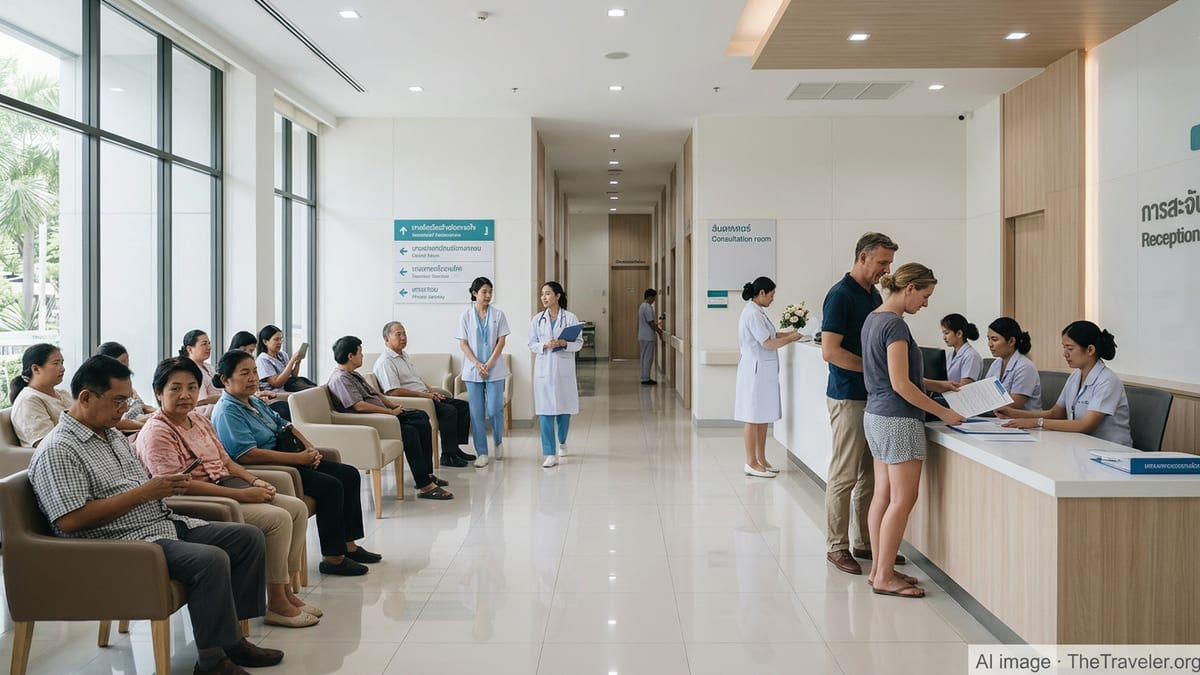
Structure of the Private Hospital Sector in Thailand
Thailand operates a dual healthcare system in which public hospitals provide subsidized care primarily for citizens, while private hospitals function as for-profit entities serving middle- and higher-income Thais, expatriates and international patients. In major urban centers such as Bangkok, Chiang Mai and Phuket, private networks dominate the market for international residents and medical travelers. Large operators manage multi-hospital groups with standardized branding, information systems and pricing tiers.
Flagship private hospitals in Bangkok are positioned as regional referral centers, drawing patients from across Asia and the Middle East. Facilities such as Bumrungrad International Hospital and Bangkok Hospital are high-profile examples, with several hundred inpatient beds, extensive outpatient departments and subspecialty centers. These institutions target complex surgery, oncology, cardiology and advanced diagnostics in addition to routine care.
Below the top premium tier is a broad layer of mid-range private hospitals that still provide air-conditioned private rooms, English-language support at registration and nursing stations, and a wide range of specialists. Fees in these hospitals can be materially lower than in the flagship institutions, although differences in hotel-style comfort, waiting times and ancillary services may be noticeable. For relocation planning, it is useful to distinguish between premium international hospitals and mid-tier private providers because cost structures diverge accordingly.
Outside major cities, private hospitals are generally smaller and less specialized, with fewer English-speaking staff and more limited specialist coverage. International residents in provincial locations often plan to travel to Bangkok or another large city for complex procedures while relying on local facilities for stabilization and minor care.
Quality and Accreditation in Thai Private Hospitals
Quality standards in Thailand’s private hospitals are heterogeneous but can reach levels comparable with high-income countries at the top end of the market. A key benchmark is international accreditation, especially Joint Commission International (JCI) recognition, which assesses hospital governance, patient safety and clinical processes. Thailand has dozens of JCI-accredited organizations, giving it one of the largest concentrations of internationally accredited hospitals in Southeast Asia.
Several leading private hospitals in Bangkok were among the earliest in Asia to obtain JCI accreditation. This has been an important reputational driver in attracting foreign patients and corporate insurance contracts. Additional accreditations from regional or global bodies, as well as national Hospital Accreditation programs, further reinforce quality benchmarks in areas such as infection control, operating theatre standards and medication management.
From a relocation perspective, it is important to recognize that not all private hospitals carry international accreditation and that quality can vary even within the private sector. Premium hospitals tend to invest heavily in advanced imaging technology, cardiac catheterization labs, intensive care units and subspecialist staffing. Mid-tier institutions may rely on more basic equipment or outsource some diagnostics but can still provide competent care for common conditions.
Language and communication quality are also critical dimensions. In large Bangkok hospitals with substantial expatriate and medical tourism volumes, many physicians have overseas training and consult in English. Nursing and administrative staff in premium facilities are often required to have functional English for routine communication. In smaller private hospitals and provincial cities, English proficiency may be less reliable, which can affect complex consent discussions and discharge planning for international residents.
Cost Levels for Consultations, Diagnostics and Inpatient Care
Private hospitals in Thailand generally charge itemized fees for consultations, diagnostics, procedures and room stays. For relocation planning, it is useful to understand broad cost bands rather than specific tariffs, as charges vary by hospital tier, physician seniority and case complexity. The following ranges reflect typical 2024–2025 cash prices in major private hospitals, expressed in Thai baht (THB) and rounded for clarity. Exchange rates fluctuate, but 35–37 THB per US dollar is a reasonable recent reference.
Outpatient visits are relatively affordable by global private-sector standards. General practitioner or basic specialist consultations in mid-range private hospitals often fall around 800–2,500 THB per visit, with premium hospitals at the higher end or slightly above. Additional charges apply for medicines and tests ordered during the visit. Walk-in access is usually available, and same-day appointments are common.
Diagnostic imaging and laboratory tests show wider price dispersion. A standard X-ray may range from approximately 500 to 2,000 THB depending on the facility. More complex imaging is significantly more expensive: CT scans in large private hospitals commonly fall in the 5,000–15,000 THB range, while MRI scans can span roughly 8,000–25,000 THB or more depending on body region, contrast use and hospital tier. Comprehensive blood panels in private settings typically cost in the low thousands of baht.
Inpatient room rates are a major cost driver. Standard single rooms in private hospitals can range from about 3,000–8,000 THB per night in mid-tier facilities, while premium hospitals in Bangkok may list standard private rooms around 10,000–12,000 THB per night or higher. Deluxe or suite rooms carry significantly higher rates, and intensive care unit (ICU) beds can range upward from roughly 25,000 THB per night in major hospitals. These figures exclude physician fees, operating theatre charges, implants and medications, which are billed separately.
Indicative Procedure Costs in Thai Private Hospitals
Major procedures in Thai private hospitals remain generally less expensive than in North America or Western Europe but can still represent substantial out-of-pocket exposure for expatriates without adequate insurance. Package prices that bundle surgeon fees, anesthesia, operating theatre costs and a fixed number of inpatient days are common for planned procedures.
For frequently performed surgeries, indicative ranges across private facilities are as follows. Uncomplicated appendectomy packages in mid-range to premium hospitals may fall in the approximate band of 120,000–350,000 THB depending on surgical technique, length of stay and hospital tier. Orthopedic interventions such as fracture fixation with plates and screws often sit in a wide range, for example around 80,000–300,000 THB, influenced by implant cost and complexity.
Higher-cost surgeries such as hip replacement or cardiac bypass can reach several hundred thousand to low millions of baht. Hip replacement packages in private hospitals may cluster around 400,000–800,000 THB including hospitalization, while coronary artery bypass surgery can range from roughly 500,000 THB into the low millions depending on the number of grafts and postoperative ICU use. Maternity packages in large private hospitals typically list normal delivery in a broad range from about 80,000–200,000 THB and cesarean sections from roughly 150,000–400,000 THB, again varying with room class and clinical course.
These ranges are indicative rather than guaranteed. Premium international hospitals sometimes quote near or above the upper ends, particularly for foreign self-pay patients or complex conditions. Conversely, mid-tier private or university-affiliated hospitals can be materially cheaper, especially if the patient accepts a standard room and avoids additional hotel-style services. For relocation planning, the critical takeaway is that serious illness or surgery can generate six-figure baht bills even in mid-range private hospitals, easily exceeding what many expatriates are prepared to pay from savings.
Pricing Practices and Considerations for Foreign Residents
Foreign residents should be aware that private hospitals in Thailand are commercial enterprises and that pricing policies can differ between Thai nationals and foreign patients, as well as between insured and self-paying clients. Some high-end hospitals operate tiered fee schedules, where list prices for non-Thai self-pay patients may be higher than charges billed to local insurers or Thai patients. This is particularly visible in top-tier facilities that cater heavily to international medical tourists.
Itemization and add-on services are another feature of the private model. Bills may contain separate line items for consultation, equipment use, drugs, disposable supplies and administrative surcharges. Comfort-related services such as VIP rooms, companion meals or concierge support can increase the total considerably. Patients who prefer cost control may opt for standard rooms and ask for itemized estimates before agreeing to non-urgent procedures.
Pre-authorization and cost estimates are common for elective interventions. Many hospitals provide written procedure packages outlining what is included and excluded, for example the maximum number of inpatient days or post-operative checks. Unexpected complications or extended stays often fall outside package conditions and will be billed separately. International residents should request clarification in advance about what happens if the actual hospital stay or treatment diverges from the assumed plan.
Finally, payment expectations are strict. Private hospitals routinely require a deposit at admission, particularly for surgery or overnight stays, and international residents are usually asked to pay in full prior to discharge unless direct billing arrangements with an insurer are in place. Major hospitals accept international credit cards, but daily transaction limits can be a constraint for very large bills if insurance is not active.
Health Insurance Options and How They Interact with Private Hospitals
Private hospitals in Thailand form dense contracting networks with domestic and international insurers. Most medium and large facilities accept a wide range of global health insurance brands and regional plans, and many operate dedicated insurance desks to verify coverage, arrange direct billing and coordinate guarantees of payment. For routine outpatient visits, policyholders often pay first and seek reimbursement, while inpatient admissions for insured patients are more likely to be processed on a cashless basis, subject to policy terms.
International residents in Thailand typically rely on one of three insurance models. The first is employer-sponsored group insurance, common for multinational staff and some local corporate hires, which often includes substantial inpatient coverage in private hospitals but may limit choice of premium facilities or room types. The second is locally underwritten private health insurance, targeted at long-stay foreigners and retirees, with benefit schedules and room caps tied specifically to Thai hospital prices. The third is international health insurance policies that cover treatment across multiple countries, generally at higher premiums but with broader geographic protection.
Policy design details are critical for matching coverage to private hospital cost structures. Many Thai and regional plans include maximum per-night room and board limits, for example standard room coverage capped at a specified baht amount per day. Choosing a private hospital room that exceeds this cap results in the patient paying the difference. Similarly, surgical and medical benefit ceilings need to be compared against realistic procedure costs in the hospitals the policyholder intends to use.
Pre-existing conditions, age-related premium increases and waiting periods can affect eligibility and affordability for long-term residents. Some insurers offer specific “expat” or “top-up” products that work alongside basic local coverage to raise limits to levels more compatible with premium private hospital bills. International residents considering relocation should model scenarios such as a major surgery, a week in ICU or a complicated delivery to evaluate whether proposed policies would keep out-of-pocket costs within acceptable thresholds.
Access, Service Experience and Operational Realities
From an operational perspective, private hospitals in Thailand tend to offer shorter waiting times than the public sector, especially for outpatient consultations and elective imaging. Many facilities run extended hours clinics, and same-day or next-day appointments with specialists are common, particularly in Bangkok. Walk-in consultations are generally accepted, although peak periods can involve longer waits.
Service experience in premium private hospitals is often aligned with international hotel standards, including concierge-style reception, multilingual signage and on-site amenities such as pharmacies, cafes and sometimes accommodation for relatives. While this environment may be attractive to international residents, it is also reflected in fee levels and can divert attention from scrutinizing the clinical necessity of suggested investigations and interventions. Some observers note that high-revenue procedures and imaging can be recommended more readily in intensely competitive private markets.
For international residents, another practical consideration is emergency access. Large private hospitals in Bangkok, Phuket and other major hubs operate 24-hour emergency departments and ambulance services. However, out-of-pocket emergency care can be expensive, particularly if it leads to ICU admission. Effective insurance that covers emergency treatment in private facilities without restrictive caps is therefore a key risk mitigant. In peripheral locations, it may be necessary to stabilize in a local facility and then transfer to a larger private hospital once the situation allows.
Discharge planning and follow-up typically occur within the same private system. Electronic records are increasingly used, but coordination between different hospital groups is imperfect. International residents who expect to move between Thailand and other countries should request complete discharge summaries and imaging files to ensure continuity of care.
The Takeaway
Private hospitals in Thailand provide a level of medical infrastructure and service that makes long-term residence viable for many international professionals and retirees. At the upper end of the market, internationally accredited hospitals deliver complex surgery, advanced diagnostics and English-speaking care at prices that, while lower than many Western private facilities, can still be financially significant for serious illness.
For relocation decisions, the crucial issues are alignment between expected utilization of private hospitals, personal risk tolerance and the structure of health insurance. Routine outpatient visits and basic diagnostics are usually manageable costs even for self-paying residents. In contrast, major surgery, ICU stays or complicated maternity episodes can rapidly generate six-figure baht bills that are difficult to absorb without robust insurance cover.
Prospective movers who prioritize access to premium international hospitals should plan for comprehensive insurance with realistic room caps and procedure limits. Those comfortable using mid-range private hospitals can potentially manage with lower coverage ceilings but should still avoid remaining uninsured. Incorporating these cost and quality realities into relocation planning helps ensure that Thailand’s private hospital sector is a strategic asset rather than an unexpected financial liability.
FAQ
Q1. Are private hospitals in Thailand suitable as a primary healthcare option for expatriates?
Yes, for most expatriates private hospitals are the primary point of care, offering broad specialist coverage, modern facilities and English-speaking services in major cities.
Q2. How much should an international resident budget for a specialist consultation in a private hospital?
In large urban private hospitals, a routine specialist consultation typically falls in the approximate range of 800–2,500 THB per visit, excluding tests and medications.
Q3. What does an MRI or CT scan usually cost in a Thai private hospital?
MRI scans commonly range from roughly 8,000–25,000 THB depending on the body part, contrast use and hospital tier, while CT scans often fall around 5,000–15,000 THB.
Q4. How expensive is an overnight stay in a private hospital room?
Standard private rooms in mid-tier hospitals often cost about 3,000–8,000 THB per night, while premium Bangkok hospitals may charge around 10,000–12,000 THB or more for similar rooms.
Q5. Do private hospitals in Thailand accept international health insurance?
Most medium and large private hospitals accept major international health insurance plans and operate insurance desks to verify coverage and arrange direct billing for inpatient care.
Q6. Is international accreditation important when choosing a private hospital in Thailand?
International accreditation such as JCI is a useful signal of structured quality and safety systems, particularly for complex procedures, although many non-accredited private hospitals still provide competent care.
Q7. Can foreigners face different pricing from Thai nationals in private hospitals?
Yes, some private hospitals apply differentiated pricing or package structures, and foreign self-pay patients may sometimes encounter higher list prices than locally insured Thai patients.
Q8. What level of insurance coverage is advisable for using private hospitals comfortably?
Insurance that fully covers standard private room rates in the chosen hospitals and provides surgical and ICU benefits in the several-hundred-thousand-baht range is advisable for serious events.
Q9. Are waiting times long in Thai private hospitals compared with public hospitals?
Waiting times in private hospitals are generally shorter, with same-day or next-day specialist appointments common in major cities, although peak hours can still involve queues.
Q10. How should relocation candidates evaluate private hospital options before moving?
Prospective residents should review hospital accreditation status, service mix, indicative price lists, insurer networks and language capabilities, then match these factors with their health profile and insurance strategy.