

Education is a central factor in relocation planning for international families, and in Italy the choice between state schools and private or international institutions has major cost implications. While public education is largely free, private and especially international schools in Italy are fee-based and can represent one of the largest recurring expenses for expatriate households. Understanding tuition levels, fee structures and regional differences is essential for building a realistic relocation budget and assessing whether Italy is a viable posting or long term move.
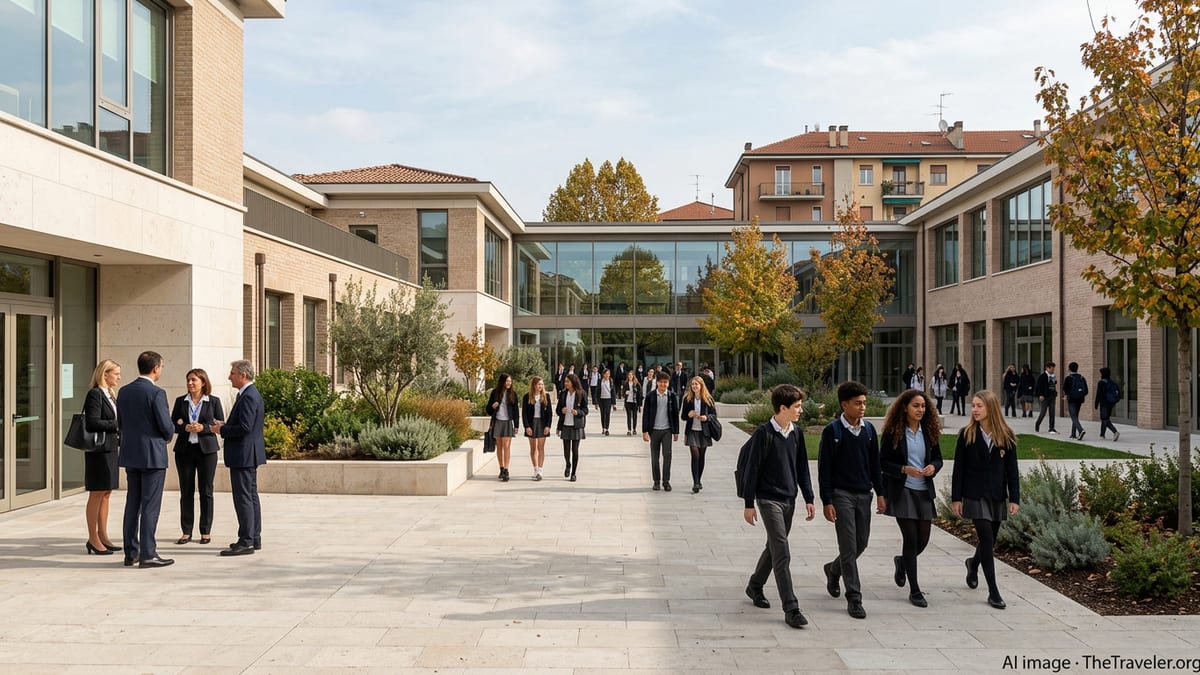
Overview of Private and International Schooling in Italy
Italy has a dual education landscape: a comprehensive state system with minimal tuition charges and a smaller but significant private and international school sector financed primarily through family or employer contributions. For most international assignees seeking instruction in English or a fully international curriculum, private international schools are the primary option, and their costs differ substantially from local private Catholic or paritarie schools that teach mainly in Italian.
Research from global school databases and relocation advisory firms indicates that annual tuition at international schools in Italy generally ranges from the equivalent of about 15,000 to 30,000 US dollars per year, depending on city and grade level. This places Italy in a mid to upper mid range for Europe: typically more affordable than leading hubs such as Zurich, Geneva or London, but often more expensive than some Central and Eastern European locations.([world-schools.com](https://world-schools.com/the-best-international-schools-in-italy/?utm_source=openai))
In parallel, smaller local private schools, often faith based and operating largely in Italian, typically charge considerably lower fees. For primary years these can start from a few thousand euros and rise to low five figure amounts at the upper secondary level, although detailed and consistent national data is limited and conditions vary widely by city.
For international families, the critical distinction is that schools delivering international curricula in English, such as International Baccalaureate, British or American programs, tend to charge at the top of the Italian market. As a result, relocation cost modelling should focus specifically on these institutions rather than on the broader private school category.
Typical Tuition Ranges by School Type and Grade
Fee levels at Italian private schools vary by curriculum, reputation and location, but broad patterns are visible. International school sources indicate that tuition for international schools commonly spans approximately 12,000 to more than 25,000 euros per year, with some top tier campuses in major cities reaching or slightly exceeding 30,000 euros for upper grades.([world-schools.com](https://world-schools.com/the-best-international-schools-in-italy/?utm_source=openai))
Examples from current fee schedules illustrate this band. The International School of Florence lists annual tuition in the mid to high twenty thousand euro range for middle and high school grades for the 2024 to 2025 academic year, depending on whether the family is paying individual or corporate rates.([isfitaly.org](https://www.isfitaly.org/apply/tuition-fees?utm_source=openai)) Similarly, documentation for the American School of Milan, a prominent international school near Milan, shows total annual tuition for 2025 to 2026 in the higher five figure euro bracket for upper grades when including building and capital contributions, positioning it among the more expensive options nationally.([asmilan.org](https://www.asmilan.org/admissions/tuition-and-fees/?utm_source=openai))
Smaller international schools outside the main hubs or with less extensive facilities may price closer to the lower end of this spectrum, sometimes under 15,000 euros for early years and primary. Conversely, highly reputed British curriculum schools in Milan or Rome can align more closely with the upper band, in some cases approaching 25,000 to 27,000 euros per year for secondary schooling.([resources.finalsite.net](https://resources.finalsite.net/images/v1711624646/britishschoolmilancom/payw0idpmwfcdy9ykvd2/March2024-FEESSUMMARY2024-25.pdf?utm_source=openai))
Parents considering non international private schools, particularly Italian language Catholic or paritarie institutions, will usually see significantly lower tuition. These schools can start in the low thousands of euros per year at primary level and may remain below the typical international school fees even at upper secondary level. However, detailed fee data is highly local and should be checked school by school.
Regional and City Level Variations in Fees
Private and international school fees in Italy show clear regional differences, closely linked to local income levels, expatriate demand and operational costs. The highest tuition levels are concentrated in major metropolitan areas, especially Milan and Rome, which host the majority of large international schools and corporate headquarters.
Milan generally has some of the highest published fees, reflecting strong demand from multinational companies and the financial sector. Well known institutions such as the American School of Milan and leading British curriculum schools in the city publish fee schedules that place upper secondary tuition in the mid to high twenties of thousands of euros per year, excluding optional services like transport or lunch.([asmilan.org](https://www.asmilan.org/admissions/tuition-and-fees/?utm_source=openai))
Rome also hosts several established international schools offering International Baccalaureate, American and British programs, with tuition that typically tracks just below or roughly in line with Milan. In other regions, such as Florence, Turin, Bologna or Verona, tuition at international schools is often somewhat lower, reflecting smaller expatriate communities and lower cost bases, although high quality schools can still charge mid range international fees.([globalcitizensolutions.com](https://www.globalcitizensolutions.com/international-schools-in-italy/?utm_source=openai))
In smaller cities or provincial capitals, international schooling options may be limited or absent, in which case families either use Italian state or private schools or consider boarding arrangements abroad. Where international schools do exist outside the main hubs, their tuition can be more moderate, though families should still anticipate five figure annual costs. In all cases, localized market checks are necessary because Italy does not have a uniform national fee framework for private schools.
Fee Structures: What Tuition Does and Does Not Include
International and private schools in Italy rarely operate on a simple single number. Published tuition usually covers core instruction and basic academic services, while a range of additional mandatory or semi mandatory charges sit alongside the main fee. Understanding this structure is critical for realistic budgeting and for comparing schools across cities or countries.
Typical components of an Italian international school fee structure include:
• One time application and registration fees payable on first enrollment, which can range from several hundred to a few thousand euros per child. • Annual tuition fees, often tiered by grade and sometimes by payer type, with higher corporate rates where companies sponsor education. • Capital or building funds, charged as one time contributions on entry or as recurring annual payments, to finance facilities investment. • Technology, laboratory or activity fees, usually smaller line items but still material on a multi child basis.([asmilan.org](https://www.asmilan.org/admissions/tuition-and-fees/?utm_source=openai))
Some schools package certain services into tuition, while others bill separately. Transport to and from school, school meals, extracurricular activities, exam fees and school trips are often billed as extras. As a result, the total annual cost of attendance can be notably higher than the base tuition line, particularly for younger children who use school bus services and for older students taking international examinations.
Corporate fee structures are another feature of the Italian market. Several leading international schools apply higher “corporate” tuition rates when the payer is an employer rather than a private family, with the rationale that corporate packages can absorb higher costs and help cross subsidize family rates. Families funded by employers should check whether their relocation policy covers the full corporate rate, while self funded families should confirm that they are classified under private rates where available.
Budgeting Considerations for Relocating Families
For international families used to state funded education, the cost of private schooling in Italy can be significant. When education is not fully covered by an employer, tuition may become one of the largest single line items in the household relocation budget, sometimes exceeding housing costs in lower rent markets. It is therefore essential to integrate school fees into long term financial planning, not just initial assignment cost projections.
Key budgeting considerations include the number of school age children, their current grades and likely progression during the stay. Tuition rises with grade level, so a family arriving with children in primary school may face higher costs over time as they move into middle and upper school. Multi child discounts of 5 to 15 percent on the youngest child’s tuition are relatively common, particularly at international schools outside the very top tier, but these reductions are usually applied only to tuition and not to registration or capital fees.([isbrescia.com](https://isbrescia.com/wp-content/uploads/2024/01/Fees-2024-2025.pdf?utm_source=openai))
Families should also factor in currency risk where household income is denominated in a currency other than the euro. As tuition is almost always billed in euros, exchange rate movements over a multi year period can materially affect the real cost of schooling. Some employers address this through education allowances that adjust annually, but self funded families may need to build conservative buffers into their budgets.
Finally, it is important to account for the cumulative effect of ancillary costs: school meals, transport, uniforms, learning materials and after school activities. For top tier international schools, these items can add several hundred to several thousand euros per year per child to the headline tuition, depending on the level of participation in optional programs.
Scholarships, Discounts and Employer Support
Tuition relief in Italian private and international schools exists but should be viewed as supplementary rather than central to financial planning. Some international schools offer limited merit or need based scholarships, typically covering a portion of tuition and aimed at promoting diversity or supporting exceptional academic or artistic talent. However, the number of awards is generally small relative to total enrollment, and scholarships may not be available at all grade levels.([globalcitizensolutions.com](https://www.globalcitizensolutions.com/international-schools-in-italy/?utm_source=openai))
More commonly, schools apply structured discounts such as sibling reductions, early payment rebates or loyalty schemes for long standing families. Sibling discounts often range around 5 to 10 percent off tuition for the second and subsequent children, although conditions differ by institution and they rarely extend to corporate fee payers. Payment plan surcharges may also apply if tuition is paid in multiple installments rather than in a single annual payment.
For many relocating families, the most significant mitigating factor is employer support. Multinational companies and international organizations frequently provide education allowances or directly pay school invoices for dependants, sometimes with caps or grade based limits. In Italy, it is common for global mobility policies to benchmark against the fees of prominent international schools in Milan or Rome and to cover tuition, registration, building funds and essential fees, while leaving optional activities to the family.
Where employer coverage is partial or capped, families must assess the gap between the allowance and actual anticipated costs over the full intended duration of the assignment. If future postings are likely, it can also be helpful to compare Italian fees with those in prospective next locations to understand whether Italy represents a relatively high or low cost stage in the child’s overall schooling journey.
The Takeaway
Private and international school tuition in Italy is a decisive factor in relocation feasibility for many international families. While the state school system offers a cost free route in principle, language and curriculum considerations often lead expatriates to select fee paying schools, especially in the larger cities where robust international offerings are available.
Current data indicates that international school tuition in Italy typically falls in the broad range of 12,000 to more than 25,000 euros per year, with flagship schools in Milan and Rome at the top of that spectrum and more modest institutions in secondary cities somewhat lower. Non international private schools in Italian can be considerably less expensive but may not meet the language or curriculum needs of all families.
Beyond headline tuition, fee structures in Italy incorporate registration charges, capital contributions and a variety of ancillary costs that can significantly increase the total annual spend. Employer education support, scholarships and discounts can offset part of this burden, but most households still need to dedicate substantial resources to schooling.
For decision makers, the central conclusion is that Italy occupies a middle position among European destinations for international school costs. It is not among the very highest price markets globally, but education expenses are nonetheless material and must be factored carefully into both corporate assignment budgets and personal financial planning.
FAQ
Q1. How much do international schools in Italy typically cost per year?
Typical annual tuition at international schools in Italy ranges roughly from 12,000 to more than 25,000 euros per child, with top tier schools in major cities sometimes approaching or slightly exceeding 30,000 euros in upper grades.
Q2. Are private Catholic or Italian language schools in Italy cheaper than international schools?
Yes. Many local private Catholic or paritarie schools charge significantly lower tuition than international schools, often starting from a few thousand euros per year at primary level, although fees and quality vary widely by city.
Q3. Which Italian cities have the highest private school tuition?
Milan generally has the highest tuition levels, closely followed by Rome. Other cities such as Florence, Turin or Bologna tend to have somewhat lower fees, although high quality schools can still command mid range international prices.
Q4. What additional fees should families expect besides tuition?
Families should budget for application and registration fees, capital or building fund contributions, technology or activity fees, as well as separate charges for school meals, transport, uniforms, examinations and trips.
Q5. Do Italian international schools offer sibling discounts?
Many international schools in Italy offer sibling discounts, typically in the range of about 5 to 10 percent on tuition for younger children, though these reductions often apply only to private pay families and not to corporate fee arrangements.
Q6. How do Italian international school fees compare with other European countries?
Italy sits in a mid to upper mid range within Europe. Fees are often lower than in very high cost markets such as Switzerland or the United Kingdom, but can be higher than in some Central and Eastern European destinations.
Q7. Are scholarships commonly available at international schools in Italy?
Some schools offer limited scholarships based on merit or financial need, but awards are generally few and may cover only part of tuition, so they should be seen as a potential bonus rather than a core funding strategy.
Q8. Does tuition usually include school transport and meals?
Not typically. Transport and meals are often billed separately from tuition, and can add several hundred to several thousand euros per year to the total cost of attendance, depending on the child’s age and usage.
Q9. How should families factor currency risk into school budgeting?
Because tuition is nearly always billed in euros, families whose income is in another currency should consider potential exchange rate fluctuations over several years and build conservative buffers or seek employer support where possible.
Q10. What is the best way to obtain precise fee information for planning a move?
The most reliable approach is to request current fee schedules directly from shortlisted schools, including all ancillary charges, and to validate how corporate versus private payer status affects the amounts that will actually be invoiced.