

Private and international school fees are a critical cost item for relocating families assessing Portugal as a destination. While the country is often perceived as relatively affordable, education at private and international schools can absorb a significant share of an expatriate household budget, particularly in Lisbon, Porto and the Algarve. Understanding how tuition is structured, the typical ranges by age and curriculum, and the ancillary charges that sit on top of headline fees is essential for realistic relocation planning.
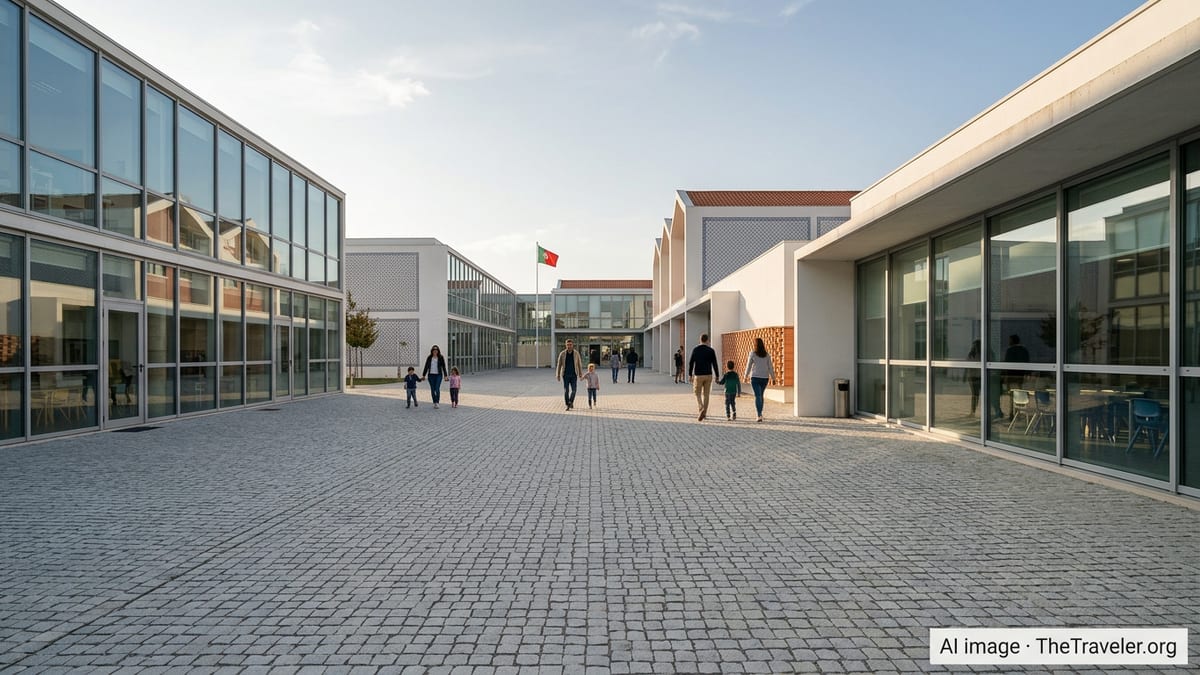
Overview of Private School Pricing in Portugal
Portugal offers a mix of international schools teaching foreign curricula and private Portuguese schools that follow the national curriculum with enhanced facilities or bilingual streams. For international families, the primary budget impact usually comes from the international segment, which is priced significantly above local private options and far above free public schooling. Published fee schedules for 2024 and 2025 indicate that mainstream international schools in and around Lisbon commonly charge from roughly 10,000 to more than 25,000 euros per year per child depending on grade level and school brand, with a clustering in the 12,000 to 20,000 euro band for secondary years.
Mid-tier international schools and some bilingual options in secondary cities or less central metro areas tend to be cheaper, often starting around 5,000 to 8,000 euros annually in the lower grades and rising into the low to mid teens in upper secondary. At the other end of the spectrum, long-established premium schools with British, American or full IB pathways are typically at the top of the national range, especially in exam years. This divergence means that education choices can easily double or halve a family’s total schooling spend even within the same city.
Overall, international school tuition in Portugal is generally lower than in leading Western European capitals such as Paris, Amsterdam or Zurich, where annual fees above 25,000 euros are common. However, when set against local salary levels and housing costs, the relative burden can still be high for families without employer support. Fee inflation should also be considered, as many schools review tuition annually and have implemented steady increases over recent academic cycles.
Tuition Ranges by School Type and Level
Published data for international schools in Greater Lisbon for the 2025 and 2026 academic years shows typical annual tuition ranges of approximately 10,500 to 26,700 euros, with variation based on curriculum, grade, and campus facilities. A survey of leading schools compiled by specialist relocation and property consultancies places most primary tuition in Lisbon between roughly 10,000 and 16,000 euros and most secondary tuition between 14,000 and the mid 20,000 euro range per year.
Individual school fee schedules illustrate how costs escalate with age. A well known international school near Oeiras lists annual tuition for early years at around 13,500 euros rising to about 17,900 euros in lower secondary and roughly 21,700 euros in the diploma years for the 2025 to 2026 school year. Another international school in the Lisbon area publishes tuition for early years in the 12,000 euro range with progressive increases across primary and middle school. An American curriculum school serving the Lisbon and Sintra area cites a broad annual tuition band of approximately 11,000 to 21,000 euros from kindergarten through grade 12, again reflecting higher prices in older grades.
Outside Lisbon, headline tuition levels are generally lower but still substantial. In the Algarve, a large international school reports annual day fees around 3,800 euros at the lowest primary levels up to around 14,200 euros at the top of secondary, while weekly and full boarding options raise the total cost significantly. In smaller bilingual and regional international schools, published fees show early years tuition starting in the low to mid four figures, with upper primary and lower secondary in the mid four to low five figure ranges depending on the school.
Private Portuguese schools that follow the national curriculum but market smaller classes, upgraded facilities or bilingual tracks often come in well below the flagship international schools. For families comfortable with Portuguese as a language of instruction, these institutions can represent a significantly lower fee burden, although published price points vary widely and can still be material in big urban areas.
Fee Structures, One Time Charges and Recurring Extras
International school fees in Portugal rarely consist of tuition alone. Families should expect a layered cost structure that includes one time entry charges, annual administrative fees and recurring extras for services such as transport and meals. These elements can add several thousand euros per child each year on top of published tuition.
Many schools charge a non refundable application or registration fee due at the time of applying or upon confirmation of a place. Amounts commonly fall in the 200 to 500 euro range for the basic application, with some institutions also requiring a separate enrolment or acceptance fee in the thousands. Certain Lisbon area schools present a capital levy or building fee structure where new students pay a one time infrastructure contribution of about 5,000 euros per child, with reduced per capita costs for multiple siblings starting together.
Annual administrative and re enrolment fees are also common, though usually modest relative to tuition. Line items such as student insurance, examination fees, technology levies and campus development contributions may appear as additional charges. A number of schools operate deposit systems, holding a portion of fees that may be refundable at graduation or upon withdrawal with sufficient notice, while others use deposits more as non refundable seat reservation payments.
Beyond tuition and institutional charges, parents should factor in uniforms, textbooks and learning materials, canteen or meal plans, extracurricular activities, after school care and school bus transport where available. In practice, these add ons can raise the effective annual education cost by several hundred to a few thousand euros per child depending on service levels and participation in activities, particularly in full service campuses around Lisbon and the Algarve.
Regional and Curriculum Based Cost Differences
Location and curriculum are key drivers of price differentiation in Portugal’s private and international school market. Lisbon and its surrounding municipalities host the largest and most expensive cluster of schools, with published fee ranges that are consistently higher than those in secondary cities and more rural regions. Tuition surveys focused on Greater Lisbon indicate average primary international school fees that are several thousand euros higher per year than comparable offerings in smaller urban centres.
Curriculum type also influences pricing. British and American curriculum schools and institutions offering the full International Baccalaureate continuum tend to sit at the premium end of the spectrum, especially where they have long operating histories and extensive facilities. In contrast, German and French international schools in Portugal are often cited as more affordable, with typical tuition bands reported around 5,000 to 6,000 euros per year across many grades, although spaces in these schools can be limited and language requirements may narrow their appeal for some international families.
Bilingual schools that blend the Portuguese curriculum with significant English or other foreign language instruction occupy an intermediate tier. Some carry fee levels close to mainstream international schools, particularly in Lisbon, while others are closer to high end private Portuguese schools. For relocation planning purposes, parents should examine not just headline curriculum labels but concrete fee tables and the actual medium of instruction at each level to determine the true cost profile for their specific child’s age and language needs.
Boarding options are limited nationally but where offered, such as at certain Algarve schools, they create a distinct cost profile. Published boarding fees can add 13,000 to 15,000 euros or more annually to day tuition, substantially increasing the overall education budget. For most expatriate families living in Portugal, however, day schooling remains the norm and boarding fees are not a primary driver of relocation costs.
Budgeting Scenarios for International Families
From a relocation budgeting perspective, private school costs in Portugal need to be modelled per child and then aggregated across the family, with a clear understanding of upcoming grade transitions and potential fee increases. For a family placing one primary age child in a mid range international school in Greater Lisbon, a realistic estimate might involve tuition around 12,000 to 15,000 euros per year, plus perhaps 1,000 to 3,000 euros in additional fees and services, yielding a total annual education cost in the low to high teens.
For a family with two or three children, particularly if one is approaching secondary or diploma years at a premium school where tuition can exceed 20,000 euros annually, the aggregate figure can quickly climb into the high 30,000 to 60,000 euro range or more per year. One time capital levies, if applicable, can add an initial outlay equivalent to several months of tuition in the first year. These dynamics mean that school selection is often one of the decisive factors in determining whether a relocation package or personal income is sufficient to support a long term stay.
Employers with international assignees in Portugal often include education benefits or capped tuition allowances in mobility policies. Where such support exists, families should verify whether it covers only core tuition or also enrolment charges and extras. It is common for allowances to be calibrated to mid market schools, leaving parents to self fund any incremental cost of selecting a top tier institution. For self sponsored relocations, some households consider a staged approach, for example using a more affordable bilingual or Portuguese private school initially while children acquire language skills, then potentially transitioning to a global curriculum in later years if necessary.
Fee discount mechanisms such as sibling reductions, early payment incentives or employer linked discounts exist at some schools but are not guaranteed. Taken together, these factors underscore the importance of obtaining up to date written fee schedules from shortlisted schools and mapping them against multi year family education plans before finalizing relocation decisions.
The Takeaway
Private and international school fees in Portugal represent a substantial and often underestimated component of the cost of relocating with children. While overall fee levels are frequently lower than those in some northern European capitals, they remain high relative to local income levels and can exceed housing costs for families with multiple children in premium institutions. For decision making purposes, the critical variables are the chosen city, curriculum, school brand and the ages of the children at the time of relocation and over the subsequent five to ten years.
International families should approach Portuguese school choice as a structured financial decision rather than a purely educational one. This involves distinguishing between international and private national schools, understanding the shape of tuition across grade bands, and factoring in auxiliary charges that meaningfully increase the total annual outlay. Budget modelling should incorporate plausible annual fee increases and potential currency movements if income is earned in a non euro currency.
Ultimately, Portugal can offer international quality schooling at a cost level that is competitive within Europe, especially for families willing to look beyond the most established international brands in Lisbon. However, the difference between a cost conscious bilingual option in a secondary city and a flagship international school in Greater Lisbon can amount to tens of thousands of euros per year for a multi child family. Transparent, data driven analysis of fee structures at the short listed schools is therefore essential for any relocation feasibility assessment.
FAQ
Q1. How much do international schools in Lisbon generally cost per year?
Typical annual tuition for international schools in Greater Lisbon ranges from roughly 10,500 to 26,700 euros depending on the school, grade level and curriculum, with most secondary grades clustering between about 14,000 and the low 20,000 euro range.
Q2. Are private school fees lower outside Lisbon?
Yes, international and private school fees outside Lisbon are generally lower, with many Algarve and secondary city schools publishing early years fees in the low to mid four figures and upper grades in the mid four to low five figure range, although top tier options still command higher prices.
Q3. How do German and French schools in Portugal compare on price?
German and French international schools in Portugal are often at the more affordable end of the international segment, with typical tuition bands reported around 5,000 to 6,000 euros per year across many grades, subject to availability and language suitability.
Q4. What one time fees should relocating families expect?
Families should expect non refundable application or registration fees often between 200 and 500 euros, and at some schools additional one time enrolment, capital levy or building fees that can be around 5,000 euros per child, alongside possible refundable or partially refundable deposits.
Q5. How much extra should be budgeted beyond tuition?
Beyond tuition, families should allow for uniforms, books, meals, transport, insurance, exams and activities, which together can add several hundred to a few thousand euros per child annually, depending on usage and the school’s service model.
Q6. Do schools in Portugal offer sibling discounts?
Some private and international schools provide sibling discounts or family packages, but these are not universal and the percentage reduction varies, so it is important to confirm current policies directly with each institution.
Q7. How quickly are private school fees rising in Portugal?
Most schools review fees annually and have implemented steady increases in recent academic years; families should assume regular upward adjustments and build a buffer for fee inflation over a multiyear stay.
Q8. Are boarding options widely available and how much do they cost?
Boarding is relatively limited in Portugal, but where available, especially in certain Algarve schools, boarding fees can add roughly 13,000 to 15,000 euros or more on top of day tuition per year.
Q9. Can a private Portuguese school be a lower cost alternative to an international school?
Yes, private Portuguese schools following the national curriculum, including some with bilingual elements, typically charge noticeably less than flagship international schools, although prices vary by city, reputation and facilities.
Q10. What is the best way to get accurate, current tuition figures?
The most reliable approach is to obtain the latest written fee schedules directly from shortlisted schools, including notes on application, enrolment and ancillary fees, and to confirm how and when the figures will be reviewed for future academic years.