

More news on this day
Proflight Zambia’s new three-times-weekly Lusaka–Livingstone–Windhoek service, launched on 3 March 2026, is being hailed as a pivotal new corridor for Southern Africa’s tourism economy.
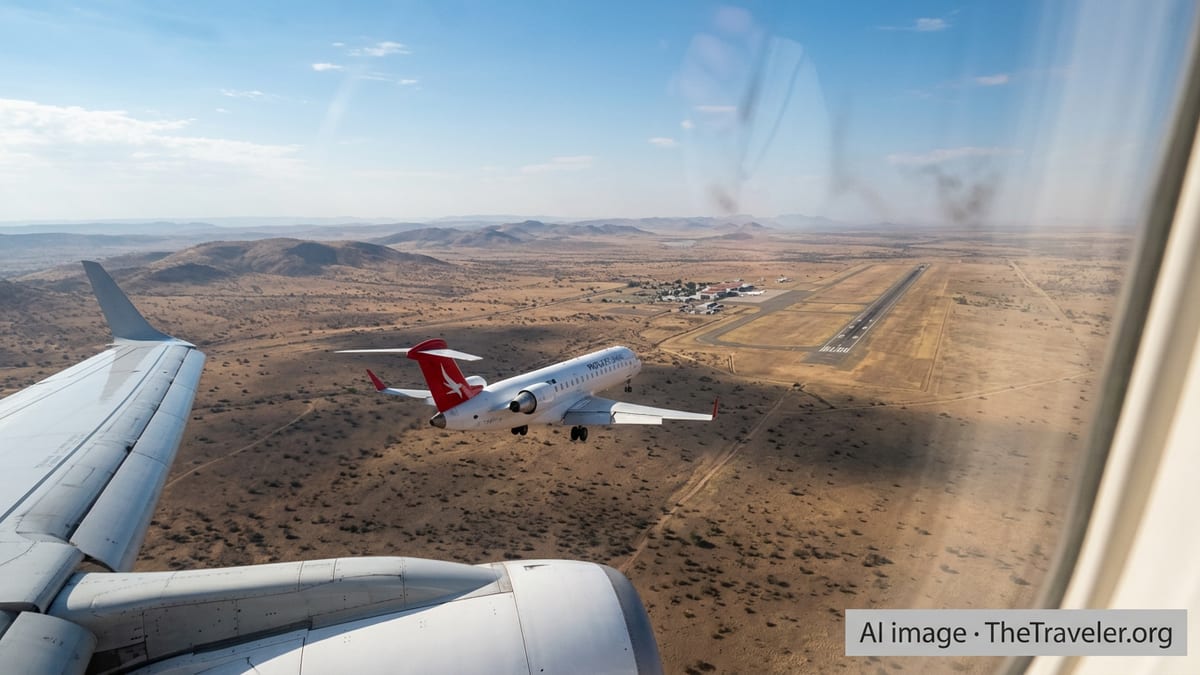
A Three-City Corridor Connecting Key Tourism Gateways
The new route links Lusaka’s Kenneth Kaunda International Airport, Livingstone’s Harry Mwaanga Nkumbula International Airport and Windhoek’s Hosea Kutako International Airport in a single, scheduled service. Operating on Tuesdays, Fridays and Sundays, the flights are timed to provide morning departures from Zambia and lunchtime arrivals in Namibia, with afternoon returns designed for same-day connectivity back through Lusaka.
According to timetable details published by aviation and airport authorities, the service departs Lusaka at 08:30, touches down in Livingstone at 09:55 and arrives in Windhoek at 11:35. The return leg leaves Windhoek at 12:20, landing in Livingstone at 13:55 and reaching Lusaka at 15:20, giving travellers a full afternoon to connect to onward domestic or regional flights.
Proflight is initially operating the route three times a week, but industry observers say the pattern could be adjusted if demand accelerates. Crucially, the airline currently has no direct competitor on the Lusaka–Livingstone–Windhoek combination, giving it a first-mover advantage in capturing leisure and corporate traffic between Zambia and Namibia.
Faster Access to Victoria Falls and Namibia’s Signature Landscapes
For the region’s tourism sector, the most immediate impact is on multi-country holiday planning. Livingstone remains one of the principal gateways to Victoria Falls, while Windhoek is the main entry point to Namibia’s deserts, canyons and coastal attractions. The new link effectively stitches these two high-profile destinations into a single, practical itinerary for both African and long-haul visitors.
Tour operators say travellers can now fly into Lusaka, connect the same morning onto Livingstone and be in Windhoek before midday, avoiding the time and cost of backtracking through distant hubs. In the opposite direction, visitors beginning safaris or self-drive trips in Namibia can more easily add Victoria Falls and Zambian parks such as Kafue or South Luangwa to their journeys without complex routings.
Industry stakeholders in both countries argue that this kind of point-to-point access is essential if Southern Africa is to compete with other long-haul regions for high-value tourists. By reducing overall travel time between iconic sites, the route aims to encourage longer stays, higher in-destination spending and more repeat travel across borders.
Boost for Regional Trade, Meetings and Investment Travel
While leisure travel is expected to dominate initial demand, business and government stakeholders are also positioning the service as an economic catalyst. The three-city corridor links two capital cities and a major tourist town, supporting trade missions, conferences and cross-border projects in mining, logistics, energy and conservation.
Officials involved in air access initiatives in Namibia and Zambia have framed the route as part of a broader strategy to position both countries as regional hubs. Faster same-day access between Lusaka and Windhoek is expected to facilitate meetings-heavy sectors, reduce reliance on longer routings through Johannesburg and improve the case for hosting international events that span both destinations.
Travel planners note that the timings allow corporate travellers to depart in the morning, conduct afternoon business in Windhoek or Lusaka and position themselves for onward connections the following day. For smaller enterprises and NGOs operating across the Zambezi region, the reduction in travel complexity could translate into tangible cost and time savings.
Improved Connectivity for Safari Circuits and Remote Destinations
The service is also being closely watched by safari operators who rely on efficient links between international gateways and remote wildlife areas. Proflight’s network already connects Lusaka with domestic destinations such as Ndola, Solwezi and Mfuwe, and the airline has indicated that schedules are being coordinated to feed traffic onto the new Windhoek flights.
Morning arrivals into Lusaka from Zambia’s Copperbelt and safari regions are timed to connect into the 08:30 departure to Livingstone and Windhoek, while evening services back to Ndola, Solwezi and Mfuwe offer same-day returns from Namibia. This pattern allows travellers to combine desert landscapes and wildlife reserves in a single trip without overnight city stopovers that previously added to costs.
In addition, Livingstone’s role as a mid-route stop strengthens its position as more than just a gateway to Victoria Falls. With the new direct Livingstone–Windhoek leg, visitors staying on the Zambezi can now access Namibia’s interior on a non-stop flight, a convenience that local tourism boards believe will support lodge occupancies and encourage investment in new products along the river.
Strategic Step in Intra-African Air Connectivity
Aviation analysts see the Lusaka–Livingstone–Windhoek service as part of a slow but significant shift toward improved intra-African connectivity. For years, many journeys between African capitals required backtracking through hubs thousands of kilometres away, adding expense and travel time that eroded the continent’s competitiveness.
By directly linking two neighbouring markets and anchoring the route in a major tourism hub, Proflight’s move aligns with long-standing calls from regional bodies and industry groups for more rational air networks within Africa. The service also supports initiatives aimed at turning Namibia into a stronger regional aviation node and reinforcing Lusaka’s status as a growing connector for Southern and Central Africa.
For travellers, the immediate benefits will be measured in hours saved and itineraries simplified. For the tourism and aviation industries, the route’s performance over the coming seasons will be watched closely as a test case for how targeted, multi-destination services can unlock new flows of visitors and investment across Southern Africa.