

Mexico has become one of the world’s most popular destinations for foreign residents, particularly from the United States, Canada, and Europe. Evaluating Mexico as a potential place to live requires a clear understanding of the structural advantages and disadvantages that affect foreigners in daily life. This briefing focuses on decision-critical pros and cons, especially around safety, infrastructure, social integration, and practical living conditions that shape the foreign resident experience across the country’s diverse regions.
Overall Attractiveness of Mexico for Foreign Residents
Mexico consistently ranks highly in international surveys of foreign residents, often placing near the top for overall expat satisfaction. Recent global expat studies place Mexico in the top tier out of more than 50 surveyed destinations, driven by positive assessments of local friendliness, ease of settling in, and perceived quality of everyday life for foreigners. These rankings signal that many foreign residents find Mexico a highly livable environment despite acknowledged structural challenges.
Approximately 1.5 to 2 million foreign citizens are estimated to reside in Mexico either full-time or part-time, with large concentrations in Mexico City, the Bajío region, the Yucatán Peninsula, and Pacific and Caribbean coastal zones. While official numbers vary, Mexico is widely regarded as the largest foreign resident hub in Latin America. This established presence of foreign communities means that newcomers often find existing support networks, foreign-oriented services, and bilingual professionals, which can significantly reduce the friction of initial settlement.
However, satisfaction is not uniform. Experiences differ sharply between major metropolitan centers, resort corridors, mid-sized interior cities, and rural areas. Factors such as security conditions, urban infrastructure quality, prevalence of English, and social attitudes toward foreigners can vary from one state or municipality to another. Prospective residents should therefore treat “living in Mexico” as a broad category that requires location-specific due diligence rather than assuming a uniform national experience.
Foreigners choosing Mexico are typically attracted by a combination of climate, proximity to North America, perceived lifestyle benefits, and the ability to access services and amenities that would be significantly more expensive in many high-income countries. At the same time, they must be prepared to manage a context marked by uneven public services, visible inequality, and security concerns that are more pronounced than in many Western European or high-income Asian countries.
Safety, Security, and Perception of Risk
Security is often the primary concern raised by foreigners considering Mexico. At a national level, Mexico registers higher homicide and organized-crime-related violence rates than most OECD countries. Public reporting and international indices consistently classify Mexico as a country facing significant security challenges, particularly connected to organized crime, trafficking routes, and local power disputes. These structural realities influence both the objective risk profile and international perception of Mexico as a place to live.
For foreign residents, the risk picture is more differentiated. Many expat-focused surveys report that a majority of foreigners feel reasonably safe in their daily routines in established expat hubs and central neighborhoods, even while recognizing ambient criminality in the wider environment. Smaller cities with strong tourism or foreign-resident economies, as well as higher-income districts of large cities, typically have heavier private security, better lighting, and more visible policing. Nevertheless, petty theft, burglary, and opportunistic crime are recurrent concerns, and foreigners can be perceived as higher-value targets.
Security conditions differ substantially between regions and even between individual neighborhoods. Some states report homicide rates many times higher than others, and local advice about which areas to avoid can be very granular, down to specific districts or road corridors. Prospective residents must therefore treat national statistics as a background signal and focus on city and neighborhood level data, recent trends, and local incident patterns when assessing risk. Living in a gated community or well-secured apartment complex is common among middle-class Mexicans and foreigners alike, and this residential pattern effectively becomes part of the security strategy.
Another aspect for foreigners to consider is institutional reliability. Trust in police, the justice system, and mechanisms for redress is structurally lower than in many advanced economies, reflecting persistent corruption and low conviction rates. This affects how foreigners manage risk: emphasis tends to be placed on avoidance strategies, situational awareness, secure housing, and private security solutions rather than reliance on state institutions alone. For many foreign residents, security is a manageable but non-trivial factor that requires continuous attention and informed local guidance.
Infrastructure, Public Services, and Environmental Conditions
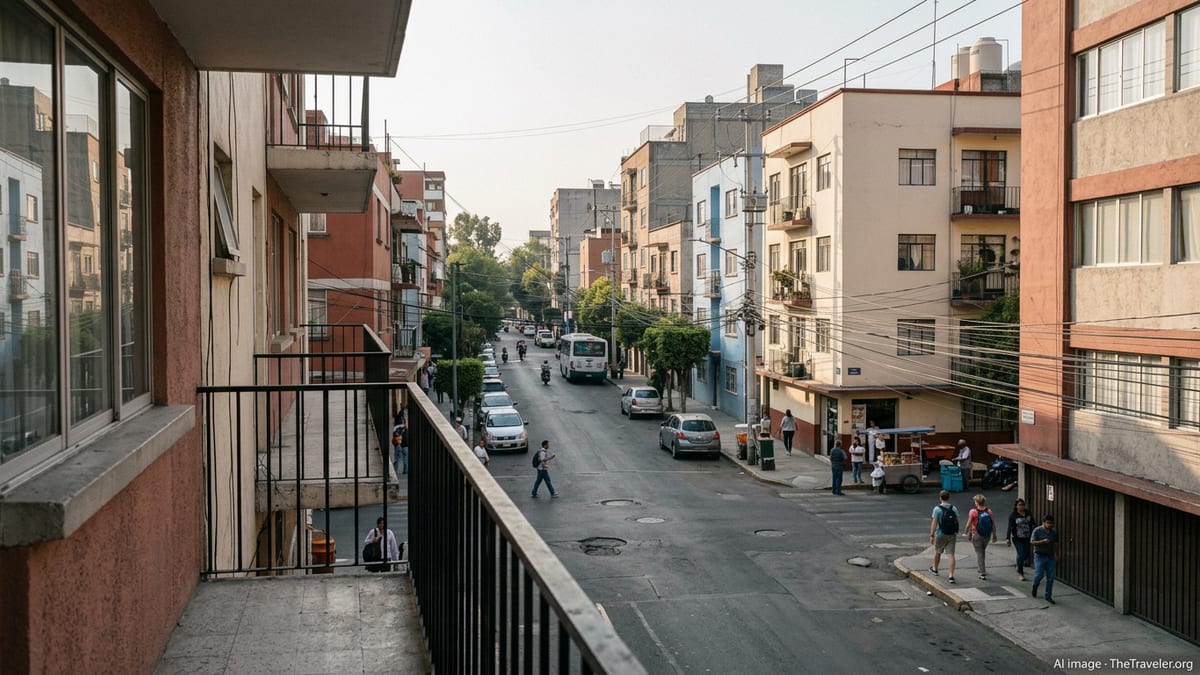
Mexico offers a mix of modern infrastructure in core urban and tourist zones and much weaker systems in peripheral or lower-income areas. Major cities and affluent districts typically have reliable broadband, extensive public transport options, modern shopping and service infrastructure, and a growing network of private healthcare facilities. These areas can feel broadly comparable to mid-tier North American or European cities in terms of day-to-day functionality for foreigners.
However, infrastructure quality decreases quickly outside of core zones. National and international assessments highlight recurring issues such as uneven road maintenance, congestion, air pollution in large metropolitan areas, and occasional power interruptions or water service outages. In some urban districts, aging water networks and drought-related supply pressures have led to temporary cutoffs or reduced pressure, affecting both locals and foreign residents. The impact on daily life can range from minor inconvenience to significant disruption, depending on location and building quality.
Environmental quality is another important dimension. Industrial and vehicle emissions contribute to elevated air pollution levels in several major cities, and waste management practices can result in visible litter and localized sanitation problems, particularly in less affluent districts. Foreigners arriving from countries with high environmental standards may find these conditions challenging. That said, environmental quality within Mexico is highly variable, with some highland and coastal cities offering relatively good air and cleaner urban environments.
Foreign residents with higher budgets often mitigate infrastructure weaknesses by selecting newer developments with independent water storage, backup power, private security, and controlled access. Residential complexes oriented toward middle- and upper-income households frequently advertise these features as standard. Prospective movers should not assume that utility reliability is uniform and should investigate building-level infrastructure and contingency provisions as part of the housing selection process.
Social Integration, Language, and Local Attitudes Toward Foreigners
A major advantage of living in Mexico for foreigners is the generally positive social environment. Survey data consistently highlight Mexico as a top-ranked destination for ease of making local friends, perceived friendliness toward foreigners, and overall personal happiness among expat respondents. Many foreign residents report that social interactions in daily life are more open, informal, and supportive than in their home countries, which can facilitate rapid integration at a basic social level.
However, meaningful integration beyond surface-level interactions usually depends on language. Estimates suggest that a relatively small minority of Mexicans have strong English proficiency, and English is concentrated in tourist zones, certain professional sectors, and younger, urban populations. Outside of these segments, daily life runs overwhelmingly in Spanish, including government procedures, contracts, banking documentation, and most professional environments. Foreigners who do not invest in Spanish language skills may find themselves constrained to expat circles, reliant on intermediaries, and less able to navigate challenges independently.
Language also affects the ability to form deeper relationships with local residents, access informal information networks, and interpret local norms. Foreigners who reach at least an intermediate level of Spanish typically report a qualitatively different experience of Mexico, with greater social integration, reduced dependence on foreign-oriented service providers, and improved capacity to evaluate risks and opportunities firsthand.
Attitudes toward foreigners are not uniformly positive. In some cities with rapid growth of foreign populations and visible price increases, there is emerging local concern about displacement, housing pressures, and cultural friction. While overt hostility remains limited in most areas, foreigners who cluster in specific neighborhoods and pay rents or prices far above local norms can contribute, unintentionally, to social tension. Prospective residents should be aware that their presence has economic and social impacts and that responsible integration involves sensitivity to local dynamics, not only personal comfort.
Economic Environment, Inequality, and Daily Living Conditions
Mexico is an upper-middle-income country with a large and diversified economy, but income distribution is uneven and a substantial share of the population lives in poverty or near-poverty conditions. Recent official figures indicate that roughly one-third of Mexicans live below the national poverty line, with both moderate and extreme poverty concentrated in certain regions and urban peripheries. For foreign residents, this means daily life often involves close proximity to visible inequality, informal labor, and areas of limited public investment.
From a foreigner’s perspective, this environment has both advantages and challenges. On one hand, the presence of a large service workforce and lower local wage levels underpins the availability of affordable domestic help, childcare, and personal services that would be cost-prohibitive in many high-income countries. On the other hand, inequality interacts with security risks, political discontent, and social fragmentation. Living in a highly protected enclave while large parts of the surrounding city lack basic services can create a sense of isolation and ethical discomfort for some foreign residents.
Foreigners who earn in stronger currencies or maintain remote income streams typically experience significant purchasing power advantages relative to the local median. This can enable a high standard of living, but it also contributes to localized inflation in desirable neighborhoods and can deepen divides between foreign and local residents. In some popular cities, property prices and rents have risen sharply over the last two decades, and local commentary increasingly highlights the role of foreign demand, especially in central and scenic districts.
Daily living conditions for foreigners are therefore shaped by micro-level choices: neighborhood selection, housing type, transportation mode, and the degree of interaction with the informal economy. Those who position themselves only in premium enclaves may encounter infrastructure and services broadly aligned with their home-country expectations but at the cost of a narrow social lens. Those who choose more mixed neighborhoods can achieve a more integrated experience but must be ready to navigate less predictable service quality and more complex local dynamics.
Bureaucracy, Governance, and Institutional Reliability
Governance quality and administrative processes are important factors in the lived experience of foreigners in Mexico. International corruption indices place Mexico in the lower tier globally, with recent scores in the mid-20s on a 0 to 100 scale where higher values indicate lower perceived corruption. This position reflects enduring concerns around bribery, influence in public contracting, and weak accountability mechanisms, which in turn shape public perceptions of government effectiveness.
For foreign residents, the most tangible manifestations of governance challenges appear in bureaucratic procedures, enforcement consistency, and dispute resolution. Administrative processes related to registrations, permits, utilities, and property matters can be slow, documentation heavy, and vulnerable to informal practices. Timelines can be unpredictable, and the application of rules may vary between offices or officials. Foreigners often rely on local facilitators, attorneys, or relocation consultants to navigate such processes efficiently and ensure compliance.
The justice system presents additional complexity. Court backlogs, low conviction rates, and procedural delays undermine confidence that civil or commercial disputes will be resolved rapidly or fairly. For foreign residents engaging in property purchases, business operations, or long-term contractual relationships, careful legal due diligence becomes essential, including the selection of reputable counsel and conservative structuring of agreements. Informal norms and personal networks can matter as much as formal rules in determining outcomes.
Despite these challenges, foreigners who limit their activities to residential life with straightforward legal arrangements may experience bureaucracy primarily as an inconvenience rather than a fundamental obstacle. However, anyone planning to own property, operate a business, or deeply embed financially in Mexico should treat institutional reliability and governance risk as central decision criteria, not peripheral issues.
The Takeaway
Living in Mexico as a foreigner offers a mix of strong advantages and significant structural risks. On the positive side, Mexico provides a socially welcoming environment for foreigners, a large and established foreign resident community, and access to urban zones with relatively modern infrastructure and a wide range of services. For individuals with foreign income or savings, this can translate into a comfortable or even high standard of living, supported by proximity to North America and extensive air and land connectivity.
Balancing these advantages are material concerns around security, institutional reliability, environmental quality, and inequality. National-level crime indicators remain high by international standards, governance challenges constrain trust in official institutions, and infrastructure quality outside core zones is inconsistent. Foreign residents who approach Mexico with unrealistic expectations or a purely lifestyle-driven perspective may be unprepared for these realities.
A practical decision framework requires location-specific analysis. Prospective residents should narrow their focus to one or two target cities, examine neighborhood-level security and infrastructure conditions, evaluate the depth of existing foreign and local networks, and realistically assess their willingness to adapt to language, bureaucracy, and social inequality. For those prepared to manage these factors thoughtfully, Mexico can be a viable and rewarding long-term living environment. For others, the combination of risk, complexity, and ethical trade-offs may outweigh the lifestyle and financial advantages.
FAQ
Q1. Is Mexico generally safe for foreigners to live in long term?
Mexico presents higher security risks than many high-income countries, but many foreigners live long term in specific cities and neighborhoods with manageable risk levels. Safety depends heavily on location, personal behavior, and housing choices, so careful local due diligence is essential.
Q2. Are some parts of Mexico significantly safer for foreigners than others?
Yes. Safety conditions vary sharply between states, cities, and neighborhoods. Well-established expat hubs and higher-income urban districts often report lower violent crime and more visible security, while some regions face persistent organized-crime-related violence that most foreigners avoid.
Q3. How reliable are utilities like water and electricity in Mexican cities?
In major urban centers and newer developments, electricity and internet are usually reliable, though short outages can occur. Water supply is more variable, with some districts experiencing pressure reductions or temporary cutoffs, making building-level water storage an important selection criterion.
Q4. Can a foreigner live in Mexico comfortably without speaking Spanish?
In tourist areas and certain urban neighborhoods, basic life can be managed with limited Spanish due to English-speaking service providers. However, lack of Spanish restricts integration, complicates interaction with authorities and local professionals, and can increase dependence on intermediaries.
Q5. How do locals generally feel about the growing number of foreign residents?
Attitudes are often friendly at an interpersonal level, but there is growing local concern in some cities about rising rents, displacement, and cultural friction linked to rapid foreign inflows. Foreigners who are sensitive to local conditions and avoid visible price escalation behaviors tend to integrate more smoothly.
Q6. What are the main lifestyle drawbacks foreigners report after moving to Mexico?
Common drawbacks include concerns about crime, frustration with bureaucracy, uneven infrastructure, visible poverty and inequality, and environmental issues such as litter or air pollution in some cities. These factors can create long-term fatigue for foreigners expecting higher systemic reliability.
Q7. Is public transportation practical for foreigners in Mexico’s major cities?
In large cities, public transport networks of metro, bus, and bus rapid transit are extensive, but they can be crowded and vary in perceived safety. Many middle-class locals and foreigners combine ride-hailing services with selective use of public transport based on time of day and route.
Q8. How big is the foreign resident community, and where is it concentrated?
Estimates point to well over one million foreign residents, with particularly visible communities in Mexico City, the Lake Chapala area, San Miguel de Allende, the Riviera Maya, and parts of Baja California. The presence of established communities can ease transition but may also accelerate local price increases.
Q9. How does corruption affect everyday life for foreigners?
Foreigners mainly encounter corruption indirectly through slow or inconsistent administrative processes, the need for fixers or facilitators, and limited confidence in dispute resolution. While some may never face direct solicitation, the broader climate shapes expectations about institutional efficiency and fairness.
Q10. Who is best suited to living in Mexico as a foreigner?
Mexico tends to work best for foreigners who are adaptable, willing to learn Spanish, comfortable with a degree of unpredictability in public systems, and prepared to invest time in understanding local dynamics. Those seeking a fully standardized, low-friction environment may find the structural trade-offs difficult to accept over the long term.