

Thailand is one of the most popular destinations worldwide for long-stay foreigners, ranging from short-term remote workers to long-term retirees and corporate transferees. Assessing whether it is a practical place to live requires a clear view of both advantages and disadvantages that specifically affect foreigners in day-to-day life. This briefing evaluates the main pros and cons of living in Thailand as a foreign resident, focusing on operational reality rather than short-term tourism appeal.
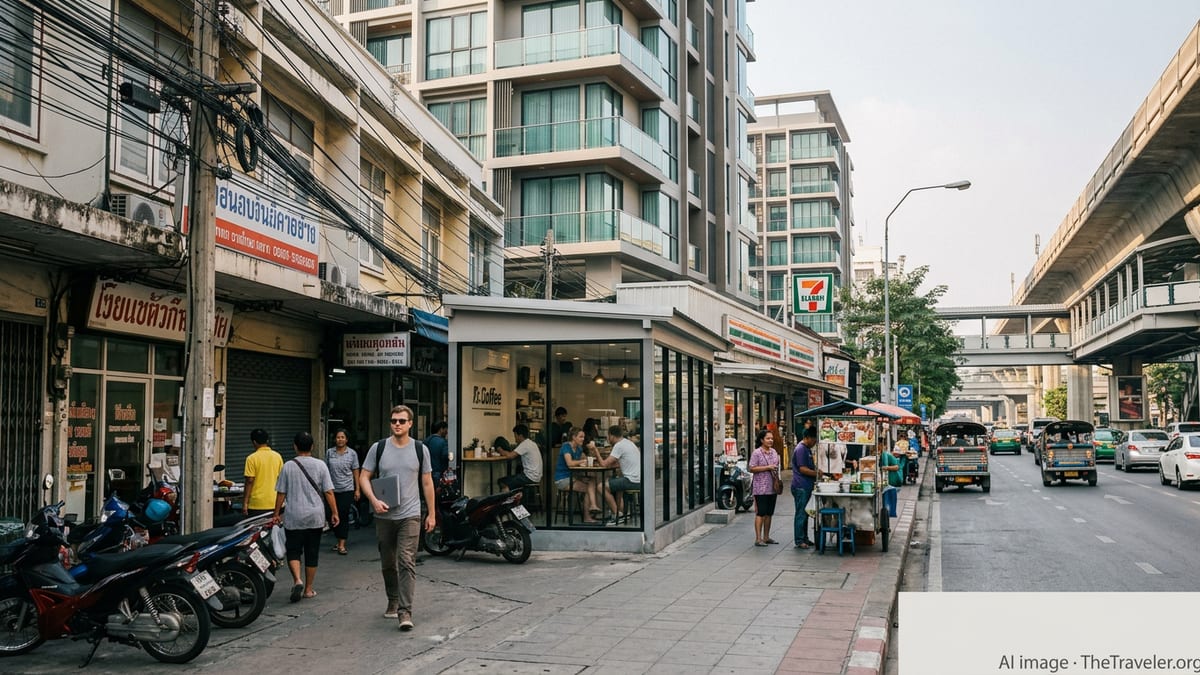
Overall Attractiveness for Foreign Residents
Thailand consistently ranks among the top destinations in global expat and remote worker surveys, largely due to its comparatively low day-to-day expenses, extensive services ecosystem for foreigners, and established expatriate hubs such as Bangkok, Chiang Mai, Phuket, and Pattaya. Surveys over recent years typically place Bangkok and Chiang Mai among the better-rated cities in Asia for foreigners when factoring in cost, accessibility, and lifestyle convenience, even if they do not score as high on governance or infrastructure as some regional peers.
For many foreigners, Thailand’s main advantages lie in perceived value for money and personal freedom in structuring daily life. The range of accommodation, food options, and services that cater to international tastes is broad in major urban centers, resulting in a relatively high level of comfort compared with many other emerging markets. At the same time, there are notable structural challenges, including environmental issues, congestion, and bureaucratic complexity, which can significantly affect long-term satisfaction.
Importantly, Thailand is not homogenous. The experience of a foreigner living in central Bangkok is very different from that of someone in a northern provincial city or a southern resort island. Pollution patterns, infrastructure quality, and access to international-standard services vary considerably by region, and relocation assessments should treat “Thailand” as a group of distinct micro-markets rather than a single, uniform environment.
Overall, Thailand offers a compelling proposition for foreigners seeking a relatively comfortable and affordable base in Southeast Asia, but expectations must be calibrated around the country’s development stage, governance framework, and environmental constraints. The decision to relocate is often less about headline attraction and more about an individual’s tolerance for trade-offs.
Quality of Daily Life and Services
In the main cities and larger provincial centers, access to daily services is generally strong. Supermarkets stock a wide range of imported products, international restaurant chains are widely present, and there is a dense ecosystem of small businesses that provide cleaning, laundry, personal grooming, and home repair at comparatively low prices. This service density is a major advantage for foreigners seeking convenience and a high level of day-to-day comfort.
Personal services such as domestic help, childcare support, and home maintenance are far more affordable than in most Western countries, which significantly enhances perceived quality of life. Many foreign residents report being able to outsource time-consuming tasks and focus more on work or leisure than would be financially feasible in their home countries. This is particularly attractive for families with young children and for older retirees who benefit from practical assistance at home.
However, service quality is variable and can differ sharply between urban and rural areas, as well as between providers. Clear communication, written instructions, and quality checks are often required to ensure that work is executed to international expectations. Foreigners without at least basic Thai language skills may need to rely heavily on bilingual intermediaries, apps, or local contacts when dealing with tradespeople, utility providers, and smaller service businesses.
Outside the main cities, access to international-standard supermarkets, specialty shops, and bilingual service providers can drop off significantly. Foreigners relocating to smaller towns or islands often face a narrower range of products, occasional supply gaps, and a greater need to adapt consumption habits to locally available goods and services.
Infrastructure, Connectivity, and Urban Conditions
Thailand’s core physical infrastructure is relatively advanced by regional standards, with extensive road networks, multiple international airports, and modern mass transit in Bangkok. The capital’s elevated rail systems ease cross-city travel along key corridors, while domestic flight connectivity allows foreigners to move efficiently between major hubs. Nevertheless, road congestion is severe in Bangkok and increasingly visible in other large cities, which can extend commuting times and reduce predictability in daily schedules.
Internet connectivity is a notable strength. Thailand ranks among the higher-performing countries globally for fixed broadband speeds, with recent indices placing it within roughly the top 20 worldwide and average fixed download speeds above 200 Mbps in many urban areas. Mobile data speeds are more mixed but continue to improve as 5G coverage expands across metropolitan regions. For remote workers and digital professionals, this level of connectivity is a significant advantage compared with numerous competing relocation destinations.
Urban environmental conditions present a more complex picture. Air pollution, particularly fine particulate matter (PM2.5), is a recurrent issue during the cool and dry months, approximately from December to April, especially in Bangkok and northern regions such as Chiang Mai and Chiang Rai. Recent air quality reports show that peak PM2.5 levels frequently exceed both Thai national and World Health Organization guideline values during these periods, even though annual averages have improved somewhat over the past few years. Foreigners with respiratory conditions, young children, or a strong preference for clean air may find this a decisive negative factor.
Water quality is generally safe for bathing and household use, but tap water is not typically consumed directly. Most households rely on bottled or filtered water for drinking, which adds a minor but constant logistical element to daily life. Solid waste management and street cleanliness vary by district and municipality; central business and tourist zones tend to be well maintained, while outlying areas may see more irregular waste collection and informal dumping.
Social Environment, Language, and Integration
Thailand is widely regarded as socially accommodating toward foreigners. Long-standing tourism and expatriate communities mean that foreign residents are a familiar presence in many urban and resort areas. In practice, this translates into relatively low levels of everyday hostility toward foreigners in public spaces compared with some other countries, which can make day-to-day life more comfortable for new arrivals.
At the same time, social integration beyond the expatriate bubble can be limited. While English is commonly used in tourist zones, major businesses, and among younger urban Thais, functional English proficiency is not universal. Foreigners who do not make at least a basic effort to learn Thai often find their interactions constrained to a subset of service-sector workers and bilingual professionals, limiting deeper engagement with the wider community and making it harder to navigate more complex tasks such as dealing with local bureaucracy or community organizations.
Foreigners are also subject to certain structural separations in public life. In some contexts, there are dual pricing structures, where foreigners may pay more than Thai citizens for specific attractions or services. While such pricing is more visible in tourist-oriented venues than in daily life, it illustrates a broader differentiation between Thai citizens and non-citizens that newcomers should be prepared to encounter.
Social expectations related to behavior, hierarchy, and conflict management can differ significantly from common Western norms. Public displays of anger, confrontational argument, and open criticism are generally discouraged. Foreigners who adapt well to indirect communication, show deference in formal settings, and avoid public confrontation usually experience smoother interactions. Those who remain highly confrontational or dismissive of local norms may find themselves socially isolated or facing friction in professional and community settings.
Safety, Security, and Personal Risk Perception
Thailand’s overall crime profile is relatively moderate compared with many other countries that attract large numbers of foreign residents. Most foreigners describe day-to-day safety in urban areas as acceptable, particularly in central neighborhoods of major cities and established resort zones. Petty crime such as pickpocketing, bag snatching, and opportunistic theft exists but is generally manageable with standard precautions, especially in crowded areas and nightlife districts.
Violent crime against foreigners is less common but not absent. Incidents tend to be concentrated in areas with heavy nightlife activity or where alcohol and drugs are involved. Foreigners who avoid high-risk environments and follow standard personal safety practices typically experience few serious security issues. Residential neighborhoods frequented by expatriates often benefit from visible security measures such as gated compounds, guards, and CCTV, which further reduces perceived risk.
Road safety is a significant concern. Thailand regularly ranks among the higher-risk countries globally for traffic fatalities per capita. Motorbike usage is widespread, helmet compliance is inconsistent, and adherence to traffic rules can be variable. Foreign residents who rely on motorcycles or scooters, particularly without full protective gear, face elevated personal risk. Even as car passengers or pedestrians, foreigners must adjust to traffic patterns, frequent lane changes, and sometimes aggressive driving behavior.
Natural hazard exposure is mixed. Thailand does not sit on a major earthquake fault line like some regional neighbors, but flooding can be recurrent in parts of Bangkok and other low-lying areas during the rainy season. Coastal areas and islands can be affected by heavy storms and, in rare cases, by tsunami risk. Foreigners choosing housing in flood-prone or coastal zones should factor in building elevation, drainage, and emergency access when assessing long-term suitability.
Regulatory and Practical Constraints Specific to Foreigners
Foreigners in Thailand operate within a regulatory environment that retains clear distinctions between citizens and non-citizens. While this briefing does not focus on visa frameworks, it is important to note that legal stay, right to work, and access to certain public services are conditioned on visa and permit status. In practice, this creates an additional layer of administrative effort and ongoing compliance that forms part of the daily reality of living in the country.
Ownership and control structures are another important constraint. Foreigners face restrictions on direct land ownership and, in many cases, on controlling stakes in local companies, which affects how they can structure both personal property arrangements and business operations. Even where workarounds are legally available, they often require legal advice, complex structures, and ongoing monitoring. For many long-term residents, this reinforces a sense of conditionality and reduces the feeling of long-term security compared with the experience of citizens.
In employment and business, foreigners must navigate licensing, work permit rules, and restrictions on participation in certain professions. Many professional roles are open in practice, particularly in multinational companies and in sectors such as education, technology, and senior management. However, the need for employer sponsorship and formal documentation can limit job flexibility and make spontaneous career changes more complex than in jurisdictions with more liberal labor-market access for foreigners.
These regulatory and structural distinctions do not prevent successful long-term residence, but they do shape the overall risk profile of relocation. Foreigners considering building a long-term base in Thailand must be comfortable with an operating environment where legal status and property arrangements can be more conditional and administratively demanding than in countries that grant broader rights to permanent residents or naturalized citizens.
The Takeaway
Living in Thailand as a foreigner offers a distinctive mix of strong practical advantages and material trade-offs. On the positive side, foreigners benefit from comparatively low everyday expenses, extensive service availability, strong fixed-line internet infrastructure, and a generally accommodating social environment. These factors enable many foreign residents to enjoy a level of comfort and convenience that might be financially out of reach in their home countries.
On the negative side, recurrent air pollution, heavy traffic congestion, elevated road-safety risks, and structural constraints on foreigner rights present meaningful challenges. Integration into local society can be shallow without sustained language learning and cultural adaptation, and the regulatory framework can make legal status and property arrangements feel less secure than in some alternative relocation destinations.
For individuals with high tolerance for environmental variability, flexible career arrangements, and an interest in leveraging Thailand’s service-rich urban hubs, the country can function effectively as a medium- to long-term base. For those prioritizing ultra-low environmental risk, strong legal permanence, or fully predictable governance, Thailand may be better suited as a finite multi-year posting rather than a permanent relocation destination.
Ultimately, Thailand is best evaluated not as a binary “good” or “bad” destination but as a portfolio of trade-offs that align well with some foreigner profiles and poorly with others. A successful move depends on matching personal risk tolerance, health considerations, and long-term objectives with the specific realities of life in the particular Thai city or region under consideration.
FAQ
Q1. Is Thailand a good long-term base for remote workers and digital nomads?
Thailand can be a practical base for remote workers due to strong fixed broadband, competitive costs, and established foreigner communities, especially in Bangkok and Chiang Mai. However, seasonal air pollution, visa management requirements, and occasional mobile-network variability mean it is more suitable for those with flexibility and a high tolerance for environmental and regulatory trade-offs.
Q2. How safe is daily life for foreigners in Thai cities?
Day-to-day personal safety for foreigners is generally acceptable in major cities, with most risks concentrated in traffic, nightlife areas, and crowded districts. Standard precautions against petty crime and careful behavior on roads, particularly when using motorbikes, are important. Many expatriate neighborhoods and residential compounds offer additional security measures that further reduce everyday risk.
Q3. How serious is air pollution for residents rather than short-term visitors?
Air pollution is a recurring seasonal issue, particularly between December and April, and can significantly affect residents with respiratory or cardiovascular vulnerabilities. While annual averages have improved in some areas, peak PM2.5 levels in Bangkok and northern regions still frequently exceed health-based guideline values. Long-term residents commonly use air purifiers at home and monitor air quality indices to adjust outdoor activities.
Q4. Will language barriers make daily life difficult for foreigners?
In central Bangkok, major tourist destinations, and large corporate environments, many interactions can be handled in English. However, outside these contexts and in dealings with smaller businesses or government offices, limited English proficiency is common. Foreigners who learn basic Thai phrases and rely on translation tools or bilingual contacts usually navigate daily life more smoothly and experience less friction.
Q5. Is Thailand suitable for foreign families with children?
Thailand can be suitable for foreign families who prioritize access to international or bilingual schools in major cities and can budget for associated costs. Urban centers offer a wide range of child-oriented services and activities. Key considerations include traffic safety, air quality during high-pollution months, and the family’s willingness to adapt to cultural expectations in schools and public spaces.
Q6. How does infrastructure affect the experience of living in Thailand?
Core infrastructure such as roads, airports, and internet networks is relatively advanced, particularly in and around Bangkok and other major hubs. Mass transit in the capital improves cross-city mobility along main corridors, while fast fixed broadband supports remote work and digital services. However, road congestion, variable public transport coverage outside central areas, and occasional flooding in low-lying districts can complicate daily routines.
Q7. Do foreigners feel welcome in Thai society?
Most foreigners report that social interactions in Thailand are polite and generally welcoming, especially in areas with long-established expatriate and tourism sectors. However, deep integration into local social and professional networks usually requires effort in learning Thai, observing local norms, and building long-term relationships. Foreign residents often operate within parallel expatriate and local circles rather than fully merging into one or the other.
Q8. Are there significant restrictions that affect foreigners’ sense of security?
Yes. Restrictions on land ownership, certain types of business control, and access to some professions reinforce a sense of conditionality for foreign residents. Combined with visa and work-permit requirements, these constraints mean many foreigners feel their status is more dependent on regulatory stability and employer support than it might be in countries that offer broader resident rights or clearer paths to permanent settlement.
Q9. How different is life for foreigners in Bangkok compared with other Thai cities?
Bangkok offers the most comprehensive set of services, infrastructure, and international schools, but also the highest levels of congestion and frequent air-quality alerts in certain seasons. Cities like Chiang Mai, Hua Hin, and some islands offer a slower pace and smaller scale, with varying infrastructure quality and more limited international services. Foreigners should assess each city’s specific environmental conditions, connectivity, and service availability rather than generalizing from Bangkok alone.
Q10. Who is most likely to benefit from relocating to Thailand?
Foreigners who benefit most from living in Thailand typically value service-rich urban environments, have flexible or location-independent incomes, and are comfortable managing administrative requirements and environmental variability. Individuals with severe respiratory issues, very low risk tolerance, or a strong preference for permanent legal security may find other destinations better aligned with their long-term priorities.