

I went to Port Alberni with mixed expectations. On paper it sounded perfect: a central Vancouver Island base with mountain views, inlet waterfront, and access to wild coastline in almost every direction. In reality, my time there was more complicated. I found genuine warmth, impressive Indigenous-led changes on the waterfront, and easy access to nature.
I also ran into industrial smells, a downtown that still feels in transition, and moments when I wondered if I should have just driven straight through to the coast. This is my honest, first person account of what actually stood out, good and bad, and whether I would go back.
First Impressions: A Working Valley, Not a Postcard Town
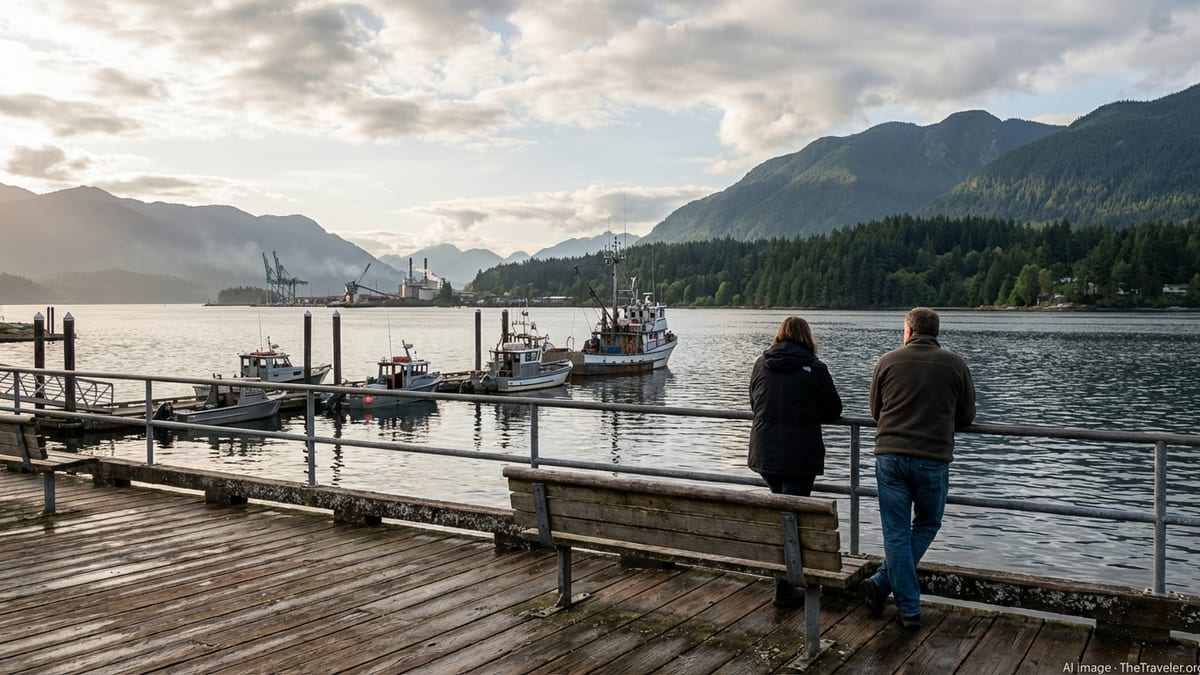
Driving into Port Alberni, I did not get the dreamy seaside-village reveal I had quietly imagined. The approach off Highway 4 is lined with big-box stores, light industry, and the unmistakable feel of a working resource town. The Somass River and inlet are nearby, but they are not the first thing you see. Instead, I found myself in traffic with logging trucks and pickups, passing modest strip malls and older houses before anything remotely “touristy” appeared.
Once I settled in, that initial letdown turned into a more nuanced appreciation. Port Alberni is not trying to be a polished resort. It is a place where people actually live, work, and send their kids to school. The mill stacks on the skyline and the boat yards along the water are part of daily life, not just background scenery. If you arrive expecting a Tofino-style boutique harbor, you are likely to be disappointed. If you arrive curious about a community in transition, the first impression starts to make more sense.
As I explored different neighborhoods, the city’s geography became clearer. The valley floor, hemmed in by mountains, gives the place a slightly enclosed feeling. On bright days, those mountains are beautiful, with Arrowsmith and the Beaufort range anchoring the horizon. On gray, low-cloud days, the same geography can feel a bit heavy and hemmed in. My mood shifted with the weather more than I expected.
That tension between “working town” and “emerging destination” shaped almost everything I experienced. At its best, Port Alberni feels authentic, friendly, and unpretentious. At its worst, it can feel like a place still figuring out who it wants to be for visitors, and how much it even cares.
Waterfront Reality: Quay-to-Quay, Markets and Missed Potential
The waterfront was where my expectations and reality clashed the most. I had read about Harbour Quay, Victoria Quay, and the newer Quay to Quay pathway that links them along the water. In my mind, this translated into a continuous, bustling promenade. What I found was more fragmented and low-key, but still worth the effort.
Harbour Quay turned out to be the most obviously visitor-friendly area. There is a fresh-looking square with colorful buildings, a playground, the reimagined Wolf Tower with Indigenous art, and views down the Alberni Inlet that are genuinely striking on a clear day. When the farmers or craft markets are running and a few food vendors are open, the place feels lively and welcoming. On quieter weekdays, though, several storefronts were shuttered or keeping limited hours, and it did not take long to walk the whole area.
The Quay to Quay pathway was a pleasant surprise. The multi-use path makes it much easier to experience the waterfront on foot or by bike, without constantly dodging traffic. Interpretive signs and Indigenous carvings along the way add cultural context, which I appreciated. Still, there are stretches that feel more like walking past the back side of an industrial zone than a polished esplanade. The view of the inlet is there, but you are always aware you are in a working harbor, with log booms, shipyards, and the last active mill nearby.
Victoria Quay felt different again. It is more of a linear park and riverside stop along the Somass, with big carved welcome figures and picnic areas. In late summer and fall it is known for black bear viewing across the estuary, and even in the off-season I could sense why people gather here. However, the highway runs right behind it, so the ambience is never entirely peaceful. Overall, I left the waterfront impressed by the progress the city and local First Nations are making, especially with new market spaces planned at the marina, but also aware of how much unrealized potential still sits behind chain-link fences and parking lots.
The Smell, the Mill and the Valley Air
I had seen casual comments about “the Port Alberni smell” before visiting, but I assumed it was mostly an outdated stereotype. It is not. On several occasions, usually in still weather, I caught distinct whiffs of sulphur and sewage as I moved around town. It was not constant and not always strong, but it was noticeable enough that I started to understand why it comes up so often in local conversations.
The industrial component seems to come from the paper mill and associated processes on the waterfront. Even though the operation has changed over the years and regulations have tightened, the valley’s geography can trap odors when the wind aligns the wrong way. Locals are divided on how often this happens; some barely notice it anymore, others describe it as one of the town’s main drawbacks. My own experience fell somewhere in the middle. There were moments when I could sit comfortably at the harbor without smelling anything unusual, and other times when the air shifted and the odour undercut the view.
On hot days, especially in summer, there is also the more familiar urban smell of warm asphalt, exhaust, and the occasional sewage note when walking near certain low-lying stretches. Again, this is not unique to Port Alberni, but the combination with industrial odours is not ideal for a place trying to grow its tourism profile. If you are particularly sensitive to smells or traveling with someone who is, this is a factor worth considering, especially for longer stays in peak heat.
That said, it is important to put the issue in perspective. I never experienced a day where the air felt unbreathable or hazardous; it was more about quality of life and ambience. For a short stop on the way to the coast, you might not notice anything. For a week-long stay, it will likely cross your mind at least once. Personally, the smells would not stop me from returning, but they would influence where I choose to stay in town and how long I plan to linger on certain days.
Nature Access: Trails, Inlet Views and a Great Base for Day Trips
Where Port Alberni really started to win me over was outside the dense part of town. The city is surrounded by mountains, lakes, rivers, and the long, fjord-like Alberni Inlet, and it does not take long to feel that you have stepped into a different world. If you think of Port Alberni less as a destination and more as a hub for outdoor exploration, its value becomes much clearer.
Close to town, the Port Alberni waterfront loop and the Quay to Quay pathway offer easy, mostly flat walks with a mix of river, estuary, and harbor views. They are not wilderness hikes, but they are pleasant and accessible, and I found them useful for stretching my legs after time in the car. For something more immersive, the Alberni Inlet Trail provides longer, more rugged stages with big views over the inlet, forest sections, and access points near China Creek. Parts of this trail are steep and demanding, but the vantage points over the valley and water are worth the effort if you enjoy serious day hiking.
Within a short drive, lakes like Sproat and Great Central offer swimming, paddling, and camping possibilities. On calm evenings, the reflections of the surrounding hills on the water were some of the most peaceful scenes of my visit. The trade-off is that in peak summer these areas can be busy, with limited parking and popular beaches filling up quickly, especially on hot weekends when locals escape town to cool off.
What really makes Port Alberni strategically interesting is its central position. Ucluelet, Tofino, and the Pacific Rim beaches lie to the west; Cathedral Grove’s old-growth forest and the smaller communities of Qualicum and Parksville sit to the east; Bamfield and Barkley Sound are accessible via the MV Frances Barkley boat from Harbour Quay when it is running. Using Port Alberni as a base, I was able to explore in several directions without constantly unpacking and repacking. The flip side is that you spend a lot of time driving those same twisty stretches of Highway 4, which can be tiring and occasionally nerve-wracking in bad weather or heavy traffic.
Culture, Community and Indigenous Presence
One area where my experience in Port Alberni exceeded expectations was in the visible Indigenous presence and the sense of community energy around that. From the welcome figures on Victoria Quay to art and story panels at Harbour Quay and along the waterfront, I felt a genuine effort to foreground Tseshaht and Hupačasath histories rather than tuck them into side rooms of a museum. The transformation of the old clock tower into the Wolf Tower, with Indigenous design elements, is a tangible example of this shift.
Markets and events, when they were on, added a human warmth that the physical infrastructure alone could not. Wandering through a Saturday market at Harbour Quay, I chatted with vendors selling local produce, crafts, and baked goods, and I found people refreshingly straightforward. There was less of the curated, ultra-polished “experience” you get in more famous tourist towns. Instead, conversations drifted from weather and salmon runs to housing costs and the pros and cons of living in a valley that is still largely dependent on resource industries.
That honesty extended to how locals spoke about their city’s challenges. A few people readily acknowledged the odour issues, the struggles of small businesses downtown, and the uneven pace of change along the waterfront. Others emphasized the growing role of collaborative projects between the city and First Nations, especially around new waterfront markets and cultural spaces. As a visitor, I appreciated that I was not being sold a simplified story. Port Alberni is clearly in a period of transition, and you can feel that both in the boosterism and in the frustrations.
What is still underdeveloped, at least from a casual visitor’s perspective, is an easily accessible, cohesive cultural circuit. There are individual attractions, museums, and heritage spots, but they are spread out and not always well-signposted. If you arrive without a plan, it is easy to miss things. With a bit of research and intention, though, you can piece together a more meaningful understanding of the place beyond its reputation as a pass-through on the way to the beaches.
Food, Lodging and the Practical Side of Staying in Town
On the practical side, Port Alberni is a mixed bag. I found some genuinely good meals in town, especially at small, independently run spots that clearly rely on local support year-round rather than seasonal tourist spikes. Prices were generally more reasonable than on the west coast, and portions were generous. On the downside, hours could be erratic, with some places closed on days I expected them to be open, and a few highly recommended eateries were slammed on weekends, leading to long waits.
Lodging options range from basic motels along the main road to a handful of nicer inns, B&Bs, and vacation rentals in quieter residential pockets or closer to the water. If you are used to design-forward boutique hotels, you will not find many here. What you will find are clean, functional places to sleep that are often cheaper than accommodations on the coast. I quickly learned that location matters: staying closer to the upland residential areas or just outside the core helped reduce the occasional industrial noise and smell, while still keeping me within a short drive of everything I wanted to see.
One frustration for me was the general car dependency. Port Alberni is not a big city, but walking between different clusters of activity often meant dealing with long, somewhat uninviting stretches of road. Public transit exists but is limited for a visitor trying to squeeze a lot into a short stay. If you do not have a vehicle, your experience here will be constrained. Even with a car, be prepared for a lot of short hops from lakes to trailheads to markets and back.
On the plus side, basic services are well covered. Supermarkets, pharmacies, gear shops, and auto services are all available, which makes Port Alberni a comfortable resupply point before heading out to more remote areas. It may not be charming in the classic tourist sense, but if you need to stock up on groceries, fix a tire, or pick up extra camping fuel, it is a very practical place to be.
Expectations vs Reality: Would I Visit Again?
Looking back, my main mistake was expecting Port Alberni to behave like a smaller, quieter version of the west coast surf towns. It is not. The industrial presence, the smells on certain days, and the patchy, still-developing waterfront all undercut that fantasy. Once I let go of that, I started to see the city more clearly: as a working community with serious nature at its doorstep and a waterfront that is slowly, imperfectly, opening itself to visitors.
Would I visit again? Yes, but with a clearer strategy. I would base myself a little farther from the heaviest industrial zones, choose a time of year when summer heat is less intense, and plan my days around outdoor excursions with shorter, targeted visits to the waterfront for markets or an evening walk. I would also give myself enough time to ride the local heritage railway when it is operating, or to book a day trip on the MV Frances Barkley down the inlet, instead of trying to cram everything into a single rushed overnight stop.
There are things I would not do the same way. I would not count on having a consistently “cute” downtown experience; instead, I would treat the town core as a functional hub with occasional nice surprises. I would also avoid over-romanticizing the idea of sunset drinks by the water; some evenings were indeed beautiful, but others were marred by wind, odour, or simple lack of atmosphere if businesses were closed.
What keeps Port Alberni on my radar, despite these caveats, is its authenticity. It feels lived-in and real, with all the imperfections that implies. If you prefer your destinations polished and curated, you will likely be frustrated. If you enjoy watching a place in the middle of change and you care more about trailheads and boat launches than main street charm, the reality here may suit you better than the brochure ever could.
The Takeaway: Who Port Alberni Is Really For
In the end, I see Port Alberni as a destination with a narrow but important sweet spot. It is not the star of the Vancouver Island tourism scene, and it probably does not want to be. Instead, it shines as a base for people who are comfortable with rough edges and interested in nature access, local stories, and real-life community dynamics rather than a carefully designed visitor bubble.
If you are an outdoors-focused traveler who wants to hike the Alberni Inlet Trail, paddle local lakes, or connect day trips to both the east coast and the Pacific beaches, Port Alberni makes sound logistical sense. You will likely appreciate the lower accommodation costs, the complete set of services, and the ability to be on a quiet lakeshore or forest trail within a short drive. You just have to accept that your home base will sometimes smell like industry and look more like a working-class town than a resort.
Culture-minded visitors who are curious about Indigenous presence on the waterfront and evolving partnerships between First Nations and the city will also find meaningful, if scattered, points of interest. Plan ahead, read up on local history, and seek out markets or community events; that is where the place’s character comes into focus.
For travelers seeking a romantic getaway, a walkable, picturesque old town, or a fully polished waterfront, Port Alberni is likely to disappoint in its current form. In that case, treating it as a brief, practical stop on the way to somewhere else may be the better choice. For me, the visit was worth it precisely because it challenged my expectations. I left with a more grounded sense of this valley and a respect for a community doing the hard, slow work of redefining itself between its industrial past and its outdoor future.
FAQ
Q1. Is Port Alberni worth visiting on its own, or just as a stop on the way to Tofino?
For me, Port Alberni worked best as a base and a resupply point rather than a primary destination. It is worth at least an overnight if you plan to hike local trails, explore nearby lakes, or book a day trip down the inlet. If you are purely focused on surf beaches and coastal scenery with limited time, you might choose to treat it as a shorter stop.
Q2. How bad is the industrial smell in Port Alberni really?
During my stay the smell came and went. Some days and areas were completely fine; other times there was a noticeable sulphur or sewage odour, especially in calm or hot conditions. It was rarely overwhelming, but it did affect the ambience. If you are very sensitive, consider staying slightly away from the heaviest industrial zones and visiting in cooler months.
Q3. Is Port Alberni a good place to stay with kids?
I found it reasonably family friendly, especially around Harbour Quay with its playground, markets, and flat waterfront walks. Nearby lakes offer swimming and easy beach time in summer. Just be realistic: this is a working town with traffic and industrial areas, not a self-contained family resort. A car is essential for reaching the nicest nature spots.
Q4. Do I need a car to enjoy Port Alberni?
In my experience, yes. While there are some walkable pockets and limited transit, most of the places that made the trip worthwhile, like lakes, trailheads, and viewpoints, required driving. Even within town, distances between clusters of interest can be long and not especially pleasant on foot.
Q5. How many nights should I spend in Port Alberni?
If you are only breaking up the drive to the west coast, one night can be enough. If you want to hike the Alberni Inlet Trail, explore lakes, and fit in a boat trip down the inlet when schedules allow, two to three nights gives you more breathing room and flexibility for weather.
Q6. What is the best time of year to visit Port Alberni?
Late spring to early fall offers the best combination of open attractions, market activity, and trail access. Summer brings heat and busier lakes, and can amplify odour issues on some days. Shoulder seasons can feel quieter and cooler, which I personally preferred, but some services may operate on reduced hours.
Q7. Is the waterfront safe and walkable?
I felt safe walking the Harbour Quay and Quay to Quay areas during the day and early evening. The paths are generally flat and accessible, though some stretches pass close to industrial zones. At night, things get very quiet, so I stuck to better-lit sections and did not push long walks after dark.
Q8. Are there good food options in Port Alberni?
I had several solid meals at local restaurants and cafes, often at better prices than on the coast. The trade-off is that hours can be irregular, especially outside peak season, and popular spots can be crowded on weekend nights. I learned to check hours in advance and have a backup plan.
Q9. Is Port Alberni a good fit for remote work or a longer stay?
From a practical standpoint, it has the essentials: supermarkets, decent internet in most lodgings, and access to services. The surroundings are great if you like to break up workdays with nature. However, the industrial backdrop, smells on some days, and car dependency might wear on you if you are craving a more idyllic village atmosphere.
Q10. Who would I recommend Port Alberni to, after my visit?
I would recommend it to budget-conscious, outdoors-focused travelers who value access to lakes, trails, and inlet trips more than polished aesthetics. I would be more cautious suggesting it to someone seeking a romantic coastal town experience or a charming, walkable historic center, because that is not what Port Alberni currently offers.