

I had wanted to experience the Quebec Winter Carnival for years. Photos of Bonhomme’s ice palace, glowing night parades, and snow sculptures made it look like a once in a lifetime winter celebration. When I finally went, I did find that magical, frosty atmosphere.
I also found crowds, unexpected costs, logistical headaches, and a cold that cuts straight through inadequately planned outfits. This is my candid, first person account of what the Quebec Winter Carnival is actually like, with the pros and cons laid bare so you can decide if it is the right trip for you.
Setting the Scene: What I Expected Versus What I Found
Before arriving in Quebec City, my expectations were sky high. Official descriptions call it one of the largest winter carnivals in the world, with ten days of parades, snow sculptures, Bonhomme’s ice palace, ice canoe races, and a whole network of activity zones spread across the city. In photos, everything looks luminous and cinematic: families beaming under fireworks, Bonhomme posing in front of a crystal palace, crowds sipping hot drinks that never seem to spill despite the snow. I pictured a nonstop festival where every corner of Old Quebec buzzed with performances and winter games from morning to night.
The reality was more nuanced. Yes, the core carnival sites are genuinely impressive, and certain moments feel like stepping into a storybook. But the festival is also highly concentrated in specific zones and at specific times of day. Outside those windows, it can feel like an ordinary winter visit to Quebec City, only with more people and higher hotel prices. I found myself repeatedly recalibrating my expectations, especially once I realized how much the experience depends on timing, weather, and how much effort I was willing to put into planning around the schedule.
Emotionally, my experience oscillated between delight and mild frustration. One hour I would be sliding down a giant snow slide with a ridiculous grin on my face, the next I would be standing in a slow moving line, nursing a lukewarm drink and wondering if I should have skipped that particular activity. Looking back, I do not think the carnival is overhyped, but I do think the glossy marketing glosses over some practical compromises that matter a lot once you are actually there.
What surprised me most was how much the overall enjoyment hinged on accepting that it is not a perfectly curated theme park style experience. It is a citywide event layered onto a living, working historic city in midwinter. That creates real magic, but it also creates bottlenecks, uneven programming, and a sense that you have to work with what the weather and the daily schedule give you.
The Atmosphere: Genuine Winter Magic With Rough Edges
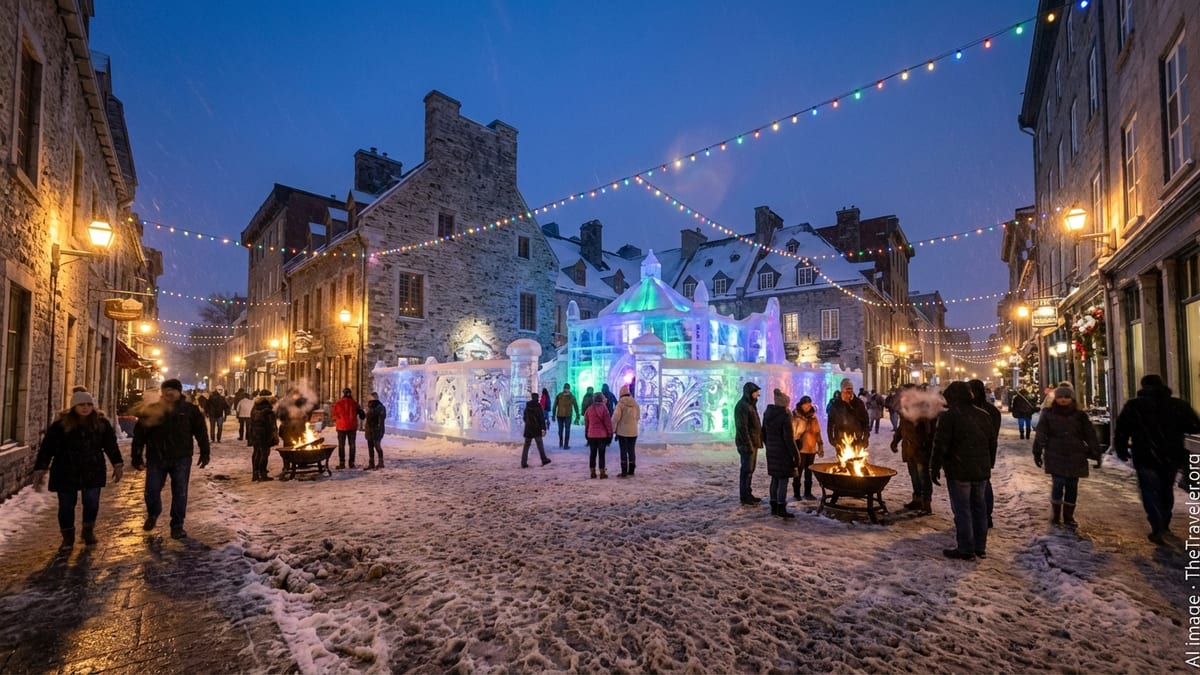
When the carnival is in full swing, the atmosphere is exactly as festive as the photos suggest. Walking toward Bonhomme’s ice palace at night, the structure glowed in cool blues and purples, with carved details and snow sculptures surrounding it. Music spilled out from the nearby SAQ bistro and ice bar, people clustered around fire pits, and kids darted between snow installations. At those moments, I felt that happy, slightly surreal sense of being somewhere that truly embraces winter rather than tolerating it.
During peak hours, though, that magic comes with a crush of people. On weekend evenings, especially around the night parades and concert times, the crowds were dense enough that simply moving between activities took effort. I am comfortable in busy urban environments, but there were times when the noise level, lineups, and constant maneuvering around strollers and groups left me more drained than energized. The festival feels less like a quaint local event and more like a major city festival, which is not necessarily bad, but it is worth knowing if you dislike crowds.
By contrast, some weekday daytime periods felt almost too quiet. I had stretches where I walked through parts of the site and wondered if something had been canceled, only to realize the schedule was simply lighter at that time. That unevenness can be jarring. I went from struggling to find a spot to stand during the parade to wandering among sculptures in near silence the next morning. Personally, I appreciated the quieter windows for taking photos and actually noticing the details of the ice and snow art, but if you came expecting constant spectacles, the lulls might feel like a letdown.
The broader city adds a lot to the mood. Old Quebec in winter, with its stone walls, narrow streets, and views over the St. Lawrence, is inherently atmospheric. Even when I stepped away from official carnival sites, I still felt immersed in a winter story. That said, the carnival does not transform every inch of the city. Once you get a few blocks away from the main zones, it quickly reverts to normal winter city life, which can feel either like a welcome break or a subtle reminder that all the fun is concentrated and curated.
Tickets, Costs, and the Effigy: Where the Money Goes
The central access point for the Quebec Winter Carnival is the effigy, the little Bonhomme shaped pass you wear on your coat that grants entry to official sites and activities. Before going, I had read that it was “only around a few dozen dollars,” which sounded very reasonable for a multi day festival. In practice, the actual price, which varies slightly by year and whether you buy in advance, felt fair but not as cheap as the casual marketing language had led me to assume.
What bothered me more than the base price was realizing how quickly other costs piled up around it. Many of the headline activities and sites are included with the effigy, but food, drinks, and certain special experiences add up fast. I found myself paying for hot drinks more often than I expected, partly because being outside in Quebec winter temperatures really does push you toward every heated tent and bistro in sight. A couple of festive cocktails at an ice bar, a snack here, a poutine there, and suddenly one evening out felt like a fairly expensive night.
Then there is the underlying cost of simply being in Quebec City during such a major event. Hotel rates were clearly higher than in lower season weeks, and availability near the main zones tightened significantly for the key weekends. I had to lock in accommodation well in advance and still felt like I was paying a premium for location. If you want to be within easy walking distance of Bonhomme’s ice palace and the night parade routes, you will almost certainly pay more for that convenience. Public transport and shuttles help, but they are not a perfect substitute for being able to duck back to your room to warm up or change layers.
On the positive side, the effigy does come with discounts at some local businesses, and if you actively seek those out, you can recoup a bit of value through reduced prices on attractions and food outside the main sites. I found that this required more conscious planning than I expected. It is easy to forget about the discounts in the moment and just follow the crowd to whatever is nearby. If I went again, I would study those offers more carefully ahead of time and build them into my daily plan rather than treating them as a nice extra.
Highlights: What Truly Lived Up to the Hype
Despite my reservations about costs and crowds, several aspects of the Quebec Winter Carnival absolutely lived up to and sometimes exceeded my expectations. Bonhomme’s ice palace is at the top of that list. Seeing it in person, especially after dark, was one of those travel experiences that felt exactly as special as I had hoped. The scale, the lighting, and the way the ice is carved and layered give it a presence that does not quite come through in photos. Walking around it, spotting little details carved into the walls, and stepping inside the surrounding zone with its music and fire pits made for a genuinely immersive evening.
The night parade I attended also delivered. The combination of illuminated floats, dancers, music, and Bonhomme himself rolling past in a blizzard of sound and light was memorable and surprisingly emotional. There was a communal thrill in watching families, locals, and tourists alike shout and cheer as the parade moved along. I felt that sense of being part of something that mattered to the city’s identity, not just a spectacle put on for visitors. Even though I had to arrive early and stand in the cold to secure a good vantage point, I did not regret the time I invested once the parade got going.
I was also impressed by the snow and ice sculptures scattered around different zones. Some were whimsical, others quite intricate and artistic, and seeing them slowly change color as the daylight shifted was a quiet pleasure. Early morning walks among the sculptures, when the crowds had not yet fully emerged, turned into some of my favorite moments. There was something contemplative about seeing this fragile art sitting in the open air, knowing it would melt or be reshaped soon.
Finally, the ice canoe race on the St. Lawrence River felt uniquely Quebec. Watching teams battle against the ice floes, cold, and current was dramatic in a way that photos do not capture. I did not spring for a VIP viewing package, but even from a regular vantage point, the combination of physical effort, risk, and scenery made it stand out. It is one of those events that makes sense only in a place that has completely embraced winter, and I appreciated the authenticity of that.
Frustrations: Lines, Logistics, and the Brutal Cold
For all those highs, there were also clear frustrations. The biggest practical challenge was the cold, which sounds obvious for a winter event in Quebec but still caught me off guard in terms of how it shaped the day. Temperatures dipped well below freezing, with wind off the St. Lawrence adding an extra bite. I was layered up with good gear, but standing still in lines for rides, activities, or parade viewing numbed my feet and hands faster than I expected. There were moments when I simply bailed on something because I could not face another half hour standing outside in a queue.
Closely tied to that were the logistics of moving between activity sites. While the carnival is spread across multiple zones, they are not all directly adjacent, and sidewalks in winter can be snowy, icy, and crowded. Trying to cram too many activities into a single day quickly turned into a slog of trudging from site to site. I found that it was easy to underestimate travel time between zones, especially when factoring in the stop and go pace of dense crowds. There were also times when I arrived somewhere just as an activity closed or a performance wrapped up, which left me feeling like I was constantly a step behind the program.
Lineups were another recurring annoyance. The most popular activities, like certain slides or interactive games, attracted long queues during peak hours. In a warmer season, waiting thirty or forty minutes might not feel dramatic. In Quebec winter temperatures, that same wait can feel punishing, even if you are dressed reasonably well. I saw more than one family abandon a line because the kids were getting too cold or too impatient. To be fair, staff generally kept things moving, but there is only so much they can do when capacity is limited and demand is high.
Finally, I found parts of the program communication a bit fragmented. There was a lot of information available about events, parades, and activities across different channels, but stitching it together into a clear, day by day personal plan took effort. I ended up checking schedules repeatedly, trying to make sure I was not missing something like a musical performance or a special animation. When I travel, I do not mind some level of planning, but here I felt like the burden on visitors to self organize around the program was higher than it needed to be.
Food, Drink, and Comfort: Warm Moments and Missed Opportunities
One thing I was genuinely looking forward to was the food and drink side of the carnival. I had visions of hearty Quebec comfort food, steaming bowls of tourtière or soup, maple treats on snow, and perhaps a few creative twists from local vendors. What I actually encountered was a mixed bag. Some offerings were delicious and hit the spot in the cold: rich poutine, maple taffy, and a couple of well executed festival snacks that tasted far better than I had any right to expect from a temporary stand.
At the same time, a noticeable portion of the food felt generic and overpriced, the kind of fare you find at many large events. A few snacks were lukewarm, and standing around juggling gloves, a hat, and a paper tray in frigid air did not exactly promote leisurely enjoyment. It is not that the food was bad overall, just inconsistent. When I made the effort to step slightly away from the busiest stands and seek out more local oriented spots, I ate very well. When I defaulted to whatever was closest, I often ended up underwhelmed.
The various bistro and bar areas around Bonhomme’s palace and other zones were a highlight in terms of comfort. Being able to step into a heated area, wrap my hands around a hot drink or a mulled beverage, and listen to music for a bit made the cold far more manageable. Those spaces also felt like natural social hubs, where people lingered, chatted, and warmed up before heading back out. The trade off is that they can get crowded and loud, and seating is not always guaranteed, especially in prime evening windows.
Looking back, I wish I had planned my meals with more intention. Rather than snacking haphazardly at onsite stands, I would now book a couple of key restaurant reservations in advance for midday or early evening, then treat the carnival food as a supplement rather than the main event. That would have given me more consistent quality, a chance to thaw out properly, and probably a better value for the money I spent.
Families, Couples, and Solo Travelers: Who Enjoys It Most
Walking around the Quebec Winter Carnival, I saw a broad mix of visitors: families with young kids in full snowsuits, couples bundled up and holding hands, groups of friends, and a fair number of solo travelers like me. The festival is clearly designed to appeal to all those segments, but it does not treat them equally, and my impressions of how well it serves each group are different.
For families with children, there is a lot to love on paper: snow slides, games, parades, characters, and a mascot as cartoonish and approachable as Bonhomme. In practice, though, the success of a family trip here depends heavily on the kids’ tolerance for cold, crowds, and late nights. I watched some children having the time of their lives, shrieking with joy on snow slides and dancing at the parades. I also saw a fair number of tired, cold, and overwhelmed kids melting down in line or slumped in sleds being pulled between sites. If I were visiting with younger children, I would schedule shorter, focused bursts of carnival time rather than trying to do full days outside.
Couples seemed to thrive here, especially those who already enjoy winter. There is something undeniably romantic about wandering through snow covered streets, watching glowing parades, and sharing a drink at an ice bar or by a fire pit. If you approach the festival as part winter date, part cultural immersion, it can be very satisfying. The key, in my view, is alignment of expectations. If one person loves the cold and crowds and the other does not, tensions could rise quickly when temperatures drop and lines grow.
As a solo traveler, I found the Quebec Winter Carnival welcoming but not automatically social. The big public events create a sense of community, but they do not necessarily lend themselves to deeper conversations. I felt safe and comfortable moving around alone, and I appreciated the freedom to tweak my schedule on the fly. However, this is not the kind of festival where you are guaranteed to fall into easy conversation with strangers, partly because everyone is focused on staying warm and keeping track of their own group. If you are an introvert who enjoys people watching and soaking up atmosphere, that can be a plus. If you are hoping to make new friends, you may need to stay in a social hostel, join organized tours, or deliberately seek out communal activities to create those opportunities.
In all cases, it is important to remember that the carnival is layered onto a city that already has plenty to offer in terms of museums, cafes, and historic sites. Some of my most enjoyable hours were actually spent ducking into quieter spaces away from the official program to defrost and rebalance my day.
How I Would Do It Differently Next Time
If I return to the Quebec Winter Carnival, I will almost certainly change how I structure the trip. First, I would avoid trying to be everywhere at once. Instead of attempting to hit multiple zones and events in a single day, I would anchor each day around one major highlight: a parade evening, the ice canoe race day, a dedicated afternoon around Bonhomme’s palace, or a morning exploring sculpture sites. That kind of focus would cut down on shuttling back and forth and reduce the feeling of constantly racing the clock and the cold.
I would also invest even more in my winter clothing system. I was reasonably prepared, with warm boots, layers, and good accessories, but there is a difference between being fine for a brisk walk and being comfortable standing nearly motionless in subfreezing temperatures for long stretches. Next time I would pack an extra pair of high quality mitts, better hand and toe warmers, and perhaps an additional insulating layer. It sounds mundane, but physical comfort really is the foundation of enjoying this event.
On the logistical side, I would prioritize staying as close as reasonably possible to one of the main carnival zones, even if that meant a slightly higher accommodation cost or a more modest room. Being able to take quick breaks indoors without a long commute feels, in hindsight, almost priceless. I would book restaurants strategically as well, using them as warm, sit down anchors around otherwise outdoor heavy days.
Finally, I would be more ruthless about saying no. Not every advertised activity is worth a long wait in the cold, especially if it is something similar to what you can experience elsewhere. The magic of the Quebec Winter Carnival, for me, lies in the combination of uniquely Quebec events like the ice canoe race, the presence of Bonhomme and his palace, and the layered atmosphere of Old Quebec in winter. Focusing my time and energy on those distinctive elements, rather than chasing every possible attraction, would likely make a second visit feel more relaxed and more rewarding.
The Takeaway: Is the Quebec Winter Carnival Worth It?
Looking back on my visit, I do not regret going to the Quebec Winter Carnival. It gave me vivid memories: the glow of Bonhomme’s palace against the night sky, the sound of drums and trumpets echoing down snowy streets during the parade, the moment when ice canoe teams vanished into a swirl of river mist and snow. Those experiences felt genuinely rooted in Quebec’s winter culture and gave me a deeper appreciation for how the city embraces a season that many people elsewhere simply endure.
At the same time, the carnival is not a perfect, friction free vacation. It is pricey once you account for lodging, food, and extras. It can be logistically demanding and physically challenging in the cold. Much of your enjoyment will depend on how well you prepare, how realistic your expectations are, and how tolerant you are of crowds and lines. If you go expecting non stop spectacle at every turn, you might be disappointed by the quieter stretches and some of the more commercial, generic aspects of the festival.
I would recommend the Quebec Winter Carnival enthusiastically to travelers who already like winter and want to dive into it fully: people who own or are willing to rent serious cold weather gear, who are comfortable outdoors for hours, and who enjoy festivals even when they are a bit messy and imperfect. It is also a strong choice for couples who want a distinctly seasonal, atmospheric trip, and for families with older kids or particularly hardy younger ones who can handle the conditions.
If, on the other hand, you strongly dislike the cold, are allergic to crowds, or are looking for a low effort, low cost getaway, this might not be the right event for you, at least not during peak weekends. Quebec City itself is beautiful in winter outside carnival dates, and you may find a quieter, more budget friendly experience then. For me, the carnival remains a worthwhile, if imperfect, celebration that I am glad I experienced once and would consider experiencing again, differently, with a better plan and a slightly thicker pair of mittens.
FAQ
Q1. Is the Quebec Winter Carnival worth visiting if I dislike the cold?
If you truly hate the cold and avoid outdoor activities in winter, the carnival will likely feel more like an endurance test than a celebration. You can still enjoy some indoor attractions around Quebec City, but the core of the carnival takes place outside in temperatures that can be very harsh. In that case, I would either reconsider the trip or plan to focus more on the city itself and treat the carnival as a bonus rather than the main reason to go.
Q2. How many days should I spend at the Quebec Winter Carnival?
For me, three full days felt about right: enough time to see Bonhomme’s palace, catch a night parade, watch the ice canoe race or other marquee events, and explore some sculptures and activity zones without completely exhausting myself. You could squeeze the main highlights into a very busy weekend, but that would mean tighter timing and less flexibility in case of bad weather or fatigue.
Q3. Do I really need the effigy pass, or can I just walk around?
You can enjoy the general winter atmosphere of Quebec City without the effigy, but entry to the official carnival sites and many of the main activities requires it. In my experience, if you are going to the city primarily for the carnival, the effigy is worth it. If you are mostly there for sightseeing and only casually curious about the festival, you might skip it or buy it for just part of your stay.
Q4. How bad are the crowds, realistically?
The crowds can be intense during key weekend evenings and around big events like the night parades. At those times, expect busy sidewalks, lines for food and activities, and a general sense of hustle. On weekdays and earlier in the day, I found things more manageable, sometimes even quiet. If you are sensitive to crowds, plan your schedule around off peak times and stake out parade spots early, then treat the rest of the evening more casually.
Q5. What kind of clothing should I pack for the carnival?
I would treat this as a trip to a genuinely cold winter destination: insulated boots with good traction, thermal base layers, a warm mid layer, a windproof and insulated outer jacket, thick socks, a proper hat, a neck gaiter or scarf, and serious gloves or mittens. Hand and foot warmers are not overkill. It is much better to have extra layers you can shed than to find yourself underdressed during a long wait outdoors.
Q6. Is the Quebec Winter Carnival suitable for young children?
It can be, but only if you plan carefully. There are many kid friendly activities and visuals, yet the combination of cold, crowds, and walking distances can be tough on younger children. I saw families having a wonderful time, but I also saw plenty of cranky, cold kids. Shorter outings, frequent warm up breaks, and realistic expectations about how much you can do in one day are essential if you go with little ones.
Q7. Can I enjoy the carnival as a non French speaker?
Yes. I do not speak French fluently, and I still felt welcome and able to navigate the event. Many staff and locals speak at least some English, and the main experiences are visual and atmospheric. Knowing a few basic French phrases is helpful and appreciated, but not mandatory for enjoying the festival.
Q8. How far in advance should I book accommodation?
I found that booking several months in advance gave me better options and prices, especially for hotels within walking distance of the main carnival zones. Last minute availability does exist, but it is often farther out or more expensive. If you have specific dates in mind, particularly over the busiest weekends, I would not wait too long to reserve a place to stay.
Q9. Is it possible to combine the carnival with other activities in the region?
Absolutely. Many visitors pair the carnival with side trips to nearby winter activities like skiing, snowshoeing, or visiting a spa. Personally, I think adding a quieter day outside the city or a relaxing spa visit can help balance the intensity of the festival and give you time to recover from the cold and crowds.
Q10. Would I go back to the Quebec Winter Carnival?
Yes, but not in exactly the same way. I would return with a clearer plan, better cold weather gear, and a more selective list of activities, focusing on what felt most unique and meaningful the first time. Knowing what to expect, I think a second visit could be both more relaxed and more rewarding.