

More news on this day
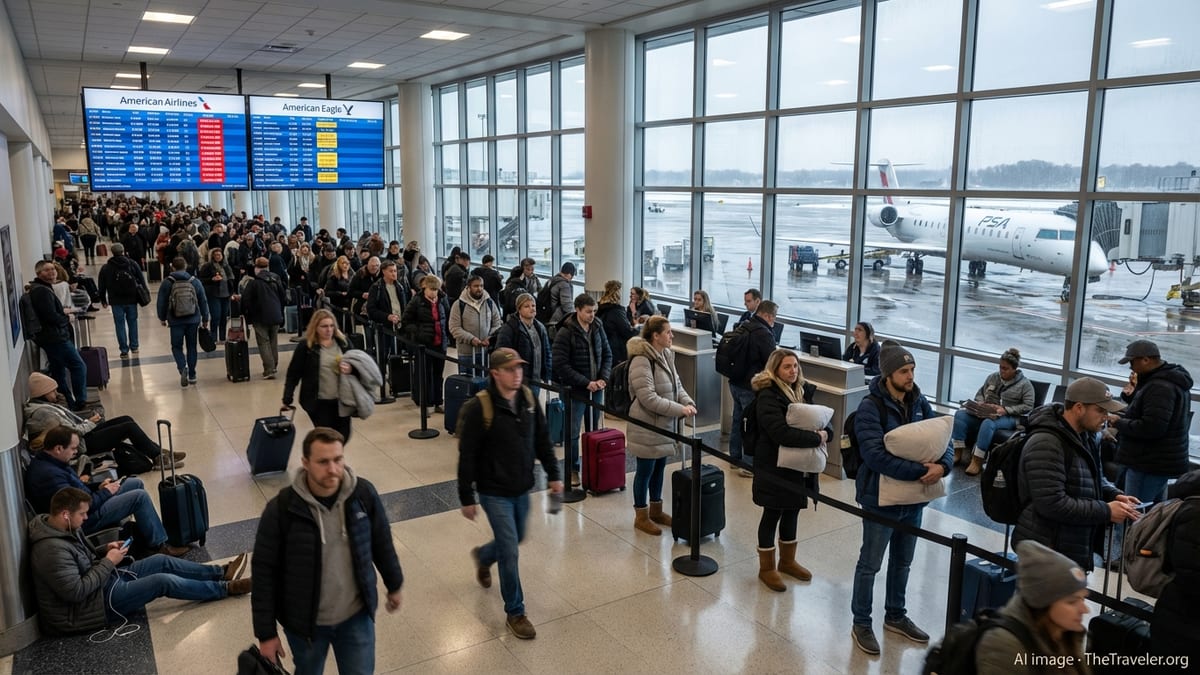
Thousands of travelers across the United States are facing long lines, missed connections and unexpected overnight stays after a wave of PSA Airlines cancellations and delays rippled through American Airlines’ regional network on Monday, stranding passengers at major hubs including Charlotte, Dallas, Washington, and Chicago.
Regional Carrier Disruptions Hit American’s Core Network
Operational disruption at PSA Airlines, a key American Eagle carrier, triggered the cancellation of roughly 200 flights and delays to at least 51 more on February 23, according to early tallies from airport operations and flight-tracking data. While those figures represent only a slice of overall U.S. flight activity, the impact has been magnified by PSA’s role feeding passengers into American Airlines’ mainline network at some of its busiest hubs.
PSA operates flights under the American Eagle brand, connecting small and midsize communities to major American Airlines hubs. When a regional carrier experiences a concentrated disruption, entire waves of connections can unravel, leaving passengers who started their journey on modest 50 to 76 seat regional jets suddenly cut off from long-haul departures to destinations across the United States and beyond.
The latest disruption comes amid one of the most challenging winter stretches in recent memory for U.S. aviation. A series of winter storms and a powerful nor’easter have combined with already stressed airline operations to push cancellations and delays to levels not seen since the pandemic era, turning regional carriers like PSA into pressure points inside the broader American Airlines system.
Hubs From Charlotte to Dallas Feel the Strain
Charlotte Douglas International Airport, PSA’s largest operations center, has again become a focal point of the disruption. With PSA now headquartered in Charlotte and operating roughly a quarter of American’s daily departures there, any localized problem at the carrier can quickly snowball across the terminal, filling concourses with stranded passengers, long queues at rebooking desks and lines stretching outside airport clubs.
In Dallas Fort Worth, American’s biggest hub, the effects are being felt through missed inbound connections on regional flights feeding the morning and mid-day banks. Travelers arriving late from smaller markets in the Southeast and Midwest are watching their onward flights to the West Coast and Latin America depart without them, forcing same-day rebooking battles during what is already a severely constrained operating day nationwide.
Washington-area and Chicago airports are also reporting outsized knock-on disruption tied to regional operations. At Ronald Reagan Washington National and Chicago O’Hare, PSA-operated routes under the American Eagle banner form part of dense shuttle-style schedules along the East Coast and into the Midwest. When those flights cancel in clusters, aircraft and crews fall out of position, complicating recovery efforts even after the immediate cause of the disruption has eased.
Nor’easter and Blizzard Conditions Compound PSA Woes
The PSA disruption is unfolding in the shadow of a powerful winter storm that has battered the eastern half of the United States with heavy snow, ice and strong winds. Over the weekend and into Monday, the nor’easter combined with a broad February blizzard to push national airline cancellations into the thousands, with New York, Boston, Philadelphia, and other Northeast airports among the hardest hit.
Weather-related ground stops and runway closures at key East Coast hubs have limited the ability of airlines to move aircraft and crews into position, placing additional stress on carriers like PSA that operate tight, high-frequency schedules with limited spare capacity. Even when conditions improve, it can take days to fully unwind the resulting gridlock as aircraft, crews and passengers are gradually re-synchronized with the published timetable.
For PSA, whose network threads through weather-vulnerable hubs such as Charlotte and Washington in winter, the storm has added a wild card to already complex operations. Flights are being canceled not only because of conditions at departure and arrival airports, but also because the aircraft or crew scheduled to operate them is stuck elsewhere in the weather-hit system, forcing difficult day-of-operation choices about which routes to prioritize.
American Airlines and PSA Scramble to Rebook and Recover
American Airlines is deploying its standard disruption playbook to manage the PSA-related fallout, including travel waivers, expanded rebooking options and the use of partner carriers where seats are available. At hub airports, American and PSA staff are moving gate to gate with rolling announcements, handing out meal vouchers where required and directing customers to self-service rebooking tools in mobile apps and kiosks to reduce lines at customer service counters.
However, the scale of the broader winter disruption has limited the number of immediately available alternative flights. With many mainline and regional services already canceled or heavily booked across the Northeast and Midwest, displaced PSA passengers are in many cases being re-accommodated one or two days later, particularly on thinner routes where American and its partners only operate a few frequencies per day.
American’s regional operations team in Charlotte, described internally as the “nerve center” for PSA’s network, is working to reposition aircraft and crews as weather windows open. Those efforts are focused on restoring key trunk routes linking Charlotte, Dallas, Washington and Chicago with larger spokes, with secondary and tertiary markets expected to see a slower return to normal schedules as resources gradually free up.
Stranded Travelers Face Long Lines, Limited Options
For travelers caught in the disruption, the experience is a familiar mix of uncertainty, exhaustion and frustration. At Charlotte and Dallas in particular, passengers report waiting more than an hour just to speak with an agent, only to learn that the next available confirmed seat to their destination might not be until later in the week. Hotel rooms near major hubs have quickly filled, driving some travelers to look for lodging miles away or to sleep in terminal seating areas.
Business travelers are racing to reconfigure itineraries on short notice, turning to rail, rental cars or even same-day video conferencing in place of in-person meetings. Families returning from holidays or college students trying to get back to campus after long weekends are negotiating school and work obligations around changed arrival times, with some opting to abandon their trips entirely in favor of refunds or future flight credits.
In smaller communities where American Eagle and PSA flights provide the primary commercial air link, disruptions can be even more acutely felt. A single canceled roundtrip may mean that an entire town loses same-day access to a hub for medical appointments, business travel or vital connections, raising the stakes of each cancellation decision and highlighting the central role regional aviation plays in the U.S. transportation system.
Regional Airlines Under Pressure Amid Labor and Weather Shocks
The latest PSA disruption lands at a moment of intense scrutiny for regional airlines across the United States. Carriers that fly under the banners of major airlines have grappled with a persistent pilot shortage, heightened wage pressure and rising operating costs since the pandemic, even as mainline demand has largely recovered. PSA itself recently agreed to a landmark pilot pay rise that significantly increased wages and benefits, part of a broader effort to stabilize staffing and protect American’s regional feed.
While higher pay has helped regional airlines attract and retain cockpit crew, it has also highlighted how thinly stretched some networks remain. On days when weather, maintenance or air-traffic control constraints hit multiple hubs simultaneously, regional carriers have little slack in aircraft or crew rosters to absorb shocks. The result is a fragile equilibrium where a relatively small number of operational disruptions can quickly cascade into widespread cancellations, as seen across PSA’s network on Monday.
Industry analysts note that PSA’s growing concentration in Charlotte, combined with its role in feeding other hubs such as Dallas and Washington, creates both efficiencies and vulnerabilities. When everything works, American can channel large volumes of connecting traffic smoothly through its regional network. When a storm or systems issue hits, however, the tight interdependence between hubs can magnify local problems into national ones.
Broader U.S. Flight Chaos Sets Difficult Backdrop
The PSA cancellations are unfolding against a wider backdrop of unusual flight chaos across the country. Winter storms this season have repeatedly forced airlines to ground large swaths of their schedules, with recent days seeing nationwide cancellation and delay figures that rival some of the worst weather events of the last decade. Airports from New York and Boston to Chicago, Dallas and Atlanta have all reported waves of grounded departures and long inbound holding patterns at various points this month.
For travelers, that means disruption is no longer confined to one carrier or one region. A passenger whose itinerary begins on a PSA-operated American Eagle flight and ends on a codeshare with another major airline may find that both segments are affected, even if the weather at their origin and destination appears calm. The interconnected nature of the U.S. air travel system ensures that when one part of the network struggles, the effects can radiate domestically and onto transatlantic and transpacific services.
Regulators and aviation watchdogs are closely monitoring how airlines manage these stress tests, from staffing levels and de-icing capacity to communications with travelers when schedules crumble. While weather remains the proximate cause of most cancellations this week, repeated large-scale disruptions are likely to renew debate in Washington over passenger rights, compensation policies and resilience standards for both mainline and regional operations.
What Travelers Can Expect in the Days Ahead
With storms still working their way through parts of the country and aircraft and crews badly out of position, passengers booked on PSA-operated American Eagle flights over the next several days should prepare for continued schedule volatility. Airlines are advising travelers to check their flight status frequently, confirm whether their regional legs are operated by PSA or another partner, and consider building in additional connection time at major hubs where gate changes and delays remain common.
Experts recommend that passengers who must travel in the immediate term keep essential medications, chargers and a change of clothes in carry-on bags in case of sudden overnight disruptions, and use airline apps or websites to rebook rather than relying solely on airport counters. For those with flexible plans, voluntarily moving travel to later in the week may offer a smoother experience as airlines like PSA and American gradually restore more normal operations.
For now, the long lines and crowded concourses at Charlotte, Dallas, Washington and Chicago tell the story of just how central regional carriers have become to American’s national network, and how quickly a disruption at one operator such as PSA can strand thousands of travelers far from their intended destinations.