

More news on this day
A landmark pilot pay package at PSA Airlines, long in the making under former American Airlines chief executive Doug Parker, has pushed wages more than 50 percent higher at the American Eagle carrier, drawing strong praise from unions and setting a new benchmark for regional airline compensation across the United States.
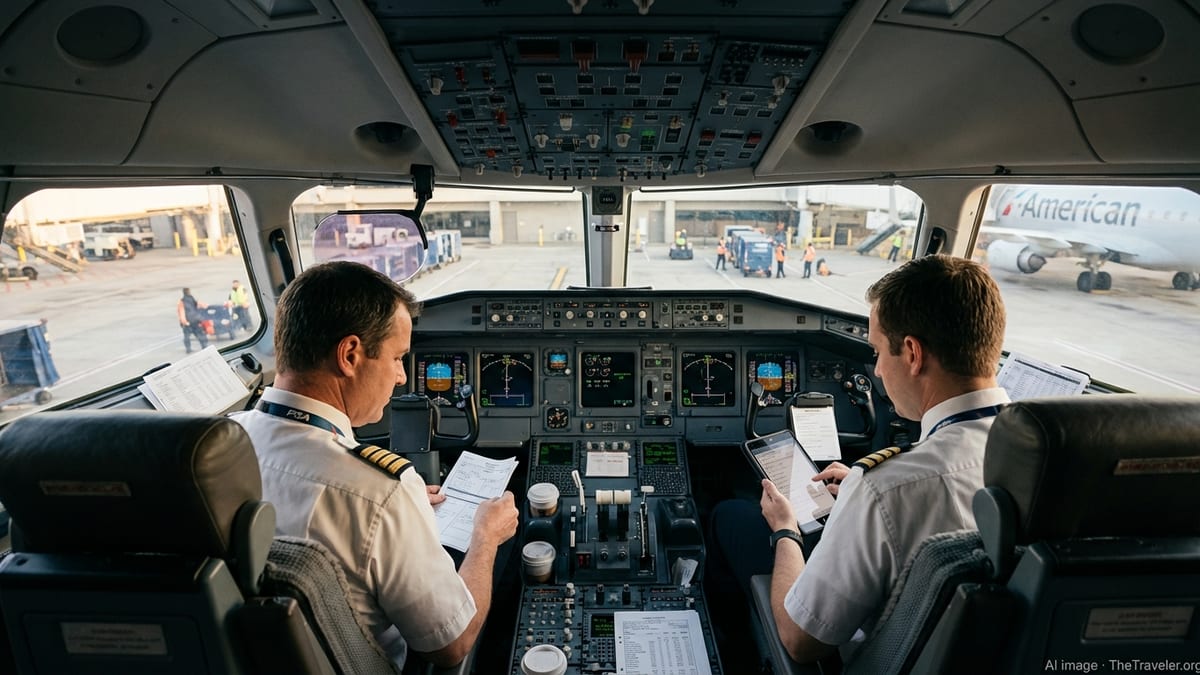
A Historic Deal in the American Airlines Family
When PSA Airlines and the Air Line Pilots Association unveiled what they called “industry-changing compensation” for the Dayton based carrier’s flight deck crews, insiders quickly linked the strategy to Doug Parker’s broader vision for stabilizing American Airlines’ regional operations. As chief executive of American Airlines Group until 2022 and later as board chair, Parker had already signaled that fixing the pilot pipeline at the regional level was essential to protecting the mainline network. The PSA deal put that theory into practice with unprecedented numbers.
Under the agreement, PSA pilots secured a package that lifted pay by more than 50 percent, with some categories seeing increases of 60 to 70 percent once new premiums and bonuses were factored in. Management and union negotiators deliberately pitched the new structure above the longstanding regional pay leader, Endeavor Air, to ensure PSA could recruit and retain captains in a fiercely competitive labor market. The result was a compensation reset that rippled across all three of American’s wholly owned regional subsidiaries.
For Parker, who had spent years steering American through consolidation, a pandemic and the early stages of recovery, the regional pilot crisis was not an abstract labor issue. Without enough cockpit crews at carriers such as PSA, American would be forced to park aircraft, surrender small city routes and undermine the connectivity that feeds its hubs. By backing a contract that put PSA wages far ahead of previous norms, he effectively tied American’s long term network health to better pay and clearer career progression for regional pilots.
The deal also marked a reputational shift. Regional airline flying has historically been associated with long hours, modest pay and uncertain progression to mainline jobs. With the PSA agreement, Parker and his team signaled that the American Eagle carriers would no longer sit at the bottom of the industry’s pay tables, but would instead be positioned as premium on ramps into a major airline career.
Unions Hail a Breakthrough for Regional Pilots
Pilot unions, which had pressed for years to close the gap between regional and mainline pay, were quick to claim the PSA package as a breakthrough. Leaders at the Air Line Pilots Association framed the agreement as more than a simple wage hike, calling it proof that regional flying could support a sustainable long term career rather than a brief stepping stone. The scale of the increases, they argued, would finally reflect the responsibility carried by crews operating complex jets into some of the most challenging airports in the country.
Union officials pointed in particular to the agreement’s premium structures, which lifted pilots’ overall earnings well beyond the headline hourly rate increases. With supportability premiums and training related pay credits, line check airmen and instructors at PSA saw their compensation rise sharply, in some cases to double their previous rates. That move not only rewarded pilots who take on additional safety critical duties, but also helped strengthen the airline’s in house training pipeline at a time when new hire classes are expanding.
The reaction among rank and file pilots at PSA and other American Eagle carriers was just as strong. Online forums and internal message boards quickly filled with messages describing the new pay scales as transformational, particularly for first officers who had weathered years of stagnation. Pilots noted that the deal narrowed the gap with ultra low cost carriers and even brought some regional pay trajectories within striking distance of smaller cargo and low cost mainline operators in the first five years of a career.
For unions, the PSA contract became a reference point in subsequent talks elsewhere in the industry. Negotiators at other regionals cited the deal as proof that management could afford to move quickly when network reliability was at stake, and pilots at the major airlines highlighted it as further evidence that the market for qualified aviators had fundamentally changed in pilots’ favor.
Inside the Fifty Percent Pay Rise
At the heart of the PSA agreement was a sweeping reset of wage scales that pushed total compensation more than 50 percent above pre deal levels. Starting pay for first officers jumped dramatically, while captains saw their hourly rates elevated to a tier that would have been almost unthinkable for a regional carrier just a few years earlier. The structure was designed to make PSA’s pilots, on average, roughly 57 percent better paid than those at the next highest regional competitor.
The raises did not stop at the basic wage grid. The contract layered in additional forms of compensation tied to the roles that keep the operation safe and scalable. Line check airmen, who ride along in the cockpit to evaluate and mentor other pilots, began receiving double pay credit for those duties. Full time simulator instructors, proficiency check airmen and aircrew program designees also saw their pay credits climb, giving them a financial incentive to commit their experience to training instead of leaving immediately for other carriers.
Critically for pilots planning a long term career at PSA, the agreement offered accelerated movement up the pay scale. Any pilot serving as a line check airman, proficiency check airman or program designee would automatically move to the carrier’s highest pay rate at the end of their fifth year of service. That provision ensured that those who invested in the airline’s training ecosystem would not be left behind peers who moved more quickly to mainline jobs.
By elevating both entry level and specialized training pay, the PSA package attempted to solve multiple problems at once. It made the airline more attractive to new commercial pilots deciding where to start their careers, reassured seasoned captains that staying for a few more years would be worthwhile, and underpinned a robust internal training and checking cadre just as pilot hiring accelerated worldwide.
Flow-Through to American: A Clear Path to the Mainline Cockpit
One of the defining features of the PSA agreement, and a core part of Parker’s regional strategy, was the emphasis on flow-through to American Airlines’ mainline operation. The contract strengthened an already established pathway by which pilots at the American Eagle carriers move, in seniority order, into first officer positions on narrowbody jets at the flagship airline. For many aspiring aviators, that prospect is the primary reason to choose a wholly owned regional over an independent competitor.
In the PSA deal, management committed to an enhanced flow structure that aligned with arrangements at American’s other wholly owned carriers and set a clear timeline: pilots could expect to transition to mainline within roughly five years. To back that promise, the agreement guaranteed that any eligible pilot who had not been offered a mainline position by the end of their fifth year would be paid at PSA’s top captain rate. That clause effectively used higher regional pay as a safety net, ensuring that delays in flow would not translate into financial penalties.
The strengthened pathway is particularly significant for pilots based in smaller cities served by PSA’s fleet of regional jets. Many operate commuter flights that feed American hubs such as Charlotte, Philadelphia and Washington, connecting local travelers to the airline’s long haul network. Knowing that those routes can serve as stepping stones to a seat on a Boeing or Airbus aircraft at mainline American makes the regional lifestyle more sustainable, especially when combined with the new wage scales.
For American Airlines, a healthier flow-through pipeline helps protect its ability to staff mainline flights without relying exclusively on lateral hires from other carriers. As Parker and his successors have acknowledged, relying on poaching alone would only intensify competition and drive up costs across the industry. A robust internal pipeline from PSA and its sister regionals instead gives American more control over training standards, corporate culture and long term staffing.
Impact on Small City Connectivity and Travel Choices
While the PSA deal was framed primarily as a labor agreement, its implications for travelers are far reaching. Regional airlines like PSA operate many of the thinner routes that link small and midsize communities to American’s national and international network. When pilot shortages force those carriers to park aircraft, the immediate effect is fewer flights, higher fares and, in some cases, the complete loss of scheduled air service for smaller cities.
By sharply raising pay, PSA aimed to reverse the trend that had seen pilots leave regional cockpits faster than they could be replaced, leading to grounded aircraft and service reductions. Early indicators from across the regional sector suggest that higher wages and clearer career paths have helped recruitment, with more commercial pilot graduates and military aviators now seeing regionals as viable entry points rather than temporary stopgaps. That, in turn, should make it easier for American to restore or preserve service to smaller communities.
For travelers in those markets, a more stable PSA operation means improved reliability and a greater likelihood that key morning and evening departures to American hubs will remain on the schedule. Business travelers, in particular, rely on those regional flights to make same day trips or connect efficiently to long haul services. Leisure travelers in smaller cities stand to benefit as well, with more predictable options for reaching beach, mountain and international destinations via American’s larger hubs.
There is also a competitive dimension. If American’s regionals can maintain adequate staffing and flight frequencies, rival carriers may face pressure to match capacity in contested markets, potentially leading to more choice and better fares. Conversely, airlines that are slower to adjust regional pilot pay risk ceding smaller cities to those willing to invest in their feeder networks, a dynamic already visible in parts of the United States where service reductions have hit hardest.
How PSA’s Deal Fits into a Wider Pilot Pay Boom
The PSA agreement did not emerge in a vacuum. It came amid a sweeping shift in pilot compensation across the United States, as major carriers and regionals alike grappled with an acute pilot shortage and booming post pandemic demand. In 2023, major airlines including Delta, United, American and Southwest all secured contracts that delivered double digit cumulative raises over multi year periods, in some cases approaching 50 percent by the late 2020s.
Those headline contracts at the majors reshaped expectations throughout the industry. With mainline captains on track to earn around 300,000 dollars in base pay at several large carriers, regional airlines were forced to rethink how they attracted new pilots into their pipelines. The PSA deal, strongly supported during Parker’s leadership transition period, represented one of the most aggressive regional responses, effectively acknowledging that the old model of low starting pay supplemented by promises of future mainline jobs was no longer sufficient.
Industry salary surveys in 2025 and 2026 show how far the market has moved. Starting first officer pay at leading regional airlines now regularly falls in the 75,000 to 100,000 dollar range, compared with 20,000 to 30,000 dollar equivalents commonly seen a decade earlier. Regional captains, especially those at carriers tied to major airline groups, can earn between 130,000 and 200,000 dollars annually, often boosted by retention and sign on bonuses. Against that backdrop, PSA’s decision to leapfrog a key rival’s wage scales underscored how high the stakes had become.
For unions, the escalation is both a vindication and a new baseline. Contracts like PSA’s are now cited in bargaining rooms as evidence that carriers can no longer rely on an oversupply of pilots willing to accept minimal wages for the privilege of flying jets. For management teams, the trend has required a recalibration of how labor costs are built into ticket pricing and network planning, with the understanding that cutting corners on pilot pay can quickly translate into canceled flights and long term reputational damage.
Questions About the Future of Premium Pay
Even as pilots and unions welcomed the PSA agreement, a lingering question has hung over the regional sector: how long will the most generous elements of these pay structures last. Some of the largest increases at American’s wholly owned regionals were initially negotiated as temporary premiums, tied to side letters that extended for a defined period in anticipation that the worst of the pilot shortage might ease later in the decade.
Discussion among pilots suggests that at least part of the PSA wage surge, and similar boosts at Envoy and Piedmont, was originally framed as a fifty percent premium layered on top of underlying contractual rates. Under that interpretation, if the premium were allowed to expire at the end of 2026 without a new agreement, pay could theoretically revert closer to legacy levels. Such a move would be deeply unpopular with pilots and could reignite attrition at a time when major airlines are still hiring aggressively.
From a strategic standpoint, the prospect of rolling back pay would also clash with the broader direction set during Parker’s tenure, which tied American’s regional resilience to competitive pilot compensation and robust flow arrangements. Industry analysts note that, by the mid 2020s, most large regional carriers that raised pay in response to the pilot shortage had either made those increases permanent or extended them in new contracts, reflecting an emerging consensus that higher pilot wages are not a short term anomaly but a structural shift.
For now, PSA pilots and their union representatives are focused on using the current deal to rebuild staffing, strengthen training and demonstrate the value of sustained investment in the regional workforce. As negotiations evolve later in the decade, the experience of operating under significantly higher wage scales is likely to shape arguments on both sides of the table about what constitutes a realistic long term floor for pilot pay in the American Airlines system.