

Psiri, the compact neighborhood tucked just behind Monastiraki Square in central Athens, has evolved from a gritty backstreet district into one of the city’s liveliest hubs for nightlife, food and urban culture. By day, its lanes are scattered with workshops, street art and small cafes.
By night, the area around Iroon (Heroes) Square erupts into a dense mix of tavernas, cocktail bars, late-night souvlaki joints and live-music haunts that attract a mostly local crowd alongside in-the-know visitors. This guide explores what to expect from Psiri today, how to eat and drink your way through it, and how to navigate the neighborhood like a seasoned Athenian.
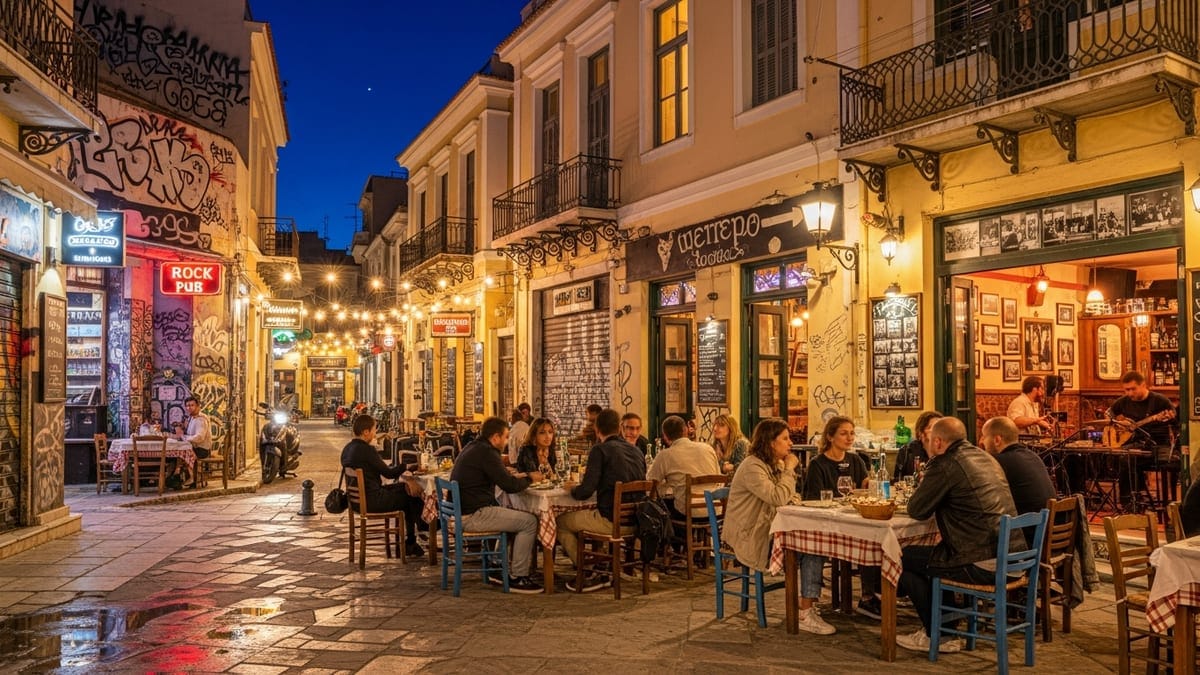
Getting Your Bearings in Psiri
Psiri sits just north of Monastiraki Square and the metro station of the same name, which makes it one of the easiest neighborhoods in Athens to reach on foot or by public transport. Walk a block or two behind the main flea-market streets and the scene changes quickly from tourist stands to low-rise neoclassical buildings, side streets strung with fairy lights and the bustle of small workshops that still recall Psiri’s industrial past. Iroon Square is the neighborhood’s central reference point, ringed with cafes and tavernas whose tables spill into the cobbled plaza.
Historically, Psiri had a tough reputation. In the 19th century it was home to rebellious gangs and working-class trades, and up until the 1990s it was considered one of Athens’ rougher quarters. Over the past three decades, though, careful restoration and a wave of small businesses have transformed the area. Today, Psiri is a curious but compelling mash-up: craft ateliers and leather workshops stand next to design boutiques, graffitied walls hide sleek cocktail bars, and traditional ouzeries coexist with DJ-driven courtyard parties.
Despite its makeover, Psiri has held on to a distinctly Athenian soul. Unlike more polished nightlife zones designed for visitors, this is still where many local students, creatives and young professionals come to drink, eat and stay out late. The crowd tends to be mixed in age and background, especially on weekends, which adds to the neighborhood’s improvisational, social feel. Language is rarely a barrier, but menus and conversation are grounded in Greek rhythms and customs.
Psiri is compact enough to navigate entirely on foot, and exploring it is about wandering rather than checking specific sights. Key arteries such as Agion Anargiron, Miaouli, Karaiskaki and Protogenous streets each have their own personality, from mellow cafes and bakeries to late-night music spots. The best way to understand the area is to see it at different times of day: fairly subdued in the morning, humming by afternoon, and fully transformed after dark.
Nightlife: From Ouzo Bars to All-Night Parties
Psiri’s reputation rests largely on its nightlife, and with good reason. Even on quieter weeknights, many venues stay open well past midnight, while Friday and Saturday can run into the early hours of the morning. Nightlife here is not confined to a single street: it seeps into alleys, courtyards and rooftops, giving the whole district a festive atmosphere when the weather is mild.
A classic Psiri evening often begins at a traditional taverna or ouzerie near Iroon Square, where groups share meze (small plates) alongside carafes of house wine, ouzo or tsipouro. Live rebetika or laika music is common, especially on weekends and Sunday afternoons, when locals pack into long-running spots for bouzouki-fueled sessions that blur the line between lunch and night out. These venues can feel chaotic and loud, but they are among the best places in Athens to experience Greek music culture in a casual setting.
As the night progresses, the focus shifts toward bars and clubs scattered across Psiri’s backstreets. Stylish cocktail bars with inventive Greek-influenced menus coexist with easygoing rock pubs, beer specialists and indie-leaning spaces that host DJ sets and live bands. Rooftop terraces, some of them attached to small boutique hotels, draw a slightly more laid-back crowd with views toward the Acropolis and the illuminated city skyline. Many of these rooftops stay lively into the small hours during peak season.
For those who prefer a more alternative or underground scene, Psiri offers art-forward spaces that function as galleries by day and bars or performance venues by night. Courtyard bars where DJs spin electronic or experimental sets, small clubs with themed music nights, and venues that combine exhibitions, installations and live music are all part of the mix. The result is a neighborhood where you can tailor your night out, moving from traditional to contemporary, from relaxed to high-energy, all within a few blocks.
Eating in Psiri: Tavernas, Street Food and Sweet Stops
Psiri’s dining scene is one of Athens’ most varied, spanning rough-around-the-edges tavernas that have fed locals for decades, creative bistros and dessert specialists that draw dedicated followings. The neighborhood’s roots as a working-class quarter are still reflected in its food, with many places emphasizing unfussy, hearty Greek cooking at relatively accessible prices compared with more upscale districts.
Classic tavernas around Iroon Square and on nearby streets serve familiar staples such as grilled meats, keftedes (meatballs), Greek salad, fava, saganaki and stuffed vegetables. Often decorated with old photographs, enamel signs and vintage objects, these venues trade on nostalgia and a sense of continuity. In the evenings and on weekends, live bands set up in corners or on makeshift stages, and tables quickly fill with groups ordering shared dishes rather than individual plates.
Alongside the traditional spots, Psiri has embraced global and niche cuisines. You can find one of Athens’ few kosher restaurants here, a handful of modern Greek bistros that rework local ingredients in contemporary ways, and casual eateries inspired by street food from across the Mediterranean and beyond. Vegetarian and vegan options have become increasingly common, from plant-based spins on Greek classics to cafes that focus on fresh salads, grains and seasonal produce.
Sweets are another local specialty. Long-established patisseries serve syrup-drenched desserts, while newer dessert bars focus on playful, highly decorated creations that have become Instagram fixtures. Watch for shops where pastry chefs work in open kitchens, preparing bougatsa or other pastries in front of the crowd. These places are busy in the afternoon and again late at night, when people break from bar-hopping to refuel with something sugary and strong Greek coffee.
Daytime Psiri: Street Art, Workshops and Coffee Culture
Although Psiri is most famous for its after-dark energy, daytime offers a different, often more nuanced portrait of the neighborhood. Early in the morning, many streets feel almost sleepy, with workshop shutters half open and a few regulars nursing coffees outside old-style cafes. This quieter window is ideal for exploring Psiri’s street art, architectural details and remaining artisan trades.
The area has developed into an informal open-air gallery for Greek and international street artists. Large-scale murals cover entire building facades, while smaller tags, stencils and paste-ups crowd side alleys and doorways. Some works are political, others whimsical or abstract, but collectively they give Psiri a layered, evolving character. Unlike more curated districts, the art here often changes, making repeat visits rewarding.
Psiri also maintains a crafts and maker culture that predates its nightlife boom. You can still find leather workshops producing sandals, belts and bags using traditional methods, as well as small studios where local designers create clothing, jewelry and homeware. Many of these spaces double as boutiques, inviting passersby to browse and, occasionally, watch artisans at work. This blend of old trades and new design brands is one of the neighborhood’s most distinctive daytime draws.
Coffee culture is central to how locals use Psiri during the day. Compact specialty cafes pull expertly made espresso-based drinks, while more traditional kafeneia serve Greek coffee alongside backgammon boards and small glasses of spirits. Side streets near Iroon Square and Agion Anargiron Street are lined with tables that fill around midday, when workers and residents break for a leisurely coffee and snack. Visiting at this time reveals a social, slower-paced Psiri, a sharp contrast to its nightlife persona.
Practicalities: Safety, Noise and Where to Stay
Psiri today is generally considered safe for visitors, particularly in the evening when its streets are busy and well lit. The neighborhood’s transformation into a nightlife and dining hub means there is a near-constant presence of bar staff, restaurant workers, taxi drivers and patrons until late. That said, it is still an urban district in a major European capital. As in other parts of central Athens, pickpocketing can occur around crowded bar areas and on the nearby metro lines, so keep valuables secure and avoid leaving bags or phones unattended on tables.
Daytime can feel more subdued, and some visitors describe the area as slightly gritty when the bars are closed and streets are emptier. This perception is part of Psiri’s dual character and not usually a cause for concern, but solo travelers may feel more comfortable sticking to busier streets until they get a feel for the layout. Common-sense precautions apply: use licensed taxis or ride-hailing services late at night if you are unfamiliar with the area, and avoid poorly lit backstreets if they feel deserted.
Noise is one of the main practical issues to consider, especially if you plan to stay in Psiri. The same qualities that make the neighborhood vibrant at night can make it challenging for light sleepers. Bars often play music well past midnight, outdoor tables stay occupied late, and weekend crowds can be boisterous. Many newer hotels and apartments have installed decent soundproofing, but not all buildings are equal. When booking accommodation, look for recent guest reviews that mention noise levels, request an interior-facing room if possible, and consider bringing earplugs.
On the plus side, staying in Psiri places you within easy walking distance of many of Athens’ major sights, including the Acropolis, Plaka, the Ancient Agora and the central market on Athinas Street. Monastiraki and Thissio metro stations bracket the neighborhood, providing direct links to the airport and Piraeus port. For travelers who value atmosphere and proximity over serenity, basing yourself in Psiri can be an excellent choice.
When to Go and How to Experience Psiri Like a Local
Psiri is very much an evening and night neighborhood, and understanding its rhythm will help you experience it at its best. In general, Greeks go out later than visitors from many other countries. Dinner in Psiri often starts around 9 p.m. and can stretch toward midnight, with bar-hopping and clubbing afterward. Arriving at a taverna at 7 p.m. may mean you have your pick of tables, but the atmosphere will be quieter and more tourist-heavy than later in the night, when local groups arrive.
Weekends, especially Friday and Saturday nights, are the busiest, with packed squares and queues at some of the most popular venues. If you prefer a more relaxed scene, consider visiting on a Tuesday or Wednesday, when the energy is still lively but the crowds more manageable. Sunday afternoons offer a different kind of buzz, as locals gather for long lunches with live music that can easily roll into evening.
Seasonality also shapes Psiri’s mood. In the peak summer months, many bars and restaurants move much of their seating outside, turning streets into quasi-open-air lounges and dining rooms. Warm nights encourage rooftop gatherings and make it easy to wander from one place to another without ever stepping inside. In winter, the action shifts indoors, but the neighborhood remains active, with a more intimate, cozy feel inside its tavernas and bars. Shoulder seasons such as April to early June and late September to October often strike a good balance between pleasant temperatures and manageable crowds.
To experience Psiri like a local, plan to drift rather than schedule. Start with an early-evening coffee or aperitif at a sidewalk table, watching the neighborhood gradually fill. Choose one or two tavernas or meze spots based on what looks busy with Greeks rather than what has the most prominent signage, then follow the flow of people as they spill into nearby bars. Talk to bartenders or servers; they are often happy to recommend their own favorite late-night hangouts or live music nights elsewhere in the area.
Cultural Quirks and Etiquette in Psiri
Part of Psiri’s charm lies in the way it reflects contemporary Athenian culture in a dense, walkable grid. Understanding a few local customs and expectations will help you fit seamlessly into the scene. The first is the centrality of sharing. Meals with friends are usually communal affairs: dishes go in the middle of the table, everyone samples a bit of everything, and conversation flows as steadily as the wine or tsipouro. Do not hesitate to ask servers for suggestions on what to order for the table rather than individually.
Smoking regulations are officially strict in Greece, but enforcement can vary, especially in nightlife areas. Many venues in Psiri have improved ventilation or created designated outdoor areas, yet you may still encounter smoke inside some bars and smaller tavernas. If this is an issue for you, look for places that advertise smoke-free interiors or focus on rooftop and open-air venues during the warmer months. It is entirely acceptable to ask to sit outdoors or away from heavy smoking areas if space allows.
Tipping follows broader Greek norms: service charges are often included, but it is customary to leave a small additional amount if you are satisfied, typically by rounding up the bill or adding around 5 to 10 percent in tavernas and bars. At busy late-night venues, tipping the bartender a euro or two per round is appreciated and can sometimes lead to quicker service as the bar fills. Payment by card is widely accepted in Psiri, though having some cash on hand is useful for small cafes or older establishments.
Dress codes are generally relaxed, even in trendier cocktail bars. Smart-casual attire is more than sufficient almost everywhere, and you will see a wide range of styles, from sneakers and T-shirts to more dressed-up looks. The streets in and around Psiri can be uneven and crowded, so practical shoes are highly recommended, particularly if you plan to wander between multiple venues in one night.
The Takeaway
Psiri is not the polished, postcard image of Athens that many travelers expect, and that is precisely its appeal. Within a few compact blocks, the neighborhood bundles together remnants of its working-class history, a thriving craft and design scene, some of the city’s most engaging nightlife, and a cross-section of Athenians at play. By day, you can sip coffee in the shadow of street art and poky workshops; by night, you can move effortlessly from taverna tables piled with meze to rooftop bars and late-night clubs.
For visitors willing to embrace its noise, grit and high energy, Psiri offers an immersive window into contemporary urban Athens, far removed from staged experiences. Whether you base yourself here or simply come for an evening, the neighborhood rewards curiosity, unhurried wandering and a willingness to follow the sounds of music and conversation down whichever side street they lead you. If you want to see where the city truly comes alive after dark, Psiri belongs at the top of your Athens itinerary.
FAQ
Q1: Is Psiri safe at night for visitors and solo travelers?
Psiri is generally considered safe at night, especially on busy evenings when streets are crowded and well lit. Most incidents reported in the broader city center involve pickpocketing rather than violent crime. Use normal city precautions, keep valuables secure, and stick to well-traveled streets until you feel comfortable navigating the area.
Q2: What time does nightlife in Psiri usually start and end?
Nightlife in Psiri starts later than in many countries. Tavermas begin to fill around 9 p.m., bars get busy between 11 p.m. and 1 a.m., and on weekends it is common for venues to stay open until 3 or 4 a.m. or later. Arriving too early can mean a quieter, more touristy atmosphere; arriving around 10 p.m. or after feels closer to local timing.
Q3: How do I get to Psiri using public transportation?
The easiest way is via the Athens metro. Monastiraki station, served by Lines 1 and 3, is adjacent to the neighborhood; from there it is a short walk into Psiri. Thissio station is also within walking distance. Many buses and trams connect to the wider center, but for most visitors the metro or a short taxi ride are the most straightforward options.
Q4: Is Psiri a good area to stay in, or only for going out at night?
Psiri can be an excellent base if you prioritize atmosphere and central location. You will be walking distance from the Acropolis, Plaka, Syntagma and the central market. The main trade-off is noise, especially on weekend nights. If you are sensitive to sound or traveling with young children, you may prefer a nearby but quieter neighborhood and visit Psiri primarily for evenings.
Q5: What kind of food can I expect to find in Psiri?
Psiri offers a broad spectrum of food options. Traditional tavernas serve grilled meats, meze and classic Greek dishes. There are also modern bistros, street-food counters, dessert specialists and a scattering of international or niche concepts, including kosher and vegetarian-friendly spots. Many kitchens stay open late, and quick snacks like souvlaki or pastries are easy to find after midnight.
Q6: Are there things to do in Psiri during the day, or is it only interesting at night?
While nights are the main draw, Psiri is worth exploring during the day. You can wander among street art, visit leather and craft workshops, browse design boutiques, and linger at coffee shops. The neighborhood feels more relaxed and reveals its working side in daylight, offering a contrast to the packed, high-energy evenings.
Q7: How expensive are drinks and meals compared with other parts of Athens?
Prices in Psiri vary by venue but are generally moderate for a central neighborhood. Traditional tavernas and casual bars can be quite good value, especially for shared plates and house wine. High-end cocktail bars and rooftop venues charge more, closer to typical European city-center prices. Overall, you can tailor your spending by choosing venues that fit your budget.
Q8: Do I need reservations for tavernas and bars in Psiri?
Reservations are recommended for popular tavernas and rooftop bars, particularly on Friday and Saturday nights or during peak travel seasons. Many casual bars and smaller spots do not take bookings and operate on a first-come basis. If you plan a special dinner or want a specific view, book ahead; for bar-hopping, you can usually just walk in and move on if a place is full.
Q9: Is Psiri suitable for families or older travelers?
Psiri can be enjoyable for families or older travelers who are comfortable with busy, lively environments. Early evenings and daytime visits are usually more relaxed and easier with children or anyone sensitive to noise and crowds. Late-night hours are geared more toward adults, with loud music, smoking in some venues and dense bar traffic.
Q10: What should I wear for a night out in Psiri?
Dress codes are informal. Smart-casual clothing is appropriate almost everywhere, and you will see many people in jeans, sneakers and simple tops. Comfortable shoes are highly recommended because you will likely be walking on uneven pavements and cobblestones between venues. In winter, bring layers, as you may move between warm interiors and cooler outdoor seating.