

Alaska’s vast distances, sparse population, and challenging weather make getting around unlike anywhere else in the United States. Public and ground transportation exists in many forms, but it is often seasonal, regional, and far less frequent than visitors from urban areas might expect. Understanding how Alaska’s buses, trains, ferries, shuttles, taxis, and rideshares actually work on the ground is essential for planning a realistic, safe, and enjoyable trip.
How Transportation in Alaska Is Different
Alaska’s geography and climate shape every aspect of its transportation network. Many communities are not connected to the state’s limited road system, meaning you cannot simply drive between major destinations the way you can in the lower 48. Mountains, glaciers, fjords, and long stretches of wilderness separate towns, and winter conditions can significantly affect schedules and road safety. As a result, public transportation here functions as a patchwork of regional systems rather than a single unified network.
Travelers quickly discover that “public transit” in Alaska usually means a combination of local city buses, seasonal tourist shuttles, the Alaska Railroad, and the Alaska Marine Highway ferry system. Intercity buses do operate on the main highway corridors, but departures may be once daily or only on certain days of the week. In many places, particularly in rural and Indigenous communities off the road system, planes and small boats serve the role that buses and trains play elsewhere.
Because options are fewer and distances are greater, careful advance planning is critical. Schedules can change from summer to winter, and some services run only in the peak travel season from roughly May through September. When planning, it is helpful to build in extra flexibility, check current timetables shortly before departure, and have a backup plan if weather or mechanical issues disrupt service.
Despite the complexities, Alaska’s ground and marine transportation systems can be rewarding in their own right. Traveling by local bus in Anchorage, by train along the Alaska Railroad, or by ferry on the Inside Passage offers close-up views of daily life, landscapes, and communities that most cruise passengers and fly-in visitors never see.
City Buses and Local Public Transit
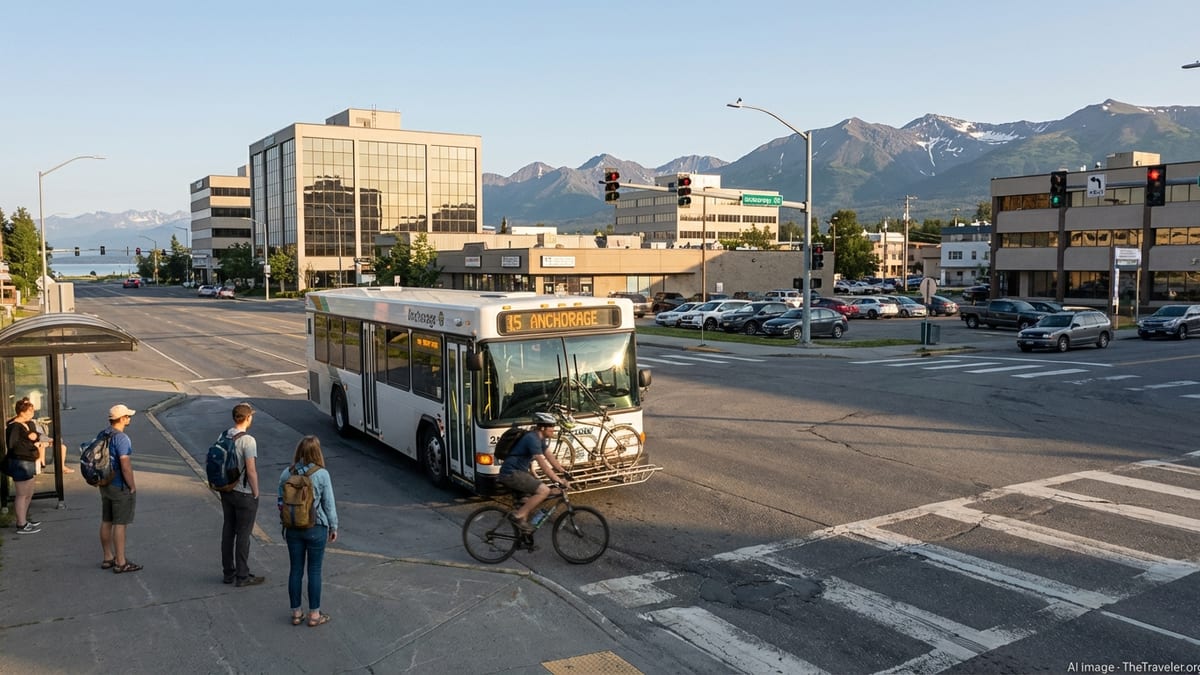
Anchorage, Alaska’s largest city, has the most developed public bus network in the state through its People Mover system. The agency operates multiple routes that connect downtown with residential neighborhoods, shopping areas, medical centers, and Ted Stevens Anchorage International Airport. Many core routes run more frequently during weekday peak hours, and a dedicated route links downtown and the airport via Spenard Road. The municipality has recently updated winter schedules and added routes to improve frequency and coverage, particularly in South Anchorage.
People Mover buses are generally modern, accessible, and equipped with bike racks, reflecting an emphasis on multi-modal travel. Riders can typically pay cash on board or use mobile ticketing through a dedicated smartphone app. Local programs offer reduced fares for youth and seniors, and Anchorage has expanded benefits such as free rides for eligible university students and certain free-ride days for older riders. These policies make city buses an economical way for residents and visitors to move around town without a car.
Outside Anchorage, local transit is more limited but still present in a few population centers. Fairbanks operates a public bus system serving the city and nearby areas, including the University of Alaska Fairbanks campus and key shopping districts. Juneau has its own bus network that runs along the main roaded corridor from downtown to Mendenhall Valley and surrounding neighborhoods. Smaller communities may offer demand-response shuttles, senior transportation, or seasonal circulator buses, especially in cruise ports like Ketchikan and Skagway, where shuttles ferry visitors between docks, downtown, and popular viewpoints.
In most Alaska cities, bus service tapers off in the evening, and weekend schedules are reduced compared with weekdays. Visitors should not assume big-city frequencies or late-night service. It is wise to review current route maps, hours, and fare information shortly before you travel and to plan important connections, such as to the airport, with a time cushion.
Anchorage Airport, Shuttles, Taxis, and Rideshares
Ted Stevens Anchorage International Airport is the primary air gateway for most travelers entering Alaska, and it offers a combination of public and private ground transportation options. A free airport shuttle circulates between the domestic terminal, international terminal, and the consolidated rental car facility at regular intervals, which is convenient for transfers between flights, parking, and rental agencies. For travel into the city, the People Mover’s airport-serving route stops outside the main terminal, connecting the airport with downtown Anchorage and the Spenard and Jewel Lake areas with relatively frequent service during the day and early evening.
In addition to public buses, several private shuttle companies operate from Anchorage, providing seasonal transfers to popular destinations such as Seward, Whittier, and Denali area lodges. These shuttles typically require advance reservations, follow fixed daily schedules in summer, and may align their departures with cruise ship arrivals and Alaska Railroad timetables. Hotel courtesy vans are also common in Anchorage and other larger communities, offering complimentary airport pickups for registered guests who call on arrival.
Taxis remain a staple form of ground transportation in Alaska’s larger towns, particularly for early morning or late-night trips when buses do not operate. Taxi companies usually serve airports, ferry terminals, and rail depots, and it is common to find designated taxi queues near these hubs in summer. Fares can be higher than in many other states due to longer distances and higher operating costs, so it helps to ask for an estimated price before setting out or to use the meter as a guide.
Rideshare services such as app-based car-hailing operate in Anchorage and, on a more limited basis, in a few other communities, though availability can fluctuate by season and time of day. Coverage is generally better in summer, when tourism booms and more drivers are on the road. In winter or during off-peak hours, waits may be longer or cars may not be available at all. For time-sensitive journeys such as catching a train or flight, many travelers still prefer to pre-book a taxi or shuttle rather than rely solely on on-demand rideshares.
Intercity Buses, Shuttles, and the Road System
Alaska’s road network centers on a handful of main highways, including the Parks Highway between Anchorage and Fairbanks, the Seward Highway to Seward, the Glenn Highway from Anchorage to Glennallen, and the Richardson Highway linking the Interior to coastal ports like Valdez. Intercity buses and shuttle services operate along these corridors, but typically with far fewer departures than similar distances would see in other states. Many are privately run companies that specialize in tourist travel and seasonal service rather than year-round commuter routes.
Between Anchorage and Seward, several bus and shuttle operators provide daily summer transfers that cater to cruise passengers boarding ships in Seward as well as independent travelers visiting Kenai Fjords National Park. These services often coordinate with the arrival and departure times of cruise ships and Alaska Railroad trains. On the Parks Highway, coach services connect Anchorage, Talkeetna, Denali National Park, and Fairbanks, with most trips concentrated during the mid-May to mid-September visitor season when lodges and park services are fully open.
Because many intercity buses are tailored to the tourism market, they may offer commentary, rest stops at viewpoints, and baggage handling similar to a guided tour. However, they still function as practical transportation for independent travelers, particularly those without rental cars or those uncomfortable driving in variable weather conditions. Seats are usually reserved in advance, and some operators enforce strict luggage allowances because of limited under-bus storage space.
Travelers should be prepared for longer travel times than the mileage might suggest, due to road conditions, construction, and the cautious speeds needed on winding mountain sections. In shoulder seasons and winter, some services reduce frequency dramatically or pause operations altogether, leaving the private car as the main option on many routes. Always confirm whether a bus or shuttle runs on the exact date you plan to travel, and consider purchasing tickets in advance during peak periods when services can sell out.
Alaska Railroad: Scenic Rail with Practical Uses
The Alaska Railroad is both a scenic attraction and a functional transportation link between several major regions of the state. Its main line stretches roughly from Seward on the Kenai Peninsula through Anchorage and the Mat-Su Valley to Fairbanks in the Interior, with branches serving ports such as Whittier. Passenger service operates year-round, but the schedule and specific trains vary by season, with a busier summer timetable and a quieter winter schedule focused on essential connections.
In summer, the Denali Star train runs daily between Anchorage and Fairbanks, stopping at communities like Wasilla, Talkeetna, and the gateway to Denali National Park. Another popular seasonal route, the Coastal Classic, connects Anchorage and Seward, offering travelers a comfortable alternative to driving the Seward Highway and providing striking views of Turnagain Arm, glaciers, and mountains. These trains feature large windows, dome cars on many departures, and a choice of service levels, making them particularly attractive to visitors who want both transportation and sightseeing in one experience.
During the colder months, the Aurora Winter Train maintains service between Anchorage and Fairbanks on a reduced, typically weekend-oriented schedule. It can make flag stops for residents in remote areas along the route, underscoring the railroad’s role as a lifeline for off-the-road communities. For travelers willing to embrace winter conditions, the train offers a distinctive way to reach Interior Alaska and potentially view snow-covered landscapes and northern lights along the way.
Although often marketed as a tourist attraction, the Alaska Railroad can be a practical choice for those who prefer not to drive long distances or who want to avoid potential hazards such as icy roads or heavy summer traffic on narrow highways. It connects conveniently with cruise ships via Seward and Whittier and with local bus networks and taxis in Anchorage and Fairbanks. Tickets are generally more expensive than comparable bus fares but provide a level of comfort, space, and scenery that many travelers consider worth the premium.
Alaska Marine Highway and Coastal Ferries
The Alaska Marine Highway System is the state-operated ferry network that links many coastal and island communities that lack road connections. Its vessels run along routes spanning Southeast Alaska, Prince William Sound, Southcentral coasts, and the Aleutian chain. For many residents, these ferries are essential transportation for people, vehicles, and goods. For visitors, they offer a slower but deeply immersive way to travel the Inside Passage and Gulf of Alaska, reaching towns and villages that large cruise ships may visit only briefly or not at all.
The fleet includes a mix of mainline vessels that cover longer routes and smaller ships that act as feeders between communities. Some routes in Southeast connect hubs such as Juneau, Haines, and Skagway, while others serve smaller towns and outlying islands. In Southcentral, ferries link ports like Whittier and Valdez with communities in Prince William Sound, and a dedicated vessel serves specific local routes such as Ketchikan to Metlakatla. Longer sailings along the Gulf of Alaska and out the Aleutian chain run less frequently and are more prone to schedule changes due to rough seas and maintenance demands.
Schedules for the Alaska Marine Highway can be complex, with some routes operating year-round and others only in certain seasons or on a limited number of sailings per month. Budget and staffing constraints in recent years have occasionally led to reduced frequencies compared with past decades. Travelers who want to include the ferry in their itinerary should examine current timetables, note which ports allow vehicle loading, and book cabins or vehicle space well ahead during busy months. Walk-on passengers generally have more flexibility, but even then, advance planning is recommended.
Beyond the state-run system, local water taxis and small-boat operators serve many coastal communities, especially in remote bays, national parks, and wildlife areas. These smaller services are typically privately run, often seasonal, and tailored to outdoor activities such as sea kayaking, hiking, and fishing. While they are not “public transit” in the traditional sense, they function as critical links for reaching off-grid lodges, trailheads, and villages scattered along Alaska’s lengthy coastline.
Driving, Rentals, and When You Need a Car
Even with buses, trains, and ferries, there are many places in Alaska where having your own vehicle is the most practical or only way to explore. Car rentals are available at major airports and in larger towns such as Anchorage, Fairbanks, Juneau, and sometimes in popular seasonal hubs like Skagway or Homer. Inventory can be limited in peak season, and prices often rise from late spring through early fall, so early reservations are highly advisable.
Driving in Alaska can be rewarding, offering flexibility and access to viewpoints, trailheads, and small communities along the road system. However, conditions can be very different from those in more temperate states. Long stretches without services, wildlife on the roadway, gravel sections, and rapid changes in weather are all common. Travelers should fuel up regularly, carry water and warm layers, and be prepared for road construction or delays, particularly on major corridors like the Parks and Seward Highways during summer.
In winter, road travel demands extra caution due to snow, ice, and limited daylight. Studded tires or winter-rated tires are strongly recommended, and some rental companies may set specific restrictions on where and when their vehicles can be driven. Visitors who are not comfortable with winter driving may prefer to rely on the Alaska Railroad or local flights during the cold season, especially for long distances between Anchorage and Fairbanks or to Interior communities.
For short city stays in places with decent transit, such as downtown Anchorage or Juneau’s central districts, it is entirely possible to manage without a car by using buses, taxis, shuttles, and walking. But for exploring the Kenai Peninsula, visiting multiple trailheads in a day, or accessing more remote roadside campgrounds and fishing spots, renting a vehicle or traveling with someone who has one significantly expands your options.
Practical Tips for Using Public and Ground Transport
Successfully navigating Alaska’s transportation systems comes down to preparation and realistic expectations. Schedules for buses, trains, and ferries can change from year to year and often differ between summer and winter. Checking the latest updates close to your travel dates is essential, especially for the Alaska Marine Highway and Alaska Railroad, which may adjust service patterns in response to demand, maintenance, or budget constraints.
Time management is particularly important when connecting between different modes of transport. For example, if you arrive in Anchorage on a late-night flight, the city buses may not be operating, and you will need to rely on a taxi, hotel shuttle, or rideshare. Likewise, if you plan to connect from a ferry arrival to an intercity bus or train departure, it is wise to allow extra time in case of weather-related delays. Alaska’s scale and unpredictability reward those who build some flexibility into their plans rather than scheduling back-to-back connections.
Budgeting is another key consideration. While city buses are relatively affordable, long-distance rail and ferry trips can be significant expenses compared with driving, particularly for families or groups. On the other hand, high fuel prices, rental car costs, and potential one-way drop fees may make public options more attractive for some itineraries. Comparing the total cost of each approach, including lodging and meals during longer surface journeys, can help determine the best fit for your trip.
Finally, staying informed locally can make a big difference. Visitor centers, hotel front desks, and local tourism offices often have up-to-date printed timetables, route maps, and advice on the best way to reach popular attractions by transit. Bus drivers, ferry staff, and train conductors are usually familiar with common visitor questions and can provide practical suggestions on stops, transfer points, and timing. A willingness to ask and adapt often leads to smoother journeys and unexpected discoveries along the way.
The Takeaway
Public and ground transportation in Alaska reflects the state’s unique combination of vast distances, challenging terrain, and dispersed communities. Instead of a dense web of transit lines, travelers find a set of specialized systems that each serve a particular role: city buses for local movement, intercity shuttles for key highway corridors, the Alaska Railroad for scenic long-haul journeys, and the Alaska Marine Highway for roadless coastal regions.
Using these systems effectively requires more forethought than in many other destinations, but the payoff is significant. Riding a local bus in Anchorage offers a glimpse of everyday city life, while a trip on the Alaska Railroad or a state ferry provides access to landscapes and communities that few visitors see from a car or cruise ship. For some travelers, combining public transit with targeted car rentals or guided transfers strikes the best balance between independence, cost, and safety.
Ultimately, there is no single “right” way to get around Alaska. The best strategy depends on your comfort with driving, your budget, the season, and how much time you have. By understanding the strengths and limitations of each mode of transport and by planning with flexibility, you can stitch together an itinerary that turns the journey itself into one of the most memorable parts of your Alaska experience.
FAQ
Q1. Can I travel around Alaska without renting a car?
Yes, it is possible, especially in summer, by combining city buses, intercity shuttles, the Alaska Railroad, and the Alaska Marine Highway, though you will need to plan carefully and accept less flexibility.
Q2. How reliable are city buses in Anchorage and other Alaska cities?
Anchorage’s People Mover and bus systems in Fairbanks and Juneau are generally reliable, but routes are fewer and service hours shorter than in many major U.S. cities, particularly late at night and on weekends.
Q3. Is the Alaska Railroad mainly for tourists or can locals and budget travelers use it?
The Alaska Railroad serves both tourists and residents. It is often more expensive than bus travel, but locals use it for comfortable, weather-independent transport between key communities, especially in areas with limited road options.
Q4. How early should I book Alaska Marine Highway ferry trips?
For summer travel, it is prudent to book several months in advance if you plan to bring a vehicle or need a cabin. Walk-on passengers have more flexibility but should still check space and schedules well ahead.
Q5. Are rideshare services widely available in Alaska?
Rideshare availability is strongest in Anchorage and more limited or seasonal in other communities. Service can be sparse late at night, in winter, or in smaller towns, so always have a backup, such as a taxi or pre-booked shuttle.
Q6. What is the best way to get from Anchorage to Seward without driving?
In summer, many travelers choose between the Alaska Railroad’s Coastal Classic train and various coach or shuttle services. Both typically run daily, and the choice depends on budget, schedule, and preference for scenery versus speed.
Q7. Do public buses in Alaska accept cash and mobile payment?
Most city buses, including Anchorage’s People Mover, accept cash fares on board and also offer mobile ticketing options through dedicated apps or fare systems, though details can vary by community, so check locally before riding.
Q8. How does winter affect public and ground transportation in Alaska?
Winter brings shorter days, snow, and ice, which can lead to slower travel and occasional delays. Some seasonal services pause entirely, while year-round systems adjust schedules and run times to account for conditions.
Q9. Is it safe to rely on public transportation to reach a cruise ship or flight on time?
Many travelers do so successfully, but because weather and traffic can be unpredictable, it is wise to allow extra time, avoid tight connections, and consider a taxi, shuttle, or earlier bus or train for critical departures.
Q10. Where can I find the most current schedules for Alaska transit, trains, and ferries?
The most up-to-date information is available directly from operators, such as local transit agencies, the Alaska Railroad, and the Alaska Marine Highway System. Always verify schedules close to your travel dates, as they can change from year to year.