

Turkey’s public transport network is one of the most extensive and affordable in its region, connecting chaotic megacities, coastal towns and far-flung Anatolian hubs by rail, road and sea. For travelers, the system can feel confusing at first glance, yet with a little preparation it becomes a powerful tool for exploring the country efficiently and on a reasonable budget.
How Public Transport Works in Turkey
Turkey has a layered transport system that ranges from modern metros and high speed trains to ferries and informal shared taxis. In major cities like Istanbul, Ankara and Izmir, you will mostly rely on integrated urban networks of metro, tram, bus, metrobus, funicular and ferry services, accessed with a contactless smart card. Between cities, long distance coaches and the growing high speed rail network provide the backbone of public mobility, supplemented by conventional intercity trains and domestic flights.
For visitors, this variety is both an advantage and a challenge. Each metropolitan municipality sets its own tariffs and ticketing rules, and branding differs from city to city, but the basic logic is similar: tap in with a card, ride, then transfer within a defined period at a reduced or included fare. In practice, once you understand how one city’s system works, you can adapt quickly to others.
Public transport generally runs from early morning to around midnight in big cities, with some 24 hour bus or metrobus services on selected routes in Istanbul. Frequency can be very high along busy corridors, then drop considerably in outlying suburbs or small towns. Travelers should be prepared for peak hour crowding in cities, while intercity trips benefit from advance reservations, especially on popular dates and routes.
Compared with many European countries, Turkish public transport remains relatively affordable for visitors paying in foreign currency, although prices have risen in recent years due to inflation and higher operating costs. Fares, routes and timetables are frequently updated, so it is wise to confirm details shortly before you travel, especially for long distance rail and coach services.
City Transport in Istanbul, Ankara and Izmir
Istanbul has the most complex network in Turkey, spanning two continents and linking more than 15 million residents. Its system includes several metro lines, modern and heritage trams, an overground metrobus corridor, extensive bus routes, funiculars up steep hills and a dense web of commuter ferries across the Bosphorus and along the Golden Horn. These services are gradually being integrated, and most can be accessed with a single contactless payment card issued by the metropolitan municipality.
Ankara, the capital, offers a more compact but straightforward system with metro lines, suburban rail and an extensive bus network radiating from central hubs such as Kızılay and Ulus. The city’s layout is less fragmented by waterways than Istanbul, which makes cross town trips feel more direct but often reliant on buses once you leave the central metro corridors. For many visitors, the main use of Ankara’s network is reaching intercity train stations, bus terminals and government districts efficiently.
Izmir, Turkey’s third largest city on the Aegean coast, combines metro, suburban rail, tram lines, buses and commuter ferries on the bay. Here, as in Istanbul, ferries can be both practical and scenic, offering a relaxed way to cross the water while avoiding road traffic. Izmir’s coastal setting and relatively linear urban form make its public transport intuitive for visitors, with clearly defined corridors following the shoreline and connections inland to residential districts and the airport.
Smaller cities such as Bursa, Konya, Antalya, Kayseri, Eskisehir, Adana and Gaziantep often have at least one light rail or tram line plus a city bus network. Branding, card names and operators differ, but the principles are familiar: board at front or all doors depending on the city, tap a card, and watch onboard displays for upcoming stops. English announcements are becoming more common on new metro and tram lines serving airports and tourist districts, but they are not guaranteed everywhere.
Smart Cards and Tickets: Istanbulkart, AnkaraKart and Others
Most major Turkish cities use their own contactless smart cards for public transport. In Istanbul, virtually all buses, metros, trams, funiculars, metrobuses and municipal ferries use a single stored value card. Visitors can buy an anonymous version of this card from airport kiosks, vending machines at metro stations and many small shops, then load credit in Turkish lira. The same card can be tapped for up to several passengers in succession, although transfer discounts may only apply fully to the first user.
Ankara and Izmir operate similar systems with their own branded cards. These can normally be purchased at metro stations, major bus interchanges, ferry piers and selected newsstands or kiosks. Reloading is done at vending machines and authorized sales points, which accept cash and, increasingly, bank cards. In Izmir, for example, the city card can be used on metro, suburban rail, trams, buses and ferries, simplifying multimodal journeys from the airport to the city center or between coastal districts.
Single use tickets and disposable contactless tokens still exist on some systems, particularly for visitors who do not want to purchase a reusable card. However, they are often more expensive per ride and may not include free or discounted transfers. Because of rapid fare adjustments in response to inflation, it is difficult to quote exact prices, but visitors can expect a single urban journey to cost the equivalent of a few euros or less, with integrated transfers making longer chains of trips cost effective.
Many cities also support contactless bank card payment or mobile wallets on some gates and validators. This can be convenient if you are staying briefly and do not want to manage a separate transit card, but integration is not yet universal, and some discounts or caps may be reserved for local cards. As a rule of thumb, if you will be in a city for more than a day or two and plan to use public transport regularly, obtaining its official transport card remains the most flexible and economical choice.
Metros, Trams, Buses and Ferries
Metros and trams are the backbone of urban public transport in Turkey’s larger cities. Lines are generally modern, air conditioned and increasingly accessible, with escalators and elevators at major stations. Trains run frequently at peak times, often every few minutes, and somewhat less often late in the evening. Onboard, route maps above doors and electronic displays announcing the next station make navigation relatively simple, even with limited Turkish language skills.
Buses fill in the gaps between rail corridors and reach neighborhoods that metros and trams do not serve. In Istanbul, a special bus rapid transit system called metrobus uses a dedicated central lane along a major highway, avoiding traffic at rush hour. Elsewhere, city buses share the road with private cars and can be affected by congestion, particularly at bridges and key junctions. Many routes are numbered and displayed clearly at the front, but it can be helpful to cross check destinations on a map app before boarding.
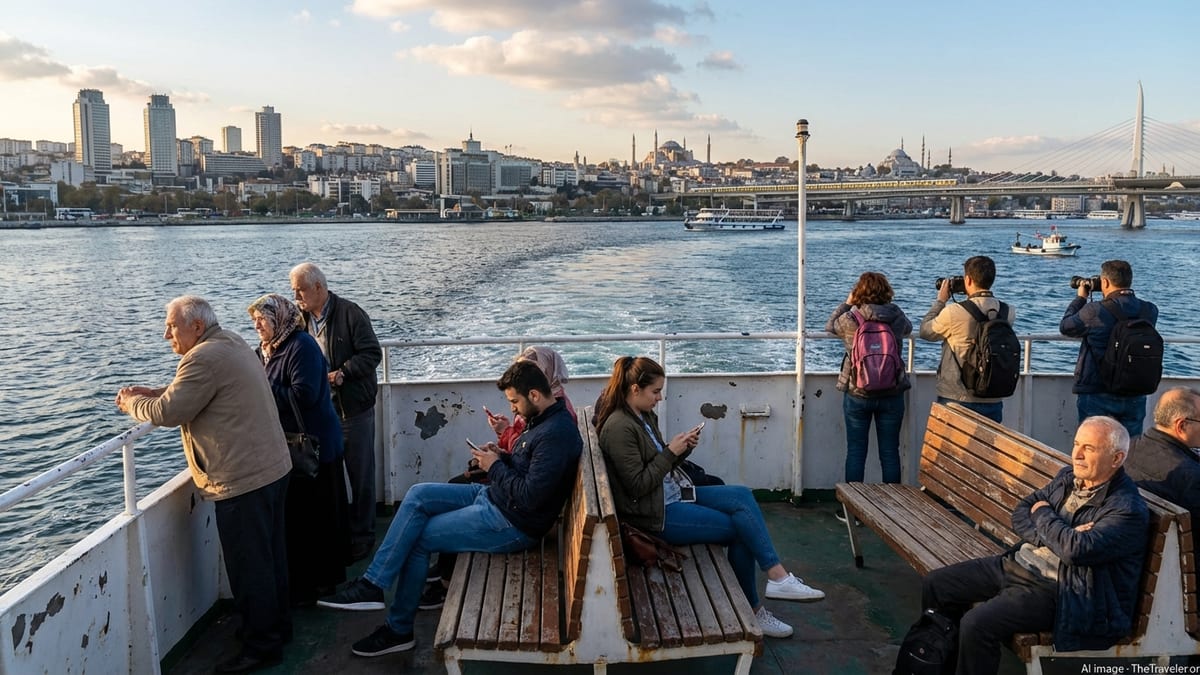
Ferries are a distinctive feature of Istanbul and Izmir, where urban geography is defined by wide bodies of water. City run ferries connect districts on opposite shores, with regular departures throughout the day. They offer wide open decks, indoor seating and kiosks selling tea and snacks, making them both a commuter artery and a gentle sightseeing experience. For a traveler, a ferry ride can double as an inexpensive mini cruise, especially at sunset when skylines and minarets are silhouetted against the water.
Operating hours vary by mode and route, but many metro and tram lines start service around dawn and run until close to midnight. Night buses or limited 24 hour services typically cover a handful of critical corridors in Istanbul, particularly between central districts and major hubs such as Taksim Square and the main bus terminal. Timetables and headways can change seasonally or during major events, so checking the latest information in transit apps or at stations is advisable before very early or late journeys.
Intercity Travel: Coaches, High Speed Trains and Conventional Rail
Intercity bus travel remains one of the most common ways to move around Turkey. Large private coach companies operate frequent services between major cities and resort areas, using modern, air conditioned buses with allocated seating. Many companies offer onboard hot drinks and snacks, as well as entertainment screens and occasional Wi Fi. Buses depart from centralized terminals known as otogar, which can be some distance from historic centers but are usually linked to them by city buses, metros or dedicated shuttles.
Alongside buses, Turkey is rapidly expanding its high speed rail network. Branded as YHT, high speed trains currently link Istanbul with Ankara, Eskisehir and Konya, and Ankara with Konya, Sivas and Karaman, with journey times between Istanbul and Ankara typically around four to four and a half hours. Recent infrastructure upgrades have noticeably shortened travel times on newer lines, and further expansion is planned to connect more provincial cities in the coming years.
Conventional intercity trains still operate on several domestic routes, including overnight services between Ankara and the far eastern city of Kars, to the southeast toward Kurtalan and Tatvan, and between Istanbul, Ankara and Izmir. These classic trains are slower than high speed services but can be atmospheric and economical, with reclining seats and, on many routes, sleeping compartments. They appeal to travelers who value the journey itself and wish to see landscapes change gradually across the Anatolian plateau and through mountain ranges.
Reservations are strongly recommended for all high speed trains and most long distance services, especially during weekends, public holidays and the busy summer season. Tickets can usually be purchased at station counters, official mobile apps and authorized agencies. Fares fluctuate with demand and class of travel, but they tend to be competitive with long distance bus prices, especially when factoring in comfort and reduced travel times on high speed routes.
Dolmuş, Taxis and Ride Hailing
Beyond formal public transport, visitors in Turkey will quickly encounter dolmuş vehicles and regular taxis. Dolmuş are shared minivans or small buses that operate along fixed routes, picking up and dropping off passengers anywhere along the way. They are especially common in medium sized cities, suburbs and along coastal strips, bridging gaps between official bus corridors and residential or beach areas. Fares are typically paid in cash to the driver and are based on distance, though prices are usually posted near the front of the vehicle.
For tourists, dolmuş can be an efficient and culturally interesting way to get around, but route knowledge is largely based on local familiarity rather than formal maps. Destinations are written on the front windscreen, and asking the driver or fellow passengers for confirmation is normal. Service generally starts early in the morning and winds down by late evening, with frequency dropping outside peak commuting hours or in low season at resort towns.
Licensed yellow taxis operate in all major cities and tourist regions. They are metered, although additional surcharges may apply for night journeys or bridges and toll roads in Istanbul. In recent years, municipal authorities have approved significant fare increases to keep pace with fuel and operating costs, so short trips may feel more expensive than urban public transport. To avoid misunderstandings, it is sensible to ensure the meter is switched on when you enter and to have a rough idea of the expected route from a map.
App based ride hailing exists in some areas, often integrated with local taxi fleets rather than independent private drivers. Services and legal frameworks have evolved over time, and availability can vary by city and even by neighborhood. Using official taxi stands at transport hubs, or booking through reputable hotel concierges and apps, provides an added layer of security, particularly late at night or when carrying luggage.
Using Public Transport: Practical Tips for Travelers
Navigating public transport in Turkey becomes straightforward once you adopt a few habits. First, always carry a small amount of cash in Turkish lira alongside your transport card, as some smaller buses, dolmuş lines or older vending machines still require cash payments. Reloading cards at the start of the day avoids scrambling for credit when boarding a crowded bus or passing through a station gate during rush hour.
Language can be a concern for first time visitors, but route maps, color coded lines and station signage make orientation manageable. Metro and tram stations typically display schematic maps and neighborhood plans, and in larger cities, announcements are often bilingual on airport routes and central lines. Keeping the Turkish names of your origin and destination written down or saved in your phone helps avoid confusion when you need to ask for directions or confirm the correct platform or bus.
In terms of safety, public transport in Turkey is generally considered safe, with a visible presence of municipal staff and, on some lines, security personnel. As in any busy urban environment, travelers should be mindful of pickpocketing risks in very crowded vehicles or at major interchanges. Wearing your backpack in front in packed conditions, keeping wallets and phones in inner pockets, and avoiding conspicuous displays of cash or expensive cameras can reduce the chance of opportunistic theft.
Accessibility has been improving, particularly on newer metro, tram and high speed rail lines, where level boarding, tactile paving and elevators are more common. However, older stations, steep streets and historic districts may still pose challenges for travelers with reduced mobility or heavy luggage. Planning routes that favor modern lines, and allowing extra time for transfers involving stairs or long walks, will make journeys smoother and less stressful.
The Takeaway
Public transport in Turkey offers travelers a powerful mix of coverage, affordability and local color. From sleek high speed trains crossing the Anatolian plateau to ferries gliding between continents on the Bosphorus, the system rewards those who take a little time to understand how its pieces fit together. In many cases it will be faster and more economical than relying solely on taxis or private transfers, particularly in dense urban centers where traffic congestion can be severe.
For a first visit, investing in the local transport card, getting comfortable with metro and tram maps, and embracing the occasional dolmuş ride can dramatically expand your reach. You will gain insight into everyday Turkish life, hear snatches of local conversation, and experience neighborhoods that might otherwise remain off the typical tourist circuit. With sensible precautions and up to date information, navigating Turkey by public transport can become one of the most memorable and rewarding facets of your trip.
FAQ
Q1: Do I need a different transport card for each Turkish city?
In practice, yes. Most major cities use their own smart card systems that are not interoperable, so you will usually buy a new card in each city where you use public transport extensively.
Q2: Is public transport in Turkey safe for solo travelers at night?
Urban public transport is generally safe, but vehicles can be crowded and some routes quiet late at night. Sit near other passengers, keep valuables secure and consider using taxis for very late or unfamiliar journeys.
Q3: How early and late do metros and trams usually run?
Most metro and tram lines start around dawn and run until about midnight, with slightly shorter hours in smaller cities. Istanbul also has limited night bus and metrobus services on key corridors.
Q4: Can I pay for buses and metros with my contactless bank card?
Contactless bank cards and mobile wallets are accepted on some systems, especially in larger cities, but coverage is not universal. A local transport card is still the most reliable option.
Q5: Do Turkish high speed trains sell out?
High speed trains can sell out on busy weekends, holidays and peak morning or evening departures. It is wise to book as early as you can once your travel dates are set.
Q6: Are there discounts for transfers between metro, bus and ferry?
Many cities offer reduced fares or partial discounts when you transfer within a set time using the same card. The exact rules and savings vary by municipality and may change over time.
Q7: How much luggage can I bring on public transport?
Urban systems accommodate typical suitcases and backpacks without formal limits, but very large items can be awkward in crowds. High speed and intercity trains usually allow standard luggage at no extra charge unless it is oversized.
Q8: Are public transport announcements in English?
English announcements are increasingly common on central metro and tram lines, especially those serving airports and tourist districts, but not guaranteed on all routes. Visual displays and maps remain important aids.
Q9: What is the best way to reach city centers from Turkish airports?
Many major airports are linked by metro, suburban rail or dedicated buses, which are usually cheaper than taxis and often just as fast during peak traffic. In some cases, you may need a short taxi ride or transfer to complete the journey.
Q10: Should I choose buses or trains for intercity travel?
Buses cover more destinations and run more frequently, while high speed trains are faster and often more comfortable on routes they serve. If both options exist, compare travel time, station location and your comfort preferences when deciding.