

Arizona’s vast deserts and booming cities are often associated with car travel, but a growing web of light rail, buses and shuttles now offers visitors and residents practical options for getting around without driving. From Metro Phoenix’s Valley Metro system to Tucson’s Sun Tran buses, plus rural connectors and airport shuttles, understanding how public transportation works can help you see much more of the state with less stress, cost and traffic.
Understanding Arizona’s Transit Landscape
Arizona’s public transportation network is shaped by its geography. The state’s population is concentrated in a few metro areas, with long distances between cities. That means public transit is extensive and improving inside urban regions like Phoenix and Tucson, but more limited and shuttle based in rural and intercity corridors. Travelers who plan ahead and combine modes can still move efficiently between airports, hotels and major attractions.
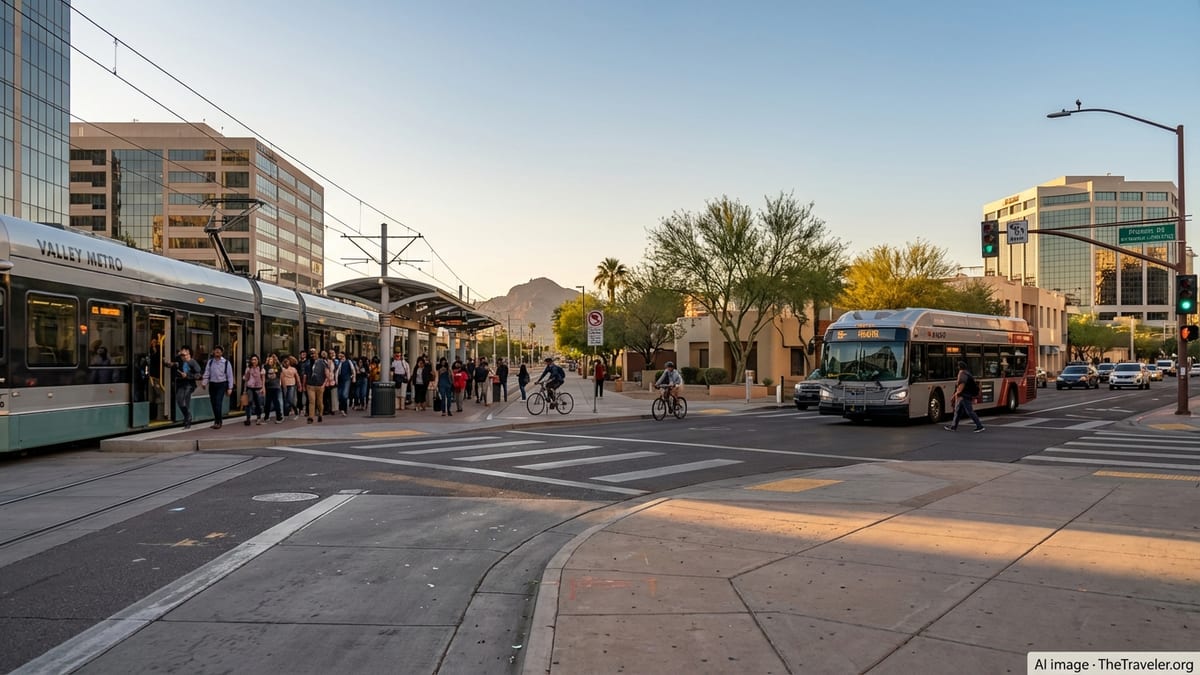
In the Phoenix area, Valley Metro coordinates light rail, streetcar, local buses, express routes and neighborhood circulators across multiple cities in Maricopa County. The system has expanded in recent years with new light rail extensions and more frequent service, driven in part by the city’s long range Transportation 2050 program, which aims to dramatically grow high capacity transit and bus rapid transit over the coming decades.
Tucson’s Sun Tran system provides a dense grid of bus routes, a modern streetcar, paratransit and neighborhood shuttles. Many services in Tucson currently operate fare free at the direction of local officials, making transit particularly attractive for visitors exploring downtown, the University of Arizona area and nearby neighborhoods.
Outside the two largest metros, public transportation is anchored by regional shuttles, tribal and rural bus services and private intercity operators that connect key hubs such as Flagstaff, Prescott, Sedona and the Grand Canyon. These services do not always run frequently, so schedules and reservations are especially important in smaller communities.
Valley Metro in Phoenix: Light Rail, Streetcar and Bus
Valley Metro is the backbone of public transportation in the Phoenix metropolitan region, serving cities including Phoenix, Tempe, Mesa, Glendale and others. Its light rail line runs through central Phoenix, downtown, Tempe and eastward into Mesa, linking major employment centers, sports venues and Arizona State University. Recent extensions have pushed service farther northwest and south of downtown, helping to fuel a rebound in ridership across the system.
In June 2025 Valley Metro reorganized its light rail into a two line system and increased frequency, with trains generally arriving about every 12 minutes during weekday daytime hours. This makes rail one of the most reliable ways to move between downtown Phoenix, Sky Harbor International Airport’s Sky Train connection, Tempe and Mesa without worrying about parking or congestion. A modern streetcar operates in downtown Tempe, with improved service running roughly every 15 minutes during the day and providing short hop connections around the city’s core.
Valley Metro’s bus network follows the region’s street grid, with dozens of local routes and select limited stop services. The busiest corridors often see service every 10 to 15 minutes during peak periods and run late into the night, while lower demand routes operate every 30 minutes or hourly, especially in early morning and late evening periods. Neighborhood circulators, usually small buses or vans, provide free or low cost local trips within specific communities, feeding riders to major bus and rail stops.
Looking ahead, Phoenix’s Transportation 2050 plan calls for tripling the light rail mileage within the city and adding extensive bus rapid transit corridors. The city has already designated early BRT corridors and continues to refine routes with community input. In early 2026, the Phoenix City Council shifted a planned Capitol area light rail extension toward a corridor along Indian School Road to better serve working class neighborhoods in Maryvale, illustrating how political decisions and community advocacy continue to shape the long term transit map.
Fares, Payment and Rider Experience in Metro Phoenix
Valley Metro has been modernizing how riders pay for trips. Paper passes have largely been phased out in favor of reloadable smart cards and mobile ticketing. Riders can load value onto a Copper Card or use the official app to purchase and store fares. Cash payment remains possible on buses for single rides, and many retail locations allow people to reload cards and accounts with cash.
Base fares in metro Phoenix remain relatively simple, with a flat local fare for most bus and light rail trips and separate pricing for express or commuter routes. Discount programs are available for seniors, youths, people with disabilities and Medicare card holders, and partner programs sometimes provide free or reduced price passes for people experiencing homelessness or in specific assistance programs. Daily fare capping and reloadable cards can lower costs for frequent riders by ensuring they never pay more than the cost of a day pass in a single day.
On board, Valley Metro vehicles are designed with accessible low floor entries, priority seating and tie down spaces for wheelchairs. Stations and transit centers typically include shade structures, seating and real time information displays. During the hottest summer months, riders should plan for the climate by carrying water and using shaded stops whenever possible. Early morning and evening trips are often more comfortable than midday travel, especially for visitors not accustomed to desert heat.
Security and cleanliness are ongoing priorities. Transit agencies and partner cities regularly adjust security presence, station design and cleaning schedules. Riders are encouraged to follow posted rules of conduct, keep belongings close and use well lit stations, especially at night. As in most large urban systems, a basic level of awareness and common sense goes a long way toward a smooth trip.
Sun Tran and Sun Link in Tucson
Tucson’s public transportation is anchored by Sun Tran, a city operated system with more than 40 fixed bus routes and an integrated network of services that includes Sun Link streetcar, Sun Van paratransit, Sun Express commuter routes, Sun On Demand microtransit zones and Sun Shuttle neighborhood and rural services. Buses reach most of the urbanized area, connecting residential neighborhoods with downtown Tucson, the University of Arizona, major shopping corridors and employment centers.
As of early 2026, rides on Sun Tran, Sun Link, Sun Van, Sun On Demand, Sun Express and Sun Shuttle continue to be fare free under a policy approved by the mayor and council. This has made transit particularly attractive for short and medium trips, especially for students, downtown workers and visitors staying near the streetcar line. Travelers should still check official information before a trip, as funding decisions can update fare policies with future budgets.
The Sun Link streetcar runs roughly 3.9 miles through five distinct districts, including Mercado San Agustín, Downtown, Fourth Avenue, Main Gate Square and the University of Arizona campus area. With frequent service and stops spaced for walkability, the line effectively functions as a spine for central Tucson, putting hundreds of restaurants, museums, shops and entertainment venues within a short walk of the tracks. Many of the stops feature public art, reflecting Tucson’s strong arts culture and making the ride itself part of the visitor experience.
Sun Tran’s bus routes vary in frequency, with core lines serving key corridors every 15 to 30 minutes during much of the day, and others operating every 30 to 60 minutes or primarily at peak commuter times. Some routes directly serve Tucson International Airport, major shopping centers and medical facilities, while express services link suburban park and ride lots with downtown.
Regional Shuttles, Rural Routes and Intercity Connections
Beyond the Phoenix and Tucson metros, Arizona’s public transportation depends on a patchwork of regional shuttles, tribal transit agencies, county operated routes and private intercity carriers. These services are essential for residents without cars and for visitors who want to reach destinations such as Flagstaff, Sedona, Prescott, Yuma or the Navajo and Hopi Nations without driving.
Several private shuttle companies provide scheduled service between airports and smaller cities, often operating multiple times per day along interstate corridors. For example, routes commonly link Phoenix Sky Harbor International Airport with Flagstaff, Prescott, Sedona and Cottonwood, offering door to door or designated stop pickups. Fares and schedules vary by company, and advance reservations are strongly recommended, especially on weekends, around holidays and during peak tourism seasons.
Intercity bus brands such as Greyhound and FlixBus operate within Arizona, connecting major population centers and some smaller communities along interstate highways. These services usually require online booking and may use curbside stops or shared transit centers rather than traditional bus stations, particularly in downtown cores. Riders should check the exact pickup location, as it may be a street corner, park and ride or transit center rather than a staffed terminal.
In rural areas, county or tribal governments sometimes operate small bus networks under contracts supported by state and federal programs. Service frequencies tend to be limited, with a handful of trips per day or even a few days per week. These routes often focus on essential trips to medical centers, social services, shopping areas and schools. Visitors staying in smaller communities should ask local tourism offices or lodging staff about available buses or shuttles, and verify timetables close to the travel date.
Airport Access and Local Shuttles
Arizona’s major airports are reasonably well integrated with local transit, though access looks different in each city. In Phoenix, the PHX Sky Train connects terminals to a Valley Metro Rail station at the 44th Street area, allowing riders to transfer directly between the airport and the regional light rail system. Local buses and ride hail services complement the rail connection, giving travelers options to reach downtown hotels, Tempe, Mesa or suburban destinations.
Tucson International Airport sits south of downtown and is served by specific Sun Tran bus routes that run between the central Ronstadt Transit Center and the terminals. One such route, for example, links the airport with downtown through South Park Avenue and adjoining neighborhoods, offering a budget friendly, if somewhat longer, alternative to taxis or rideshares. Tucson’s ongoing fare free policy makes airport to city center trips especially economical for budget travelers and students.
Smaller airports around the state, including those in Flagstaff, Yuma and other cities, are typically connected to town centers by a mix of local buses, hotel shuttles and private airport shuttle companies. In some resort areas, such as Sedona, hotels may coordinate shared vans for guests, while independent operators offer prebooked rides from major airports. Because these services can change from season to season, checking airport and hotel information ahead of arrival is vital.
Within cities and towns, local shuttle services, microtransit and paratransit play an important role. Programs such as Dial a Ride, On Demand zones and city run neighborhood shuttles provide curb to curb or flexible route service, often targeted at seniors, people with disabilities or neighborhoods that are difficult to serve with full size buses. Eligibility, booking rules and fares differ by city, so riders should confirm details before relying on these services for time sensitive trips.
Planning, Accessibility and Sustainability
Effective use of public transportation in Arizona starts with careful planning. Both Valley Metro and Sun Tran provide online trip planners and real time arrival tools through their websites and mobile apps. These tools allow riders to enter an origin and destination, then see route choices, transfer points and estimated travel times. For visitors, aligning sightseeing plans with transit corridors can reduce backtracking and make it easier to return to lodging during the hottest part of the day.
Accessibility is a central focus of Arizona’s large transit agencies. Buses and trains are equipped with ramps or low floor entries, priority seating and securement areas for mobility devices. Paratransit systems such as Dial a Ride in metro Phoenix and Sun Van in Tucson offer door to door service for riders who cannot use regular fixed routes because of a disability. Riders typically must complete an eligibility process in advance, so anyone who depends on paratransit should begin that process well before travel.
Safety considerations mirror those of most urban transit systems. Riders are encouraged to use well lit stops, keep valuables out of sight, avoid isolated areas late at night when possible and follow staff instructions during disruptions. Extreme heat adds another element to safety in Arizona; travelers should bring water, hats and sun protection, seek shade on platforms and avoid long walks between stops during the hottest hours when they can.
Environmental sustainability is an increasing priority. Arizona transit agencies have been shifting fleets toward lower emission technologies such as compressed natural gas, hybrid vehicles and battery electric buses. Tucson’s Sun Tran, for example, has operated electric buses for several years and is now expanding its electric fleet with federal support, aiming to replace older diesel vehicles and reduce greenhouse gas emissions. Valley Metro and other providers across the state are also integrating more energy efficient vehicles and exploring cleaner power sources over time.
The Takeaway
While Arizona’s cities were built with cars in mind, public transportation has become a viable and often convenient option for many trips, particularly in metro Phoenix and Tucson. Light rail, streetcars and frequent bus routes connect major employment centers, universities and entertainment districts, while on demand shuttles and paratransit fill in coverage for neighborhoods and riders with specific needs.
For visitors, using public transit can significantly cut transportation costs, ease parking headaches and provide a more local perspective on daily life in Arizona’s cities. Regional shuttles and intercity buses create opportunities to reach mountain towns and desert destinations without renting a car, as long as travelers plan carefully around less frequent schedules.
As cities continue to invest in light rail expansions, bus rapid transit and cleaner, more efficient buses, the role of public transportation in Arizona is set to grow. Whether you are commuting to work, heading to a university game or exploring historic downtown streets, taking the train, bus or shuttle can be an integral part of experiencing the state in a more sustainable and connected way.
FAQ
Q1. Does Arizona have enough public transportation to visit without renting a car?
It depends on where you plan to go. Phoenix and Tucson can be explored largely by transit, but visiting smaller towns and remote parks usually still requires a car or tour.
Q2. How reliable is Valley Metro light rail service in Phoenix?
Light rail in Phoenix generally runs frequently and on schedule, with trains about every 12 to 15 minutes during much of the day and real time updates available in the official app.
Q3. Is public transportation in Tucson really free right now?
As of early 2026, Sun Tran buses, Sun Link streetcar and related services are operating fare free under city policy, though riders should check for any future changes before traveling.
Q4. How can I get from Phoenix Sky Harbor airport to downtown by transit?
You can ride the PHX Sky Train from the terminals to the 44th Street station, then transfer to Valley Metro Rail, which continues into downtown Phoenix and onward to Tempe and Mesa.
Q5. Are Arizona transit systems accessible for wheelchair users?
Yes. Valley Metro and Sun Tran vehicles are equipped with ramps or low floors, wheelchair securement areas and priority seating, and both regions offer paratransit for eligible riders.
Q6. What is the best way to pay for buses and light rail in Phoenix?
Most riders use a reloadable Copper Card or the official Valley Metro mobile app, which allow you to load value, track usage and benefit from fare capping, while cash is still accepted on buses.
Q7. Can I reach the Grand Canyon or Sedona using public transportation?
There is no single state run service, but a combination of private shuttles and intercity buses can get you from Phoenix or Flagstaff to gateway communities, often with advance reservations.
Q8. How safe is public transit in Arizona for solo travelers?
Transit in Arizona’s major cities is generally safe, especially during daytime and early evening, though riders should stay aware, keep belongings secure and use well lit stops at night.
Q9. Do Arizona transit systems offer discounts for students and seniors?
Yes. Valley Metro provides reduced fares for seniors, youths and people with disabilities, and Tucson’s current fare free policy temporarily eliminates the need for individual discounts.
Q10. Are there late night buses or trains in Phoenix and Tucson?
Several Valley Metro routes run until around midnight or later, and key Sun Tran routes also offer evening service, but overnight options are limited so riders should check schedules in advance.