

Arkansas is best known for its winding mountain highways, small towns and wide open spaces, which means most residents get around by car. For visitors, though, public transportation can still be a practical way to reach key downtowns, campuses and attractions, especially if you plan carefully and understand the state’s limited but evolving transit network. This guide explains what travelers need to know about riding buses, streetcars and shuttles across the Natural State.
How Public Transit Works in Arkansas
Compared with larger coastal states, Arkansas has a relatively small public transportation network that is concentrated in a handful of urban areas. The largest systems operate in and around Little Rock, Northwest Arkansas and Fort Smith, with smaller city networks and rural demand response services filling in some gaps. For most itineraries, visitors will find transit most useful for getting around compact downtowns or university districts rather than crossing long distances across the state.
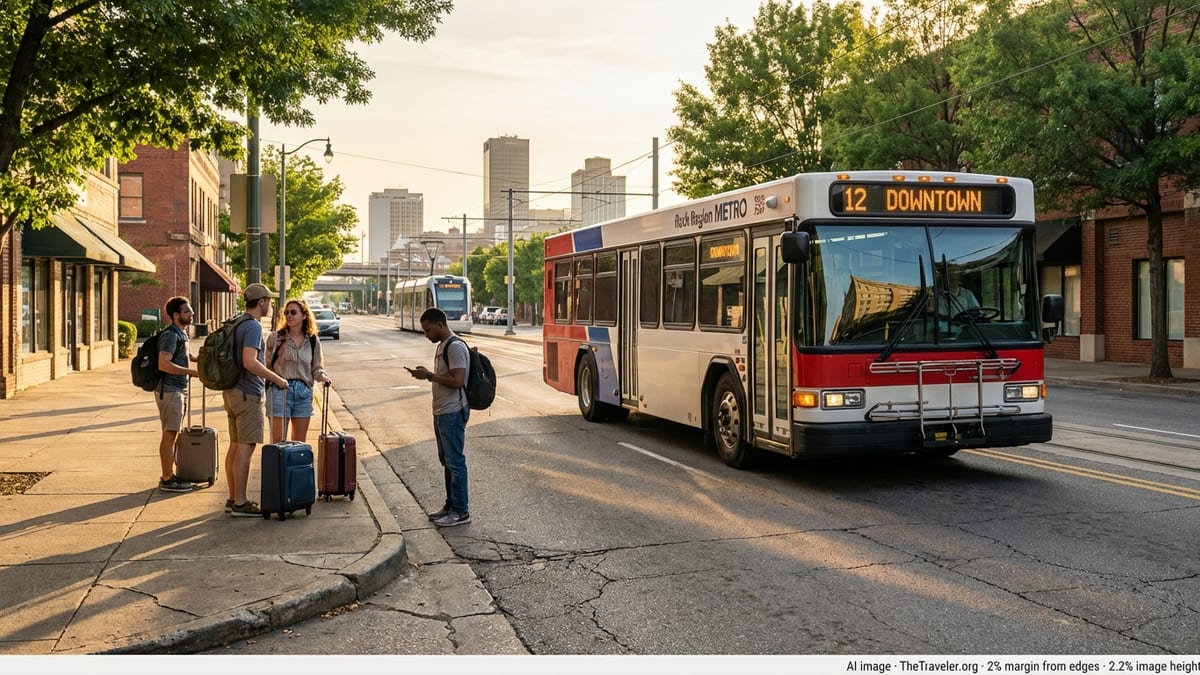
Rock Region METRO in central Arkansas is the state’s biggest agency. It runs regular bus routes, express commuter lines, paratransit services and a downtown streetcar that links Little Rock with North Little Rock. Services typically run seven days a week on core routes, with frequencies that are reasonable by regional standards but far below those of major metropolitan areas. Riders can plan trips and check real time arrivals using trip planning tools and smartphone apps promoted by the agency.
Northwest Arkansas, home to Fayetteville, Bentonville, Rogers and Springdale, is served by Ozark Regional Transit along with the University of Arkansas’ Razorback Transit system. Ozark Regional Transit focuses on fixed routes and on demand zones that connect growing suburbs to job centers and shopping hubs, while Razorback Transit offers fare free buses that knit together the university campus and surrounding neighborhoods. Together, they form the backbone of public mobility in the fast growing corner of the state.
Beyond these hubs, Arkansas relies heavily on a patchwork of small city systems and rural transit providers. Cities such as Fort Smith, Hot Springs, Pine Bluff and Jonesboro operate local bus routes, while regional agencies backed by the Arkansas Department of Transportation provide demand response or deviated fixed route services in many counties. These rural systems often require advance reservations, run on limited schedules and focus on essential trips such as medical appointments, work commutes and shopping.
Key Transit Hubs for Visitors
For most travelers, Little Rock is the primary gateway to Arkansas, and Rock Region METRO is the most practical starting point if you want to explore without a car. The system’s River Cities Travel Center in downtown Little Rock functions as a major hub where many bus lines converge. From there, routes fan out to state government complexes, medical centers, shopping districts and residential neighborhoods across Pulaski County. The agency’s modern diesel and electric buses are equipped with ramps and lifts, making them accessible to riders with mobility devices.
The METRO Streetcar provides a distinctive way to see the riverfront. Operating over several miles of track across the Arkansas River between Little Rock and North Little Rock, the heritage style streetcars serve downtown hotels, dining streets and cultural attractions. Service patterns occasionally change because of bridge and highway construction, and some stops may be suspended at times, so visitors should verify current operating hours and stop closures before planning a streetcar focused outing.
In Northwest Arkansas, Fayetteville and the surrounding corridor function as another important hub. Razorback Transit, operated by the University of Arkansas, runs multiple routes that are open to the general public as well as students and staff. Buses circulate between Union Station on campus, residence halls, major academic buildings and key city destinations including the entertainment district along Dickson Street and shopping areas such as Northwest Arkansas Mall. Service levels vary by semester and are heavier on class days, with reduced routes when university activity slows.
Other regional hubs include the transit centers in Fort Smith and Jonesboro, along with smaller transfer points in Hot Springs and Pine Bluff. While these facilities may be modest compared with larger U.S. cities, they provide logical anchors for planning local trips. Fort Smith’s system, for example, ties together downtown, main commercial corridors and neighborhoods while offering dedicated curbside and paratransit services for riders who cannot easily reach standard bus stops.
Types of Services: Buses, Streetcars and On Demand Rides
The bulk of Arkansas’ public transit is delivered through conventional fixed route buses. In Little Rock, Rock Region METRO operates more than twenty regular and express lines that follow set paths and timetables, with closely spaced stops along major corridors. Riders can board by signaling at marked stops and exit at any stop along the route. These buses cover daily needs such as commuting to state offices, reaching hospitals, and connecting residential neighborhoods to shopping centers.
Heritage style streetcars offer another mode in central Arkansas and as a visitor they can be both practical and scenic. The METRO Streetcar runs on steel tracks in the streets of downtown Little Rock and North Little Rock, stopping at platforms near hotels, restaurants, museums and riverfront parks. Although the cars themselves look historic, they are operated as part of the modern transit system, subject to temporary detours and construction related suspensions. When fully running, they can be a memorable way to travel between the two downtowns without driving.
On demand and microtransit services have expanded rapidly in Arkansas over the past few years. Rock Region METRO’s partnership with a national technology provider powers small zone based services branded separately from its traditional buses. Instead of following fixed routes, these shuttles accept ride requests through smartphone apps or phone calls and pick up passengers at virtual stops within defined neighborhoods. Similar on demand offerings are becoming more common in Northwest Arkansas, where Ozark Regional Transit uses flexible models to reach low density suburbs and employment parks.
Demand response and paratransit services remain crucial, especially in rural counties. Many regional operators funded through state and federal programs offer curb to curb rides that must be reserved at least a day in advance. Vans or small buses then group multiple riders whose trips are roughly along the same corridors. For visitors, these services can occasionally fill a gap in itineraries focused on specific attractions or events, but they work best for those willing to plan conservatively and adjust expectations about timing and flexibility.
Paying Fares and Using Transit Apps
Most of Arkansas’ larger transit agencies have modernized their fare collection systems, giving visitors several options beyond carrying exact change. Rock Region METRO, for instance, sells passes through mobile ticketing platforms that allow riders to buy, store and activate fares on their smartphones before boarding. As a bus approaches, you simply display the active pass screen to the driver, who verifies it visually. Traditional paper passes, cash fares and employer funded programs operated through local institutions remain in use as well.
In Northwest Arkansas, fare structures vary between systems. Razorback Transit is generally fare free for both the university community and the public, which makes it especially attractive for budget conscious travelers staying near campus or in Fayetteville’s downtown. Ozark Regional Transit typically charges modest fares, and details on ticket prices, discounts and free ride programs are available through agency materials. Because these agencies occasionally receive grants for promotions, visitors may encounter temporary fare free periods or special passes tied to events.
Across the state, transit agencies encourage riders to use smartphone apps that combine trip planning, wayfinding and real time tracking. Rock Region METRO is integrated into widely used journey planning apps and also promotes tools that show the live locations of buses and streetcars. Fort Smith Transit supports a free app that lets users track buses, save favorite stops and receive route change alerts, which can be especially helpful during detours or seasonal schedule adjustments.
Travelers who prefer not to rely on mobile technology can still navigate systems using printed timetables, route maps and telephone information lines. Major transit centers usually display posters with color coded route diagrams and basic schedules, while smaller stops may only show a route number and logo. Because some smaller agencies update paper materials less often, verifying time sensitive information with staff members or call centers is advisable, particularly on weekends and holidays when service levels tend to be lighter.
Accessibility and Visitor Friendly Features
Arkansas transit providers have gradually worked to make buses and facilities more accessible to riders with disabilities and to the broader public. Modern fixed route buses operated by Rock Region METRO, Ozark Regional Transit and Fort Smith Transit are typically low floor or equipped with lifts that enable boarding with wheelchairs, scooters and walkers. Designated priority seating areas are clearly marked, and drivers receive training on deploying ramps, securing mobility devices and assisting passengers upon request.
Complementing those features, most systems operate paratransit or curb to curb services for riders who meet eligibility requirements under federal regulations. In central Arkansas, Rock Region METRO’s complementary paratransit service runs within the same general area and hours as the fixed route network, offering pre booked trips for individuals unable to use standard buses. Other cities follow a similar pattern, tailoring service areas to their own urban boundaries and funding levels.
Language accessibility is more limited than in some larger states, but key materials such as route maps, basic instructions and safety notices are increasingly available in Spanish alongside English in high demand areas. Online content often provides more robust translation options through browser tools than printed brochures. Visitors who rely on language support or large print materials should plan extra time at transit centers to speak with staff who can walk through itinerary options and provide printed details when available.
Safety features on Arkansas transit systems are generally straightforward but important to understand. Vehicles are equipped with internal and external lighting, surveillance cameras and two way communication systems that link operators to dispatch centers. Transit centers and busy stops usually have lighting and clear lines of sight, but some outlying stops may be simple signposts on roadside shoulders. As in any destination, visitors are wise to remain aware of their surroundings, keep valuables secure and choose well lit stops when traveling after dark.
Reaching Attractions, Campuses and Rural Areas
Public transportation can be a convenient way to reach a limited set of Arkansas attractions, especially those concentrated in major downtowns. In Little Rock, Rock Region METRO routes connect visitors to the riverfront, state government quarter, hospitals and several museums. When METRO Streetcar service is fully available, it offers a scenic ride along the Arkansas River and through historic districts in both Little Rock and North Little Rock, making it useful for sightseeing and for short hops between hotels, restaurants and cultural sites.
University campuses are among the best served destinations in the state. Razorback Transit in Fayetteville brings riders directly to the heart of the University of Arkansas, surrounding residence halls, athletic facilities and nearby shopping corridors. Many visitors attending games, conferences or campus tours rely on these buses to avoid steep campus parking fees and to navigate hilly terrain. In central Arkansas, Rock Region METRO also provides links to community colleges and technical campuses, with some institutions sponsoring programs that allow students and staff to ride without paying individual fares.
Natural and historic sites are more challenging to reach by transit alone. The National Park Service notes, for example, that public transportation to Arkansas Post National Memorial is effectively limited to organized tour buses, with rental cars recommended for most independent visitors. Similar conditions apply to many state parks, lakes and mountain trailheads that lie far from population centers. Rural transit providers may serve some gateway towns, but schedules are sparse and require advance reservations, so relying entirely on these services for outdoor itineraries demands patience and flexibility.
For travelers planning multi city trips, intercity bus services link Arkansas to neighboring states and connect a few of its larger cities. Traditional carriers and newer long distance bus brands periodically adjust routes that pass through Little Rock, West Memphis and other nodes. Since timetables and stop locations change over time, it is important to verify current offerings close to your travel dates. Once in town, local bus networks can often bridge the last mile gap between intercity stops, hotels and attractions, though evening and Sunday options may be limited.
Planning Tips, Timing and When to Rent a Car
Visitors who intend to rely on public transportation in Arkansas should begin planning early, especially if their trips involve smaller cities or rural regions. Start by mapping out your must see destinations and checking whether local transit agencies serve them at all. In Little Rock or Fayetteville, that might mean examining bus route maps for connections to downtown, campuses and event venues. In more remote areas, it could involve calling rural transit providers directly to ask about reservation requirements, operating days and any restrictions on out of area riders.
Timing matters as much as geography. Peak service in urban systems typically occurs on weekday mornings and afternoons when commuters and students are traveling. Evenings, weekends and holidays often feature reduced frequencies or entire routes shutting down, which can lengthen travel times or make some trips impractical. Before leaving your hotel, confirm the schedule for both your outbound and return legs, and be prepared with a backup option such as a rideshare or taxi if your last bus for the day is delayed or full.
Transit can work well for visitors whose activities are concentrated in walkable cores. Staying in downtown Little Rock near the River Cities Travel Center, or near the University of Arkansas campus in Fayetteville, allows you to combine short transit hops with walking or cycling. This approach is cost effective and avoids parking hassles. By contrast, travelers planning to explore multiple small towns, wineries, trailheads or lake resorts in a short time frame will almost always find a rental car more efficient, since public transit rarely offers direct or frequent links between such destinations.
Ultimately, the decision to rely on buses and streetcars or to rent a car comes down to your itinerary and comfort level. Arkansas’ public transportation systems are improving, with new on demand services and technology upgrades making them more user friendly each year. Yet they still operate within a largely car dependent landscape. Setting realistic expectations, building generous time buffers into your schedule and remaining flexible will help you make the most of the options that are available.
The Takeaway
Public transportation in Arkansas is not as extensive as in many larger states, but visitors who focus on the right hubs can still navigate key areas without driving. Little Rock’s Rock Region METRO and its downtown streetcar, Northwest Arkansas’ combination of Ozark Regional Transit and Razorback Transit, and city systems in Fort Smith, Hot Springs, Pine Bluff and Jonesboro collectively provide a framework for car free travel where population density supports it.
Beyond those centers, a mosaic of rural and demand response transit agencies offers essential mobility to local residents and, in some cases, opportunities for visitors willing to plan ahead. These services tend to operate on limited schedules and often require advance reservations, which means they function best as supplements to, rather than replacements for, private cars on complex itineraries. Travelers heading to national parks, remote state parks or mountain trailheads should expect to arrange their own vehicles or join organized tours.
For a smooth experience, combine careful schedule checks with basic safety awareness and a flexible mindset. Use mobile apps or printed materials to understand routes, carry backup payment options for fares and keep an eye on real time updates in case of detours or construction related service changes. With those strategies, public transit can become a useful tool in your Arkansas trip, offering an affordable and sometimes scenic way to see the state’s urban cores.
FAQ
Q1. Can I visit Little Rock without renting a car if I rely on public transit?
Yes, it is possible if you stay near downtown and plan carefully around Rock Region METRO buses and the streetcar, though evening and weekend options are more limited.
Q2. Is the METRO Streetcar in Little Rock mainly for tourists or for everyday transportation?
It operates as part of the regular transit system but is especially popular with visitors because it links hotels, restaurants and attractions along the riverfront.
Q3. Are Arkansas buses accessible for wheelchair users and travelers with limited mobility?
Most urban buses are equipped with ramps or lifts and priority seating, and agencies operate complementary paratransit or curb to curb services for eligible riders.
Q4. How common are fare free transit services in Arkansas?
A few systems, notably Razorback Transit in Fayetteville, are generally fare free, while others occasionally run promotions; many agencies still charge modest cash or pass based fares.
Q5. Do Arkansas transit systems run late at night?
Service tends to reduce significantly in the late evening, and many routes stop running relatively early, so late night travelers often need taxis, rideshares or private cars.
Q6. Can I reach national parks and remote outdoor areas using public transportation?
Only in limited cases. Many parks and rural sites lack regular transit, and agencies often recommend rental cars or organized tours for those destinations.
Q7. Are transit apps necessary to ride buses in Arkansas?
No, but they are very helpful. You can still use printed maps, posted schedules and phone assistance, yet apps make trip planning and real time tracking much easier.
Q8. How far in advance should I book rural demand response transit?
Policies vary, but calling at least one business day in advance is common, and some agencies may accept or even require longer lead times for reservations.
Q9. Is public transit in Arkansas safe for solo travelers?
Transit is generally considered safe, though as in any destination, solo riders should stay aware of their surroundings, keep valuables secure and favor well lit stops after dark.
Q10. When does it make more sense to rent a car instead of using transit?
Renting a car is usually better if you plan to visit multiple small towns, parks or rural attractions on a tight schedule, since transit coverage and frequency decline sharply outside cities.