

Germany’s public transportation network is one of the most extensive in Europe, connecting major cities, small towns and rural regions with a mesh of trains, suburban rail, trams and buses. For visitors, it can feel impressively efficient but also a little intimidating at first, with unfamiliar ticket types, zones and rules. Understanding the basics before you arrive will save time, reduce stress and help you travel confidently from your first ride.
How Germany’s Public Transport System Is Organized
Germany’s public transport is built on a layered system that combines national rail services with hundreds of regional and local networks. At the top is Deutsche Bahn, the national rail operator, which runs long-distance Intercity Express (ICE), Intercity (IC) and Eurocity (EC) trains, as well as many regional trains. Below that level, regional transport associations coordinate local S-Bahn (suburban rail), U-Bahn (metro), trams and buses in and around cities.
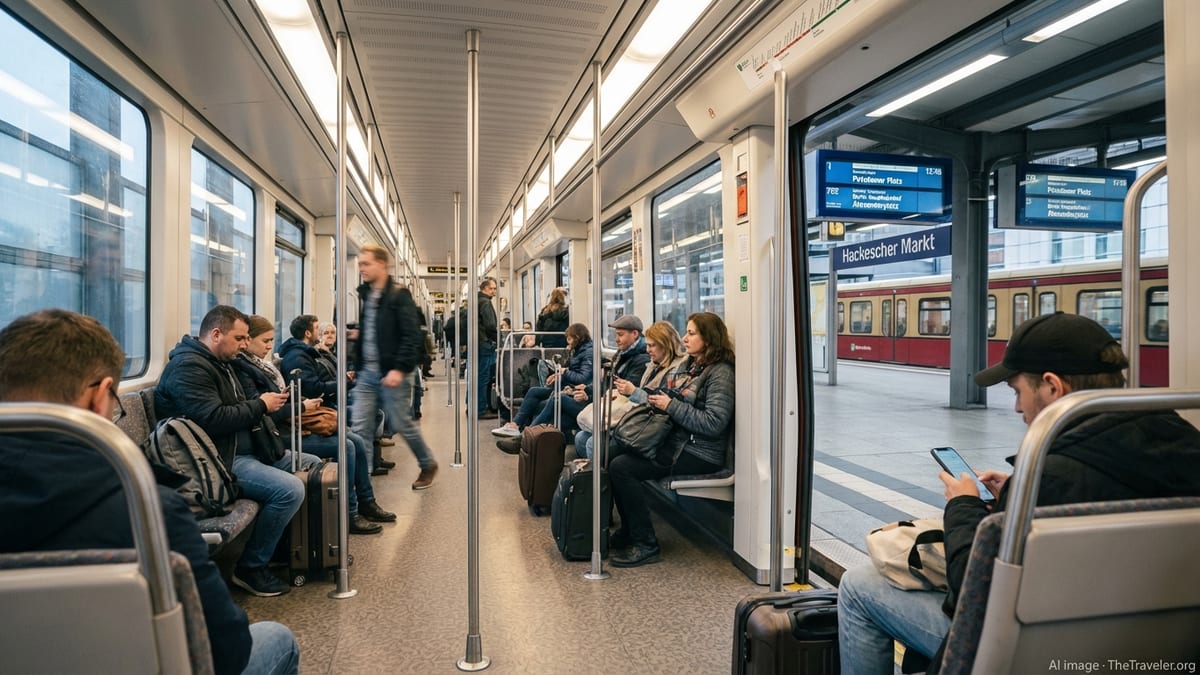
For visitors, the most visible modes in cities are S-Bahn, U-Bahn, trams and buses. The S-Bahn connects city centers with suburbs and nearby towns and usually runs above ground. The U-Bahn is a true metro, mostly underground and focused on dense urban areas. Trams cover shorter urban routes at street level, while buses fill in the gaps to reach residential districts, business parks and tourist sights that trains and trams do not serve directly.
Most metropolitan areas are grouped into transport associations that unify fares across modes within a region. These associations use zone systems: you buy a ticket valid for specific zones, and that ticket is accepted on all participating operators within those zones, regardless of whether you ride a bus, tram, U-Bahn or S-Bahn. Examples include the Verkehrsverbund Berlin-Brandenburg around Berlin, the Munich transport association and numerous others covering nearly every larger German city.
Service frequency is generally high on core routes. In major cities, U-Bahn and S-Bahn trains often run every few minutes during the day, with slightly longer intervals in the evening and early morning. Smaller towns and rural areas rely more on regional trains and buses, where hourly or even two-hourly services are common, so checking timetables matters more outside the big metropolitan centers.
Ticket Types, Zones and the Deutschlandticket
Tickets in Germany are usually time or zone based rather than distance based. A single ticket for a city might be valid for a set duration, such as 60 to 120 minutes, and cover travel in a defined area. During this validity window, you may change vehicles and modes as needed, provided you stay within the permitted zones and keep traveling in one continuous direction rather than explicitly using the ticket as a hop-on, hop-off pass.
For longer or more intensive exploration, day tickets and short-stay passes are often better value than multiple singles. Most urban networks sell day tickets valid until very late at night or early the next morning, and there are frequently group options that allow several people to travel together on one pass. Regional day tickets on Deutsche Bahn’s local and regional trains can be attractive if you want to visit several towns in one federal state in a single day, though they are typically restricted to slower regional trains rather than long-distance high-speed services.
Since 2023, Germany has offered a nationwide subscription product commonly known as the Deutschlandticket. This month-to-month pass gives unlimited travel on local and regional public transport across the entire country, including local buses, trams, U-Bahn, S-Bahn and regional trains in second class. It is not valid on long-distance ICE, IC or EC trains or on most long-distance private operators, and it is usually tied to one named person using an app or smart card.
The Deutschlandticket is especially useful for visitors planning to stay several weeks and travel heavily by local transport between and within cities. Because the pass is sold as a monthly subscription, you normally sign up through an app or local transport provider and then cancel before the next month to avoid automatic renewal. Prices have risen compared with the original launch period, so it is worth comparing the cost of the pass with what you expect to spend on individual and regional day tickets during your stay.
How to Buy, Validate and Show Tickets
Buying tickets has become much easier for visitors thanks to digital tools. Deutsche Bahn’s official app and website allow you to purchase long-distance and regional train tickets, including many local transport add-ons, with an English interface and common foreign payment cards. Many regional transport associations also maintain their own apps, which sell city tickets and day passes and can sometimes issue the nationwide Deutschlandticket.
Ticket machines remain widely available at train and metro stations. These machines typically offer an English-language option and let you choose tickets by zone, destination or product type. In trams and buses, small onboard machines or the driver may sell simple tickets in some cities, but the trend is toward buying before boarding when possible. In busy urban networks, ticket inspection is often done by roving staff rather than ticket barriers, so you must carry a valid ticket and be prepared to show it on request.
Validation rules differ by region and ticket type. Some tickets print with a time stamp at purchase and need no further validation. Others are stamped by the user in small blue or yellow validation machines located on platforms, at station entrances or inside vehicles. If your ticket states that it is only valid after validation, you must stamp it before or immediately upon starting your journey, otherwise you are treated as traveling without a ticket even if you have paid for one.
Travelling without a valid ticket is taken seriously. Standard penalty fares are relatively high and are applied on the spot by inspectors, who may also check identification details. Honest mistakes, such as forgetting to validate, are rarely waived once the inspection begins, so it is crucial to understand whether your ticket requires stamping and to keep digital tickets clearly accessible on your phone, with enough battery to show them at any time.
Using Trains, Trams and Buses Day to Day
Once you have the right ticket, the next challenge is using the network efficiently. Platform signage in Germany is generally clear and consistent, with each train or tram showing a line number, destination and, often, intermediate stops on electronic displays. Timetable boards list departure times, platform numbers and whether a service is regional or long-distance. Announcements are primarily in German, but on major intercity routes and airport links, key messages are often repeated in English.
On S-Bahn and U-Bahn systems, trains display both the line code and final destination. To avoid confusion, match both before boarding. Route diagrams over doors and on platforms help you confirm the direction of travel and count how many stops remain. Many vehicles and stations provide digital displays showing the next stops in real time, which is invaluable if station names are unfamiliar or difficult to pronounce.
Boarding etiquette is straightforward but important. Passengers typically allow others to get off before stepping on, and it is courteous to form loose queues rather than blocking doors. Once aboard, move away from entrances so that others can board quickly. Priority seating near doors is reserved for older people, passengers with reduced mobility, pregnant travelers and those with small children. Stowing luggage in overhead racks, between seat backs or in dedicated luggage zones keeps aisles clear and reduces the chance that staff will ask you to move your bags.
Most trams and buses have at least two doors; some require you to board at the front and show or buy a ticket from the driver, while others use all-door boarding with proof-of-payment checks. Stop request buttons are standard: press them in good time before your stop so the driver knows to halt, especially in smaller towns or at night when not every stop is served automatically.
Airports, Long-Distance Rail and Regional Connections
Germany’s largest airports are closely integrated with the rail network, so many visitors begin their public transport experience as soon as they land. Major hubs such as Frankfurt, Munich and Berlin are linked by frequent S-Bahn or regional trains to their city centers, along with dedicated airport buses where rail access is less direct. Travel times from airport to downtown are typically short by European standards, which makes using public transport more practical and affordable than taxis for most visitors.
At airports with long-distance rail stations, intercity trains may offer onward connections to other German cities without requiring a change in the city center. These long-distance services require separate tickets from local transport passes and usually use dynamic pricing, so booking in advance through Deutsche Bahn can secure cheaper fares. Finding the correct platform is helped by clear signage within terminal buildings that directs passengers towards local and long-distance trains.
Beyond airports, regional public transport links much of the country to major hubs. Regional Express and Regionalbahn trains form the backbone of intercity travel on routes not served by high-speed ICE lines, stopping at mid-size towns that would otherwise be hard to reach by public transport. In many regions, these trains are synchronized with bus networks at key interchange points, creating timed transfers that minimize waiting time between services.
When planning regional journeys, it is useful to check whether a single regional day ticket or state-specific pass might cover both trains and local buses. This can be cheaper and more flexible than buying separate tickets for each leg. Be aware, however, that such tickets usually exclude long-distance trains and seat reservations, so they are best for travelers who value flexibility and are comfortable with slower, multi-stop routes.
Accessibility, Safety and Travel Etiquette
Accessibility has improved markedly in German public transport over the past two decades, although the experience still varies between modern and older infrastructure. Many newer stations feature lifts, escalators, step-free entrances and platform heights that align with train doors, making it easier for wheelchair users, travelers with strollers and those with heavy luggage. In older stations, there may be stairs only, or platform gaps that require extra care when boarding and alighting.
Most modern trams and low-floor buses are designed with ramps or level boarding areas. Designated spaces for wheelchairs, walkers and strollers are clearly marked with pictograms near doors, and these areas take priority over bicycles or standing passengers. If you need assistance, train and station staff can often provide support, but advance notice is advisable for more complex journeys or when traveling with larger mobility aids.
Public transport in Germany is generally perceived as safe, including late in the evening. Stations and vehicles are often equipped with CCTV, emergency intercoms and good lighting. That said, you should adopt the same common-sense precautions you would in any large city: keep valuables secured and out of sight, pay attention to your surroundings and avoid leaving bags unattended. Night services may attract louder crowds, especially on weekends, but serious incidents are uncommon and police or security staff are visible on many networks.
Unwritten etiquette contributes strongly to the overall atmosphere. Speaking at a moderate volume, using headphones, keeping feet off seats and disposing of litter properly are all expected. Eating small snacks is usually tolerated, but some operators restrict hot meals or messy food on certain services, particularly urban networks where cleanliness is a priority. Following these norms not only avoids negative attention but also helps you blend in more easily as a visitor.
Luggage, Bicycles and Pets on Board
Luggage rules on German trains and local transport are generally relaxed but guided by practicality. You can usually bring suitcases, backpacks and smaller bags without formal limits, provided you can carry them yourself and store them without blocking aisles, doors or emergency equipment. On long-distance trains, dedicated luggage racks at carriage ends and overhead shelves above seats help accommodate larger items, while on local trains and trams, multi-purpose areas near doors are often intended for bulky luggage, strollers and wheelchairs.
Bicycles are welcome on many services but are subject to specific rules and, often, extra tickets. On long-distance trains, only certain services and designated carriages accept full-size bicycles, and you normally need both a bicycle ticket and a reservation for a bike space. Regional trains and S-Bahn lines are generally more bike friendly, although many transport associations limit bike carriage during weekday peak hours. Folding bikes that are fully folded are widely treated as regular luggage and can usually travel without a separate bike ticket.
In crowded conditions, passengers with strollers, wheelchairs or walkers have priority over bicycles in multi-purpose spaces. If the area fills up, cyclists may be asked to leave or wait for the next service, especially on busy urban lines. In trams and buses, local rules vary, but the same principle applies: bikes are allowed only as long as they do not endanger other passengers or obstruct emergency exits. Checking local transport websites or station notices before setting out with a bike is sensible, particularly in larger cities where regulations are more detailed.
Pets are commonly seen on German public transport, especially dogs. Small pets that can be carried in containers usually travel for free or at reduced cost, while larger dogs often require a separate ticket, sometimes charged at a child fare in regional systems. Dogs are typically required to be on a leash, and in many networks they must also wear a muzzle, especially larger breeds. As with bicycles, the exact rules differ by region and operator, so visitors traveling with animals should confirm conditions in advance.
Night Travel, Disruptions and Seasonal Crowds
Night travel is an important part of Germany’s public transport offer, particularly in large cities. Many metropolitan areas operate dedicated night bus networks covering key routes after regular services end, often with special line numbers beginning with a letter to distinguish them from daytime routes. In some cities, core U-Bahn or S-Bahn lines run through Friday and Saturday nights with extended hours, giving late-night travelers frequent options without relying on taxis.
Timetables may change between weekdays and weekends, so it is worth checking last departure times, especially if you are staying in a suburb or less central district. In smaller towns and rural areas, evening and night services are more limited, and the last bus or regional train may depart earlier than visitors expect. Planning your return journey before heading out for the evening can prevent expensive taxi rides or long walks home.
Like any large network, Germany’s public transport system can experience delays and disruptions due to construction, weather or operational issues. On rail services, planned engineering works are often announced weeks in advance and may result in timetable adjustments, replacement buses or platform changes. Real-time information screens and announcements at stations provide updates, and many apps show live departure and platform data that help you adapt quickly to changes.
Seasonal peaks can have a noticeable effect on comfort and crowding. Summer holidays, long weekends and major events can lead to full trains and buses, especially on popular tourist routes and regional lines serving holiday regions. If your schedule allows, traveling outside peak hours in the late morning or early afternoon can significantly improve your chances of finding a seat. Reserving a seat on long-distance trains, even when not mandatory, is highly recommended in busy periods.
The Takeaway
For visitors, Germany’s public transport system offers a powerful combination of reach, reliability and value. Trains, trams and buses knit together cities, towns and rural regions in a way that makes car-free travel not only feasible but often preferable, especially when you factor in parking costs and traffic in major urban centers. With a modest amount of preparation, you can use the system to move smoothly between airports, hotels, historic centers, cultural sights and natural landscapes.
The key is to understand the main building blocks: the distinction between long-distance and local transport, the role of regional transport associations, the basics of zones and time-based tickets, and the importance of validating your ticket when required. Digital tools make planning and purchasing straightforward, and products such as the Deutschlandticket can be excellent value for longer stays and frequent journeys on local and regional services.
If you respect local etiquette, give priority to those with reduced mobility, and familiarize yourself with rules for luggage, bicycles and pets, you will find that German passengers and staff are generally helpful and patient with visitors. In return, the system rewards you with punctual connections, wide coverage and a largely stress-free way to experience the country beyond the obvious tourist paths.
Whether you are commuting between meetings, exploring half-timbered towns or taking a spur-of-the-moment trip to a nearby lake, public transport in Germany can be both a backbone of your itinerary and a memorable part of the travel experience in its own right.
FAQ
Q1. Do I need to buy public transport tickets in advance in Germany?
For local buses, trams, U-Bahn and S-Bahn, you can usually buy tickets shortly before travel via apps or station machines, while long-distance train tickets are cheaper if purchased in advance.
Q2. Is the Deutschlandticket useful for short stays by visitors?
The Deutschlandticket can be worthwhile if you stay at least several days and expect to make many local and regional trips, but for a brief city break, regular day tickets may be more economical.
Q3. Can I use one ticket on buses, trams, U-Bahn and S-Bahn in a city?
In most German cities, a ticket issued by the regional transport association is valid across buses, trams, U-Bahn and S-Bahn within the covered zones for the ticket’s validity period.
Q4. How do inspectors check tickets if there are no barriers?
Germany mainly uses a proof-of-payment system in which roving inspectors board vehicles or appear on platforms and ask passengers to show valid paper or digital tickets.
Q5. Are German trains and buses safe to use at night?
Public transport in Germany is generally considered safe, including at night, although standard precautions such as keeping valuables secure and staying aware of your surroundings still apply.
Q6. What happens if I forget to validate my ticket?
If your ticket requires validation and you forget to stamp it before or at the start of your journey, inspectors will usually treat it as invalid and may issue a penalty fare.
Q7. Can I take my bicycle on German public transport?
Full-size bicycles are allowed on many regional trains and some long-distance services, often with extra tickets or reservations, while fully folded bikes typically count as regular luggage.
Q8. Are airport transfers included in regular public transport tickets?
In many cities, standard local tickets and day passes cover airport S-Bahn or regional trains and relevant buses, but long-distance trains serving airports usually require separate tickets.
Q9. Is public transport accessible for travelers with limited mobility?
Accessibility is improving, with many modern stations and vehicles offering step-free access and designated spaces, though some older infrastructure still presents stairs and platform gaps.
Q10. Do I need to speak German to use public transport?
While most signage uses German, key information is often supported by symbols and, on major routes, English announcements, and many ticket machines and apps offer English-language options.