

More news on this day
Hundreds of passengers traveling between Puerto Rico and major U.S. gateways found themselves stranded today, as a wave of 93 delays and at least six cancellations at San Juan’s Luis Muñoz Marín International Airport rippled across routes to Miami, New York and Orlando.
Get the latest news straight to your inbox!
Live Disruptions Hit Key Mainland Gateways
Publicly available flight-tracking data and travel-industry coverage for April 5 indicate that operations at Luis Muñoz Marín International Airport in San Juan deteriorated through the day, with dozens of departures and arrivals running behind schedule. Reports highlight around 93 delayed flights and six outright cancellations affecting a mix of domestic and regional services, including heavily traveled links to Florida and the U.S. Northeast.
The disruption has been particularly visible on routes connecting San Juan with Miami, New York area airports and Orlando, a trio of gateways that serve as vital bridges between Puerto Rico, the mainland United States and international networks. Travelers heading to and from these hubs encountered rolling departure time revisions, gate changes and extended holds on the tarmac as airlines attempted to absorb the operational strain.
Published coverage notes that affected flights cut across several major carriers serving Puerto Rico, including full-service and low-cost operators. While the precise breakdown of delays by airline continues to shift in real time, patterns observed on tracking platforms suggest that both inbound and outbound services on the San Juan to Miami, San Juan to Orlando and San Juan to New York corridors have been repeatedly pushed back, in some cases by several hours.
The resulting congestion has spilled into connecting banks at U.S. hubs. Because many passengers from Puerto Rico use Miami, New York and Orlando as transfer points to reach other destinations, missed connections and rebookings have added another layer of complexity, stretching customer-service resources at multiple airports at once.
Part of a Wider Wave of Early April Flight Turmoil
The Puerto Rico disruptions come on the heels of a broader spell of turbulence across the U.S. aviation system in the early days of April. National-level data compiled by flight-tracking services for this period show several days with hundreds of cancellations and thousands of delays at airports across the country, as spring storms, heavy holiday demand and tight airline schedules combined to strain operations.
In recent days, large hubs from Boston and Chicago to Miami and Orlando have experienced elevated disruption totals, with some airports logging well over one hundred delayed flights in a single day. Travel-industry outlets describe a pattern in which severe weather and airspace constraints trigger initial problems, and then residual effects linger for days while carriers reposition aircraft and crews.
San Juan’s current difficulties appear to fit into that wider pattern. According to publicly available operational statistics, Luis Muñoz Marín International Airport has seen strong traffic growth, particularly on leisure and visiting-friends-and-relatives routes to Florida and the Northeast. When demand remains high and schedules are densely packed, relatively small disturbances can quickly cascade into more visible disruption for travelers.
Analysts note that, although today’s figures in Puerto Rico are striking on their own, they are also part of a continuing trend in which even routine seasonal weather or minor technical issues can cause large numbers of delays once they intersect with peak travel periods, constrained staffing and busy airspace along the U.S. East Coast.
San Juan Terminals Strain Under Passenger Backlogs
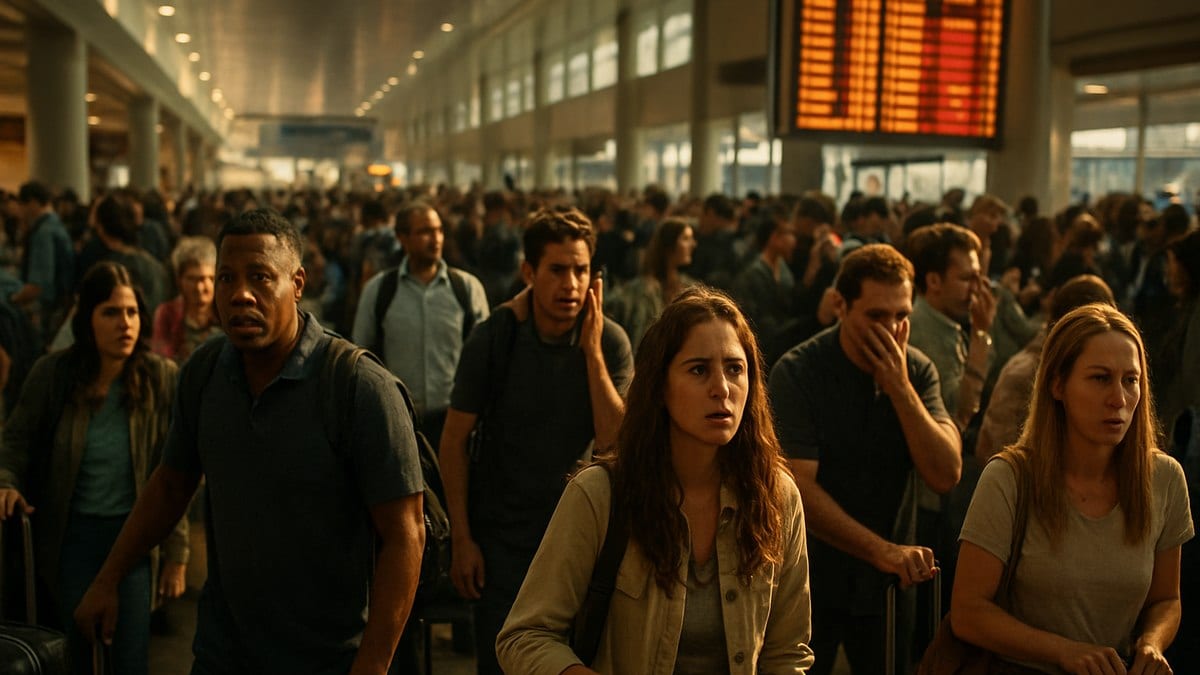
Inside the terminals at Luis Muñoz Marín International Airport, today’s flight delays have translated into crowded concourses, long queues and an atmosphere of uncertainty for many travelers. Social media posts and traveler accounts describe packed gate areas, limited seating and lines stretching well beyond standard check-in and security zones as passengers wait for clarity on revised departure times.
In recent weeks, visitors departing Puerto Rico have already been cautioned to allow extra time for check-in, agricultural inspection and security screening, with some reporting multi-hour processes from curb to gate on busy mornings. Today’s spike in delayed operations appears to have amplified those pressures, leaving more travelers than usual airside for longer stretches of the day.
Extended waits can also place additional pressure on airport amenities. Food outlets, restrooms and charging stations tend to become bottlenecks when large numbers of passengers remain in the terminal for hours longer than planned. While airport operators and airlines publish general guidance on arriving early and monitoring flight status, the lived experience for travelers during disruption days frequently includes searching for quiet corners, power outlets and reliable updates on departure boards.
With San Juan serving as the primary air gateway for Puerto Rico’s residents and visitors alike, today’s operational snags have had outsized visibility on the island. The combination of local passengers returning home, tourists wrapping up vacations and U.S.-bound travelers making time-sensitive connections has heightened anxiety in the departure halls.
Ripple Effects in Miami, New York and Orlando
The impact of Puerto Rico’s flight problems has been felt far beyond San Juan. Miami International Airport, New York’s major gateways and Orlando International all play central roles in linking the island to mainland destinations, and today’s backlog at Luis Muñoz Marín has contributed to crowding and schedule shifts at those hubs.
Travel-industry reports point out that Miami and Orlando were already managing heavy early April traffic linked to spring vacations and the Easter holiday period. Previous days saw significant numbers of delayed and canceled services at these Florida airports, and today’s disruptions on San Juan routes have further complicated aircraft rotations and gate assignments.
In the New York region, which includes John F. Kennedy International and other large facilities, publicly visible delay tallies have climbed again today, with a portion of those disruptions tied to Caribbean and Florida operations. Flights linking Puerto Rico and New York often feed into dense banks of transcontinental and international departures, so when arrival times slip, passengers can miss onward journeys that may not have immediate alternatives.
Across all three cities, travelers arriving from San Juan have reported a mix of short-notice gate changes and long walks between terminals in order to secure rebooked connections. While many airlines attempt to automate notifications through mobile apps and text messages, the number of passengers seeking assistance at customer-service counters and self-service kiosks tends to swell rapidly on days with high disruption counts.
What Travelers Can Do if Their Flight Is Affected
For passengers currently caught up in the Puerto Rico flight chaos, consumer advocates consistently recommend a few practical steps. First, travelers are urged to monitor flight status directly through airline apps or text alerts, which typically update more quickly than general airport displays. Independent flight-tracking tools can also provide near-real-time data on aircraft movements and historical delay patterns.
Second, those with flexibility in their plans may consider asking about rerouting options through alternate hubs, particularly when heading to or from the New York region or Florida. With Miami, Orlando and other East Coast airports all experiencing varying degrees of disruption, options may open up through secondary gateways that still have available seats and more stable schedules.
Third, travel-rights information published by airlines and transportation agencies can help passengers understand when they may be eligible for refunds, rebooking at no extra charge or other forms of assistance. Policies differ depending on the cause of disruption, ticket type and destination, but clear documentation can be useful when negotiating at the airport or via call centers.
Finally, planning for longer dwell times in the terminal is crucial on days like today. That can include packing essential medications and chargers in hand luggage, downloading entertainment in advance and keeping any critical documents accessible. While such steps do not eliminate the frustration of unexpected delays, they can make extended waits in San Juan, Miami, New York or Orlando marginally more manageable while the region’s aviation network works through the backlog.