

More news on this day
Disruptions centered on Puerto Rico’s main air gateway triggered 93 delays and six cancellations today, stranding thousands of passengers and creating knock-on chaos in Miami, New York and Orlando as airlines scrambled to reset their schedules.
Get the latest news straight to your inbox!
Disruption at San Juan Spills Into Major U.S. Gateways
The latest wave of disruption began at Luis Muñoz Marín International Airport in San Juan, where tracking data and published coverage indicate an unusually high number of delayed departures concentrated on routes to the U.S. mainland. The slowdown quickly rippled outward to busy connecting hubs, particularly Miami International, New York area airports and Orlando International.
Flight status boards for services linking San Juan with Florida and the U.S. Northeast showed rolling delays through the day, with some departures repeatedly pushed back as crews and aircraft rotated late from earlier flights. As day-of operations tightened, a small but significant group of flights moved from delayed to cancelled, stranding travelers mid-journey and forcing mass rebookings.
Publicly available information indicates that the tally reached 93 delayed services tied to Puerto Rico routes and six outright cancellations across multiple airlines. Although that number is modest compared with a major nationwide weather event, the clustering on a limited set of routes amplified the impact for passengers trying to connect through already congested hubs.
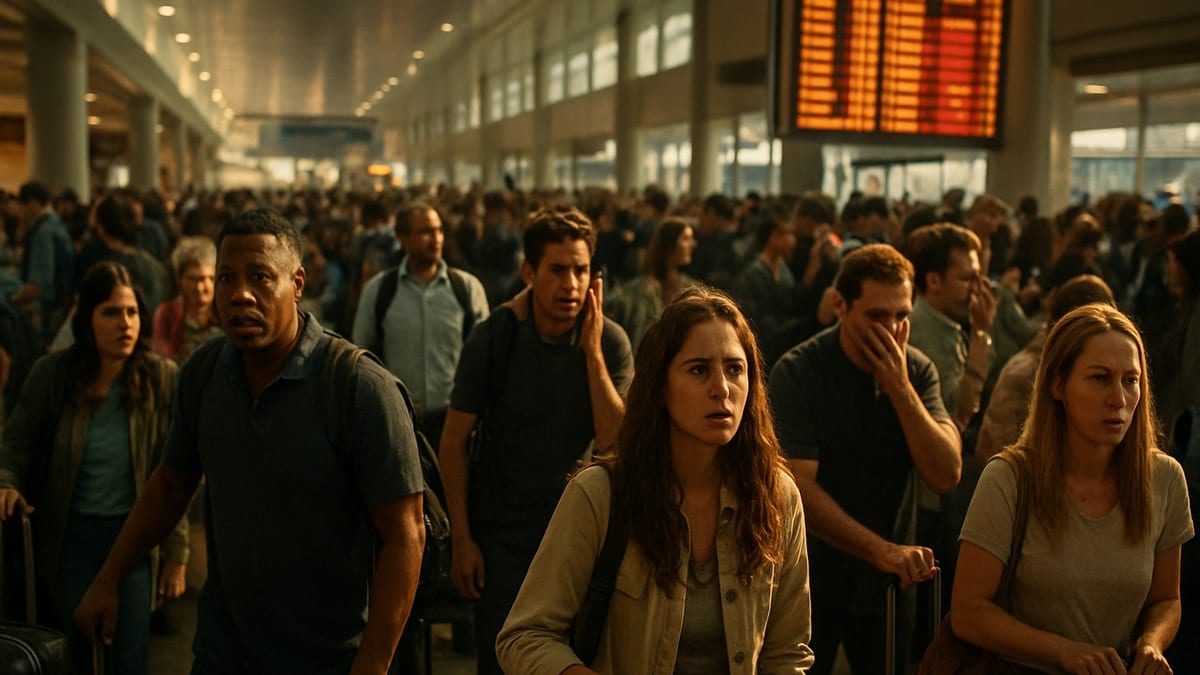
For travelers, the operational nuances mattered little compared with the visible reality in terminals. Reports from passengers described long lines at check in, crowded gate areas and departure boards dominated by yellow and red status alerts as the day wore on.
Miami, New York and Orlando Bear the Brunt
Miami International was among the hardest hit, reflecting its role as a key bridge between Puerto Rico and the mainland. According to live tracking and airport operations dashboards, flights between San Juan and Miami experienced a succession of pushbacks, with turn times stretching as ground handling teams juggled late-arriving aircraft and tight gate availability.
In New York, the effects were spread across multiple airports. Services linking Puerto Rico with John F. Kennedy, LaGuardia and Newark reported extended departure holds, which in turn disrupted onward connections to other domestic and transatlantic destinations. Passengers reported missing evening connections after inbound aircraft from San Juan arrived hours behind schedule.
Orlando International experienced its own version of the crunch. The airport, already known for heavy leisure traffic and periodic security bottlenecks, saw lines swell as Puerto Rico bound flights stacked up on departure boards. Social media posts and traveler accounts pointed to crowded concourses and weary passengers waiting through multiple gate-change announcements as carriers reworked their schedules.
The combination of three busy hubs facing simultaneous disruptions from the same cluster of routes magnified the sense of nationwide impact. Even passengers who were not traveling to or from Puerto Rico found themselves caught in the ripple effect as aircraft and crews that normally shuttle between these cities were absorbed into recovery operations.
Operational Strain and the Knock-On Effect for Travelers
While precise causes varied by airline and flight, operational data suggested a mix of factors behind today’s chaos. Rotational delays, in which one late flight creates a domino effect on later departures using the same aircraft, appeared especially pronounced on San Juan routes that cycle multiple times per day through Miami, New York and Orlando.
Airlines also faced challenges in repositioning crews who were themselves out of place after overnight disruptions earlier in the week. Under federal duty-time rules, pilots and flight attendants can only work a set number of hours, limiting the flexibility carriers have to instantly recover from extended delays. Publicly available scheduling information indicated several flights waited on fresh crews before departure.
For passengers, those behind the scenes constraints translated into hours in terminal seats and on standby lists. Many travelers reported being offered rebookings one or two days out when near-term flights filled quickly, particularly on peak leisure routes between Puerto Rico and Florida. Families returning from spring vacations and travelers heading to work in the mainland United States were among those most affected.
Airlines responded with a patchwork of options ranging from same day standby to routing passengers through secondary hubs. However, with gate space and seat availability at a premium in Miami, New York and Orlando, some travelers resorted to overnight stays in airport hotels or with friends and family while waiting for confirmed seats.
Guidance for Affected Passengers and Upcoming Travelers
Consumer advocates note that passengers whose flights are cancelled are generally entitled to a refund if they choose not to travel, while those facing long delays may receive meal or hotel vouchers when disruptions are within an airline’s control. Publicly available guidance from regulators and airlines encourages travelers to keep documentation of their original itinerary, delay notifications and any additional expenses.
Travel experts recommend that passengers currently stranded due to the Puerto Rico related disruptions check their flight status frequently through airline apps, which often update faster than departure boards in the terminal. Same day change tools within those apps can sometimes surface earlier rebooking options, especially when airlines add capacity to pressured routes.
Those scheduled to travel over the next several days on routes connecting Puerto Rico with Miami, New York or Orlando are being urged, in public advisories and online forums, to arrive at the airport earlier than usual and to avoid tight layovers. Longer connection windows can provide a buffer if inbound flights from San Juan continue to run late while airlines work to get aircraft and crews back into regular rotation.
Flexible travelers may find better odds by accepting alternative routings through less congested hubs or even nearby secondary airports. While that can add time and an extra connection to the journey, it can also reduce the risk of an overnight stranding if disruption continues to ripple outward from today’s disruptions.
What Today’s Chaos Reveals About a Stressed System
The latest round of delays and cancellations underscores how tightly wound the air travel system remains, particularly on high demand leisure and visiting friends and relatives routes such as those linking Puerto Rico with Florida and the U.S. Northeast. With limited slack in schedules and aircraft utilization, localized problems can cascade quickly across multiple airports and airlines.
Industry analysts observing today’s events point to a broader pattern in which moderate operational challenges create outsized effects for travelers, especially during busy periods. As airlines focus on efficiency and high aircraft use, the margin for absorbing a cluster of irregular operations has shrunk, leaving passengers more exposed when things go wrong.
For Puerto Rico, today’s chaos also highlights its dependence on reliable air links to mainland hubs. Even a few dozen disrupted flights can translate into thousands of people unable to reach work, medical appointments or family gatherings on time. The scenes in Miami, New York and Orlando offered a stark illustration of how closely connected these markets have become.
Whether airlines adjust schedules, add buffer time or invest further in operational resilience in response to episodes like today’s remains to be seen. For now, travelers navigating the Puerto Rico corridor are likely to build in extra time and backup plans, mindful that a small number of delayed and cancelled flights can swiftly turn into a long day at the airport.