

More news on this day
Puerto Vallarta has welcomed its first ocean liner back to port after weeks of security-related cancellations, a symbolic turning point for the Mexican Pacific resort city and its crucial tourism economy.
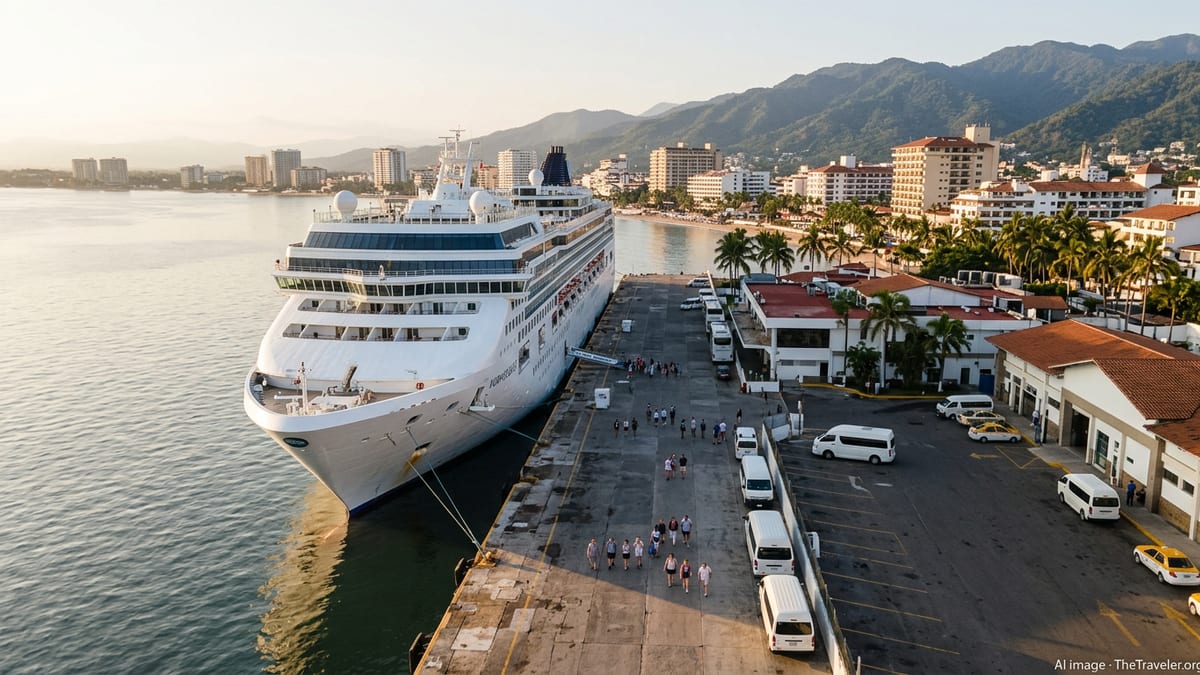
First Cruise Call Marks End of a Turbulent Pause
The arrival of the first cruise ship since February’s cartel-related unrest brought a visible sense of relief to Puerto Vallarta’s waterfront, where tour operators, shopkeepers and taxi drivers watched the vessel glide into the bay. The call, which followed a string of canceled visits in late February and early March, is widely seen as a vote of confidence in the destination’s stability and appeal.
According to cruise industry reports, lines temporarily suspended calls after violence linked to organized crime on February 22 triggered travel disruptions across Jalisco state and prompted security alerts from foreign governments. In the weeks that followed, Puerto Vallarta’s normally busy cruise calendar fell silent, dealing a fresh blow to businesses still recovering from the pandemic-era shutdowns.
The ship’s return this month restores a key economic lifeline. Local authorities said they worked closely with federal security forces and cruise line risk teams to certify conditions on the ground, including road access from the maritime terminal to popular excursion areas and hotel zones.
For many residents, the ship’s horn echoing across Banderas Bay signaled that the worst of the immediate crisis is over, even as officials acknowledge that rebuilding traveler confidence will take sustained effort.
Security Measures Reassure Cruise Lines and Visitors
In the lead-up to the first post-crisis call, Puerto Vallarta’s port authority and tourism officials emphasized heightened security protocols on land and at sea. Authorities increased patrols along access roads to the cruise terminal, coordinated checkpoints on major routes used by tour buses, and intensified surveillance in heavily visited areas such as the Malecón and Marina Vallarta.
Local officials report that cruise companies deployed their own security teams to conduct on-the-ground assessments, including meetings with law enforcement, port executives and municipal leaders. Those risk reviews, combined with the gradual normalization of daily life following the February unrest, paved the way for the green light to resume port calls.
Passengers disembarking in Puerto Vallarta were greeted by a visible but low-key security presence, with uniformed officers positioned around the terminal and transport zones while remaining largely in the background of the visitor experience. Port representatives said the goal is to reassure travelers without creating an atmosphere of tension in a city that markets itself on relaxed beach holidays and open-air promenades.
Cruise lines are continuing to monitor conditions closely, but the successful completion of this first visit, without reported incidents, is expected to weigh heavily in favor of maintaining upcoming calls on the Mexican Riviera itineraries that include Puerto Vallarta.
Economic Jolt for a Tourism-Dependent City
The return of cruise traffic delivers an immediate, measurable boost for a local economy that leans heavily on visitor spending. Before the recent unrest, Puerto Vallarta had been experiencing a robust rebound in cruise arrivals, with port statistics in 2025 showing hundreds of thousands of passengers disembarking over the course of the year and a growing number of multi-ship days at the terminal.
On the pier and throughout the city, small businesses felt the absence of that traffic during the crisis pause. Artisans who depend on day-trippers to buy handicrafts, independent tour guides, restaurant owners in the Marina district, and operators of whale-watching and snorkeling excursions all reported sharp drops in revenue as ship calls were pulled from the schedule.
The first ship’s arrival this month did not fully make up for those lost weeks, but it generated a surge of activity. Taxis lined up early outside the terminal, tour vans once again filled with visitors heading toward jungle zip-lines and hillside viewpoints, and beachfront bars reported strong midday trade as passengers spread along the Malecón and Los Muertos Beach.
Business leaders say the call is as much about momentum as immediate income. They hope that a stable pattern of arrivals in the coming weeks will help restore booking confidence among travel agents and individual cruisers considering Mexican Riviera itineraries for late 2026 and the 2027 high season.
From Pandemic Shutdown to Multiple Crises
For Puerto Vallarta, this latest disruption comes on the heels of one of the most challenging periods in its modern tourism history. Cruise calls were halted for 17 months during the height of the COVID-19 pandemic, with the Carnival Panorama’s August 2021 arrival marking the first ship back after the global shutdown and a cautious restart for the city’s maritime tourism sector.
In the years since, Puerto Vallarta has worked steadily to rebuild its image as a safe and vibrant stop on the Mexican Pacific circuit. Increased cruise traffic through 2024 and 2025, including days with dual and triple-ship arrivals, underscored the strength of demand from North American travelers seeking warm-weather escapes and cultural experiences along the coast.
The February 2026 unrest, centered on cartel-related violence in Jalisco and neighboring states, represented a different kind of shock. While the incidents were largely away from the tourist zones, travel disruptions, viral images on social media and official security advisories were enough to prompt cruise lines to temporarily reroute ships. Industry analysts note that, compared with the pandemic, the pause in calls this year was shorter, but it highlighted the sector’s vulnerability to sudden security concerns.
Officials in Puerto Vallarta say the city’s experience managing health protocols during the pandemic helped authorities coordinate a rapid, unified response this time, including communication with tour operators and international partners to explain the scope and duration of the security operations.
Outlook: Testing Confidence for the 2026–27 Seasons
With the first post-crisis ship now sailed, attention is turning to what the next several months will look like for Puerto Vallarta’s cruise calendar. Port authorities indicate that most lines with scheduled calls for late spring and fall 2026 are, for now, keeping the destination on their itineraries, although they have reserved the right to adjust routes if conditions change.
Travel advisors report that many clients remain eager to sail the Mexican Riviera, but are asking more pointed questions about security in Pacific ports compared with recent years. Puerto Vallarta’s tourism board has responded by ramping up its communication in key source markets, emphasizing both reinforced security coordination and the city’s long-standing reputation as one of Mexico’s most hospitable seaside destinations.
Industry observers say the successful handling of this first ship call will be an important reference point as lines finalize deployment decisions for the 2026–27 winter season, when cooler North American temperatures typically drive higher demand for warm-water cruises. Strong bookings that include Puerto Vallarta could translate into more frequent visits and larger ships, while any renewed unrest could quickly sway itineraries elsewhere.
For now, though, the image of a modern cruise liner once again anchored against the backdrop of the Sierra Madre foothills serves as a powerful signal. After a pandemic shutdown, a fragile recovery and the latest security scare, Puerto Vallarta’s cruise economy is once again moving forward, one ship at a time.