

More news on this day
Hundreds of holidaymakers from Canada, the United States and the United Kingdom were left stranded in Puerto Vallarta this week after a wave of flight suspensions by North American carriers responding to a sudden security crisis in western Mexico.
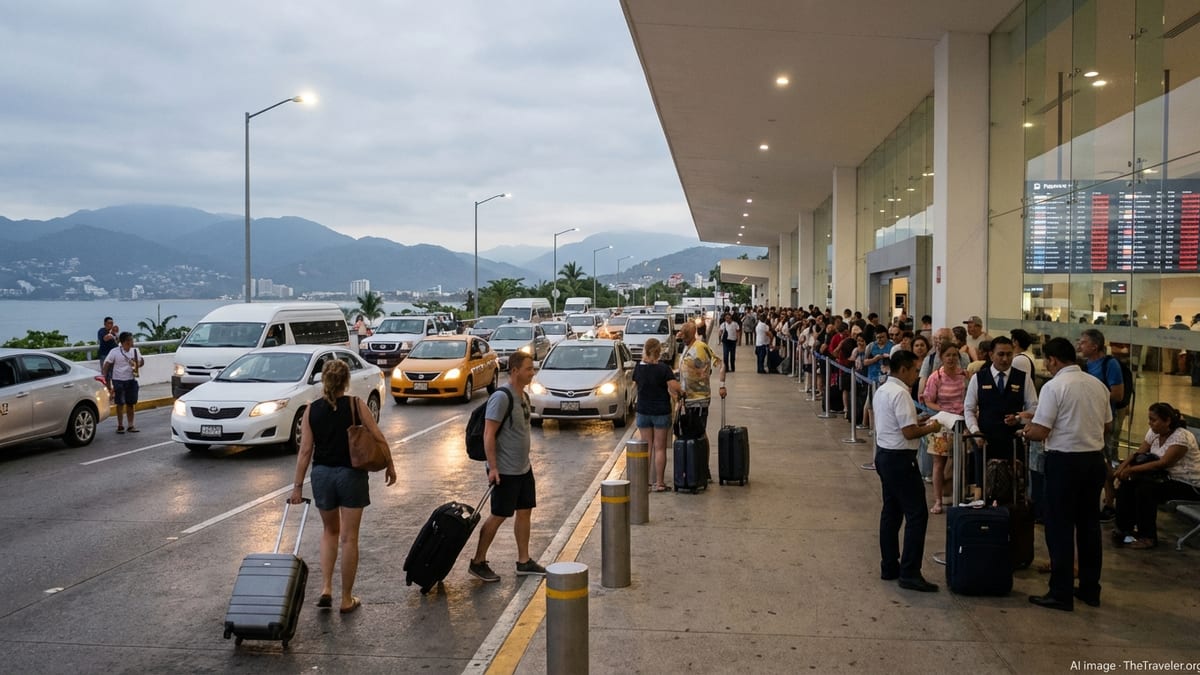
Major North American Airlines Slash Puerto Vallarta Services
Operations at Puerto Vallarta’s Licenciado Gustavo Díaz Ordaz International Airport remained technically open on Monday, but the departure boards told a different story. Dozens of flights to and from key Canadian and US hubs were canceled as airlines moved quickly to pull back capacity following cartel violence across Jalisco state.
Data from flight-tracking services and airline advisories show that services by Air Canada, WestJet, Air Transat and Porter Airlines between Puerto Vallarta and cities such as Toronto, Vancouver, Calgary and Edmonton have been heavily curtailed or temporarily suspended. On the US side, United, American, Delta, Southwest and Alaska Airlines all reported widespread cancellations to Puerto Vallarta and nearby Guadalajara, with some carriers operating only a skeleton schedule or none at all.
Industry analysts say the pattern amounts to a de facto suspension of many Mexico routes in and out of the resort city, even though the airport itself has not been formally closed by authorities. With rotation disruptions, crew positioning problems and ongoing security reviews, carriers are prioritizing safety and operational flexibility over maintaining normal frequencies.
Mexican low cost airlines serving domestic routes, including services to Guadalajara, Monterrey and Tijuana, have generally maintained more stable schedules, creating a two-speed picture in which international leisure travelers are bearing the brunt of the disruption.
Stranded Tourists Face Confusion and Lengthy Rebooking Battles
For visitors from Canada, the United States and the United Kingdom, the rapid pullback in flights translated into a weekend of uncertainty. Travelers reported crowded airport terminals, long lines at airline counters and inconsistent information on when flights might resume or which routes still had available seats.
Many passengers attempting to return to North America found their flights repeatedly canceled or rescheduled as airlines adjusted operations in real time. With a limited number of remaining departures and equipment constraints across the network, rebooking options quickly grew scarce, especially for families and larger groups hoping to travel together.
Some tourists have opted to shelter in hotels and resorts away from the airport while monitoring airline apps and travel alerts. Others are attempting complex routings via Mexico City or other unaffected airports, though those alternatives often involve additional costs, overnight stays and uncertainty about onward connections.
Travel agents and online booking platforms say call volumes have surged as clients seek refunds, travel credits or alternative itineraries. While consumer protection rules require airlines to refund canceled flights, many travelers are discovering that securing replacement journeys at short notice in peak season is considerably more difficult.
Security Crisis After Cartel Leader’s Killing Ripples Into Aviation
The aviation turmoil follows a dramatic security operation in Jalisco state on February 22 that left Nemesio Rubén Oseguera Cervantes, the alleged leader of the Jalisco New Generation Cartel, dead after a military raid near Guadalajara. Retaliatory violence quickly spread across parts of the state, including road blockades, vehicle fires and attacks on infrastructure that shocked residents and visitors alike.
Images circulating from Puerto Vallarta over the weekend showed plumes of smoke rising from burned vehicles, makeshift barricades on key roadways and a heavy presence of security forces. Local authorities declared heightened alert levels and, at times, suspended public transport in parts of the region while urging people to remain indoors.
Foreign ministries in Canada and the United Kingdom updated their travel advisories for Jalisco, warning against non essential travel and urging tourists already in resort areas such as Puerto Vallarta to stay inside their accommodations and follow local guidance. The US State Department used social media and a dedicated crisis hotline to advise American citizens to shelter in place in a number of affected Mexican states.
While there have been no reports of tourists being directly targeted in the unrest, the perception of risk and the practical difficulty of moving people and aircraft safely through the region have combined to create a cascade of airline schedule changes. Aviation experts note that even isolated incidents near airport access roads can prompt carriers to rethink operations, particularly when multiple governments elevate their warnings simultaneously.
Marriott, Hilton and Hyatt Brace for Tourism Shockwaves
The sudden halt and reduction of international flights into Puerto Vallarta has set off alarm bells across the local hospitality industry, where major global brands such as Marriott, Hilton and Hyatt anchor extensive beachfront resorts and branded residences catering to North American and European markets.
Hotel executives and local tourism officials say immediate occupancy levels remain relatively stable, largely because many current guests are staying longer than planned while they wait for flights home. However, concern is mounting over a potential wave of cancellations and booking slowdowns for the coming weeks as prospective visitors reassess travel plans in light of security headlines and volatile air service.
Resort managers are shifting quickly into crisis management mode: extending discounted night rates for stranded guests, waiving early departure penalties, enhancing on property security and reassuring customers through direct messaging that operations continue normally within hotel grounds. Some are coordinating closely with airline partners and tour operators to align check out flexibility with revised flight schedules.
Tourism economists warn that if the perception of instability persists, Puerto Vallarta’s broader visitor economy from independent restaurants and excursion providers to taxi drivers and small retailers could feel the impact long after air service normalizes. Large hotel groups, they note, may be better positioned than local businesses to absorb a short term shock.
Travel Outlook: Gradual Recovery With Ongoing Caution
By Monday, there were early signs that air operations in Puerto Vallarta and Guadalajara were beginning to stabilize, with some airlines gradually reinstating limited services and publishing updated travel waivers. Yet aviation authorities and carriers alike stressed that the situation remains fluid, and further adjustments are likely as security assessments continue.
Industry watchers expect a phased recovery, with domestic Mexican flights returning to near normal patterns first, followed by a more cautious rebuild of transborder and long haul routes as demand, security conditions and government advisories allow. For now, many airlines are extending flexible change policies, allowing passengers booked to or through affected airports to postpone, reroute or cancel their trips without standard penalties.
Travel experts advise anyone with upcoming plans to Puerto Vallarta or other parts of western Mexico to monitor airline notifications closely, stay informed on official government travel advice and maintain regular contact with their hotel or travel advisor. Comprehensive travel insurance with strong disruption and evacuation benefits is also being strongly recommended in light of the current uncertainty.
For Puerto Vallarta and its powerful international hotel brands, the coming days will be critical. The speed with which airlines restore consistent schedules, and travelers regain confidence in the safety and reliability of the destination, will shape whether this episode is remembered as a brief shock or the start of a more prolonged tourism setback.