

More news on this day
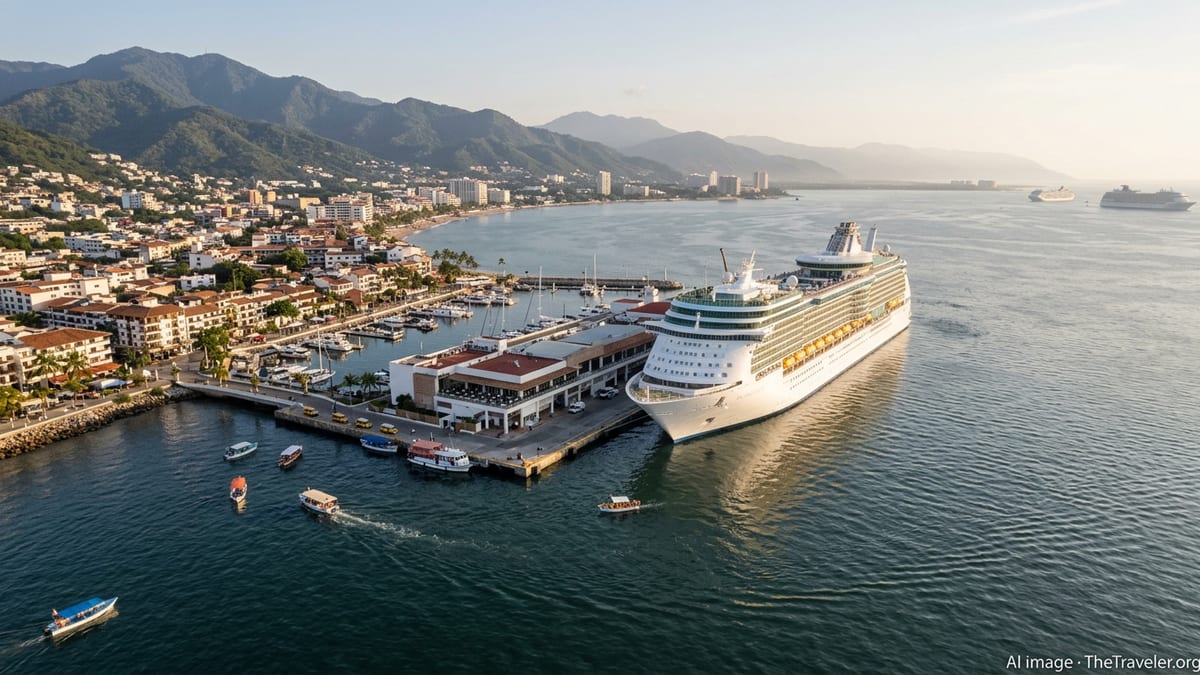
Mexico’s major cruise ports are entering a new phase of expansion, with Puerto Vallarta rapidly joining Cozumel, Cabo San Lucas and Progreso at the center of a record-setting surge in maritime tourism across routes favored by North American travelers.
Get the latest news straight to your inbox!
Record Passenger Growth Across Mexico’s Coasts
Recent data for 2025 show Mexico consolidating its role as a leading cruise destination in the Americas, with more than 11 million cruise passengers and double-digit annual growth in both arrivals and ship calls. Industry coverage points to Cozumel in Quintana Roo, Cabo San Lucas in Baja California Sur, Puerto Progreso in Yucatán and Puerto Vallarta in Jalisco as key beneficiaries of this momentum, each handling rising volumes of large-capacity ships deploying from U.S. Gulf and Pacific homeports.
Cozumel remains Mexico’s undisputed cruise giant, closing 2025 with about 4.7 million passengers on roughly 1,300 ships and reinforcing its status among the busiest cruise ports in the world. Reports indicate that forecasts for 2026 could push the island’s tally closer to 5 million visitors, supported by dense scheduling from Miami, Fort Lauderdale, Port Canaveral, Galveston and New Orleans.
On the Pacific side, Cabo San Lucas has emerged as a clear growth leader, with official statistics for 2025 citing around 1.1 million passengers and nearly 300 ship calls, representing some of the strongest year-on-year percentage gains among Mexican ports. This performance is strengthening the Mexican Riviera itineraries that link Los Angeles, Long Beach and San Diego with Cabo San Lucas, Mazatlán and Puerto Vallarta.
In the Gulf of Mexico, Progreso has shifted from niche stop to regional mainstay. From early 2024 into 2025, the port saw triple-digit increases in ship arrivals and passenger numbers, and forecasts published by the Yucatán tourism authorities suggest annual totals in the hundreds of thousands. Larger vessels and more frequent calls are helping reposition Progreso as a regular fixture on Western Caribbean sailings.
Puerto Vallarta’s Growing Role on the Mexican Riviera
Puerto Vallarta, long known as a resort and sun destination, is becoming a more prominent link in Mexico’s cruise chain. Port and tourism data for 2024 indicated more than a quarter million cruise passengers between January and May alone, and subsequent reporting shows that the destination surpassed half a million cruise visitors over the full year as capacity returned and new deployments were added.
The port’s inclusion on most Mexican Riviera itineraries is central to this growth. Major cruise lines routinely pair Puerto Vallarta with Cabo San Lucas and Mazatlán on seven-night sailings from Southern California, channeling a steady stream of U.S. passengers to Jalisco’s Pacific coast. Publicly available figures compiled by Mexico’s federal tourism monitoring system list Puerto Vallarta among the country’s top five cruise ports by passenger volume, behind Cozumel, Mahahual or Costa Maya, Ensenada and Cabo San Lucas.
Local economic analyses highlight how cruise passengers complement, rather than replace, Puerto Vallarta’s strong air-based tourism segment. Studies referenced in national tourism reports suggest that increasing cruise calls are driving higher spending in shore excursions, waterfront dining and artisanal commerce, supporting job creation in port operations, tour services and hospitality within the wider Bahía de Banderas region.
Observers also note that Puerto Vallarta’s continued appeal lies in its ability to offer a different atmosphere from Mexico’s Caribbean ports. The city’s historic center, Pacific sunsets and surrounding Sierra Madre landscapes provide a contrast to the flat coral islands and resort strips farther east, giving cruise planners more diversity when designing itineraries out of U.S. ports.
Cozumel, Cabo and Progreso Anchor Key U.S.-Linked Routes
While Puerto Vallarta strengthens its position, Cozumel, Cabo San Lucas and Progreso remain the principal anchors for Mexico’s cruise expansion across the American nautical travel sector. Cozumel dominates Western Caribbean routes, accommodating several ships daily during peak season and offering multiple berthing areas capable of handling the latest megaships. Industry analytics services that track vessel movements through satellite data routinely list Cozumel among the world’s most frequently visited cruise ports.
Cabo San Lucas plays a similar role on the Pacific coast for itineraries departing U.S. West Coast homeports. Passenger volumes recovered strongly after the pandemic period, and recent tallies show sizeable increases in both arrivals and ship calls from 2023 to 2025. This growth is closely tied to strong demand from U.S. travelers for short and weeklong voyages along the Baja peninsula and down to the Mexican mainland.
Progreso has become increasingly important for ships homeporting in Galveston, New Orleans and Florida that focus on Western Caribbean loops. Mexican and international media coverage notes that ship arrivals at Progreso more than doubled in early 2025 compared with the previous year, driven by capacity deployments from major North American brands. As larger vessels continue to join fleets, Progreso’s long pier and expanding reception facilities give cruise lines operational flexibility for high-volume calls.
Together, these ports shape a network of routes that integrates Mexico deeply into cruise circuits favored by U.S. travelers. Analysts describe a pattern where Caribbean-focused lines lean on Cozumel and Progreso, while Pacific-focused brands rely on Cabo San Lucas and Puerto Vallarta to deliver Mexican experiences within easy reach of North American homeports.
Infrastructure Upgrades and Policy Shifts Support Expansion
The surge in cruise activity has been accompanied by investment in port infrastructure and regulatory changes intended to keep Mexico competitive. In Progreso, authorities are advancing expansion works at the Puerto de Altura to handle more and larger ships, as evidenced by project descriptions included in state-level tourism and port planning documents. Enhancements range from terminal upgrades and transport connections to expanded spaces for tour operators and local vendors.
In Cabo San Lucas and Puerto Vallarta, port improvements have focused on expanding berthing capacity, streamlining passenger flows and adapting facilities to next-generation cruise ships. Publicly available information from national tourism and port statistics shows that both destinations are handling significantly more ship calls than a decade ago, and port planners are anticipating continued growth in the medium term.
Policy developments have also influenced the current wave of expansion. A proposed nationwide increase in per-passenger charges sparked debate within the industry, but subsequent revisions scaled back or delayed some of the higher tiers. Trade and travel outlets report that the initial implementation of a modest fee in 2025 has not deterred cruise lines from expanding deployments to Mexican ports, particularly as demand from U.S. travelers remains robust and fuel and operating efficiencies improve.
These moves, combined with targeted marketing and partnership campaigns in key North American source markets, are helping Mexico maintain its appeal amid growing competition from Caribbean and Central American ports. The balance between maintaining revenue from port charges and keeping itineraries attractive for cruise companies continues to shape strategic decisions across the sector.
Implications for the Wider American Nautical Travel Sector
The rise of Puerto Vallarta alongside Cozumel, Cabo San Lucas and Progreso carries broader implications for cruise tourism across the Americas. With Mexico reporting more than 79 million international visitors in 2025 across all modes of travel, cruise growth is occurring within a wider tourism upswing that is reshaping capacity planning for the region’s major cruise lines.
For the U.S. market, Mexico’s port network enables flexible itinerary design that can pivot between Caribbean and Pacific deployments depending on seasonal demand, ship positioning and fleet renewal cycles. The ability to combine marquee ports such as Cozumel and Cabo San Lucas with emerging favorites like Progreso and a strengthening Puerto Vallarta corridor gives operators more options to differentiate products for both first-time cruisers and repeat customers.
The expansion also raises questions around sustainability, crowding and local benefit distribution, particularly in smaller communities and environmentally sensitive coastal zones. Destination strategies highlighted in recent tourism analyses emphasize the need for managed growth, including staggered ship schedules, investment in shore power and port services, and stronger links between cruise terminals and nearby urban or natural attractions to spread economic gains.
As shipyards deliver larger, more efficient vessels to global fleets through 2026 and beyond, Mexico’s ability to accommodate increased capacity across both coasts will position Puerto Vallarta, Cozumel, Cabo San Lucas and Progreso as central pillars in the American nautical travel sector. Their combined trajectory suggests that the country will remain a cornerstone of Western Hemisphere cruise planning for the foreseeable future.