

More news on this day
Puerto Vallarta is emerging as a pivotal Pacific stop in Mexico’s booming cruise sector, joining Cozumel, Cabo San Lucas and Progreso in capturing rising demand from American travelers across the wider Caribbean and Pacific cruise corridors.
Get the latest news straight to your inbox!
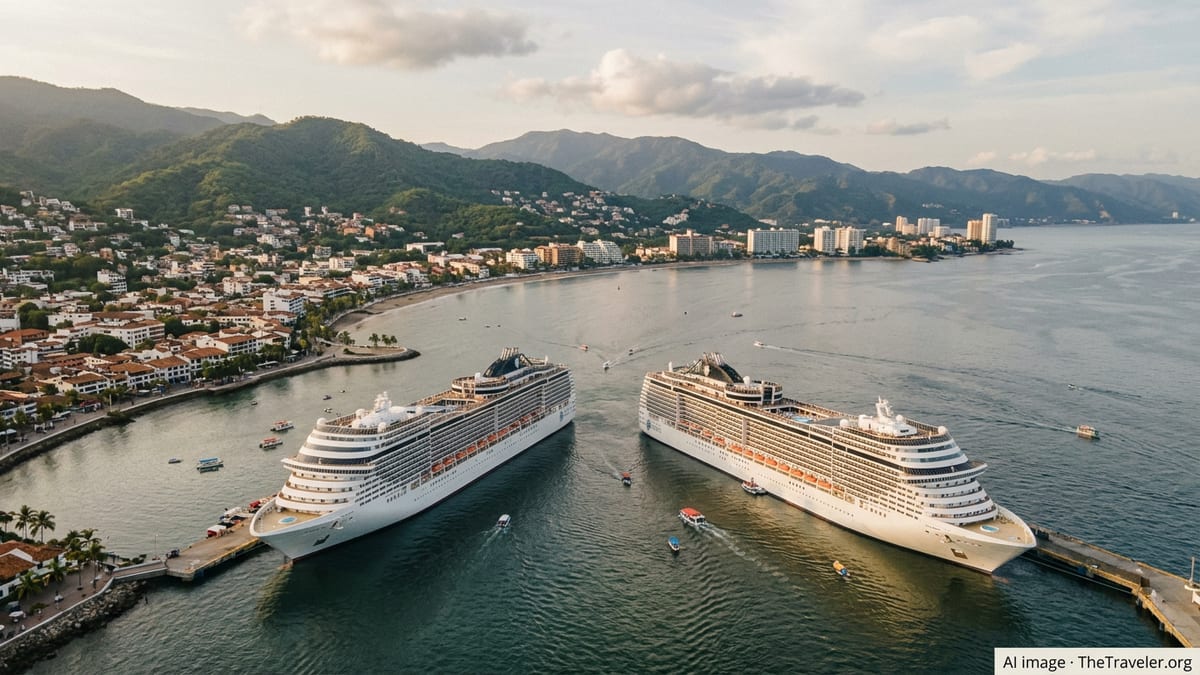
Puerto Vallarta’s Cruise Comeback Anchors Record Tourism Year
Recent data and published tourism indicators show that Puerto Vallarta’s cruise terminals are playing a growing role in a destination that has already set new records for visitor arrivals. Local tourism reports indicate that the port welcomed 171 cruise ships in 2025, up from 167 in 2024, underscoring sustained interest from major cruise brands calling on Mexico’s central Pacific coast.
This increase in cruise calls has been accompanied by a steady flow of passengers. Sector summaries highlight that more than 543,000 cruise guests visited Puerto Vallarta in 2023, with volumes nudging higher in 2024 and remaining robust into 2025, even as ship deployment shifted across the region. While some midyear comparisons pointed to slight dips in passenger counts against the previous year, the overall trend has kept the city firmly within Mexico’s top tier of cruise destinations.
The port’s performance is unfolding against a broader tourism boom. Puerto Vallarta’s international airport handled nearly 7 million passengers in 2025, according to publicly available aviation statistics, signalling expanded air connectivity that reinforces the city’s role as a multi‑modal gateway. This combination of cruise and air access is helping the destination tap into overlapping markets from the United States and Canada, especially along the West Coast.
Industry deployment updates compiled for the 2026 and 2027 seasons suggest that Puerto Vallarta will feature on more itineraries from leading cruise lines. Published schedules outline increased calls by brands such as Royal Caribbean, Princess, Carnival, Disney and Norwegian, which are positioning the port as a key stop on Mexican Riviera routes sailing from California and other U.S. homeports.
Cozumel Remains Mexico’s Mega-Hub for U.S. Cruise Passengers
On the Caribbean side, Cozumel continues to dominate Mexico’s cruise sector and serve as a primary gateway for U.S. travelers. Government and industry data show that Cozumel handled around 4.5 million cruise passengers in 2024, with local projections indicating that the island expects to surpass 5 million visitors through its cruise terminals in 2025. This volume places Cozumel among the most heavily trafficked cruise ports in the world.
To accommodate larger ships and rising demand, Cozumel’s main terminals are undergoing substantial infrastructure upgrades. Port development reports describe an investment in the range of hundreds of millions of pesos to expand berthing capacity and welcome the newest generation of large vessels, including some of the world’s biggest cruise ships. The upgrades are designed to allow multiple mega‑ships to dock simultaneously, reinforcing Cozumel’s role as a cornerstone of Western Caribbean itineraries departing from Florida and Gulf Coast ports in the United States.
Beyond hardware, Cozumel is also at the center of product innovation targeted at the North American market. Cruise company announcements outline plans for new beach club experiences and private-style destinations linked to the island, scheduled to open over the next several years. These projects aim to keep Cozumel competitive with dedicated private islands elsewhere in the Caribbean, while channelling onshore spending into controlled environments close to the docks.
At the same time, policy changes are subtly reshaping the economics of each visit. From early 2025, certain Mexican states began collecting a modest per‑passenger tax on cruise visitors to fund disaster prevention initiatives. Early commentary from travel analysts suggests the fee is small relative to overall cruise fares and is unlikely, on its own, to dampen demand for Cozumel, which remains deeply embedded in U.S. cruise planning.
Cabo San Lucas Strengthens the Pacific Itinerary Triangle
Cabo San Lucas, situated at the tip of the Baja California peninsula, is reinforcing Mexico’s Pacific cruise offer alongside Puerto Vallarta. Data from regional tourism observatories show that cruise and yacht activity in Los Cabos trended upward through much of 2025, with local authorities describing a positive pattern in ship calls and passenger movement. Earlier figures pointed to more than a quarter of a million cruise passengers in 2024, with further gains anticipated.
Cabo’s geography makes it a natural first or last port on Mexican Riviera voyages sailing from California. Many itineraries from Los Angeles, Long Beach, San Diego and San Francisco pair Cabo with Puerto Vallarta and a third Mexican stop, effectively creating a Pacific triangle that mirrors the island‑hopping patterns found in the Caribbean. This has helped solidify Cabo’s position in the American nautical travel sector, particularly among West Coast residents seeking shorter sailings without international long‑haul flights.
Investment in shore infrastructure, marinas and tender operations continues to refine the guest experience. Publicly available planning documents reference projects to streamline tendering for large ships at anchor and improve waterfront facilities to manage peaks in day‑visitor numbers when multiple vessels call on the same date. Coupled with a strong hotel and villa inventory on land, these developments are turning Los Cabos into a hybrid destination that can serve both land‑based guests and cruise visitors arriving for the day.
Seasonality also works in Cabo’s favor. The region’s dry, sunny climate during the North American winter and spring aligns closely with peak cruise demand, allowing lines to deploy vessels from U.S. ports year‑round or in extended shoulder seasons. This flexibility is prompting some brands to test new itineraries that combine Cabo and Puerto Vallarta with less frequently visited Pacific ports, broadening Mexico’s appeal for repeat cruisers.
Progreso and the Gulf Coast Expand Reach Into Middle America
On the Gulf of Mexico, the port of Progreso in Yucatán is consolidating its role as a strategic link between Mexico’s cruise industry and the central United States. Cruise programs departing from Galveston, New Orleans and other Gulf Coast homeports regularly include Progreso alongside Cozumel, offering access to both coastal experiences and inland cultural attractions such as the archaeological sites of Chichén Itzá and Uxmal.
Traffic through Progreso remains smaller than volumes recorded in Cozumel, but published accounts highlight busy days at the pier when multiple ships dock and passengers disperse to beaches, nearby towns and Mayan heritage tours. The port’s long pier, one of the most distinctive in the region, allows large vessels to berth offshore while buses and shuttles move guests along the causeway into town and beyond.
For cruise lines, Progreso’s appeal lies in its geographic position and excursion portfolio. It is one of the closest cruise gateways to major archaeological sites on the Yucatán Peninsula, making it an efficient call for culture‑focused itineraries. At the same time, Progreso extends Mexico’s cruise footprint deeper into the Gulf, connecting Caribbean circuits with routes that serve Texas and other interior U.S. markets.
Local tourism development plans reference ongoing efforts to upgrade visitor facilities and diversify shore experiences, from renovated beachfront promenades to new tour products. These initiatives aim to capture more onshore spending from the American cruise segment while easing pressure on more saturated hubs further east.
American Market Drives Coordinated Growth Across Mexico’s Coasts
Across Puerto Vallarta, Cozumel, Cabo San Lucas and Progreso, a common thread runs through recent growth: the central role of the U.S. market. Industry reports from both Mexican authorities and cruise trade groups point to American travelers as the primary source of cruise passengers calling on these ports, reflecting the concentration of homeports along the U.S. East, Gulf and West coasts.
Mexico’s ports are responding with targeted investment and coordinated planning. Port authorities and destination marketing organizations are prioritizing pier expansions, terminal enhancements and transportation links that align with deployment decisions by major North American cruise brands. In Puerto Vallarta, this includes continued improvements to the international cruise terminal and surrounding waterfront, while in Cozumel and the wider Quintana Roo region, infrastructure works are designed to handle larger ships and higher passenger throughput.
The combined effect is a multi‑coastal network that allows cruise lines to mix and match Mexican ports across very different itineraries, from short Western Caribbean loops to full‑week Mexican Riviera sailings. Puerto Vallarta’s emergence alongside Cozumel, Cabo San Lucas and Progreso provides additional flexibility for operators seeking variety while keeping voyages within easy reach of U.S. gateways.
Looking ahead to 2026 and 2027, deployment previews and tourism forecasts suggest that Mexico’s share of the American nautical travel sector is likely to grow further. With Puerto Vallarta now firmly established among the country’s leading cruise ports, Mexico appears set to consolidate its position as one of the most important cruise destinations for U.S. travelers, spanning both the Caribbean and the Pacific.