

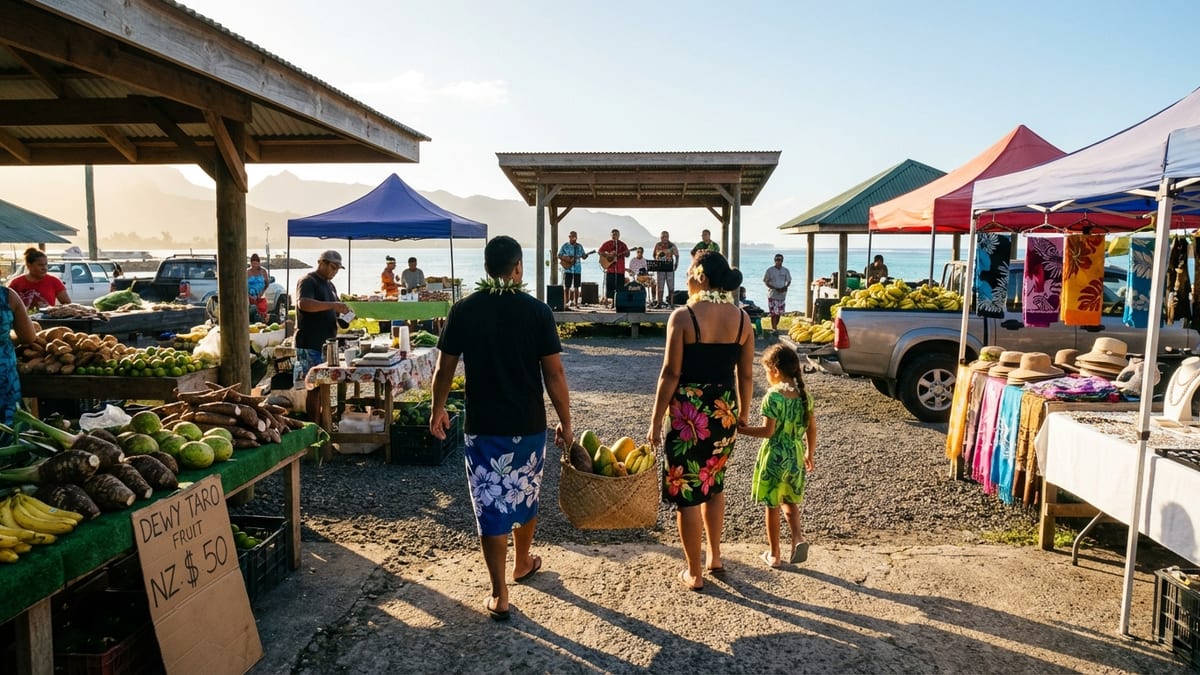
On Saturday mornings in Avarua, as the first rays of sun catch the lagoon and the church bells begin to chime, Punanga Nui Market fills with color and song. Locals pull up with truckloads of taro and papaya, ukulele chords drift from the main stage, the scent of grilled fish and coconut buns hangs in the air, and half the island seems to be here at once. For visitors, this is not just a place to buy souvenirs. Punanga Nui is the living heart of Rarotonga, a weekly gathering where commerce, culture and community collide in the most joyful way.
Understanding Punanga Nui: The Beating Heart of Avarua
Punanga Nui Market sits on the waterfront at the western edge of Avarua, Rarotonga’s compact capital, close to Avatiu Harbour and right off the main coastal road. Since its establishment in 1992, the market has grown into the island’s most important public gathering space, a place where farmers, artisans, musicians and families meet each week to trade, talk and celebrate. It was originally developed to host the Pacific Arts and Cultural Festival after Cyclone Sally and has since evolved into a symbol of resilience and pride for the Cook Islands community.
Although there is a smaller weekday market on site, Saturday is when Punanga Nui truly comes alive. From around 7 am until midday, more than a hundred stalls set up across the open-air grounds. Some vendors have semi-permanent huts or kiosks while others roll in with pop-up gazebos and trestle tables. The overall feeling is festive yet relaxed, with a constant buzz of conversation overlaid with the pulse of drums and island harmonies from the central stage.
For travelers, part of the magic is how local the market feels. Despite its popularity with visitors, Punanga Nui is primarily for the community itself. Residents come to stock up on produce, catch up over coffee, bring children to dance displays and support cousins fundraising for school teams or church groups. As a guest, you are stepping into an everyday ritual rather than a performance created just for tourists, which is precisely what makes the experience so compelling.
When to Go and How to Plan Your Visit
The main Punanga Nui market day is Saturday, with stalls operating roughly from 7 am to noon. Early morning is prime time for serious food shopping. By 8 am, produce tables are stacked high with taro, cassava, bananas, pawpaw, breadfruit, limes and glossy eggplants. Arrive before 9 am if you want the widest selection, as the freshest fruits, leafy greens and prepared foods such as poke and baked goods tend to sell out quickly. As the morning goes on, the emphasis shifts from grocery shopping to grazing, socializing and enjoying the cultural shows.
On weekdays, a smaller version of the market operates, typically from around 7 am to mid-afternoon. You will still find some produce stalls, a handful of craft vendors and a couple of cafés or lunch counters doing steady trade with office workers from Avarua. The atmosphere on these days is quieter and more utilitarian, which can appeal if you prefer fewer crowds or want a second visit to pick up items you had your eye on. However, if you only have one chance to go, plan for Saturday so you experience the full spectrum of food, music and performance.
Timing matters for comfort as well as choice. Rarotonga mornings are cooler and breezier, making it more pleasant to wander the open-air aisles before the tropical sun climbs high. By late morning, the heat can be intense, especially around the food stalls where grills and steamers add to the warmth. An ideal strategy is to arrive between 7 am and 8:30 am, have breakfast at the market, shop for crafts and souvenirs, then linger near the main stage as the music and dance performances build towards late morning.
Getting There and Getting Your Bearings
Punanga Nui Market enjoys a central location that makes it easy to reach from most parts of Rarotonga. If you are staying in or near Avarua, you can likely walk. Head toward the waterfront along the main road and you will soon see the cluster of stalls, parked cars and market signage. From popular beach areas such as Muri, Arorangi or Titikaveka, expect about a 10 to 20 minute drive depending on traffic and where your accommodation is located.
The island’s bus service, often referred to as the Island Hopper, circles Rarotonga in both clockwise and anticlockwise directions and stops near the market. Simply tell the driver you are heading to Punanga Nui and they will let you off at the closest point. Buses are a convenient option if you do not want to hire a car but still prefer flexibility. Taxis are also available, particularly around resort areas and the airport, although they can be relatively expensive for solo travelers compared with the bus.
If you are driving, follow the coastal road until you reach Avarua and watch for the market on the seaward side. Parking is available along the main road in front of the market and in informal overflow areas nearby, including grass lots and spots by the riverside. On Saturdays these spaces fill up quickly. Arriving early makes parking significantly easier and reduces the stress of navigating tight turns among other vehicles and pedestrians. Once inside, the market is compact and easy to explore on foot, with lanes roughly grouped into produce, crafts and food areas, though part of the fun lies in simply wandering.
Flavors of Rarotonga: What to Eat and Drink
Food is at the heart of the Punanga Nui experience. Many visitors first encounter quintessential Cook Islands flavors at the market, often over a simple breakfast enjoyed at a shared picnic table. Local cafés and stalls serve strong organic coffee, chilled smoothies whirled from ripe mango, banana and passionfruit, and indulgent coconut buns or doughnuts still warm from the oven. Fresh tropical fruit plates are common, offering an easy, refreshing way to start the day.
As you delve deeper into the aisles, look out for dishes that define home cooking in the Cook Islands. Ika mata is a signature specialty: chunks of raw fish marinated in lime and then mixed with coconut cream, often served with chopped vegetables or salad. Poke, another beloved dish, is a dense pudding made from local fruits like banana or pawpaw combined with arrowroot or cassava and gently sweetened with coconut cream. These foods can be rich, so ordering small portions at several stalls allows you to taste more without overdoing it.
Grills smoke steadily along one side of the market, turning out skewers of marinated chicken, local fish, sausages and sometimes octopus, paired with taro, breadfruit chips or simple salads. You might also find island-style curries, noodle stir-fries, crepes, waffles and baked treats that reflect the Cook Islands’ blend of Polynesian traditions and global influences. Wash everything down with chilled nu, or fresh drinking coconut, served in its green shell with a straw. It is both a drink and a photo opportunity, and the vendors will often split the coconut for you afterward so you can scoop out the soft flesh.
For food lovers, one of the pleasures of Punanga Nui is talking directly with the people who prepare your meal. Ask stall owners about the ingredients they use or where their fish is caught and you are likely to hear stories about family plantations, early-morning fishing trips or treasured recipes handed down from grandparents. The market becomes a living cookbook and every plate you sample connects you more deeply to the island’s way of life.
From Black Pearls to Rito Hats: Shopping the Stalls
Beyond the food, Punanga Nui is the island’s most varied marketplace for crafts, clothing and keepsakes. Many travelers choose to do the bulk of their souvenir shopping here, not simply for convenience but because the selection is local and the atmosphere informal. You will find pareu, the bright sarongs that everyone in the Cook Islands seems to live in, printed with hibiscus, frangipani or traditional motifs. These can be worn as beach cover-ups, wrapped as dresses or used as throws back home.
Handwoven rito hats, created from the bleached inner fronds of young coconut leaves, are among the most distinctive items sold at Punanga Nui. The work is intricate and time-consuming, often done by women who learned from older relatives, and the hats are both practical sun protection and wearable art. Alongside them, you may see finely woven fans, pandanus mats and baskets, all demonstrating the depth of local weaving traditions. Buying directly from the maker allows you to appreciate the skill involved and ensures your money returns to island families.
Jewelry stalls showcase everything from shell necklaces and seed bracelets to high-end black pearl pieces. The Cook Islands are renowned for black pearls, which are farmed on northern islands and then crafted into rings, earrings and pendants on Rarotonga. Punanga Nui is a good place to browse entry-level designs and talk with sellers about how to assess luster, shape and color. If you plan to make a more significant purchase, you might use the market to compare styles before visiting dedicated pearl boutiques elsewhere in Avarua.
Scattered between these marquee items are artists selling paintings and prints, woodcarvers offering clubs, paddles and drums, and vendors with hand-stitched tivaevae quilts in bold florals. You can also pick up locally produced oils, soaps and noni tonics, often labeled with the village where they are made. Most stalls are cash based, although a few of the more permanent shops may take cards. Prices are generally fixed but polite conversations about value, especially when purchasing several items from the same vendor, are welcomed and often rewarded with an extra smile or a small discount.
Culture in Motion: Music, Dance and Community Life
What truly distinguishes Punanga Nui from a simple farmers’ market is the cultural life that unfolds all around its stalls. A main stage sits near the center of the grounds, and on Saturdays it hosts a rolling program of live music and dance. Local bands perform island classics accompanied by ukulele and drums, choirs sing in Cook Islands Māori, and young dancers step out in bright costumes to perform their first public routines. Much of this entertainment is free, with small groups sometimes fundraising for school trips or sports tours via donation buckets.
For visitors, watching these performances offers a glimpse into how profoundly music and dance are woven into everyday life in the Cook Islands. Cultural shows put on at resorts may be polished and dramatic, but the numbers you see at Punanga Nui have a different intimacy. Children dart on and off stage, parents cheer from the crowd, and grandparents sway in time with the rhythm. You are witnessing community rather than spectacle, and that can be deeply moving.
Beyond the stage, culture reveals itself in quieter interactions. Elder women sit making ei katu, the fresh flower crowns worn for celebrations and church, threading frangipani, gardenia and foliage with practiced fingers. Men chat about rugby scores beside pickups loaded with bananas and breadfruit. Teenagers move between smoothie stalls and clothing racks, catching up on the week’s gossip. For the Cook Islands diaspora returning home on holiday, Punanga Nui often functions as a reunion point, a place to re-anchor themselves in island life after time overseas.
As a traveler, your role within this space is that of guest. Simply by being present, listening and engaging respectfully, you help sustain the market’s vibrancy. Buying from small-scale vendors, tipping musicians when appropriate and asking permission before taking close-up photos are all ways to show appreciation. In return, you are likely to be welcomed with warmth, offered samples to taste and perhaps even drawn into a dance circle if you linger near the stage long enough.
Practical Tips, Etiquette and Sustainability
A little preparation goes a long way in making your Punanga Nui visit smooth and enjoyable. Cash is essential, ideally in smaller denominations. New Zealand dollars are used throughout the Cook Islands, and while there is usually an ATM near the market entrance, it is sensible to arrive with money already on hand in case of queues or machine outages. Bring a reusable shopping bag or small backpack for your purchases, and consider a cooler bag with ice packs if you plan to buy perishable foods and have a long journey back to your accommodation.
Dress for the climate: light, breathable clothing, a hat and comfortable sandals or walking shoes. Even in the morning, the tropical sun can be strong, so sunscreen and a refillable water bottle are important. The market is mostly uncovered, and while showers pass quickly, a compact rain jacket or umbrella can be handy in the wet season. Rubbish bins are dotted around, but they can fill quickly on busy days. If you carry your own trash out when necessary, you help keep the grounds pleasant for everyone.
Etiquette is straightforward and rooted in respect. Greet stallholders with a smile and a simple kia orana, the local greeting, and you will likely see faces light up. Ask before taking photos that focus closely on individuals, particularly elders or children. When tasting samples, it is courteous to buy something, even a small item, if you engage for a while at a stall. If a vendor is busy with local customers buying large quantities of produce, be patient and wait your turn. The pace at Punanga Nui is unhurried, and leaning into that rhythm is part of the experience.
Finally, consider the impact of what you buy. Favor goods that are clearly handmade or locally produced rather than mass-imported trinkets. Avoid purchasing shells or coral if you are unsure of their origin, and be mindful of airline baggage limits when tempted by large wooden carvings. Every dollar you spend at Punanga Nui has the potential to support sustainable livelihoods, preserve traditional skills and strengthen community initiatives, so choosing thoughtfully benefits both you and the island.
The Takeaway
Punanga Nui Market is far more than a sightseeing stop. On a compact piece of waterfront land in Avarua, it condenses the flavors, crafts, stories and social life of Rarotonga into a few vivid hours each week. Come early on a Saturday and you will see the island at its most authentic and unscripted: fishermen unloading their catch, farmers arranging pyramids of fruit, grandmothers plaiting rito, and children running between stalls in flower crowns sticky with jam from breakfast buns.
For travelers, a visit here offers something that no lagoon cruise or resort meal can quite match. By eating local dishes prepared by home cooks, buying a pareu directly from the woman who printed it, or simply sitting with a coffee listening to island harmonies, you gain a more grounded understanding of the Cook Islands and the people who call them home. Punanga Nui is where commerce and culture meet, where the past lives on in the weave of a hat or the beat of a drum, and where you, as a guest, are invited to share in the island’s everyday joy.
FAQ
Q1. What days and hours does Punanga Nui Market operate?
The main market takes place on Saturday mornings, typically from around 7 am to midday, when most stalls are open and cultural performances occur. A smaller number of vendors also trade on weekdays during the morning and early afternoon, but the full experience is on Saturday.
Q2. Do I need to arrive early, and how crowded does it get?
Arriving between 7 am and 8:30 am is ideal. Early hours offer cooler temperatures, better parking options and the widest selection of fresh produce and prepared foods. By mid-morning the market can be quite busy, especially during peak tourist seasons and around school holidays.
Q3. What is the best way to get to Punanga Nui from popular resort areas?
If you are staying near Avarua, you can usually walk to the market. From beach districts such as Muri, Arorangi or Titikaveka, you can take the island bus, hire a car or use a taxi. The bus is convenient and affordable, while driving gives you the most flexibility if you plan to explore other parts of the island afterward.
Q4. Is the market suitable for families with young children?
Yes. Punanga Nui is family-friendly and many local families bring children. Kids usually enjoy the live music, dancing, colorful stalls and sweet treats like smoothies and coconut buns. Just keep a close eye on them in crowded sections and near the main road, and bring sun protection and water for hot days.
Q5. Can I pay by card, or should I bring cash?
Most vendors at Punanga Nui operate on a cash-only basis, especially smaller produce and snack stalls. A few permanent shops may accept cards, but you should not rely on it. Bring sufficient cash in small denominations, and use ATMs in Avarua before you arrive at the market if possible.
Q6. What local foods should I try at the market?
Look for ika mata, a marinated raw fish dish with coconut cream and lime, as well as banana or pawpaw poke, which is a traditional pudding-like dessert. Grilled fish and chicken with taro or breadfruit, tropical fruit smoothies and fresh drinking coconuts are also favorites that give a real taste of island cuisine.
Q7. Are the crafts and souvenirs at Punanga Nui genuinely local?
Many of the crafts, such as rito hats, pareu, woven fans, wooden carvings and tivaevae quilts, are made by local artisans who often sell their own work at the market. There may be some imported items as well, so if authenticity matters to you, ask vendors where and how their products are made.
Q8. Is bargaining expected at the market?
Prices at Punanga Nui are generally fair and often fixed, especially for food and small items. Light, respectful negotiation may be acceptable when purchasing higher-value goods or multiple items from the same stall, but aggressive haggling is discouraged. A friendly conversation about what fits your budget usually goes a long way.
Q9. What should I wear, and is there any dress code to consider?
There is no formal dress code, but modest, comfortable clothing suited to a tropical climate is recommended. Many visitors wear shorts, sundresses or light shirts along with a hat and sandals. If you plan to continue to church or more formal venues afterward, consider carrying a pareu or light cover-up.
Q10. How can I be a respectful and responsible visitor at Punanga Nui?
Use the local greeting kia orana, ask before taking close-up photos of people, dispose of or carry out your rubbish and support small-scale vendors where you can. Choose locally made items, avoid buying questionable shells or coral, and be patient in queues. Above all, approach the market with curiosity and courtesy, and you will be warmly received.