

More news on this day
Qantas is moving closer to launching nonstop Sydney–London Heathrow flights in 2027, a flagship ultra-long-haul service that could permanently alter how Australians and Britons travel between the two countries.
Get the latest news straight to your inbox!
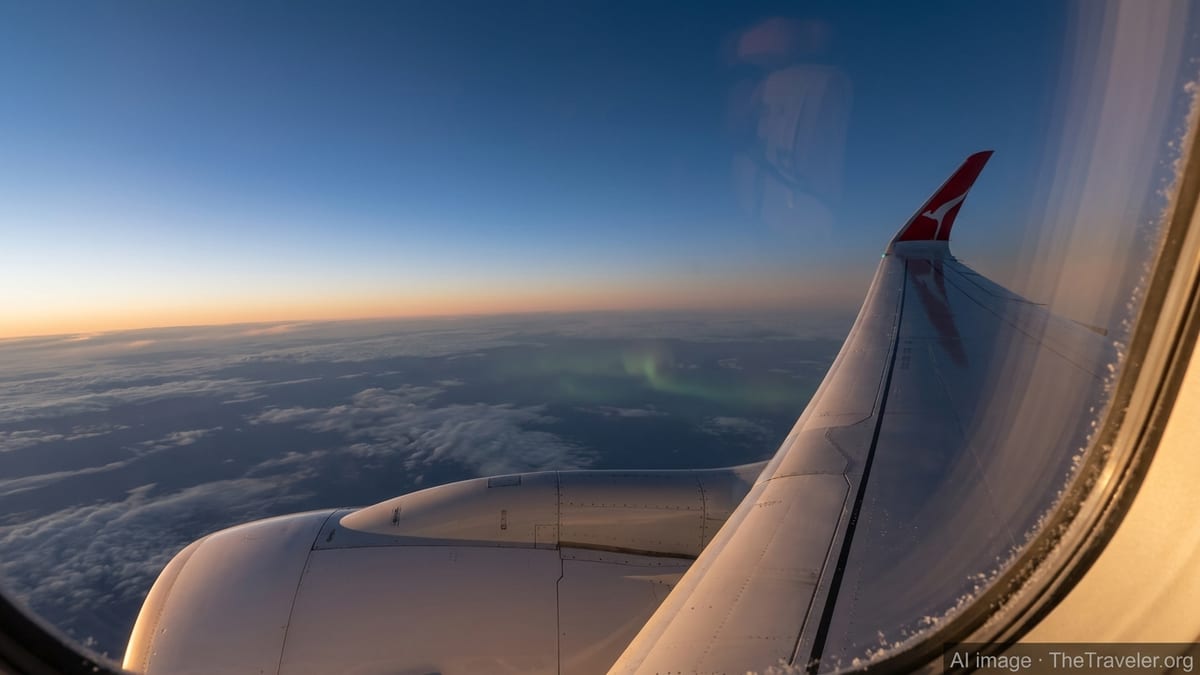
What Qantas’ Project Sunrise Means for the Australia–UK Route
The planned Sydney–London Heathrow nonstop will sit at the heart of Qantas’ Project Sunrise program, which uses a specially adapted Airbus A350-1000ULR to fly for up to about 22 hours without refuelling. Publicly available information indicates that Qantas has 12 of these aircraft on order, with the first delivery now expected in late 2026 and commercial services slated for the first half of 2027. The Sydney–Heathrow route is widely expected to be among the first wave of ultra-long-haul launches.
The flight will build on, but go far beyond, Qantas’ existing Perth–London service by turning the traditional multi-stop “Kangaroo Route” into a single hop from Australia’s largest city to the UK capital. Industry analysis suggests that the new nonstop could cut up to around four hours off today’s typical one-stop journey times, depending on routing and connections. For travellers used to changing planes in Asia or the Middle East, the appeal of boarding in Sydney and disembarking directly at Heathrow is likely to be significant.
Aviation observers note that Qantas views these flights not just as another long-haul option, but as a strategic way to capture high-yield business, premium leisure, and visiting-friends-and-relatives traffic on one of the world’s most competitive intercontinental corridors. If execution matches ambition, the airline stands to reposition itself as a global leader in ultra-long-haul operations.
Cabin Design Aimed at Comfort on 20-Plus-Hour Flights
Flying for nearly a full day in one stretch raises obvious questions about comfort and wellbeing, and Qantas has framed cabin design as a central pillar of Project Sunrise. The A350-1000ULR interiors have been configured for about 238 passengers, significantly fewer than many standard A350-1000 layouts, which can exceed 300 seats. By reducing capacity, the airline is creating space for more generous seating, enlarged premium cabins, and new shared areas intended to break up the journey.
Concepts released in late 2025 show four cabin classes, including enclosed first class suites designed to resemble compact hotel rooms, with flat beds, ample storage, and large entertainment screens. Business class is expected to feature direct aisle access for every passenger and improved privacy compared with older long-haul products. Premium economy and economy cabins are being promoted with extra storage solutions, redesigned seat shells, and ergonomics developed with input from sleep and health researchers.
One of the most distinctive elements is a dedicated “Wellbeing Zone” located between premium economy and economy. According to Qantas material and independent reporting, this area will include standing space, stretch bars or handles, digital guides to simple in-flight exercises, and a hydration station with water and light refreshments. The goal is to encourage movement and reduce some of the physical strain associated with remaining seated for nearly an entire day.
Lighting schemes and service timing are also being tuned to fight jet lag. Publicly available information points to tailored cabin lighting sequences and meal schedules designed to nudge passengers’ body clocks toward London time well before arrival, a strategy informed by previous experimental test flights and academic collaboration.
Operational Challenges and Flight Experience Between Sydney and Heathrow
Operating one of the world’s longest commercial flights on a daily basis will require careful fleet and crew planning. Analysis of Qantas fleet projections suggests that at least three A350-1000ULR aircraft will be needed to support daily ultra-long-haul services from Sydney to both London and New York, with full daily schedules not expected until around spring 2027. This makes the ramp-up period critical, as the airline balances inaugural services with maintenance windows and training flights.
The route itself is expected to track a high-latitude or polar path, depending on winds and airspace constraints, potentially passing near East Asia, the Bering region, and the Arctic before descending over northern Europe into London. This type of routing allows Qantas to take advantage of favorable winds while staying within the range and performance envelope of the A350-1000ULR. At around 20 to 21 hours of scheduled block time, even small variations in jet streams could influence exact routing and arrival times.
For travellers, the flight will likely feel different from a conventional long-haul service. Reports from earlier research flights suggest that onboard routines are structured into phases, with lighting, meals, and movement breaks deliberately sequenced across the journey. Travellers can expect multiple main meal services, extended quiet periods for sleep, and regular prompts to stand, stretch, and hydrate. The airline is also positioning its nonstop as a premium product, so fares at the front of the aircraft may command a notable price premium over traditional one-stop itineraries.
Nevertheless, the sheer duration of the flight will not appeal to everyone. Some passengers may continue to prefer breaking the journey with a stopover in Asia, the Middle East, or Western Australia, especially if they value hotel rest, ground sightseeing, or lower fares over speed and continuity.
Tourism and Market Impact for Australia and the United Kingdom
The introduction of a nonstop Sydney–Heathrow service is expected to have wide-reaching implications for tourism patterns between Australia and the UK. Travel industry analysts suggest that a faster, more convenient link could stimulate additional demand from Britons considering long-haul holidays in Australia, particularly for high-value itineraries combining Sydney with coastal or wine regions in New South Wales. Similarly, Australians visiting friends and relatives in the UK may find the direct option compelling, especially for shorter trips where every hour saved matters.
The route is also likely to heighten competition along the broader Australia–Europe corridor. Airlines based in the Middle East and Asia have built substantial businesses funnelling Australasia–Europe traffic through their hubs, and a nonstop Sydney–London option challenges that model on at least part of the market. While one route will not displace hub-based networks, it could push carriers to refine schedules, upgrade products, or sharpen pricing to retain loyal travellers.
For cities like Singapore, Doha, and Dubai, which have long served as default stopover points between Australia and Europe, the Qantas nonstop may shift a slice of premium traffic away from intermediate hubs. However, leisure travellers seeking multi-stop itineraries or lower fares are still likely to pass through these cities in large numbers, softening any impact. The new service may therefore act more as a high-profile flagship route than a wholesale reordering of traffic flows.
From a tourism branding perspective, the marketing value of “world’s longest commercial flight” status and a one-hop Kangaroo Route is significant. Destination marketers in both Australia and the UK are expected to lean into this narrative, presenting the nonstop as a symbol of closeness between the two countries and a gateway to extended touring across both nations.
How Travellers Can Prepare for Ultra-Long-Haul in 2027
With the first Project Sunrise aircraft due to arrive in late 2026 and services scheduled to begin in 2027, prospective passengers have time to consider whether the nonstop Sydney–Heathrow flight suits their travel style. Travel advisors suggest that those most likely to benefit include business travellers on tight schedules, frequent visitors with established routines in either country, and premium leisure travellers willing to pay for extra comfort in the forward cabins.
Health and comfort will be central considerations. Medical guidance on long-haul flying typically highlights the importance of hydration, light stretching, and periodic movement to support circulation and reduce discomfort during extended periods of sitting. While the A350-1000ULR’s wellbeing features are designed to make these habits easier to maintain, travellers may still wish to consult health professionals for personalised advice, especially if they have existing conditions.
On the planning side, the new nonstop is expected to slot into Qantas’ broader network from Sydney, providing same-day connections from other Australian cities on domestic feeders. In the UK and Europe, passengers landing at Heathrow can tap into a dense network of onward flights and rail links across the continent. Travel industry commentary indicates that pricing, fare structures, and loyalty program treatment will come under close scrutiny once schedules are published and tickets go on sale, likely closer to the first aircraft delivery.
For now, the Sydney–London Heathrow nonstop remains one of the most closely watched developments in global aviation. As aircraft assembly progresses in Toulouse and Qantas finalises interiors and schedules, 2027 is shaping up as a milestone year that could redefine what is considered possible, and practical, in commercial air travel between Australia and the United Kingdom.