

More news on this day
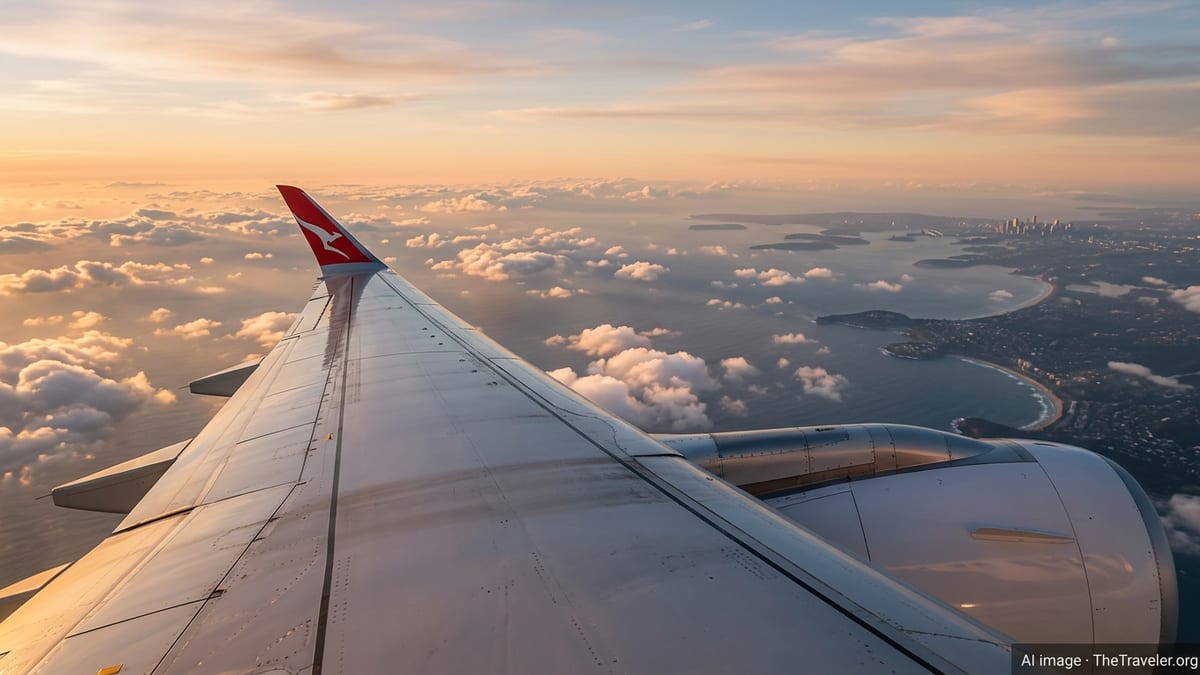
Qantas is edging closer to a major reset of long-haul travel, preparing a new fleet of ultra long-range Airbus A350-1000 aircraft to operate non-stop services from Australia to New York and London while deepening its use of strategic hubs such as Singapore.
Get the latest news straight to your inbox!
Project Sunrise Nears Take-Off
The multi-year initiative known as Project Sunrise is designed to link Australia directly with key global cities on flights of up to around 22 hours. Publicly available information shows that Qantas has ordered 12 specially configured Airbus A350-1000s to operate these missions, with the first aircraft now progressing through final assembly in Toulouse and test flying expected in 2026.
Reports indicate that Qantas is targeting the first half of 2027 for the launch of commercial non-stop services from Sydney to both London and New York, subject to aircraft delivery and regulatory approvals. These routes would rank among the longest in the world and follow earlier research flights between Australia, London and New York operated by Qantas Boeing 787-9 aircraft to study fatigue and passenger wellbeing.
The airline has framed Project Sunrise as a way to offer a time-saving alternative to traditional one-stop itineraries via Asia, the Middle East or North America. For business travellers in particular, trimming several hours from the end-to-end journey and removing the need to change planes mid-route is positioned as a key selling point.
While initial flights are expected to depart from Sydney, industry coverage suggests that other Australian gateways such as Melbourne could eventually join the non-stop network as additional A350s arrive and demand patterns become clearer.
A350 Cabin: Fewer Seats, More Space
Central to the Qantas strategy is a low-density, premium-heavy configuration on the new A350-1000 jets. Data published in fleet references and airline briefings indicates each aircraft will carry just 238 passengers, far below the more than 300 seats typical on many A350-1000s. The layout is set to include six first class suites, 52 business suites, 40 premium economy seats and 140 economy seats.
This four-class approach contrasts with some rival ultra long-haul operators that have removed first class or economy from their longest flights. Qantas appears to be aiming for flexibility, allowing the same aircraft type to operate not only the flagship non-stop services but also high-demand routes across Asia and other long-haul markets.
According to cabin design materials released by the airline and its partners, each first class suite will feature a separate bed and recliner-style lounge chair, closed off with walls and a sliding door. Business class is planned as an all-aisle-access suite product with privacy doors, while premium economy will offer wider seats with a 2-4-2 layout and extra legroom compared with standard economy.
Even in economy, Qantas is emphasizing improved ergonomics for ultra long sectors. The 3-3-3 arrangement is paired with seats from specialist manufacturer Recaro featuring updated cushioning, larger in-flight entertainment screens and device storage, with a seat pitch reported at about 33 inches, slightly above many long-haul benchmarks.
Wellbeing Zone and Jet Lag Research
One of the most talked-about features of the Qantas A350 design is a dedicated Wellbeing Zone located between the premium economy and economy cabins. Aircraft interior coverage describes this as an open space where passengers can stand, stretch and access hydration and light snacks, breaking up the long periods of sitting that come with 19 to 22-hour itineraries.
The concept is informed by research Qantas commissioned with sleep and body clock specialists during a series of ultra long-haul test flights. Published summaries of that work highlight the importance of in-flight movement, tailored meal timing and cabin lighting tuned to circadian rhythms as tools to reduce jet lag and improve post-flight recovery.
To support this, the A350 cabin will incorporate next-generation LED lighting programs that shift gradually through different colour temperatures, together with lower cabin altitude and higher humidity compared with older aircraft types. These A350 characteristics are similar to those already used on new-generation long-haul jets and are being marketed as key comfort advantages on very long flights.
In addition to cabin hardware, industry analysis suggests Qantas is likely to adjust service routines, including meal timing and in-flight entertainment recommendations, to better match the time zone of the destination and further support passenger wellbeing.
Non-Stop Links to New York and London
The proposed non-stop routes from Sydney to London and New York sit at the heart of Qantas’ long-haul reset. Publicly available commentary from airline executives and planning documents has long identified these two cities as priority targets, given their strong corporate travel demand and symbolic status as global financial hubs.
The Sydney to London service would effectively update the historic “Kangaroo Route,” which until now has required at least one stop, commonly in Singapore, Perth, Dubai or other Asian and Middle Eastern hubs. A direct link is expected to cut journey times by several hours and remove the complexities of transiting a third country, although prevailing winds and payload limits will still shape exact schedules and capacity.
The Sydney to New York non-stop will open a new option alongside existing Qantas services that operate via Los Angeles. Analysis in aviation publications suggests the airline could maintain both options, giving price-sensitive travellers the ability to route via the United States West Coast while offering time-poor premium passengers a faster, non-stop alternative to the US East Coast.
While firm schedules and fares have yet to be released, booking trends on current long-haul routes indicate that demand for non-stop premium seats could be particularly strong among corporate travellers, high-status frequent flyers and leisure passengers willing to pay a surcharge for shorter total travel time.
Singapore and Regional Hubs Remain Central
Even as Qantas prepares ultra long-range non-stops, its network plans underscore the continued importance of strategic hubs such as Singapore. Carrier announcements in late 2024 and 2025 outline expanded flying between Australia and Singapore, including new Darwin to Singapore services and additional capacity from other Australian cities using newer-generation aircraft.
These developments reinforce Singapore’s role as a key transit and business hub for Qantas customers, connecting Australia not only with Southeast Asia but also with partner airlines’ networks into Europe, India and North Asia. For many travellers, a one-stop itinerary via Singapore will remain more affordable than ultra long-haul non-stops and will continue to offer a wide range of schedule options.
Industry observers note that regional enhancements, such as the use of Airbus A220s and forthcoming A321XLRs on thinner routes to Singapore and other Asian destinations, will help feed long-haul services while improving connectivity for secondary Australian cities. This positions the new A350 ultra long-haul flights as the top tier of a broader network strategy rather than a standalone product.
For travellers planning trips from Australia to Europe or North America from 2027 onward, the emerging picture is a choice between traditional one-stop journeys through hubs like Singapore and a new generation of non-stop A350 flights that trade higher fares for saved hours and added onboard comfort.